
Religion · Europe
Roman religion
At a glance
- Roman religion was a matter of correct practice rather than belief: prayer, vow and sacrifice were exchanged with the gods on the principle of do ut des, “I give that you might give”.
- Its priests were men of the elite who also held political office, while the six Vestals tended the sacred hearth of the state and every household honoured its own Lares and Penates.
- Rome absorbed the gods of the peoples it ruled and the mystery cults of the East, but its conflict with Christianity ended in 380, when Nicene Christianity became the empire’s official religion.
Timeline
- 509 BCEThe expulsion of Tarquinius Superbus ends Roman kingship and begins the Republic, whose elected magistrates also serve as priests
- 206 BCEDuring the war with Hannibal the Sibylline books call for the cult of the Magna Mater from Pessinus
- 186 BCEThe Senate restricts the Bacchanals, a popular mystery cult of Bacchus
- 64After the Great Fire of Rome, Nero blames the Christians, who are persecuted and killed
- 303Diocletian’s first edict against Christianity orders the destruction of churches and Christian texts
- 313The Edict of Milan makes mutual toleration the ideology of the empire
- 380Under Theodosius I, Nicene Christianity becomes the official state religion of the Roman Empire
- 391Theodosius I ends official support for all other cults and extinguishes the sacred fire of the Vestals
Spread through the centuries
Where it began, how it spread, and where it was a main faith (a bright glow) or held communities (a faint one), century by century to its last places. Press Play or move the slider, turn the globe, and tap a glow or a mark to read about it.
The map opens here once the page has loaded.
Origins

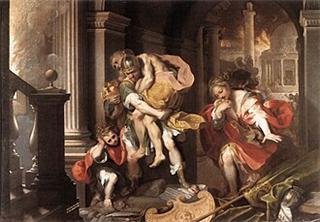
For Rome’s earliest period history and myth are hard to tell apart. In legend the Trojan Aeneas, son of Venus, laid the basis of Roman religion when he brought the Palladium, the Lares and the Penates from Troy, and the Greek exile Evander set up the Greatest Altar of Hercules. Romulus founded the city after consulting the gods through augury and was credited with the Consualia and the first temple of Jupiter Feretrius. His Sabine successor Numa Pompilius, who negotiated directly with the gods, was credited with the first calendar, the priesthoods of the Salii, flamines and Vestals, the cults of Jupiter, Mars and Quirinus, and the Temple of Janus. The Etruscan king Tarquinius Priscus founded a Capitoline temple to Jupiter, Juno and Minerva, the model for the highest official cult of the Roman world.
Roman historians held that the essentials of the Republic’s religion were complete by the end of Numa’s reign. This archaic religion was the foundation of the mos maiorum, “the way of the ancestors”, central to Roman identity. It was open to its neighbours: Greeks in Italy brought practices such as the cult of Apollo, Romans matched their gods with Greek ones, and Etruscan religion shaped augury. The expulsion of Tarquinius Superbus ended the kingship and began the Republic (509–27 BCE), in which the same men elected to public office also served as augurs and pontiffs.
Beliefs & Practice
Roman religion was practical and contractual, resting on the principle do ut des, “I give that you might give”. It depended on knowing and correctly performing prayer, rite and sacrifice, not on faith or dogma. Immortal gods ruled heaven and earth, with gods of the underworld and countless lesser deities. Jupiter, the most powerful, embodied the divine authority of Rome’s highest offices. Rome had no native creation myth and matched its deities with the Greek gods, adapting their myths.
Every sacrifice needed a prayer, and the words had to be exact: a mistake could mean starting a whole festival again. Vows promised offerings in return for benefits, and oaths called on the gods as witnesses. The most potent offering was an animal, usually cattle, sheep or pigs, which had to seem willing; its entrails were reserved for the gods and the meat shared in a communal meal. Public rites took place outdoors at an altar within a templum, a space marked out by augury, and the calendars show roughly forty annual festivals.
Neglect of the gods was a kind of atheism, while excessive or fearful devotion was superstitio; either could bring divine anger on the state. Beliefs about an afterlife varied, but care of the dead was among the oldest practices: the departed became one of the di Manes, appeased at the February festival of the Parentalia, and tombs were inscribed Dis Manibus, “to the Manes-gods”.
Texts & Teachers
Roman religion had no scripture; it lived in rites, calendars, priestly law and oral tradition. In crises the state consulted the Sibylline books, which after the defeat at Cannae in 216 BCE recommended the vow of a ver sacrum and the burial alive of two Greeks and two Gauls, and in 206 BCE the cult of the Magna Mater. The Twelve Tables forbade any harmful incantation.
Much is known through writers. Cicero, himself an augur, held religion “necessary” and said the Romans considered themselves the most religious of peoples. Livy recorded the prodigies of the war with Hannibal, among them a phantom navy in the sky, and the self-sacrifice of Decius Mus. Ovid’s Fasti, a poem on the festivals from January to June, mixes antiquarian lore, popular custom and poetic invention. Ennius translated Euhemerus, who explained the gods as deified mortals, and Varro saw popular observance as a necessary fiction. Vergil’s Aeneid gave the Imperial vision of the past, Pliny the Elder wrote a sceptical history of magic, and Apuleius’s The Golden Ass almost certainly describes the mysteries of Isis.
From the 2nd century CE the Church Fathers condemned the empire’s non-Christian religions as “pagan”. When Theodosius I dismantled the old cults, the senator Quintus Aurelius Symmachus protested in a letter, and Ambrose, Bishop of Milan, urged the rejection of his plea. Sissel Undheim argues that Mary Beard, John North and Simon Price’s Religions of Rome dismantled the old story of religious decline in the late Republic.
Spread
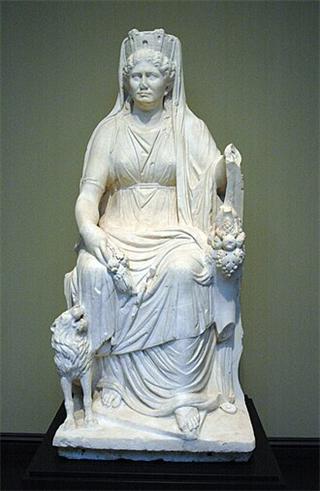
As Rome grew, its policy was to absorb the gods and cults of other peoples rather than root them out. In the early Republic it brought Diana from Aricia to the Aventine, Castor from Tusculum and Fortuna Primigenia from Praeneste; Camillus promised Juno of Veii a temple if she deserted her city, took Veii in her name and dedicated her temple on the Aventine. In 217 BCE the Venus of Eryx came from Sicily. During the Punic Wars (264–146 BCE) generals built many temples to fulfil their vows; the Magna Mater was brought from Pessinus in 206 BCE and installed on the Palatine in 191, and a mystery cult of Ceres and Proserpina came in 205 BCE. Troublesome cults were taken over rather than banned: the Senate restricted the Bacchanals in 186 BCE.
Under the empire, peoples who accepted Rome’s rule kept their own cults, while new foundations by Roman citizens and their allies followed Roman models: newly municipal Sabratha built a Capitolium, and by the middle of the 1st century CE Gaulish Vertault had given up its sacrifice of horses and dogs for a Romanised cult. The Imperial cult developed first in the eastern provinces, then in the West. Soldiers set up altars to their traditional gods, the emperor’s genius and local deities, and traders and legions brought home cults from Egypt, Greece, Iberia, India and Persia, among them those of Cybele, Isis, Mithras and Sol Invictus; Aurelian (270–275) established an official cult of the Palmyrene Sol Invictus in Rome’s Campus Martius.
Community & Society
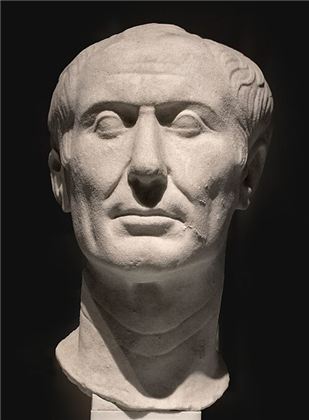
Rome had no separate priestly caste. Priesthoods were held by the elite, often by the same men who held political office, and a priest drew no stipend. The earliest public priests were probably the flamines; the three major flamines, of Jupiter, Mars and Quirinus, came from patrician families. Pontiffs and augurs advised the magistrates, and the haruspices, an Etruscan profession, read the gods’ will in entrails; the Senate sent noble boys to Etruria to learn the art. Julius Caesar became pontifex maximus in 63 BCE, and the emperors held the office after Augustus.
The six Vestals tended the sacred hearth of the state. A Vestal was freed from her father’s authority and could wield political influence, but one who lost her chastity was buried alive. In each household the paterfamilias was the senior priest, offering daily cult to the Lares and Penates and the family Genius, while his wife cared for the household cult of Vesta. Women attended most festivals, and the rites of the Bona Dea excluded men, but as a rule women did not perform animal sacrifice. Plebeians were at first excluded from the priesthoods; in principle the colleges were later opened to them.
Rejecting the state religion was tantamount to treason. Jews were at times exempt from official sacrifice, but Christians were persecuted: by Nero after the fire of 64 CE, under Decius’s edict of sacrifice, by Valerian, and by Diocletian’s edicts from 303, until Galerius revoked the policy in 311.
Legacy
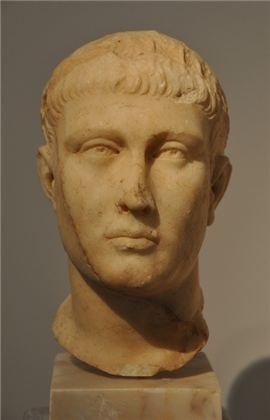
The conversion of Constantine I ended the persecutions; the Edict of Milan (313) made mutual toleration the empire’s ideology, and Constantine funded churches and summoned the First Council of Nicaea. His nephew Julian, emperor from 361, tried to restore non-Christian practice, but his reforms were reversed after his death in 363. In 380, under Theodosius I, Nicene Christianity became the state religion, and non-Christians faced exclusion from public life or persecution. Gratian refused the office of pontifex maximus and removed the altar of Victory from the Senate house; in 391 Theodosius ended official support for all other cults, put out the Vestals’ sacred fire and vacated their temple.
Much survived in Christian forms. Christian festivals were fitted into the old calendar, the title divus was later given to saints, the Lupercalia was celebrated as late as the 5th century, and the Council of Tours forbade Christians to attend the Parentalia in 567. Amulets and binding spells persisted in Italy through late antiquity, and charms inherited from classical tradition lived on, reinterpreted, in medieval magic. Patrick Leigh Fermor wrote that the Maniots of Greece abandoned the old religion only towards the end of the 9th century.
In the 15th century Pomponio Leto’s Roman Academy celebrated the Natalis Romae until Pope Paul II dissolved it in 1468, and in the 2000s the Associazione Tradizionale Pietas rebuilt temples and sought legal recognition.
Roman religion was the polytheistic religion of ancient Rome, an exchange of prayer, vow and sacrifice with the gods that bound together household, city and state. Its priests were the city’s magistrates, and it absorbed the gods of the peoples Rome ruled. After long conflict with Christianity it lost the state’s support under Theodosius I, in 380 and 391.
Test yourself
5 questions on this page, from its key events and facts.
The questions open here once the page has loaded.
References
- Mary Beard, John North and Simon Price, Religions of Rome