
Religion · Ancient Near East
Zoroastrianism
At a glance
- Zoroastrianism grew from the hymns of the prophet Zarathustra, who taught that the Wise Lord, Ahura Mazda, calls every person to choose truth over the lie in a cosmic struggle that will end in the triumph of good.
- It was the faith of the Achaemenid kings and the state religion of the Parthian and Sasanian empires, and its ideas of judgement, heaven and hell and a final renewal of the world may have influenced Judaism, Christianity and Islam.
- After the Arab conquest of Iran it became a minority faith; today it survives among small communities in Iran and among the Parsis of India, whose contribution to modern Bombay was out of all proportion to their numbers.
Timeline
- c. 1500–1000 BCEZarathustra composes the Gathas, by the reckoning of many modern scholars; others place him in the 7th or 6th century BCE
- c. 520 BCEDarius I credits his victories to Ahura Mazda in the Behistun inscription
- 224Ardashir I founds the Sasanian Empire, under which Zoroastrianism becomes the state religion
- 3rd centuryThe high priest Kartir organises the Zoroastrian church and its fire temples across the empire
- 651The last Sasanian king, Yazdegerd III, is killed after the Arab conquest of Iran
- 9th–10th centuryZoroastrian priests compile the Pahlavi books, among them the Denkard and the Bundahishn
- 8th–10th centuryZoroastrians from Iran settle in Gujarat, according to the Story of Sanjan: the origin of the Parsis
- 1892The Parsi Dadabhai Naoroji becomes the first Asian elected to the British House of Commons
Spread through the centuries
Where it began, how it spread, and where it was a main faith (a bright glow) or held communities (a faint one), century by century to today. Press Play or move the slider, turn the globe, and tap a glow or a mark to read about it.
The map opens here once the page has loaded.
Origins
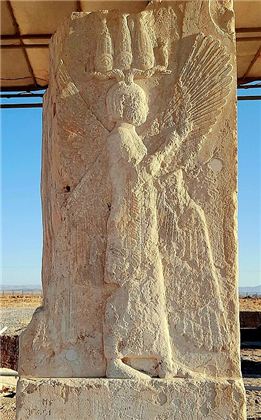
Zoroastrianism traces its teaching to the prophet Zarathustra, known to the Greeks as Zoroaster. Almost nothing is certain about his life. The language of the hymns attributed to him, the Gathas, is an archaic form of Avestan, an Iranian language closely related to the Sanskrit of the Rigveda, and the world they describe is one of herders and their cattle without cities or kings. For these reasons many scholars place him in the second millennium or the early first millennium BCE, somewhere in eastern Iran or Central Asia; others, following a later Zoroastrian tradition, date him to the 7th or 6th century BCE.
Zarathustra was a priest of the old Iranian religion, which, like the Vedic religion of India, honoured many gods and offered sacrifices. According to the Gathas, he received a revelation from Ahura Mazda, the “Wise Lord”, whom he proclaimed as the supreme creator, uncreated and wholly good. He condemned the worship of the daevas, gods whom he regarded as evil, and called people to stand on the side of truth and order, asha, against the lie, druj. His message met hostility at first, but according to tradition he converted a ruler named Vishtaspa, who protected and spread the faith.
The religion grew among the Iranian peoples, blending Zarathustra’s teaching with older traditions, and by the 6th century BCE it was the faith of the Persian kings. Darius I, who ruled the Achaemenid Empire from 522 BCE, proclaimed in his inscriptions, above all at Behistun, that he ruled by the will of Ahura Mazda. Whether Cyrus the Great before him was a Zoroastrian is debated. The Greek historian Herodotus described the Persian magi, the priestly class who later became the guardians of Zoroastrian tradition, and their custom of exposing the dead.
The religion that emerged combined Zarathustra’s vision with ancient rites: the reverence of fire and water as pure creations, the sacrifice performed by priests, and the veneration of beings such as Mithra, the god of covenants, and Anahita, the goddess of the waters, who were brought back into the tradition as worthy beings created by Ahura Mazda.
Beliefs & Practice
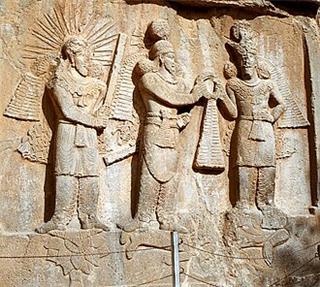
Zoroastrianism teaches that Ahura Mazda is the wise and good creator of all that is good. Opposed to him is Angra Mainyu, the destructive spirit, the source of evil, death and disorder, who is not his equal but his adversary. The world is the scene of the struggle between them, and every human being, endowed with free will, takes part in it through the choices of their thoughts, words and deeds. The ethical motto of the faith is “good thoughts, good words, good deeds” (humata, hukhta, hvarshta).
Ahura Mazda works through the Amesha Spentas, the “holy immortals”, divine aspects or beings such as Good Mind, Best Truth and Holy Devotion, each linked to a part of creation, from cattle and fire to earth, water and plants. Lesser divine beings, the yazatas, “those worthy of worship”, among them Mithra and Anahita, are honoured in prayer.
Zoroastrianism teaches a personal and a final judgement. At death the soul crosses the Chinvat Bridge, which widens for the righteous, who pass to the “House of Song”, and narrows for the wicked, who fall into the place of the lie. At the end of time a saviour, the Saoshyant, will appear, the dead will rise, evil will be destroyed and the world will be made perfect for ever in a final renewal, the frashokereti.
Worship centres on purity and on fire, the symbol of Ahura Mazda’s light and truth; Zoroastrians pray facing a source of light, and they do not regard fire itself as a god. Fire temples keep sacred fires burning continuously, the most important of which have burned for centuries. Priests perform the yasna, the central act of worship, in which the sacred texts are recited and offerings consecrated.
Every Zoroastrian child is initiated at about seven to fifteen years of age in a ceremony in which they receive the sacred shirt, the sudreh, and the sacred cord, the kusti, which they untie and retie while praying several times a day. Because dead bodies were regarded as polluting, Zoroastrians traditionally exposed the dead to birds in towers of silence, the dakhmas, so as not to defile earth or fire; many now use burial or cremation instead.
Texts & Teachers
The scripture of Zoroastrianism is the Avesta, a collection of texts in the Avestan language that was transmitted orally for many centuries before being written down. Its oldest part is the Gathas, seventeen hymns traditionally attributed to Zarathustra himself, composed in Old Avestan in a difficult, allusive poetry. Around them stand later texts in Young Avestan: the Yasna, the liturgy of the main act of worship, which contains the Gathas; the Yashts, hymns to individual divine beings; the Vendidad, a book of laws of purity; and prayers for daily use.
According to later Zoroastrian tradition, a great Avesta of twenty-one books existed under the Achaemenids and was destroyed or scattered when Alexander the Great conquered Persia, then gathered again under the Parthians and Sasanians. Under the Sasanians, probably in the 5th or 6th century CE, priests invented a precise alphabet to write the Avesta down; much of what they recorded was later lost, and the surviving Avesta is perhaps a quarter of the Sasanian collection.
The Sasanian priesthood also developed a large body of commentary and teaching in Middle Persian, written in the Pahlavi script. Most of it survives in books compiled in the 9th and 10th centuries, after the Arab conquest, when the priests sought to preserve their tradition: the Denkard, an encyclopaedia of Zoroastrian learning; the Bundahishn, an account of creation and the end of the world; and works of law, apologetics and visions, such as the Book of Arda Viraf, which describes a journey through heaven and hell.
The Parsis of India later produced texts in Gujarati and Persian, among them the Story of Sanjan, the traditional account of their migration from Iran. In the 18th and 19th centuries European scholars, beginning with the Frenchman Abraham Hyacinthe Anquetil-Duperron, who studied with Parsi priests in Surat and published a translation of the Avesta in 1771, made the Zoroastrian scriptures known to the West.
Spread
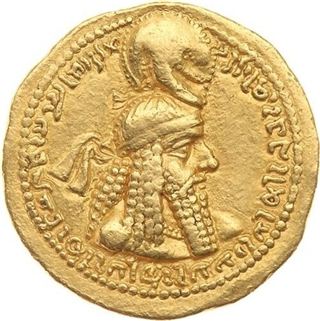
Zoroastrianism spread among the Iranian peoples from Central Asia to the Iranian plateau and became the faith of the three great Persian empires. The Achaemenid kings honoured Ahura Mazda, though they tolerated the religions of their many subjects. Under the Parthians, who ruled Iran from the 3rd century BCE to the 3rd century CE, Zoroastrianism was the dominant religion, practised in many regional forms.
The Sasanian dynasty, founded by Ardashir I in 224, made it a state church. The high priest Kartir, in inscriptions of the late 3rd century, boasted of founding fire temples across the empire and of persecuting Jews, Christians, Buddhists and Manichaeans. Zoroastrian priests became a powerful hierarchy, closely tied to the monarchy, and the Sasanian state presented itself as the defender of the good religion against Roman and Christian rivals.
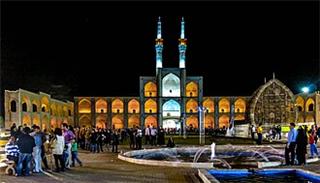
The Arab conquest of Iran between 633 and 651 ended Zoroastrianism’s position as the religion of the state. Conversion to Islam was gradual: for several centuries Zoroastrians remained numerous, especially in the countryside, and continued to produce learned works. Over time, heavy taxation, social pressure and periods of persecution reduced them to small communities, concentrated around the desert cities of Yazd and Kerman.
Some Zoroastrians left Iran. According to the Story of Sanjan, a group sailed to Gujarat, where a local ruler allowed them to settle on condition that they adopt the local language and customs; the traditional dates of their landing, in the 8th to 10th centuries, are uncertain. Their descendants became known as the Parsis, “Persians”. From the 17th century many Parsis moved to Bombay, where under British rule they became leading merchants, shipbuilders, industrialists and philanthropists.
In the 19th and 20th centuries Parsis and Iranian Zoroastrians emigrated to Britain, East Africa, North America and Australia, forming a small, scattered diaspora.
Community & Society

Zoroastrian communities have long been organised around their fire temples, their priests and their councils. The priesthood is hereditary: priests are drawn from priestly families and trained from childhood to memorise and recite the liturgy. The highest grade of fire, the Atash Behram, is consecrated in an elaborate ceremony from sixteen different fires; there are eight in India and one in Iran, at Yazd, where the fire is said to have burned since the 5th century.
Among the Parsis, community institutions, the Parsi Punchayet of Bombay above all, managed temples, funds, housing and charities, and Parsi philanthropists founded hospitals, schools and libraries that served all of Bombay’s people. Families such as the Tatas, whose founder Jamsetji Tata built the Taj Mahal Palace hotel in Bombay and planned India’s first great steelworks, made the Parsis one of the most prominent communities in India’s modern economy.
Zoroastrians do not generally seek converts, and among the Parsis only those born to Parsi fathers have traditionally been accepted into the community, rules that have been debated as numbers decline. The community’s population is ageing and shrinking: the Indian census of 2011 counted about 57,000 Parsis, and the worldwide total is perhaps 100,000 to 200,000, including converts and communities of Iranian Zoroastrians.
Festivals mark the seasons and the dead. The most widely celebrated festival of Iranian origin, Nowruz, the new year at the spring equinox, was a Zoroastrian feast before it became a festival for all Iranians and many peoples of Central Asia and the Caucasus. The towers of silence, still used by some Parsis, have become difficult to maintain with the decline of vultures in India, and many families now choose other rites.
Under the Islamic Republic of Iran, Zoroastrians are a recognised minority with a reserved seat in parliament.
Legacy

Zoroastrianism is one of the oldest living religions and one of the most influential. Its teaching of a single good creator opposed by a destructive spirit, of a personal judgement after death, of heaven and hell, of a saviour and a final resurrection, has led many scholars to argue that it influenced Jewish thought after the Babylonian exile, when Jews lived under Persian rule, and through Judaism the ideas of Christianity and Islam, though the extent of that influence is debated.
The magi, the priests of Iran, entered the Christian story as the wise men from the east, and Zoroaster became for Greeks and Romans a legendary sage of wisdom and astrology. Manichaeism, founded in Sasanian Iran in the 3rd century, borrowed Zoroastrian ideas of the struggle between light and darkness. In the modern West the prophet’s name was given to Friedrich Nietzsche’s philosophical book Thus Spoke Zarathustra, published in the 1880s, though its ideas are Nietzsche’s own.
Persian culture carries Zoroastrian traces in its calendar, its festivals, above all Nowruz, and the epic Shahnameh of Ferdowsi, completed around 1010, which retells the legends of ancient Iran. The Faravahar, the winged figure from Achaemenid reliefs, has become a symbol of Iranian identity.
The Parsis, despite their small numbers, played an outsized part in the making of modern India: in commerce and industry through families such as the Tatas, in politics through Dadabhai Naoroji, an early leader of Indian nationalism and the first Asian elected to the British Parliament, in 1892, and in science, law and the arts.
Zoroastrianism, founded on the teaching of the prophet Zarathustra about the Wise Lord, Ahura Mazda, and the struggle between truth and the lie, was the faith of the Persian empires from the Achaemenids to the Sasanians. After the Arab conquest it declined to small communities in Iran and among the Parsis of India, but its ideas of judgement, salvation and the end of the world may have shaped the religions of the West.
References
- Boyce, M. (2001) Zoroastrians: Their Religious Beliefs and Practices. 2nd edn. London: Routledge.
- Kreyenbroek, P.G. and Munshi, S.N. (2001) Living Zoroastrianism: Urban Parsis Speak about their Religion. Richmond: Curzon.
- Rose, J. (2011) Zoroastrianism: An Introduction. London: I.B. Tauris.
- Skjærvø, P.O. (2011) The Spirit of Zoroastrianism. New Haven: Yale University Press.
- Stausberg, M. and Vevaina, Y.S.-D. (eds) (2015) The Wiley Blackwell Companion to Zoroastrianism. Chichester: Wiley Blackwell.
- Zaehner, R.C. (1961) The Dawn and Twilight of Zoroastrianism. London: Weidenfeld and Nicolson.