
Religion · Ancient Near East
Christianity
At a glance
- Christianity began among the followers of Jesus of Nazareth, a Jewish teacher crucified in Jerusalem around 30 CE, whom they proclaimed risen from the dead, the Messiah and the Son of God.
- Spread by apostles such as Paul across the Roman Empire, it survived persecution, became the empire’s religion under Constantine and Theodosius in the 4th century and shaped the civilisation of Europe.
- Divided between East and West in 1054 and again by the Reformation in the 16th century, it spread worldwide with missions and empires and is today the largest religion, with about 2.3 billion followers.
Timeline
- c. 30Jesus of Nazareth is crucified in Jerusalem under the Roman governor Pontius Pilate
- c. 50–60The apostle Paul writes his letters to the churches, the earliest Christian texts
- 313Constantine and Licinius grant Christians freedom of worship, the so-called Edict of Milan
- 325The Council of Nicaea, called by Constantine, defines the faith in the Nicene Creed
- 380Theodosius I makes Nicene Christianity the religion of the Roman Empire
- 1054The Great Schism divides the Latin West from the Greek East
- 1517Martin Luther’s Ninety-five Theses begin the Protestant Reformation
- 1962–1965The Second Vatican Council reforms the Catholic Church
Spread through the centuries
Where it began, how it spread, and where it was a main faith (a bright glow) or held communities (a faint one), century by century to today. Press Play or move the slider, turn the globe, and tap a glow or a mark to read about it.
The map opens here once the page has loaded.
Origins
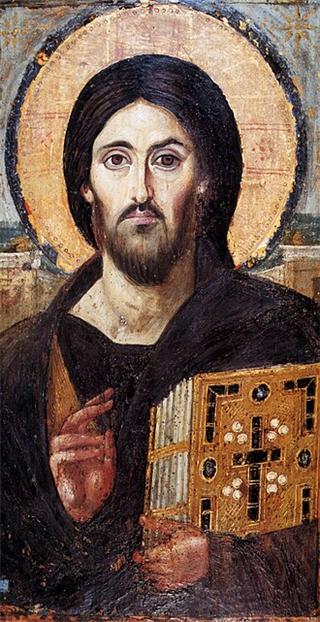
Christianity began with Jesus of Nazareth, a Jewish teacher from Galilee who lived under Roman rule. Most of what is known of him comes from the Gospels of the New Testament, written in the decades after his death, with brief references in Roman and Jewish writers such as Tacitus and Josephus. Historians generally accept that he was born around 6–4 BCE, that he was baptised by John the Baptist, that he taught and gathered disciples in Galilee, proclaiming the coming kingdom of God, and that he was crucified in Jerusalem around 30 CE on the orders of the Roman governor Pontius Pilate.
His followers proclaimed that he had risen from the dead and appeared to them, and that he was the Messiah, the Christ, promised in the Jewish scriptures. The first community, led by his disciples Peter and James, his brother, lived in Jerusalem and remained within Judaism, worshipping at the Temple. The movement soon spread to Jews of the Greek-speaking diaspora and to non-Jews, the Gentiles; in Antioch, according to the Acts of the Apostles, the believers were first called Christians.
Paul of Tarsus, a Jewish convert who had at first persecuted the believers, became the great missionary to the Gentiles. Travelling across Asia Minor and Greece in the 40s and 50s, he founded churches and wrote letters to them that are the oldest surviving Christian texts. He argued that Gentile converts need not keep the Jewish law, a position accepted, according to Acts, at a meeting in Jerusalem around 49. Paul was executed in Rome, by tradition under Nero, as was Peter.
The destruction of the Temple in 70 CE and the growing number of Gentile believers led the two communities, Christians and Jews, to separate gradually over the following decades. By the end of the 1st century Christian communities existed in many cities of the eastern Roman Empire and in Rome, worshipping in private houses, sharing a meal in memory of Jesus and reading the Jewish scriptures together with the letters of Paul and the Gospels.
The early church was a minority, viewed with suspicion by Roman authorities for refusing to honour the gods of the state and the emperor. Persecution was local and occasional until the 3rd century, when the emperors Decius and Valerian, and then Diocletian in the Great Persecution from 303, attempted to suppress it across the empire.
Beliefs & Practice
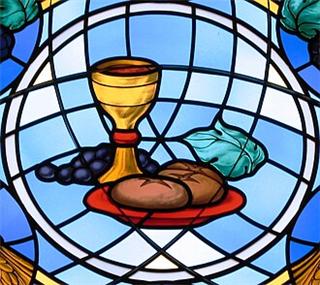
Christians believe in one God, revealed as three persons, the Father, the Son and the Holy Spirit: the doctrine of the Trinity, defined at the councils of Nicaea in 325 and Constantinople in 381. They believe that the Son became human in Jesus Christ, fully God and fully human, as the Council of Chalcedon defined in 451; that he died on the cross for the sins of humanity and rose from the dead on the third day; and that he will come again to judge the living and the dead. Salvation, forgiveness of sins and eternal life come through faith in Christ and the grace of God.
The central commandments, in Jesus’ words, are to love God with all one’s heart and to love one’s neighbour as oneself. His teaching, preserved in the Gospels, above all in the Sermon on the Mount, calls for humility, forgiveness, care for the poor and love even of enemies.
Christian worship centres on the sacraments, rites through which God’s grace is believed to be given. All the major churches practise baptism, by which a person enters the church, and the Eucharist, also called Holy Communion or the Mass, the shared meal of bread and wine in memory of Jesus’ last supper; Catholic and Orthodox Christians recognise seven sacraments, most Protestant churches two. Sunday, the day of the resurrection, is the day of worship. The Christian year is marked by Christmas, the birth of Jesus, and above all by Easter, his death and resurrection, preceded by the fasting season of Lent.
Christians differ in the sources of authority they recognise and in many teachings. The Catholic Church holds that authority lies in scripture and tradition as taught by the bishops in communion with the Pope, the bishop of Rome. The Orthodox churches hold to the tradition of the early councils and the Fathers, without a single head. Protestant churches, following the Reformation, hold that scripture alone is the final authority and that salvation comes by grace through faith alone.
The creeds, the Apostles’ Creed and the Nicene Creed above all, summarise the faith shared by most Christians.
Texts & Teachers
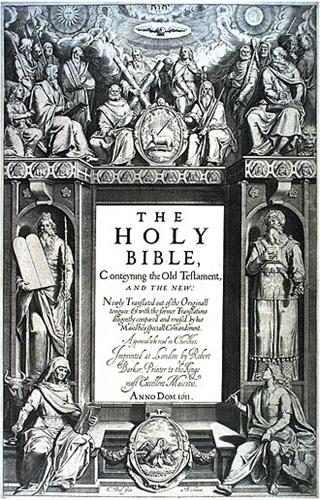
The Christian Bible has two parts. The Old Testament is the Hebrew Bible, which Christians read as pointing to Christ; Catholic and Orthodox Bibles include further books, from the Greek Septuagint, that Protestants call the Apocrypha. The New Testament consists of twenty-seven books written in Greek in the 1st and early 2nd centuries: the four Gospels of Matthew, Mark, Luke and John; the Acts of the Apostles; the letters of Paul and other apostolic letters; and the Revelation of John. Its contents were broadly agreed by the 4th century; a letter of Athanasius of Alexandria in 367 is the first to list exactly the twenty-seven books.
Translation has been central to Christianity from the beginning. Early versions appeared in Latin, Syriac and Coptic; Jerome’s Latin Vulgate became the Bible of the medieval West; the missionaries Cyril and Methodius created a Slavonic script in the 9th century to translate the scriptures; and the Reformation produced vernacular Bibles such as Luther’s German Bible and the English King James Version of 1611. The Bible has been translated, in whole or in part, into more languages than any other book.
The writers of the early church, the Church Fathers, shaped its doctrine: Irenaeus, Origen and Tertullian in the 2nd and 3rd centuries; Athanasius, the Cappadocian Fathers, John Chrysostom, Ambrose, Jerome and Augustine of Hippo in the 4th and 5th. Augustine’s Confessions and City of God influenced Western Christian thought more than any work after the Bible.
Medieval theology culminated in the work of Thomas Aquinas, whose Summa Theologiae united Christian doctrine with the philosophy of Aristotle. The Reformers Martin Luther and John Calvin wrote works that defined Protestant theology, and the Council of Trent, from 1545 to 1563, defined Catholic teaching in response. Monastic rules, above all the Rule of St Benedict of the 6th century, guided Christian communal life for centuries.
Spread

In its first three centuries Christianity spread through the cities of the Roman Empire and beyond it, to Mesopotamia, Persia and Armenia, whose king adopted it as the religion of his kingdom, by tradition in 301, before any other state. In the Roman Empire the emperor Constantine, after his victory at the Milvian Bridge in 312, favoured the church; in 313 he and his co-emperor Licinius granted Christians freedom of worship, and in 325 he called the Council of Nicaea. In 380 Theodosius I made Nicene Christianity the official religion of the empire, and pagan cults were soon banned.
Disputes over the nature of Christ divided the churches of the East after the Council of Chalcedon in 451: the Coptic, Ethiopian, Armenian and Syriac Orthodox churches rejected its definition, and the Church of the East, centred in Persia, carried its own tradition along the Silk Road to India and China, where a stele of 781 at Xi’an records its mission. The kingdom of Aksum in Ethiopia became Christian in the 4th century.
In the West, missionaries converted the Germanic, Celtic and later Scandinavian and Slavic peoples between the 5th and 11th centuries; Clovis, king of the Franks, was baptised around 500, and the Rus of Kyiv adopted Orthodox Christianity under Prince Volodymyr in 988. The rise of Islam in the 7th century brought much of the Christian Middle East and North Africa under Muslim rule, where Christian communities survived as minorities.
The Latin West and the Greek East drifted apart in language, practice and authority, and in 1054 mutual excommunications marked the Great Schism between the Roman Catholic and Eastern Orthodox churches. In the 16th century the Reformation, begun by Martin Luther in 1517, divided Western Christianity into Catholic and Protestant churches, Lutheran, Reformed, Anglican and many others.
From the 16th century Catholic missionaries accompanied Spanish and Portuguese expansion to the Americas, Africa and Asia, and from the 18th and 19th centuries Protestant and Catholic missions spread across Africa, Asia and the Pacific. In the 20th century the centre of gravity of Christianity moved south: today about 2.3 billion people are Christians, and more of them live in sub-Saharan Africa and Latin America than in Europe.
Community & Society
From its beginnings Christianity has been organised in communities, churches, led by ministers. By the 2nd century most churches were led by a bishop, assisted by priests and deacons, and bishops of the great cities, Rome, Alexandria, Antioch and later Constantinople and Jerusalem, gained authority over wide regions. The bishop of Rome, the Pope, claimed primacy as successor of Peter, a claim the churches of the East did not accept in the same form.
Monasticism began in the deserts of Egypt in the 3rd and 4th centuries with hermits such as Anthony and communities organised by Pachomius, and spread across the Christian world. Monasteries became centres of prayer, learning, farming and charity; in the West they preserved classical texts and founded schools, and later religious orders, such as the Franciscans and Dominicans in the 13th century and the Jesuits in the 16th, preached, taught and led missions across the world.
Churches and Christian rulers were closely bound together for most of Christian history. Emperors called councils, kings were anointed by bishops, and the medieval papacy contested power with emperors; after the Reformation states often had established churches. Christianity also inspired religious wars, the crusades of the 11th to 13th centuries and the wars of religion of the 16th and 17th, and persecution of heretics and Jews.
Christian communities founded hospitals, schools and the first universities of Europe, cared for the poor and orphans, and in modern times built networks of schools and hospitals across Africa and Asia. Christian movements led campaigns for the abolition of slavery and, in the 20th century, for civil rights, though Christians also defended slavery and colonial rule.
Worship takes many forms, from the liturgies of the Orthodox and Catholic churches, with their icons, incense and ancient chants, to the simple services of the Quakers and the exuberant worship of Pentecostal churches, which since the early 20th century have become the fastest-growing form of Christianity.
Legacy

Christianity is the largest religion in the world, with about 2.3 billion followers, and for more than fifteen hundred years it shaped the civilisation of Europe and, through European expansion, of the Americas and much of Africa and the Pacific.
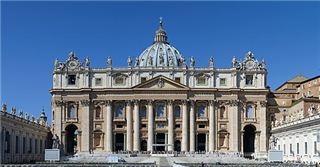
Its influence on culture has been immense. Christian architecture produced Hagia Sophia, completed in 537, the Romanesque abbeys and Gothic cathedrals of medieval Europe and St Peter’s in Rome; Christian art inspired the icons of Byzantium, the paintings of the Renaissance masters and the sculpture of Michelangelo; and Christian music, from Gregorian chant to the works of Bach and Handel, is at the foundation of the Western musical tradition. The Bible and its stories pervade European literature, from Dante’s Divine Comedy to Milton’s Paradise Lost.
Christian ideas shaped Western law, ethics and politics: the dignity of every person, the duty of charity, the distinction between the spiritual and the temporal powers and, through long and often contested development, ideas of conscience and human rights. The calendar used across the world counts years from the birth of Christ, and the week with its day of rest on Sunday spread with Christianity.
Christianity also shaped science and learning through its universities and monasteries, though its relations with science have known conflict as well as cooperation. It inspired movements for reform and for the abolition of slavery, and it was used to justify conquest and colonial rule.
Today Christianity is more diverse than ever: Catholic, Orthodox, Protestant and Pentecostal churches with their roots in Africa, Asia and Latin America as much as in Europe.
Christianity, founded on the life, death and resurrection of Jesus of Nazareth, grew from a Jewish movement in Roman Judea into the religion of the Roman Empire and the foundation of European civilisation. Divided between East and West and by the Reformation, and spread worldwide by missions and empires, it is today the largest religion in the world, with about 2.3 billion followers.
Test yourself
5 questions on this page, from its key events and facts.
The questions open here once the page has loaded.
References
- Brown, P. (2013) The Rise of Western Christendom: Triumph and Diversity, A.D. 200–1000. 3rd edn. Chichester: Wiley-Blackwell.
- Chadwick, H. (1967) The Early Church. Harmondsworth: Penguin.
- Jenkins, P. (2011) The Next Christendom: The Coming of Global Christianity. 3rd edn. New York: Oxford University Press.
- MacCulloch, D. (2009) A History of Christianity: The First Three Thousand Years. London: Allen Lane.
- McGrath, A.E. (2013) Christian History: An Introduction. Chichester: Wiley-Blackwell.
- Woodhead, L. (2014) Christianity: A Very Short Introduction. 2nd edn. Oxford: Oxford University Press.