Religion · Ancient Near East
Manichaeism
At a glance
- Manichaeism was founded by Mani, a prophet from Sasanian Mesopotamia, who from about 240 taught that the world is a mixture of light and darkness and that souls, sparks of light, can be freed through knowledge and discipline.
- Organised into an elite of the Elect and a laity of Hearers, it spread west into the Roman Empire, where the young Augustine of Hippo was a Hearer, and east along the Silk Road to the Uyghurs and China.
- Persecuted by Zoroastrian, Christian, Muslim and Chinese rulers alike, it disappeared by the early modern period, leaving its name to any world view that divides everything into good and evil.
Timeline
- 216Mani is born in Mesopotamia, near the Persian capital Ctesiphon
- c. 240Mani begins to preach his religion, after a revelation in his youth
- c. 274–277Mani dies in prison under the Sasanian king Bahram I
- c. 302The Roman emperor Diocletian orders the persecution of the Manichaeans
- c. 373–382Augustine of Hippo is a Manichaean Hearer before his conversion to Christianity
- 762–763The Uyghur ruler Bögü Qaghan adopts Manichaeism, the faith of his empire for decades
- 843The Tang emperor Wuzong bans Manichaeism in China
- 1339The image of Mani as the Buddha of Light is carved at Cao’an near Quanzhou
Spread through the centuries
Where it began, how it spread, and where it was a main faith (a bright glow) or held communities (a faint one), century by century to its last places. Press Play or move the slider, turn the globe, and tap a glow or a mark to read about it.
The map opens here once the page has loaded.
Origins
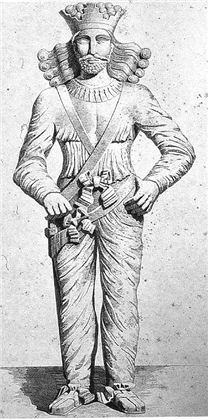
Manichaeism was founded by Mani, who was born in 216 in Mesopotamia, then part of the Parthian Empire and soon of the Sasanian Empire, near its capital Ctesiphon. His father had joined a community of Jewish-Christian baptists, the Elchasaites, and Mani grew up among them. According to Manichaean accounts, he received revelations from a heavenly twin, a divine counterpart, as a boy and again at about the age of twenty-four, and around 240 he broke with the baptists and began to preach a new religion.
Mani presented himself as the last in a line of prophets sent by God, after the Buddha in India, Zoroaster in Persia and Jesus in the West, each of whose teachings, he held, had been corrupted by their followers. His message would be the final, complete revelation, written down by himself so that it could not be distorted. He called himself an apostle of Jesus Christ and the Paraclete, the helper promised in the Gospel of John.
Mani travelled to India and then returned to Persia, where he gained the favour of the new Sasanian king, Shapur I, to whom he dedicated a summary of his teaching in Middle Persian, the Shabuhragan. Under Shapur’s protection he sent missionaries east and west and organised a church. After Shapur’s death, however, the Zoroastrian priesthood, led by the high priest Kartir, turned the court against him; under King Bahram I Mani was imprisoned and died in chains, around 274 to 277. His followers remembered his death as a crucifixion and his passing as a release of his soul to the realm of light.
Mani’s religion drew on many sources: Jewish-Christian baptist traditions, the letters of Paul and the Gnostic Christianity of the 2nd and 3rd centuries, Zoroastrian dualism and Buddhist ideas of renunciation and rebirth. It was designed from the start as a universal faith, to be preached to every people in its own language and terms.
Beliefs & Practice
At the heart of Manichaeism is a radical dualism. In the beginning there were two principles, uncreated and opposed: the Light, a realm of goodness, peace and knowledge ruled by the Father of Greatness, and the Darkness, a realm of matter, desire and chaos. The Darkness attacked the Light, and in the struggle that followed particles of light were swallowed and imprisoned in matter. The visible world, in Manichaean myth, was made from the mixture of the two, as a vast machine for gradually freeing the trapped light; the sun and moon are vessels that carry the freed light back to its home.
Human beings are part of this mixture: their bodies belong to darkness, but their souls are particles of light, forgetful of their origin. Salvation comes through gnosis, knowledge of one’s true nature and of the history of the cosmos, brought by a series of divine messengers: the Living Spirit, the Third Messenger, the Jesus of light, and finally Mani. The history of the world unfolds in three times: the past, when light and darkness were separate; the present, the time of mixture; and the future, when the light will be fully released and the darkness forever confined.
Manichaean ethics aimed to avoid harming the light in the world. The Elect, the full members of the religion, kept “three seals”: of the mouth, abstaining from meat, wine and lies; of the hands, avoiding work that harms plants, animals or the soil; and of the breast, abstaining from sex. They ate a strictly vegetarian diet, and their digestion of plants was believed to release the light within them.
The Hearers, lay believers, could marry, work and own property, but they served the Elect, prepared their food and confessed their sins weekly; they hoped to be reborn as Elect in a future life. The great annual festival, the Bema, commemorated Mani’s death before an empty throne representing his presence.
Texts & Teachers

Mani, unlike most founders of religions, wrote his own scriptures, so that his teaching would not be distorted. Manichaean tradition names a canon of seven works written in Syriac, a dialect of Aramaic: the Living Gospel, the Treasure of Life, the Pragmateia, the Book of Mysteries, the Book of Giants, the Letters and the Psalms and Prayers. He also wrote the Shabuhragan in Middle Persian for Shapur I, and he illustrated his teaching in a Picture Book, the Ardahang, for Mani was also a painter, remembered in later Persian tradition as a great artist.
Almost all of these works were lost as the religion was persecuted. For centuries Manichaeism was known mainly through the attacks of its enemies, above all Augustine of Hippo, who had been a Hearer for about nine years before becoming a Christian and wrote many works against it.
In the 20th century spectacular finds transformed knowledge of the religion. German expeditions to Turfan in Xinjiang, from 1902, recovered thousands of fragments of Manichaean texts in Middle Persian, Parthian, Sogdian and Old Uyghur, together with illuminated pages of exquisite book painting. In 1930 a hoard of papyrus codices in Coptic was found at Medinet Madi in Egypt, among them the Kephalaia, discourses of Mani, and a Psalm-book. In the 1960s a tiny Greek parchment book of the 5th century, the Cologne Mani Codex, was identified, containing an account of Mani’s early life. Excavations at Kellis in the Dakhla Oasis of Egypt from the 1990s brought to light the letters and texts of a 4th-century Manichaean community. Chinese Manichaean texts, among them a hymn scroll, were found at Dunhuang.
These sources show a religion that translated itself freely into the languages and symbols of each culture it met: Christian in the West, Zoroastrian in Persia, Buddhist in Central Asia and China, where Mani appears as the Buddha of Light.
Spread
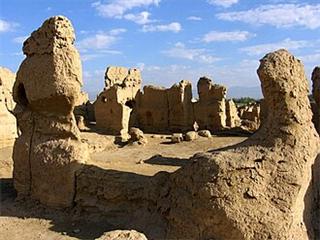
Manichaeism spread rapidly in both directions from its home in Mesopotamia. Mani’s missionaries reached Egypt within his lifetime, and the religion took root across the Roman East, North Africa, Italy and Gaul. Roman authorities regarded it with suspicion as a Persian creed: around 302 the emperor Diocletian ordered its followers to be burned with their books, and Christian emperors from the late 4th century outlawed it again and again. In the West it was largely extinct by the 6th century, though its name lived on as a charge against later heretics.
In the Sasanian Empire it was persecuted by the Zoroastrian establishment but survived, and its leaders kept their seat in Mesopotamia into the Islamic period. Under the Abbasid caliphs, Manichaeans in Baghdad were repeatedly persecuted as zindiqs, heretics, in the late 8th century, and the leadership moved east to Samarkand.
The religion found its greatest success in Central Asia. Sogdian merchants carried it along the Silk Road, and in 762 or 763 the ruler of the Uyghur Khaganate, Bögü Qaghan, adopted it after meeting Manichaean teachers during a campaign in China, making it for a time the religion of a steppe empire. After the fall of the khaganate in 840, Uyghur kingdoms in the Turfan oasis continued to patronise Manichaeism alongside Buddhism into the 10th and 11th centuries.
In China the religion was tolerated under the Tang dynasty, partly as a favour to the Uyghur allies, but in 843 the emperor Wuzong banned it, and in the persecution that followed it lost its public place. It survived in southern China, especially in Fujian, as a secret or semi-Buddhist religion, known as the Religion of Light, into the Ming period; the shrine at Cao’an near Quanzhou, with its image of Mani carved in 1339, remains. After the 16th century the last traces of the religion fade from the record.
Community & Society
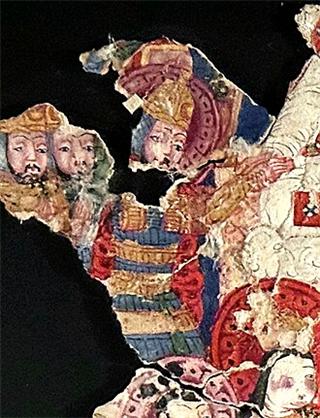
The Manichaean church was organised with a strict hierarchy modelled on the number twelve. At its head stood a single leader, the successor of Mani, who resided in Mesopotamia and later in Central Asia; below him were twelve teachers, seventy-two bishops and 360 elders, and then the body of the Elect and the much larger body of Hearers.
The division between the Elect and the Hearers defined Manichaean life. The Elect, men and women, lived in poverty and celibacy, owned nothing beyond food for a day and clothing for a year, travelled to preach and spent their days in prayer, fasting, singing and copying books. They depended on the Hearers for all their needs, and the ritual meal at which the Elect ate the food offered by the Hearers, releasing the light within it, was the central act of Manichaean worship.
The Hearers lived ordinary lives as merchants, farmers or officials. They were required to keep ten commandments, among them prohibitions on idolatry, lying, killing and adultery, to pray several times a day facing the sun or moon, to fast on certain days and to give alms. Merchants were especially prominent among them, and Manichaean communities followed the trade routes.
Books and their beauty were central to Manichaeism. Its scribes produced manuscripts of great refinement, written in a distinctive script derived from Syriac and illuminated with gold, lapis and brilliant colours, and its hymns and psalms formed a rich devotional literature.
Because the religion was so often persecuted, its communities frequently lived in secrecy and adapted outwardly to the dominant religion around them, presenting themselves as Christians in the Roman world and as Buddhists in China.
Legacy

Manichaeism was one of the most widespread religions of the late ancient and early medieval world, stretching at its height from North Africa to the Pacific coast of China. No other religion that spread so far has disappeared so completely.
Its most lasting influence came through its opponents. Augustine of Hippo, who spent nearly a decade as a Manichaean Hearer, developed his account of evil as the absence of good, and his emphasis on human will and divine grace, in conscious opposition to Manichaean dualism, and through him the encounter shaped Western Christian thought. In the Middle Ages Christian writers called later dualist movements, such as the Bogomils of the Balkans and the Cathars of southern France, “Manichaeans”, though historians doubt any direct descent.
The word “Manichaean” has survived in European languages to describe any world view that divides everything into absolute good and evil.
The rediscovery of Manichaean texts and art in the 20th century, at Turfan, Medinet Madi, Kellis and Dunhuang, revealed a religion of remarkable adaptability and literary and artistic richness. Its book painting is among the earliest surviving illuminated art of Central Asia, and Mani’s vision of a single faith translated into every language anticipated the ambitions of later universal religions.
Manichaeism, founded by the prophet Mani in Sasanian Mesopotamia around 240, taught a cosmic struggle between light and darkness in which souls are sparks of light to be freed through knowledge and discipline. Spread from the Roman West to the Uyghurs and China by missionaries and merchants, and persecuted everywhere, it vanished by the early modern period, known again only through texts recovered in the 20th century.
References
- BeDuhn, J.D. (2000) The Manichaean Body: In Discipline and Ritual. Baltimore: Johns Hopkins University Press.
- Gardner, I. and Lieu, S.N.C. (eds) (2004) Manichaean Texts from the Roman Empire. Cambridge: Cambridge University Press.
- Gulácsi, Z. (2015) Mani's Pictures: The Didactic Images of the Manichaeans from Sasanian Mesopotamia to Uygur Central Asia and Tang-Ming China. Leiden: Brill.
- Lieu, S.N.C. (1992) Manichaeism in the Later Roman Empire and Medieval China. 2nd edn. Tübingen: J.C.B. Mohr.
- Tardieu, M. (2008) Manichaeism. Translated by M.B. DeBevoise. Urbana: University of Illinois Press.
- Widengren, G. (1965) Mani and Manichaeism. London: Weidenfeld and Nicolson.