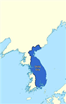
Central & East Asia
Uyghur Khaganate
At a glance
- In 744 a Uyghur–Karluk alliance destroyed the Basmyls who had taken the Göktürk capital, and Kutlug I Bilge Khagan claimed supreme rule over all the tribes from a new capital at Ordu-Baliq.
- Uyghur horsemen helped the Tang retake Chang'an and Luoyang from An Lushan's rebels in 757 and again in 762, looting Luoyang each time and extracting silk, titles, a fixed horse trade and royal marriages.
- After Bögü Qaghan's conversion in 762 Manichaeism became the official religion, binding the khaganate to the Sogdian merchants who ran its Silk Road trade.
Rise & Fall
- 744The Basmyls capture Ötüken and kill Özmiş Khagan; a Uyghur–Karluk alliance then destroys the Basmyls, and Kutlug I Bilge Khagan builds his capital at Ordu-Baliq.
- 745The Uyghurs kill Kulun Beg, the last khagan of the Göktürks, and send his head to the Tang.
- 757About 4,000 Uyghur horsemen under Bayanchur Khan's eldest son help Tang armies retake Chang'an and Luoyang; the Uyghurs loot Luoyang for three days.
- 762Bögü Qaghan helps defeat the rebels at Luoyang, sacks the city, and is converted by Manichaean priests; Manichaeism becomes the official religion.
- 779Tun Baga Tarkhan kills his nephew Bögü Qaghan and nearly two thousand of his family, clique and Sogdians, takes the throne and suppresses Manichaeism.
- 792Baoyi Qaghan defeats the Tibetans and Karluks and takes Gaochang; a Tibetan force besieging Yushu is destroyed.
- 795Qutluq Bilge Qaghan dies and the Yaghlakar dynasty ends; the general Qutluq II declares himself qaghan, founding the Ädiz dynasty.
- 840Invited by the minister Kulug Bagha, some 80,000 Yenisei Kyrgyz horsemen sack Ordu-Baliq, behead Qasar Qaghan and burn the empire's cities.
Foundation
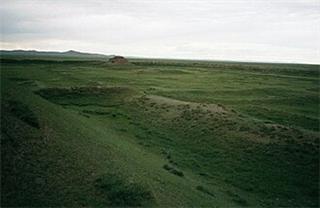
In the mid-5th century the Uyghurs were a tribe of the Tiele under the Turkic Khaganate. They fought alongside the Tang against the Tibetan Empire and the Turks in 627, and after the Tang defeated the Western Turkic Khaganate in 657 they defected to the Tang. In 742 the Uyghurs, Karluks and Basmyls rebelled against the Second Turkic Khaganate. In 744 the Basmyls captured the Turkic capital of Ötüken and killed the reigning Özmiş Khagan; later that year a Uyghur–Karluk alliance defeated the Basmyls, killed their khagan, and the Basmyls ceased to exist as a people. Hostility between Uyghurs and Karluks then drove the Karluks west into Zhetysu. In 745 the Uyghurs killed Kulun Beg, the last khagan of the Göktürks, and sent his head to the Tang.
The new khagan, Kutlug I Bilge Khagan, claimed to be the supreme ruler of all the tribes and built his capital at Ordu-Baliq. According to the New Book of Tang his territory reached the lands of the Shiwei in the east and the Altai Mountains in the west and controlled the Gobi Desert, covering the whole former territory of the Xiongnu. The khaganate called itself the Toquz Oghuz, the 'Nine Tribes', known to the Tang as the Jiuxing: a tribal confederation under the Uyghur nobility. When Kutlug died in 747 his youngest son Bayanchur Khan succeeded him and, with profits from trading outposts built with the Tang, finished Ordu-Baliq and built Bai Baliq further up the Selenga River.
Socioeconomy
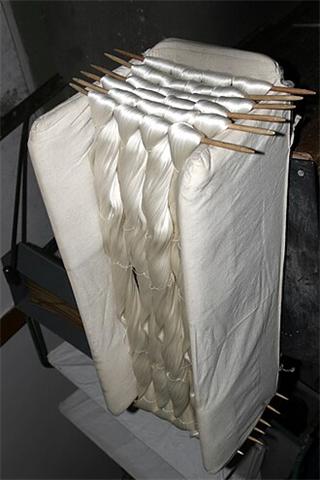
The khaganate's wealth came from the steppe herds on which its economy was based, from the Tang, and from the Silk Road. The Tang paid for Uyghur help against An Lushan with 20,000 rolls of silk and honorary titles, and fixed the horse trade at 40 rolls of silk for every horse; in 762 they paid 100,000 pieces of silk to make the Uyghurs leave Luoyang, in 780 Tun Baga Tarkhan demanded 1,800,000 strings of cash in gold and silk as compensation for Uyghurs and Sogdians killed leaving Chang'an, and in 822 the Tang paid 70,000 pieces of silk to send home troops whose help they had declined.
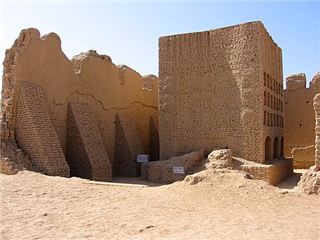
To control trade along the Silk Road the Uyghurs allied with the Sogdian merchants who controlled oases of Central Asia; the Sogdians enabled them to trade in the Western Regions and exchange Chinese silk for other goods, and their trading communities in China gained Uyghur protection in return. Unlike the Xiongnu, who could own only what they could carry, the Uyghurs built a fixed capital with Persian influences: Ordu-Baliq was a fully fortified commercial centre with concentric walls, lookout towers, stables, stores, administrative buildings, quarters for trade and handicrafts, and palaces and temples, including a monastery, at its heart. The city stored the goods of the China trade and let the khagan receive traders at a stable court, but the vulnerability of a fixed city, as Thomas Barfield observed, was also to be the Uyghurs' downfall.
Military
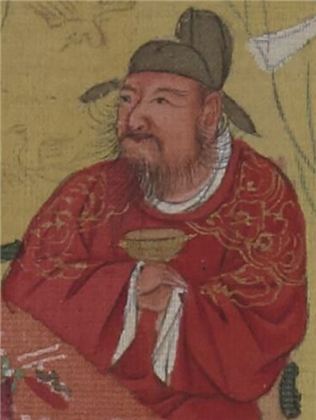
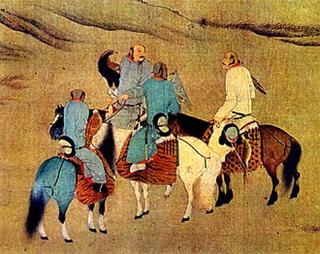
Uyghur power rested on mounted archers who could be hired and feared. Under Bayanchur Khan the khaganate brought the Sekiz Oghuz, Kyrgyz, Karluks, Türgesh, Toquz Tatars and Chiks under its rule, and after the Tang defeat by the Arabs at the Battle of Talas in 751 the Uyghurs emerged as the dominant power of Central Asia. When An Lushan rebelled, Emperor Suzong of Tang turned to Bayanchur in 756; in 757 about 4,000 Uyghur horsemen helped retake Chang'an and Luoyang, looting Luoyang for three days. In 758 Bayanchur defeated a Yenisei Kyrgyz army and executed their khan. In 762 Bögü Qaghan, who had planned to invade the Tang, switched sides after negotiations, helped defeat the rebels at Luoyang and sacked the city.
The later wars were fought against the Tibetan Empire and the Karluks. In 790 a Uyghur and Tang force was beaten by the Tibetans at Tingzhou (Beshbalik), but in 791 the Uyghurs drove the Tibetans from Lingzhou and defeated them and the Karluks at Beiting, sending the captured general Zan Rgyal Sum to Emperor Dezong. In 792 Baoyi Qaghan took Gaochang and destroyed a Tibetan force besieging Yushu; in 808 the Uyghurs seized Liang Province from the Tibetans, though a Tibetan raid of 816 came within two days of Ordu-Baliq. Chongde repulsed another invasion in 821. The end came from the north: in 840 some 80,000 Yenisei Kyrgyz horsemen razed Ordu-Baliq, and in 843 a Tang army under Shi Xiong killed 10,000 Uyghurs at 'Kill the Barbarians' Mountain.
Governance & Law
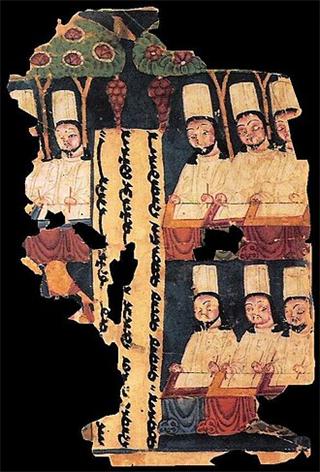
The khagan ruled a confederation of tribes under the Uyghur nobility from his court at Ordu-Baliq, where the policies of the empire were decided. The state borrowed from sedentary neighbours, with clear Persian influences in government, and its rulers took Chinese titles and brides: Bayanchur married Princess Ningguo, daughter of Emperor Suzong, while his daughter Princess Pijia married the Tang prince Li Chengcai, sealing the alliance against An Lushan in 756. Succession ran from father to son but was repeatedly violent: Tun Baga Tarkhan killed his nephew Bögü Qaghan in 779 and imposed new laws designed to secure the khaganate's unity.
The ruling Yaghlakar dynasty ended in 795 when Qutluq Bilge Qaghan died and the general Qutluq II declared himself qaghan, founding the Ädiz dynasty. Zhaoli Qaghan was murdered in 832, and in 839 Zhangxin Qaghan was forced to commit suicide by the minister Qasar, who seized the throne with 20,000 Shatuo horsemen from Ordos. Nine ministers stood near the throne; one of them, Kulug Bagha, called in the Kyrgyz. Religion was a matter of state. Bögü Qaghan's conversion in 762 made Manichaeism the official faith, chosen over Buddhism perhaps to show independence from the Tang; it was suppressed under Tun Baga Tarkhan but restored by his successors, and an inscription at Ordu-Baliq records that Manichaeans tried to turn people from their old shamanistic beliefs, a conversion from above that met resistance below.
Global & Regional Impact
The khaganate decided the fate of the Tang. Its horsemen restored Chang'an and Luoyang to the dynasty in 757 and 762, and for eighty years it sold horses, took tribute and married princesses on terms the Tang could not refuse. Its Sogdian alliance kept the Silk Road open between China and the Western Regions; Sogdians were the main traders of the Silk Roads, and a tax list from the Gaochang kingdom of the 620s shows them in 29 of 35 recorded caravan transactions.
Its religious choice left a long trace. The khaganate carried Manichaeism into China, and the Tang persecution that followed its collapse, with the edict of 843 ordering the Manichaean priests of the empire killed and Emperor Wuzong's wider ban on Christianity, Zoroastrianism and Buddhism, ended that toleration. The Uyghurs who fled south founded the Ganzhou Uyghur Kingdom in modern Gansu and the Kingdom of Qocho near Turpan, where they turned to Buddhism and, in Mahmud al-Kashgari's words, were 'the strongest of the infidels'; Kashgari praised their Turkic as 'pure' and 'most correct'. Qocho became a vassal of Yelü Dashi's Qara Khitai in 1134 and in 1209 its ruler, the Idiqut Barchuk Art Tegin, submitted to Genghis Khan, after which Uyghurs served as civil servants of the Mongol Empire, which adopted the Old Uyghur alphabet as its official script. The Karluks, with the Chigils and Yagmas, later founded the Kara-Khanid Khanate.
In the Research Series
Decline & Fall
The last decades were a cycle of Tibetan wars and palace killings. Chongde, considered the last great khagan, died in 824; his brother Zhaoli was murdered in 832, and in 839 Chongde's son Zhangxin was forced to kill himself by the minister Qasar, who seized the throne with 20,000 Shatuo horsemen. The same year brought famine, an epidemic and a winter so severe that it killed much of the livestock. In 840 Kulug Bagha, Qasar's rival, fled to the Yenisei Kyrgyz and invited them to invade. With some 80,000 horsemen they razed Ordu-Baliq, beheaded Qasar and burned the other cities of the empire.
The Uyghurs fled in two groups: 30,000 under the aristocrat Ormïzt and 100,000 under the new khagan Wujie, son of Baoyi, both seeking refuge in Tang territory. Emperor Wuzong closed the border, granted Ormïzt asylum in return for the use of his troops, and refused Wujie's demands for a city, food and protection for Manichaeans. Wujie invaded Shaanxi in 841; on 13 February 843 a Tang army under Shi Xiong killed 10,000 Uyghurs at 'Kill the Barbarians' Mountain. Ormïzt's troops, refusing to be dispersed, were massacred by the general Liu Mian. Wujie was killed in 846 and his brother Enian Qaghan defeated in 847. The Kyrgyz took little interest in the empire they had destroyed, leaving Kulug Bagha in charge of the Orkhon Valley, which the Khitans seized in 890; other Uyghurs went south to Ganzhou and Qocho, or to the Karluks.
The Uyghur Khaganate (744–840) succeeded the Göktürks on the Mongolian steppe, rescued the Tang from An Lushan's rebellion at a heavy price in silk, and built a walled capital at Ordu-Baliq to hold the profits of the Silk Road trade it ran with the Sogdians. Famine and a Kyrgyz invasion destroyed it, scattering the Uyghurs to Gansu and Turpan.
Test yourself
5 questions on this page, from its key events and facts.
The questions open here once the page has loaded.
References
- Colin Mackerras, The Uighur Empire: According to the T'ang Dynastic Histories, A Study in Sino-Uighur Relations, 744–840 (Australian National University Press, 1972)
- Michael Robert Drompp, Tang China and the Collapse of the Uighur Empire: A Documentary History (Brill, 2005)
- Thomas Barfield, The Perilous Frontier: Nomadic Empires and China (Basil Blackwell, 1989)
- Peter B. Golden, An Introduction to the History of the Turkic Peoples (1992)
- Christopher I. Beckwith, The Tibetan Empire in Central Asia (Princeton University Press, 1987)
Connections
Open the full connections map →