Central & East Asia
Tibetan Empire
At a glance
- Yarlung kings united the Tibetan plateau in the 7th century and ruled it from Lhasa as divine emperors (tsenpo).
- Its cavalry fought Tang China for the Tarim Basin and Hexi Corridor, and briefly occupied Chang'an in 763.
- It gave Tibet its script and made Buddhism the religion of the court, founding Samye monastery around 779.
Rise & Fall
- 641Princess Wencheng of Tang China arrives as a bride for the Tibetan royal house
- 663Tibet conquers the Tuyuhun around Lake Kokonor
- 670Tibetans defeat a Tang army at the Dafei River and overrun the Tarim Basin
- 763A Tibetan army occupies the Tang capital Chang'an for about two weeks
- c. 779Trisong Detsen founds Samye monastery
- 821–822Tibet and Tang China swear a peace treaty, recorded on a pillar in Lhasa
- 842Emperor Udumtsen (Langdarma) is assassinated and the empire breaks apart
Foundation

The Tibetan Empire grew out of the Yarlung valley in south-central Tibet, where a line of chiefs later remembered as the first kings of Tibet held lands south of the Yarlung Tsangpo river. In the late sixth and early seventh centuries Namri Songtsen, allied with clan leaders who had deserted rival lords, extended Yarlung authority over much of central Tibet. The chronology of this period is uncertain, and the year 618 used here is conventional. Namri Songtsen was poisoned, and his son Songtsen Gampo, who probably came to the throne as a youth around 618 or somewhat later, suppressed revolts by the conquered clans and made Lhasa his seat. He brought the Sumpa of the north-east under his rule and, in the 640s, absorbed the kingdom of Zhangzhung in western Tibet, partly through a marriage alliance and partly by force. In 634 he sent his first embassy to Tang China, and after a Tibetan attack on the Tang frontier at Songzhou in 638 the emperor Taizong agreed to a marriage alliance: Princess Wencheng arrived in Tibet in 641. Tibetan tradition adds a Nepalese wife, Bhrikuti, whose historicity is debated. When Songtsen Gampo died around 649, Tibet was a single kingdom stretching across much of the plateau and recognised by its neighbours as a major power.
Socioeconomy
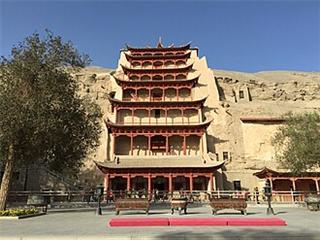
Imperial Tibet was a society of aristocratic clans, free commoners and dependent households bound to estates. Great families such as the Gar, Nanam, Dro, Tsepong and Chims held land, supplied ministers and royal consorts, and competed for influence at court. The economy rested on barley farming in the river valleys of central Tibet and on the herding of yaks, sheep, goats and horses on the high pastures, and the state recorded both through censuses and tax registers. Conquest added wealth: tribute from the Tuyuhun, Nanzhao and the oasis cities of the Tarim Basin, and from the 760s the farmland and trade of the Hexi Corridor and Dunhuang. Tibet exported horses, musk and gold, and its control of routes between China, India and Central Asia brought silk and other luxuries to the court. Religion combined the cult of the divine king with rites performed by priests whom later sources call Bon, including elaborate royal funerals in the tombs of the Chongye valley. Buddhism arrived from China, Nepal and India, first through royal temples such as the Jokhang in Lhasa, traditionally founded in Songtsen Gampo's reign, and later through monasteries endowed with land and households. Manuscripts from Dunhuang show officials, soldiers and monks writing contracts, letters and prayers in Tibetan.
Military

The empire's strength lay in its army, raised through military districts called 'thousand-districts' (stong sde), grouped into large regional divisions known as 'horns' (ru), each district owing a fixed number of soldiers. Tibetan cavalry, protected by chain mail that Chinese observers described with respect, fought alongside levies from conquered peoples. Under the minister Gar Tongtsen and his sons, Tibet conquered the Tuyuhun around Lake Kokonor in 663, and in 670 the general Gar Trinring Tsendro defeated a Tang army under Xue Rengui at the Dafei River. In the same years Tibetan forces with Western Turkic allies overran the Tang protectorate in the Tarim Basin, which the Tang retook in 692. Rivalry with Tang China, the Turks and the Arabs continued in the Pamirs, where the Tang general Gao Xianzhi's expedition of 747 seized Little Balur, a Tibetan ally. The An Lushan Rebellion (755–763) opened the way to the greatest Tibetan victories: in 763 an army briefly occupied the Tang capital Chang'an and installed a puppet emperor, and over the next two decades Tibet took the Hexi Corridor, capturing Dunhuang around 786. From 752 the kingdom of Nanzhao in Yunnan was a Tibetan vassal and ally, but in 794 it changed sides and inflicted a heavy defeat on Tibetan forces.
Governance & Law

At the head of the state stood the emperor, the tsenpo, regarded as a divine son descended from the heavens, whose person bound the clans together. In practice power was shared with a council of ministers led by a great minister (blon chen), drawn from the leading clans. For long periods the throne was overshadowed: the Gar clan dominated government after Songtsen Gampo's death until Tridu Songtsen destroyed it in 698, and several emperors came to the throne as children under regents and powerful queen mothers. Royal assemblies, held each summer and winter, settled matters of taxation, conscription and law, and are recorded year by year in the Old Tibetan Annals, which begin around 650. The state conducted censuses, kept land and tax registers and issued edicts, some of them inscribed on stone pillars such as the Zhol pillar in Lhasa, which records the services of the minister Takdra Lukhong. Writing was central to this administration: a script derived from Indian models, attributed by tradition to the minister Thonmi Sambhota in Songtsen Gampo's reign, was used for laws, correspondence and military orders. Conquered regions such as Dunhuang were organised into military districts staffed by Tibetan and local officials, while vassal rulers kept their thrones in return for tribute and troops.
Global & Regional Impact
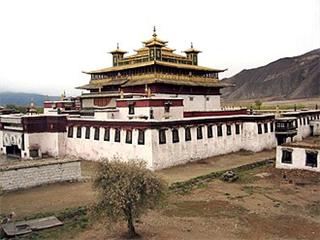
The Tibetan Empire shaped the political map of Inner Asia for two centuries. Its wars with Tang China, fought from the Kokonor to the Tarim Basin and Yunnan, drained Tang resources, and its occupation of the Hexi Corridor cut China's direct overland link with Central Asia for some eighty years. Tibet also became, for the first time, a single cultural sphere. The Tibetan script, still in use today, and a standardised written language spread across the plateau and into conquered territories, and the Dunhuang manuscripts, among them the Old Tibetan Annals and the Old Tibetan Chronicle, form the oldest substantial body of historical writing in Tibetan. Royal patronage made Tibet a Buddhist land. Trisong Detsen invited the Indian scholar Shantarakshita and, by tradition, the tantric master Padmasambhava, founded Samye monastery around 779 and, according to later accounts, presided over a debate around 792–794 in which Indian Buddhism prevailed over Chinese Chan teaching. In the early ninth century translators standardised the terms used to render Sanskrit texts, compiling the lexicon known as the Mahavyutpatti. Later Tibetans remembered Songtsen Gampo, Trisong Detsen and Ralpachen as the three Dharma kings, and the memory of the empire underpinned the legitimacy of later Tibetan rulers and lineages.
Decline & Fall
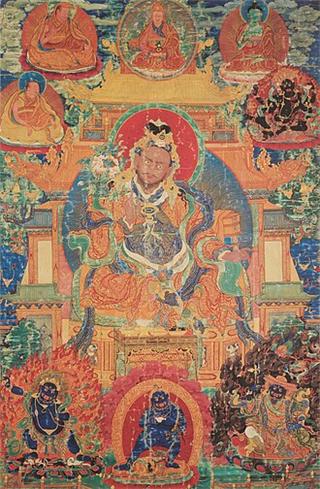
By the early ninth century the empire's resources were stretched by wars on several fronts and by the cost of supporting the Buddhist establishment, which had gained tax-exempt estates and growing influence at court. Under Ralpachen (r. 815–838) Tibet made peace with its main rivals: a treaty with Tang China was sworn in 821–822, and its text, in Tibetan and Chinese, was carved on a pillar that still stands before the Jokhang in Lhasa; a settlement with the Uyghurs was reached at about the same time. Ralpachen, a lavish patron of Buddhism, was murdered in 838, and his brother Udumtsen, known to later tradition as Langdarma, succeeded him. Later Buddhist histories portray Langdarma as a persecutor of the faith who was assassinated by the monk Lhalung Palgyi Dorje, traditionally in 842; modern historians accept that he withdrew state support from the monasteries and was killed, but treat the details with caution. His death left two claimants, Ösung and Yumten, backed by rival factions, and central government collapsed. Tibetan commanders in the north-east fought one another, Dunhuang was retaken by the local leader Zhang Yichao in 848, and revolts broke out in central Tibet from 869. The plateau entered the long Era of Fragmentation, while descendants of the royal line founded small kingdoms such as Guge in western Tibet.
The Tibetan Empire united the Tibetan plateau for the first time and for two centuries contested Inner Asia with Tang China, the Turks and the Arabs, while its kings gave Tibet a script, a written language and the royal patronage of Buddhism that came to define Tibetan civilisation.
Test yourself
5 questions on this page, from its key events and facts.
The questions open here once the page has loaded.
References
- Beckwith, C.I. (1987) The Tibetan Empire in Central Asia: A History of the Struggle for Great Power among Tibetans, Turks, Arabs, and Chinese during the Early Middle Ages. Princeton: Princeton University Press.
- Dotson, B. (2009) The Old Tibetan Annals: An Annotated Translation of Tibet's First History. Vienna: Verlag der Österreichischen Akademie der Wissenschaften.
- Kapstein, M.T. (2006) The Tibetans. Malden, MA: Blackwell.
- Richardson, H.E. (1985) A Corpus of Early Tibetan Inscriptions. London: Royal Asiatic Society.
- Snellgrove, D. and Richardson, H. (1968) A Cultural History of Tibet. London: Weidenfeld & Nicolson.
- Van Schaik, S. (2011) Tibet: A History. New Haven: Yale University Press.
Connections
Open the full connections map →