
Islamic Caliphates & Middle East
Rashidun Caliphate
At a glance
- The Rashidun Caliphate was the rule of the first four caliphs after the Prophet Muhammad, from Medina, in 632–661.
- In about 25 years it destroyed the Sasanian Empire and took Syria and Egypt from Byzantium, setting Arabic on its path to dominance.
- Disputes over succession led to the murders of three caliphs and civil war, ending in the hereditary Umayyad Caliphate.
Rise & Fall
- 632Abu Bakr is acclaimed first caliph after Muhammad's death and launches the Ridda Wars
- 634Umar ibn al-Khattab succeeds Abu Bakr and accelerates the conquests
- 636Khalid ibn al-Walid and Abu Ubayda defeat the Byzantines at the Yarmuk
- 640–642Amr ibn al-As conquers Egypt
- 642Victory at Nihawand breaks the last organised Sasanian field army
- 656Rebels assassinate Uthman, triggering the First Fitna
- 657Ali and Muawiya fight the inconclusive Battle of Siffin
- 661Ibn Muljam assassinates Ali at Kufa; the Umayyad Caliphate follows
Foundation

The Rashidun Caliphate emerged from the most consequential succession crisis in Islamic history: the death of the Prophet Muhammad in Medina in June 632 CE without a universally acknowledged successor, a moment of acute political and religious uncertainty that threatened to dissolve the young Muslim community before it had consolidated control over the Arabian Peninsula. The meeting at the Saqifah of the Banu Sa’ida, a covered hall in Medina where leading companions debated the succession within hours of the Prophet’s death, produced the acclamation of Abu Bakr al-Siddiq, Muhammad’s close companion and father-in-law, as the first caliph, from the Arabic khalifa, “successor” or “deputy”. This established a precedent of selection by consultation that distinguished early Islamic government from both Byzantine dynastic monarchy and Sasanian sacral kingship, while planting the dispute over legitimate succession that would eventually fracture the community into Sunni and Shia traditions. Abu Bakr’s immediate challenge was existential: much of Arabia rose in the Ridda Wars, the wars of “apostasy” and secession, as tribes that had submitted to Muhammad treated his death as ending their obligations and rallied around rival prophetic claimants such as Musaylima in Yamama, Tulayha among the Banu Asad and Sajah of the Banu Tamim. Abu Bakr’s division of his forces into several columns, traditionally eleven, and his relentless prosecution of the Ridda Wars in 632–633 CE, culminating in the hard-fought Battle of Yamama, where Musaylima was killed, reunified Arabia under caliphal authority and turned the energy of a now-united Arabian warrior society outward towards the wealthy settled empires of the north. The transition to Umar ibn al-Khattab in 634 CE, following Abu Bakr’s death from illness, preserved continuity while dramatically accelerating the pace of conquest, as Umar turned tribal raiding into systematic imperial expansion.
Socioeconomy

The Rashidun Caliphate’s economic foundations were transformed during its twenty-nine years, shifting from the pastoralism and limited agricultural surplus of Arabia to the administration of two of the most productive agrarian economies of the ancient world: the Sasanian irrigated lowlands of Mesopotamia and the Byzantine agricultural zones of Egypt and the Levant. Conquered territories were administered according to a fiscal principle associated with Umar that proved enormously consequential for Islamic economic history. Rather than distributing conquered farmland among Arab warriors as private property, Umar decreed that the lands of Iraq, Egypt and Syria would remain with their existing cultivators, who paid the kharaj, a land tax, to the treasury, while Arab warriors received stipends through the diwan, a register of soldiers and pensioners that Umar established in the late 630s or early 640s and that became the state’s principal mechanism for distributing wealth. This system preserved the productive continuity of conquered agriculture while channelling its surplus into stipends that sustained the Arab military establishment in purpose-built garrison cities, Kufa and Basra in Iraq and Fustat in Egypt, which were at once military camps, administrative centres and growing commercial hubs. The jizya, a poll tax on non-Muslim subjects, generated further revenue and created a fiscal disincentive to mass conversion, since widespread conversion would have reduced income, though this was never formal policy. Trade benefited from the removal of the frontier and its tolls that had long divided the Byzantine and Sasanian worlds, creating a unified commercial space from the Nile to the borders of Central Asia that stimulated long-distance exchange in textiles, grain, metals and luxury goods.
Military

The Rashidun conquests represent one of the most extraordinary episodes of rapid expansion in pre-gunpowder history: the destruction of the Sasanian Empire, the permanent loss of Byzantine power in Syria, Palestine, Egypt and Cyrenaica, and the extension of Arab authority from Libya to the frontiers of Central Asia and the borders of Sind, all within about a quarter of a century by a society with no prior tradition of imperial warfare or administration. The Arab armies that achieved this expansion were tribal forces of infantry and light cavalry, mounted on camels for strategic movement, whose advantage lay not in technology, for they lacked the heavy cavalry and siege engineering of their Byzantine and Sasanian opponents, but in cohesion and motivation, mobility in desert conditions and the exploitation of the exhaustion that the great Byzantine-Sasanian war of 602–628 had inflicted on both empires. In the west, the Battle of the Yarmuk in August 636 CE, where Arab forces under the command of Abu Ubayda and Khalid ibn al-Walid, perhaps the most gifted battlefield commander of the seventh century, defeated a large Byzantine army over six days, in tradition aided by a dust storm, delivered Syria permanently to Arab control; Jerusalem surrendered soon afterwards, and Egypt was conquered by Amr ibn al-As between 640 and 642 CE. In the east, the Battle of al-Qadisiyyah in 636 or 637 CE, where Saad ibn Abi Waqqas defeated the larger army of the Sasanian general Rostam Farrokhzad after several days of fighting, opened Iraq to conquest and was followed by the fall of the Sasanian capital Ctesiphon, while the Battle of Nihawand in 642 CE, remembered in Islamic tradition as the “Victory of Victories”, broke the last organised Sasanian field army.
Governance & Law
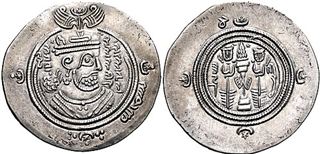
The Rashidun Caliphate’s administrative achievement was the construction, amid continuous expansion, of a framework capable of governing conquered populations of very different linguistic, religious and cultural backgrounds, a task for which Arab tribal tradition offered little precedent and which demanded considerable institutional improvisation from the four caliphs and their advisers. Umar ibn al-Khattab, whose ten-year caliphate from 634 to 644 CE encompassed the greatest volume of conquest, was also the caliphate’s most consequential institutional architect: he established the diwan, organised the garrison cities, appointed provincial governors (amirs) with defined jurisdictions and answerable to Medina, appointed judges (qadis) in major centres, and adopted the Islamic lunar calendar for official dating, anchoring it to the hijra of 622 CE. Uthman ibn Affan’s caliphate from 644 to 656 CE produced perhaps the most consequential act of Islamic textual governance, the standardisation of the Quranic text into a single authoritative recension, copies of which were sent to the major provincial centres while variant codices were ordered destroyed, establishing the textual foundation of Islamic law and theology. The legal system of this period drew on Quranic injunctions, remembered prophetic practice, later systematised as hadith, and the reasoned judgement (ijtihad) of the companions, without the elaborated schools of jurisprudence that developed under the Abbasids. Ali ibn Abi Talib’s troubled caliphate from 656 to 661 CE, dominated by the First Fitna, the civil war between Ali and the governor of Syria, Muawiya ibn Abi Sufyan, over responsibility for Uthman’s murder, showed that the caliphate lacked mechanisms for resolving elite political conflict without resort to arms.
Global & Regional Impact
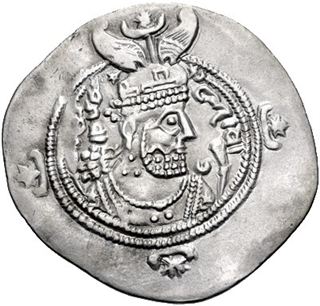
The Rashidun Caliphate’s historical significance is difficult to overstate: its twenty-nine years initiated a transformation of the Middle East, North Africa and western Iran whose consequences continue to shape the religious and cultural geography of the world fourteen centuries later. The replacement of Greek, Aramaic and Coptic by Arabic as the dominant language of the Levant, Mesopotamia and Egypt, a process that unfolded over the following centuries, with Arabic becoming the language of administration under the Umayyad caliph Abd al-Malik around 700 CE, but that was set in motion by the Rashidun conquests, was one of the most consequential linguistic transformations in recorded history, creating the Arabic-speaking world of today. The destruction of the Sasanian Empire was total and permanent: unlike the Byzantine Empire, which survived the loss of its eastern provinces and endured until 1453 CE, the Sasanian state ceased to exist with the death of Yazdegerd III in 651 CE, ending over four centuries of Sasanian rule and reorienting Persian civilisation towards an Islamic framework within which it would later flourish as a major creative force. The treatment of conquered non-Muslim populations as protected peoples (dhimmis), who were guaranteed security of life, property and worship in return for paying the jizya and accepting certain legal disabilities, established a model of regulated religious pluralism that, despite its inequalities, allowed the relatively rapid stabilisation of conquered territories. The dispute ignited by the succession crisis, over whether legitimate leadership belonged to the Prophet’s family or rested on the community’s choice, generated the Sunni-Shia divide that has shaped Islamic history ever since.
Decline & Fall
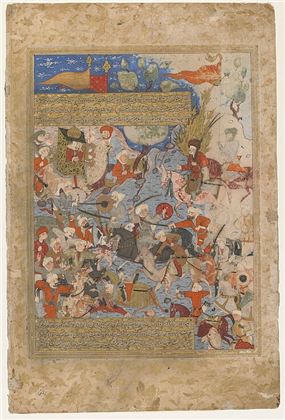
The Rashidun Caliphate’s dissolution was unusual among the empires in this dataset in being driven almost entirely by internal political and religious conflict rather than external military defeat; at the moment of its collapse the caliphate faced no neighbouring power capable of threatening its survival. The seeds of dissolution lay in the founding succession at the Saqifah, where the passing over of Ali ibn Abi Talib, the Prophet’s cousin and son-in-law, whom a significant part of the community believed Muhammad had designated as his successor, created a legitimacy deficit in the caliphates of Abu Bakr, Umar and Uthman that Ali’s partisans, the proto-Shia, never accepted. Violence at the summit had already begun with Umar’s assassination by a Persian slave in 644 CE. Uthman’s caliphate then generated mounting opposition through his appointment of members of his Umayyad clan, the Banu Umayya, who had been among the Prophet’s most determined Meccan opponents before their late conversion, to major provincial governorships, alienating early companions and garrison-city warriors who felt their contributions were being overlooked. The assassination of Uthman in June 656 CE by rebels, many of them from Egypt, who broke into his house in Medina and, according to tradition, killed him while he was reading the Quran, was the first murder of a caliph by fellow Muslims in revolt, and it shattered the principle of caliphal inviolability and triggered the First Fitna. Ali’s caliphate was consumed by war against Aisha, the Prophet’s widow, and her allies Talha and al-Zubayr at the Battle of the Camel in 656 CE, and against Muawiya at the inconclusive Battle of Siffin in 657 CE, whose agreement to arbitration was repudiated by the Kharijites, who held that human arbitration of a divine question was illegitimate; one of them, Ibn Muljam, assassinated Ali in the mosque at Kufa in January 661 CE. Hasan ibn Ali’s subsequent abdication in favour of Muawiya ended the Rashidun principle of consultative selection and inaugurated the hereditary Umayyad Caliphate, transforming Islamic government from its experimental early phase into a dynastic imperial model.
The Rashidun Caliphate’s supreme historical significance rests in its compression of world-historical consequence into a single generation: twenty-nine years that destroyed one ancient empire and stripped another of its richest provinces, permanently reshaped the religious and linguistic geography of three continents, and generated the disputes over legitimate authority and succession that have structured Islamic political thought and sectarian identity from the seventh century to the present day.
References
- Al-Tabari (1985–2007) The History of al-Tabari. Translated by various. Albany: State University of New York Press.
- Crone, P. (1980) Slaves on Horses: The Evolution of the Islamic Polity. Cambridge: Cambridge University Press.
- Donner, F.M. (1981) The Early Islamic Conquests. Princeton: Princeton University Press.
- Kaegi, W.E. (1992) Byzantium and the Early Islamic Conquests. Cambridge: Cambridge University Press.
- Kennedy, H. (2007) The Great Arab Conquests: How the Spread of Islam Changed the World We Live In. London: Weidenfeld and Nicolson.
- Madelung, W. (1997) The Succession to Muhammad: A Study of the Early Caliphate. Cambridge: Cambridge University Press.
Connections
Open the full connections map →