Social ladder · 550–330 BCE (from Cyrus the Great to Darius III)
Social Hierarchy of the Achaemenid Empire
From King of Kings to Slave

The Achaemenid Empire, the largest empire of its time, ranked people by their closeness to the king and by whether they belonged to the ruling people. At the top stood the King of Kings, who ruled “by the grace of Ahuramazda” and called even his satraps his bandaka, men bound to him by loyalty. Around him were the royal kin and the great Persian houses, who supplied most satraps and generals. The Persians of the homeland, a warrior people, paid no tribute, while the many subject peoples, from Egypt to the Indus, kept their own laws, gods and often their own rulers, but owed the king tribute, labour and soldiers. Below them came dependent workers, the kurtaš, who lived on royal rations, and slaves, who were few beside the free farmers and craftsmen. Royal favour could raise a man quickly; disloyalty could destroy a whole family.
Period 550–330 BCE (from Cyrus the Great to Darius III)People 17–35 millionRanks 8Profile Achaemenid Empire
The ladder
By rank, the ladder is drawn as a pyramid. To scale, each bar is as wide as that rank’s share of the people. Shares marked est. are estimates where no count survives; their boxes and bars are dashed.

Ruler · One ruler
Xšāyaθiya xšāyaθiyānām (The King of Kings)
The King of Kings ruled a huge empire, and people from many lands brought him gifts.
The Great King was, in the words of Darius I’s tomb, “King of Kings, King of countries containing all kinds of men”, and he ruled, as Darius proclaimed at Behistun, “by the grace of Ahuramazda”. He commanded the armies, appointed the satraps and generals, and was the source of the king’s law (dāta). His court moved between Persepolis, Susa, Ecbatana and Babylon, and the reliefs of the Apadana at Persepolis show delegations of the subject peoples bringing him gifts. The king rewarded loyalty with land, gold and office and punished disloyalty with death, at times of a whole family. Cyrus the Great founded the empire by defeating the Medes in 550 BCE; Darius I, who seized the throne in 522 BCE with the help of six Persian nobles, organised it into satrapies with fixed tribute. Four kings lie in rock-cut tombs at Naqsh-e Rostam. Kingship could be dangerous: Xerxes I was murdered in his bed, and Artaxerxes III, Greek writers say, was poisoned by the eunuch Bagoas in 338 BCE.
Moving in or out. The throne stayed in the Achaemenid family and usually went to a son of the king, but rivals fought for it: Darius I claimed descent from a side branch of the family, and Artaxerxes II had to defeat his brother Cyrus the Younger at Cunaxa in 401 BCE.
How many? One king, with the royal family.

Nobility and officials · Fewer than 1 in 1,000 (est.)
Haxāmanišiya (Royal kin and the great houses)
Noble Persian families helped the king rule, leading his armies and governing his provinces.
Below the king stood his own clan, the Achaemenids, and a small circle of great Persian houses. Six of them descended from the nobles who joined Darius in 522 BCE to kill the man he called the usurper Gaumata: Otanes, Intaphernes, Gobryas, Hydarnes, Megabyzus and Aspathines. According to Herodotus, these men could enter the king’s presence unannounced unless he was with a woman, and Darius bound their houses to his by marriage: he married daughters of Otanes and Gobryas, and Gobryas’s son Mardonius married a daughter of Darius. Most satraps under Darius came from the royal house or the six families, and nobles commanded the armies. Their wealth came from estates across the empire, from the king’s gifts and from office: Darius’s uncle Parnaka ran the economy of the homeland around Persepolis in 506–497 BCE, and his son Artabazus founded a line of satraps in Hellespontine Phrygia. In Herodotus’s account, when Intaphernes attacked two palace officers, Darius had him and almost all his family put to death.
Moving in or out. Birth and marriage decided who belonged, and the king tied the great houses to the throne by marrying their daughters and giving them his own; a noble who lost his trust could lose his life and his family.
How many? Estimate: the king’s kin and a few great Persian houses with their households, some thousands of people in an empire of 17–35 million.

Nobility and officials · Fewer than 1 in 1,000 (est.)
Xšaçapāvan (Satraps and high officials)
ganzabara (treasurer)
Satraps governed the empire’s provinces for the king, collecting taxes and keeping the roads safe.
A satrap (xšaçapāvan, “protector of the province”) governed each of the empire’s 20 to 30 provinces with an almost royal court of his own. He collected the tribute, kept the roads safe, judged cases and kept troops; but his secretary, his treasurer and the commander of the garrisons reported directly to the king, and royal inspectors toured the provinces. In the Behistun inscription Darius calls his satraps his bandaka, men bound to him by loyalty, and they held office only by his favour: according to Herodotus, he had Oroetes, satrap at Sardis, put to death for acting on his own, and Aryandes of Egypt for minting silver coins that rivalled his own. Later some satrapies passed from father to son, and in the 4th century satraps of Asia Minor rose in open revolt. Many non-Persians served the king too: the Egyptian priest and physician Udjahorresnet advised Cambyses II and Darius, and the Jewish courtier Nehemiah, by his own account, was sent to govern Judah.
Moving in or out. The king appointed satraps, mostly from the Persian nobility, and could recall or execute them; lower offices were open to men of many peoples who could serve him, from the Elamite and Babylonian scribes of the treasuries to Egyptian and Jewish courtiers.
How many? Estimate: the satraps of 20–30 satrapies, their treasurers, secretaries and the officials at court, with their households.

Religious and learned · c. 0.1–0.3% (est.)
Maguš (Magi)
magu- (magus), Greek magoi
Magi were Persian priests who led prayers and offerings to the gods.
The magi were the priests of the Persians and Medes. Herodotus calls them one of the tribes of the Medes, says that no Persian could make an offering without a magus present to sing a hymn of the gods’ birth, and describes them interpreting dreams and omens for the kings. The Persepolis tablets show magi and other priests drawing grain, wine and animals from the royal stores for offerings to Ahuramazda and to Elamite gods such as Humban alike, for the administration provided for all of them. Darius’s inscriptions name Ahuramazda as the god who gave him his kingdom, and it was under the Achaemenids that Zoroastrianism reached south-western Iran and became a defining part of Persian culture, though how closely the kings and the magi followed Zoroaster’s teaching is debated. The magi could also fall under suspicion: Darius claimed that the usurper he overthrew in 522 BCE, Gaumata, was a magus, and Herodotus tells of a massacre of magi after his death, remembered in a festival called the Magophonia.
Moving in or out. Magi were born into their priestly tribe; the most trusted served at court, where, Greek writers say, they interpreted the king’s dreams and helped to educate royal princes.
How many? Estimate: a priestly tribe of the Medes (Herodotus), perhaps some tens of thousands of people with their families.
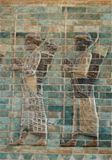
Soldiers, merchants and craftsmen · c. 2–4% (est.)
Kāra (Persian warriors)
kāra (people, army), Greek athanatoi (Immortals)
Persian men formed the heart of the king’s army, and the Greeks called his best troops the Immortals.
The Persians of Persis (Pārsa), in south-western Iran, were the ruling people of the empire, and in Old Persian one word, kāra, meant both “people” and “army”. Their homeland paid no tribute, and its men formed the core of the king’s forces: according to Herodotus, Persian boys were taught from the age of five to twenty to ride, to shoot the bow and to speak the truth. The best served in the Immortals, a corps of 10,000 heavy infantry, mostly Persians with Medes and Elamites, which Herodotus says was kept at full strength by replacing at once every man who died or fell sick; a thousand of them guarded the king. Persian troops manned garrisons across the empire, and Persian nobles commanded the contingents of the subject peoples in war. Between campaigns most Persians lived as farmers and herders.
Moving in or out. Persian birth made a man one of the ruling people; service in the king’s wars could bring gifts and promotion, and Darius I himself, according to Herodotus, had served Cambyses II as a spear-bearer before he seized the throne.
How many? Estimate: the Persians of the homeland, Fars, perhaps half a million to a million people, from whom the Immortals (10,000, Herodotus) and the core of the army were drawn.
Picture: Archers of the royal guard, glazed-brick frieze from the palace of Darius I at Susa, c. 510 BCE · Unknown author · Public domain · Wikimedia Commons

Free commoners · About 94% (the rest, est.)
Dahyāva (Tribute-paying subjects)
bāji (tribute)
Most people in the empire were farmers and craftspeople from many lands, who paid taxes to the king.
Most of the empire’s people, farmers, herders, craftsmen and townspeople, lived in its subject lands, the dahyāva, from Egypt and Ionia to Babylonia, Bactria and the Indus; the Behistun inscription lists twenty-three of them. They kept their own languages, laws and temples and often their own rulers, such as the Phoenician kings and the Greek tyrants of Asia Minor, while Aramaic served as the common written language of government. To the king they owed tribute, which Darius fixed for each satrapy: according to Herodotus, Babylonia paid 1,000 talents of silver a year and fed the king’s army for four months, and Egypt paid 700 talents and 120,000 measures of grain. Subjects also sent levies to the army and labour to the royal works. Many held land in return for service: in 5th-century Babylonia, holders of “bow land”, “horse land” and “chariot land” owed soldiers to the king, and many dealt with the Murashu firm of Nippur, which leased their plots and paid their taxes.
Moving in or out. Service to the king, as soldier, scribe or courtier, could lift a subject; rebellion brought the opposite, and Herodotus describes the people of rebel cities, such as Barca and Miletus, enslaved or deported.
How many? Everyone not counted in the other ranks: the farmers, herders, craftsmen and townspeople of the subject lands and their families, the great majority of 17–35 million people. The other ranks are estimates, so this share is one too.
Serfs and dependants · c. 0.1–0.5% (est.)
Kurtaš (Workers on rations)
Workers from many lands built the palaces of Persepolis and were paid in food such as grain and wine.
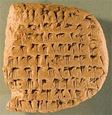
The Persepolis Fortification tablets, written in Elamite between 509 and 493 BCE, record the rations that the royal administration of the homeland issued each month to its workers, the kurtaš. They came from across the empire: Darius’s own account of his palace at Susa names Ionian and Lydian stonecutters, Median and Egyptian goldsmiths and Babylonian brickmakers. Women appear in the tablets as often as men. Rations were paid in grain, with wine, beer or meat for some, and from 492 BCE the Treasury tablets record silver paid in place of part of the rations. Women generally received less than men, but skilled craftswomen were paid as much as men, some women who led work groups received more than any man in them, and new mothers drew extra rations, twice as much for a boy as for a girl. Great households had workforces of their own: the wealthy Irdabama had 480 labourers near Shiraz. How free the kurtaš were is debated, for the word could mean hired or bound workers.
Moving in or out. Some kurtaš were deportees brought in to work on the royal building projects; skill and the leadership of a work group brought higher rations.
How many? Estimate: the Persepolis tablets record work groups in the thousands in the Persian homeland alone, such as Irdabama’s 480 labourers near Shiraz; with the royal workforces of Babylonia and Egypt, some tens of thousands of people.

Enslaved · c. 1–3% (est.)
Qallu (Slaves)
māniya- (Old Persian, household servant)
Slaves were owned by other people and had to work without pay; many were captives taken in war.
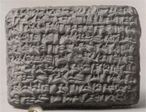
Slavery was an old institution in Babylonia, Egypt and Media, and it continued under Persian rule. People became slaves through war and rebellion, by birth to a slave mother, by sale, and in Babylonia through debt: a creditor could take a defaulting debtor’s children as slaves, though debtors no longer pledged or sold themselves. Herodotus describes the enslavement of rebellious cities, and says that Babylonia sent the king 500 boys a year as part of its tribute. Persian nobles with estates in Babylonia and other conquered lands owned many slaves, and contracts of sale survive from Babylonia, where sales were registered and taxed; one tablet in Babylonian records a slave bought at Persepolis itself under Darius I. Slaves worked mainly in households and workshops, and some Babylonian slaves ran businesses of their own and paid their owners a fixed income. In the historian Muhammad Dandamayev’s judgement, slaves were few beside the free farmers, tenants and craftsmen on whose labour the empire rested.
Moving in or out. Owners could free slaves by a written deed, often on condition that the freed person support them for the rest of their lives; children born to slave women were slaves.
How many? Estimate: Muhammad Dandamayev judged slaves few beside free people; most served in households and on the estates of Babylonia.
Picture: Clay tablet recording a slave sale, from the Egibi family archive, Babylon, c. 547 BCE · Unknown author · CC0 · Wikimedia Commons

Born into history
Where would you have stood? Chance places you on the ladder, as birth placed most people: weighted by how many each rank held.
Moving up and down
Birth ranked people in the Achaemenid Empire, but the king’s favour could change a life quickly. Darius I, according to Herodotus once a spear-bearer of Cambyses II, seized the throne in 522 BCE with six fellow nobles, and their families remained among the greatest in the empire. The king rewarded service with land, gold and office, and he gave them to foreigners too: Greeks served Darius as soldiers, craftsmen and advisers, the exiled Athenian Themistocles received the revenues of three cities from Artaxerxes I, and non-Persians such as Udjahorresnet in Egypt and Nehemiah in Judah rose high in royal service. Bagoas, chief of the eunuchs under Artaxerxes III, became so powerful that he is said to have poisoned two kings and placed Darius III on the throne. Falls were as sudden. Satraps who acted on their own were executed, rebel cities were enslaved or deported, as the people of Barca were sent to Bactria, and in Babylonia debt could cost a family its children.
Women on the ladder
A woman’s place depended on her family’s rank. Royal women were ranked in a strict order, from the king’s mother and the queen to his daughters and concubines, and kings married women of the royal family or of the great Persian houses; concubines were often slaves, captives or foreign princesses whose sons could not inherit. Greek writers imagined the royal women shut away in a harem, but the Persepolis tablets show royal and noble women owning estates and workshops, travelling with their own staff and managing large workforces, as Irdabama did with 480 labourers near Shiraz. Queens such as Atossa and Parysatis had real influence, though no woman ever ruled. Among the workers of the homeland women were as numerous as men; they were generally paid less, but skilled craftswomen earned as much as men, and women who led work groups more. Elsewhere women lived under the customs of their own peoples, which differed from land to land.
Compare with another society
Sources and further reading
- Briant, P. (2002) From Cyrus to Alexander: A History of the Persian Empire. Trans. P. T. Daniels. Winona Lake, IN: Eisenbrauns.
- Brosius, M. (1996) Women in Ancient Persia, 559–331 BC. Oxford: Clarendon Press.
- Dandamaev, M. A. and Lukonin, V. G. (1989) The Culture and Social Institutions of Ancient Iran. Trans. P. L. Kohl. Cambridge: Cambridge University Press.
- Hallock, R. T. (1969) Persepolis Fortification Tablets. Chicago: University of Chicago Press.
- Kuhrt, A. (2007) The Persian Empire: A Corpus of Sources from the Achaemenid Period. 2 vols. London: Routledge.
- Wiesehöfer, J. (1996) Ancient Persia: From 550 BC to 650 AD. Trans. A. Azodi. London: I.B. Tauris.
The shares are of the whole population, children included. Where a scholar has counted or estimated a rank, its share follows that work, named on the rank; where no count survives, the share is an estimate, marked est. and drawn dashed, made from what the rank was and did, from related figures and from the same rank in comparable societies, and its note says what it rests on. Population: a modern estimate for the empire around 500 BCE, given in Morris and Scheidel (eds.), The Dynamics of Ancient Empires (2009).
Cite this page
- APA
- The Epoch Institute. (2026). Social Hierarchy of the Achaemenid Empire. In Social Ladders. https://the-epoch-institute.org/societies/achaemenid-persia
- MLA
- “Social Hierarchy of the Achaemenid Empire.” Social Ladders, The Epoch Institute, 2026, https://the-epoch-institute.org/societies/achaemenid-persia. Accessed .
- Chicago
- The Epoch Institute. “Social Hierarchy of the Achaemenid Empire.” Social Ladders. 2026. https://the-epoch-institute.org/societies/achaemenid-persia.
- Harvard
- The Epoch Institute (2026) ‘Social Hierarchy of the Achaemenid Empire’, Social Ladders. Available at: https://the-epoch-institute.org/societies/achaemenid-persia (Accessed: ).