Social ladder · c. 1550–1070 BCE (the New Kingdom)
Social Hierarchy of Ancient Egypt
From Pharaoh to Enslaved
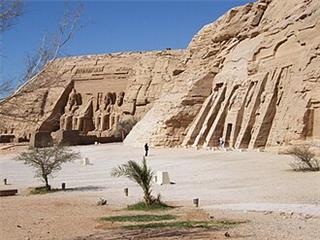
Egyptian society was ranked by office and by closeness to the king. At its head stood the pharaoh, in theory the owner of all the land and the only link between the gods and the people. Egyptian texts set the elite, the pat, above the rekhyt, the common people. The elite were the literate officials who ran the state and the priests who ran the temples and their estates; writing was the key to both, and sons usually followed their fathers into office. Below them came scribes, soldiers and craftsmen, and then the farmers, the great majority, who owed the state taxes and labour. The New Kingdom’s wars brought in captives who were made slaves. The law treated free men and women of every rank much alike, and any peasant might petition the vizier, but the ladder was steep: a small literate circle governed some two to three million people.
Period c. 1550–1070 BCE (the New Kingdom)People 2–3 millionRanks 8Profile Egyptian Empire New Kingdom
The ladder
By rank, the ladder is drawn as a pyramid. To scale, each bar is as wide as that rank’s share of the people. Shares marked est. are estimates where no count survives; their boxes and bars are dashed.
Ruler · One ruler
Nesu (The pharaoh)
hem (Majesty), per-aa (pharaoh)
The pharaoh was Egypt’s ruler, who led the army, made the laws and was honoured almost like a god.
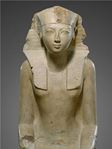
The king stood apart from all other Egyptians. In theory he owned all the land, made the laws, collected the taxes and commanded the army, and every temple rite was performed in his name, since he alone stood between the gods and humankind. His task was to uphold maat, the right order of the world, by defending the borders, feeding the people and honouring the gods. Inscriptions called him the “good god”, and in the New Kingdom his subjects began to speak of him as per-aa, “the great house”, the palace, from which the word pharaoh comes. The throne usually passed from father to son, but Hatshepsut and Tausret ruled as kings in their own right. New Kingdom pharaohs led their armies into Nubia and the Levant, filled the temples of Amun with the spoils, and built on a vast scale: Ramesses II raised the rock temples of Abu Simbel.
Moving in or out. Kingship passed by birth, usually to the king’s son, but when a dynasty failed the throne could go to the men who served it: Ay and the general Horemheb rose from the royal court, and Horemheb’s vizier became king as Ramesses I in 1292 BCE.
How many? One ruler, with the royal family.

Nobility and officials · c. 0.05–0.2% (est.)
Seru (High officials)
tjaty (vizier), ser (official), pat (the elite)
Officials such as the vizier ran Egypt for the pharaoh, keeping its records and judging its court cases.
Below the king stood the small circle of officials who ran his government, the elite that Egyptian texts called the pat. In the New Kingdom there were two viziers, one for Upper and one for Lower Egypt, who oversaw land surveys, the granaries, the treasury, building works and the archives, and sat as judges in the high court. Beneath them served the treasurers, the overseers of granaries and of works, the mayors of the towns, the generals and the Viceroy of Kush, who governed conquered Nubia. They were trained as scribes, wore fine white linen, and were rewarded by the king: Thutmose III gave his official Minmose more than 150 captive “dependents”. They built painted tombs in the hills of Thebes, where the tomb of Rekhmire, vizier of Thutmose III, sets out the duties of his office. Many posts passed from father to son, but every appointment depended on the king’s favour, and some high priests of Amun also served as vizier.
Moving in or out. Most officials were the sons of officials and had trained as scribes, but the king could raise a capable outsider, such as Bay, a commoner of West Asian origin who became chancellor and the power behind the throne at the end of the 19th Dynasty.
How many? Estimate: the vizier, the great officials and the elite the texts call the pat, with their families, a few thousand people among some 2–3 million.
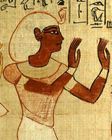
Picture: The vizier Paser, of the reign of Ramesses II (1279–1213 BCE) · Richard Mortel · CC BY 2.0 · Wikimedia Commons
Religious and learned · c. 0.5–1.5% (est.)
Hem-netjer (Priests)
wab (pure one)
Priests looked after the temples, where they washed and dressed the gods’ statues and gave them food every day.
Priests served the gods in the king’s place. Each morning the officiating priest opened the shrine, cleaned, clothed and anointed the god’s statue and offered it a meal, which was afterwards shared out and eaten by the priests. A great temple was run by its high priest, with up to three grades of priests beneath him; in the New Kingdom these higher posts became full-time, while ordinary priests served in shifts and spent the rest of the year at their own work. Before entering the sanctuary they shaved their heads and bodies, washed several times a day and wore only clean linen, but they could marry. The temples were also great landowners. Kings gave them fields, captives and the spoils of war, above all to Amun of Karnak, and modern reckonings from the Harris Papyrus and the Wilbour Papyrus put roughly 13–18 per cent of Egypt’s farmland in their hands under the Ramesside kings, most of it Amun’s. Priestly offices were lucrative and often passed from father to son.
Moving in or out. The king appointed the high priests, often as a reward for a favoured official, while lesser posts passed from father to son or were filled by the priests themselves; at the end of the period the army officer Herihor became High Priest of Amun and ruled Upper Egypt (about 1080 BCE).
How many? Estimate: a great temple had well over 150 full- or part-time priests, a mid-sized one 10–25 and the smallest one; most priests served in rotation a month at a time.

Soldiers, merchants and craftsmen · c. 0.3–0.7% (est.)
Sesh (Scribes)
Scribes kept Egypt’s records, writing down harvests, taxes and court cases on rolls of papyrus.
Scribes kept the records on which the state ran. They counted harvests and herds for taxes, surveyed fields, issued rations, wrote letters and recorded court cases for the king, the temples, the army and the great estates. Most were the sons of scribes who learned the craft at school or from their fathers, copying set texts in the cursive hieratic script, and only a small minority of Egyptians could read and write. A favourite school text, the “Satire of the Trades”, told pupils that every other trade was misery and that writing would spare them hard labour and beatings; it was among the most copied texts in the schools of Thebes under the 20th Dynasty. Scribes were indeed spared the corvée that farmers owed. Their badge was the scribe’s palette, their patron the god Thoth, and the most able rose into the high offices of state.
Moving in or out. Boys, mostly the sons of scribes, learned the craft at school or from their fathers; a gifted scribe could rise into the high offices of state, which were closed to men who could not write.
How many? Estimate: probably less than 1 per cent of Egyptians could read and write, and those few included the officials and priests above.

Soldiers, merchants and craftsmen · c. 2–4% (est.)
Mesha (Soldiers)
seneny (chariot warriors)
Egyptian soldiers fought on foot or from fast, two-wheeled chariots pulled by horses.
The New Kingdom was born in the war against the Hyksos, and its pharaohs turned the old levies into a standing professional army. Infantry with bows, spears and the curved khopesh sword fought beside the chariotry, two-man chariots carrying a driver and an archer, whose crews came from the upper classes. The army fought in Nubia and the Levant: Ramesses II marched to the Battle of Kadesh in 1274 BCE with four divisions named after the gods Amun, Ra, Ptah and Seth. Soldiers were paid, and the brave won the “gold of valour” and captives: Ahmose, son of Ebana, who fought the Hyksos at Avaris, received gold and slaves from his kings. Veterans were granted plots of farmland. Foreigners served too, Nubian Medjay, Libyans and Sherden from among the Sea Peoples, many of them prisoners who had been made soldiers.
Moving in or out. War was the quickest way up for an able man: soldiers won rewards and land, and Horemheb, a general under Tutankhamun, became king himself.
How many? Estimate: an army of some 20,000–30,000 men in the 13th century BCE (Ramesses II took four divisions to Kadesh in 1274 BCE), with garrisons and their families.
Soldiers, merchants and craftsmen · c. 4–8% (est.)
Hemu (Artisans)
sedjem-ash (servants in the Place of Truth)
Skilled craftsmen built and painted the royal tombs, and they went on strike when their food did not arrive.
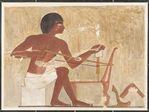
Craftsmen ranked above farmers, but most worked for the state or the temples, in workshops attached to the temples and palaces, and were paid in rations from their stores. Masons, carpenters, sculptors, painters, metalworkers and weavers produced everything from statues to coffins. The best documented are the tomb-builders of Deir el-Medina, the “servants in the Place of Truth”, who cut and decorated the royal tombs in the Valley of the Kings; their village dates from the time of Thutmose I. They lived with their families in a walled village of about 68 houses and worked in two gangs under foremen, eight days out of ten, for a monthly ration of about 5½ sacks of grain (7½ for a foreman), up to three times a field hand’s pay; many of them could read. In the 29th year of Ramesses III (about 1157 BCE), when their rations were weeks late, they downed tools in the first recorded strike.
Moving in or out. Places in the royal crew were prized and usually passed from father to son; the village was abandoned under Ramesses XI, when tomb robbery, Libyan raids and civil war brought the work to an end.
How many? Estimate: the craftsmen of the temples, the palace and the towns, from the royal tomb-builders of Deir el-Medina (about 68 houses) to village potters and weavers.
Picture: A carpenter making a chair, tomb of Rekhmire, Thebes, c. 1450 BCE (facsimile) · Nina M. Davies · CC0 · Wikimedia Commons
Free commoners · About 87% (the rest, est.)
Ihwty (Farmers)
nemhu (free private people)
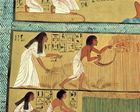
Most Egyptians were farmers who grew wheat, barley and flax in fields watered by the Nile’s yearly flood.
Most Egyptians were farmers living in mud-brick villages along the Nile. Their year followed the river: the flood from June to September, sowing as the water fell, and the harvest of emmer wheat, barley and flax from March to May. Much of the land belonged to the king, the temples or the great officials, and many farmers worked it as tenants, handing over a share of the crop, about 30 per cent on the larger estates; others held small plots of their own. Scribes surveyed the fields and assessed the harvest for tax, and farmers owed the corvée, labour on canals and irrigation works, in the quarries and on royal building projects. They lived on bread, beer, onions and beans. They were free, could own and inherit land, go to court and petition the vizier, but a low flood meant hunger, and debt could push a family into servitude.
Moving in or out. A farmer’s son could enlist in the army and earn rewards or a plot of land; a low flood or a debt could push a family into tenancy or servitude.
How many? Everyone not counted in the other ranks: the great majority of Egyptians, most of them farmers and their families. The other ranks below the pharaoh are estimates, so this share is one too.
Picture: Ploughing and reaping in the Field of Reeds, tomb of Sennedjem, Deir el-Medina, c. 1250 BCE (facsimile) · Charles Wilkinson · CC0 · Wikimedia Commons


Enslaved · c. 1–3% (est.)
Bak (Enslaved people)
hem, sekeru-ankh (living captives)
Enslaved people were owned by others and made to work without pay; many were prisoners taken in war.
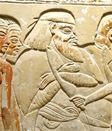
The wars of the New Kingdom made it Egypt’s great age of foreign slavery. Captives from Nubia, Libya and the Levant were led home with their hands bound, and all of them belonged first to the king, who settled some as labourers, gave many to the temples and handed others to officials and soldiers as rewards; Ramesses III boasted that he had branded Libyan prisoners with his name. Others were bought from traders in the Levant, and some Egyptians fell into bondage through debt or crime. The children of an enslaved mother were enslaved too. Enslaved people worked in the fields and workshops and as cooks, brewers, weavers, nurses and maids, and those on temple estates often lived under harsh discipline. Egyptian words such as hem and bak covered both servants and slaves, and scholars debate how far the modern idea of slavery fits. Under the Ramesside kings private owners could buy, sell and hire out slaves, who could still hold some property and had a few legal protections.
Moving in or out. Freedom could come through marriage to a free person or dedication to a temple’s service, and an enslaved woman who bore children for a childless couple could win her freedom; some captives were made soldiers.
How many? Estimate: royal inscriptions boast of captives by the thousand, settled on temple estates and in households; slaves remained a small part of a mostly free farming people.
Picture: An Asiatic captive, relief from the tomb of Horemheb at Saqqara, c. 1320 BCE · Rob Koopman · CC BY-SA 2.0 · Wikimedia Commons

Born into history
Where would you have stood? Chance places you on the ladder, as birth placed most people: weighted by how many each rank held.
Moving up and down
Egyptian society was steep, but its elite was defined by office, and offices were the king’s to give. Writing was the main ladder: the scribal schools fed the offices of state, and their teaching texts promised boys that writing would spare them hard labour and beatings. War was the other: soldiers such as Ahmose, son of Ebana, won gold and captives, the general Horemheb became king, and Horemheb’s vizier became Ramesses I. Even foreigners rose: Bay, a commoner of West Asian origin, became chancellor and the power behind the throne at the end of the 19th Dynasty. Captives could be made soldiers, and an enslaved woman could gain her freedom through marriage or by bearing children for a childless couple. Falls were sudden. The plot against Ramesses III, which drew in royal butlers, treasury overseers and scribes, ended with 38 people sentenced to death, and in the last decades of the 20th Dynasty low floods, famine and the corruption of officials brought strikes and a wave of tomb robbery to Thebes.
Women on the ladder
Egyptian law gave women unusual rights for the ancient world. A free woman could own, buy, inherit and sell land and goods, make contracts, bring cases to court and divorce. At Deir el-Medina a wife kept her own property and a third of what the couple acquired, and the villager Naunakhte used her will, under Ramesses V, to disinherit three of her eight children who had not cared for her in old age. Most women worked beside their husbands in the fields, ran the household, baked, brewed and wove linen; women of the elite served in the temples as singers and musicians. In the New Kingdom the offices of state were held by men, and women were less often taught to write. Queens such as Tiye and Nefertari had real influence, the God’s Wife of Amun was the highest priestess of Amun at Thebes, and Hatshepsut ruled as king. An enslaved woman’s children were born into slavery.
Compare with another society
Test yourself
3 questions on the ladder of Ancient Egypt.
The questions open here once the page has loaded.
Sources and further reading
- Kemp, B. J. (2006) Ancient Egypt: Anatomy of a Civilization. 2nd edn. London: Routledge.
- Lesko, L. H. (ed.) (1994) Pharaoh's Workers: The Villagers of Deir el Medina. Ithaca: Cornell University Press.
- Robins, G. (1993) Women in Ancient Egypt. London: British Museum Press.
- Sauneron, S. (2000) The Priests of Ancient Egypt. Trans. D. Lorton. Ithaca: Cornell University Press.
- Shaw, I. (ed.) (2000) The Oxford History of Ancient Egypt. Oxford: Oxford University Press.
- Spalinger, A. J. (2005) War in Ancient Egypt: The New Kingdom. Malden, MA: Blackwell.
The shares are of the whole population, children included. Where a scholar has counted or estimated a rank, its share follows that work, named on the rank; where no count survives, the share is an estimate, marked est. and drawn dashed, made from what the rank was and did, from related figures and from the same rank in comparable societies, and its note says what it rests on. Population: rough modern estimates: Alan K. Bowman puts Egypt at 1–1.5 million people in the 3rd millennium BCE and possibly 2–3 million by the 1st millennium BCE.
Cite this page
- APA
- The Epoch Institute. (2026). Social Hierarchy of Ancient Egypt. In Social Ladders. https://the-epoch-institute.org/societies/ancient-egypt
- MLA
- “Social Hierarchy of Ancient Egypt.” Social Ladders, The Epoch Institute, 2026, https://the-epoch-institute.org/societies/ancient-egypt. Accessed .
- Chicago
- The Epoch Institute. “Social Hierarchy of Ancient Egypt.” Social Ladders. 2026. https://the-epoch-institute.org/societies/ancient-egypt.
- Harvard
- The Epoch Institute (2026) ‘Social Hierarchy of Ancient Egypt’, Social Ladders. Available at: https://the-epoch-institute.org/societies/ancient-egypt (Accessed: ).