Social ladder · 305–30 BCE (the 3rd century BCE, under the first four Ptolemies)
Social Hierarchy of Ptolemaic Egypt
From Pharaoh to Enslaved
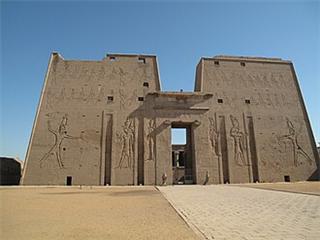
Ptolemaic Egypt was ranked by class and by language. Its kings were Macedonian Greeks who took the Greek title of basileus and the Egyptian title of pharaoh, and a Greek ruling class, which replaced the old native aristocracy, held virtually all political and economic power. Greeks lived under Greek law, were tried in Greek courts and received a Greek education, and their soldiers were given land in return for service. Egyptian priests kept their temples, their prestige and the king’s patronage, since the dynasty relied on Egyptian religion to legitimise its rule. Below them lived the peasant farmers, the vast majority, on land owned by the crown, the temples or noble families, and a complex bureaucracy extracted the country’s wealth for the king. Egyptians who learned Greek could rise, and within a century intermarriage had produced a large Greco-Egyptian educated class, but wealth and power stayed overwhelmingly in Greek hands.
Period 305–30 BCE (the 3rd century BCE, under the first four Ptolemies)People 3–4 millionRanks 8Profile Ptolemaic Empire
The ladder
By rank, the ladder is drawn as a pyramid. To scale, each bar is as wide as that rank’s share of the people. Shares marked est. are estimates where no count survives; their boxes and bars are dashed.

Ruler · One ruler
Basileus (The king)
pharaoh
The king was a Greek from Macedonia who ruled Egypt as its pharaoh from the great city of Alexandria.
The king was a Macedonian Greek. Ptolemy I Soter, a general of Alexander the Great, took the titles of basileus and pharaoh in 305 BCE, and every male king of his line was named Ptolemy. To the Egyptians he was presented as pharaoh, shown on monuments in Egyptian style and dress, building temples and endowing the priesthood. In theory, if not always in practice, he commanded the whole economy through layers of officials, and the crown controlled the making and sale of papyrus, olive oil, linen and beer. From Ptolemy II, who married his sister Arsinoe II, the kings followed the Egyptian custom of marrying their sisters, and Arsinoe was worshipped as a goddess in sanctuaries of her own.
Moving in or out. The crown passed within the dynasty, usually to the king’s son, often first as co-ruler: Ptolemy I shared his rule with Ptolemy II in 285 BCE. Under Ptolemy IV royal favourites controlled the government, and in 205 BCE a priest, Horwennefer, proclaimed himself pharaoh in Upper Egypt.
How many? One king, who often ruled jointly with a queen of the royal house, in later reigns his sister and wife.
Nobility and officials · c. 0.05–0.2% (est.)
The court and royal officials
strategos (governor of a nome), oikonomos (steward of a nome), komarches (village administrator)
Greek officials ran Egypt for the king, and they collected taxes from every province and village.
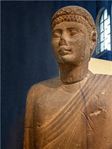
Around the king stood a Greek court and a complex bureaucracy built to extract Egypt’s wealth for the crown. At court a chief finance minister, a chief accountant and a few other ministers ran the government. Each nome, or province, was governed by a strategos, with an oikonomos for its economic affairs, and each village had its chief administrator, the komarches. Macedonians and other Greeks held virtually all the higher posts and formed the new upper class. The court also kept scholars and poets: Ptolemy II paid stipends to Callimachus and Theocritus, the mathematician Euclid worked under his patronage, and the chief librarian of the Library of Alexandria was also the crown prince’s tutor.
Moving in or out. Office came by the king’s appointment, and Greeks held nearly all of it; over time Egyptians who spoke Greek could rise further. Favour could also be lost: under Ptolemy IV a circle of royal favourites took control of the government.
How many? Estimate: the ministers of the court at Alexandria, the governors and stewards of the nomes with their Greek staffs, and the scholars the crown kept, with their families: a few thousand people among 3–4 million.
Picture: Sandstone statue of an official from Coptos, 50 BCE–25 CE (Penn Museum) · Mary Harrsch · CC BY-SA 4.0 · Wikimedia Commons

Religious and learned · c. 0.5–1.5% (est.)
Egyptian priests
-
Egyptian priests looked after the temples, and the Greek kings built new temples to keep the priests on their side.
Priests and other religious officials remained overwhelmingly Egyptian and kept much of their old privilege and prestige, because the Ptolemies relied on Egyptian religion to legitimise their rule. The first three kings built and restored temples on a large scale: Ptolemy III began the Temple of Horus at Edfu in 237 BCE. The kings called the priests of all Egypt to synods, at Canopus in 238 BCE and at Memphis in 217 BCE; the decree of 217 BCE, in hieroglyphs, Demotic and Greek, presented the king as Horus and set up his statue in every temple. The High Priests of Ptah at Memphis had great influence, even with the kings, yet the crown taxed temple property heavily.
Moving in or out. Priestly office stayed in Egyptian hands. A priest could serve the new kings, as Manetho did when he was commissioned to write a history of Egypt, or lead a revolt against them, as Horwennefer did in 205 BCE.
How many? Estimate: no count survives; the range is the one estimated for the priests of pharaonic Egypt, since the Ptolemies kept the temples and their priesthoods in their old privileged place.
Soldiers, merchants and craftsmen · c. 3–7% (est.)
Klerouchoi (Greek settlers)
katoikoi (soldier-settlers), epigonoi (their descendants)
Greek soldiers were given farms in Egypt, and in return they had to fight for the king whenever he called them.
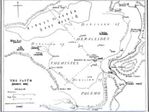
Macedonians and other Greeks were the kingdom’s privileged minority. Some lived in its three Greek cities, Alexandria, Naucratis and Ptolemais; most were soldiers settled on land grants (kleroi) across the country, the cleruchs, who farmed in peacetime and could be called to war at any time. A grant’s size followed the soldier’s rank: in the 3rd century BCE a cavalryman received 100 arouras and an infantryman 30. Many were settled in the Faiyum, which the Ptolemies drained and colonised with Greeks and Egyptians, founding villages such as Philadelphia and Karanis. Greeks lived under Greek law and were tried in Greek courts; their young men trained in the gymnasium, and their dialects merged into the common Koine Greek.
Moving in or out. Greek immigrants, mercenaries and even prisoners of war entered by joining the army, and the cleruchs’ descendants, the epigonoi, kept their status. In time many people counted as Greeks were of Egyptian descent.
How many? Estimate: tens of thousands of Greek soldiers and mercenaries settled with their families, beginning with Ptolemy I’s roughly 6,500 Macedonians and the 8,000 prisoners settled after Gaza in 312 BCE, besides the Greeks of Alexandria, Naucratis and Ptolemais; in the Faiyum cleruchs and their descendants made up as much as 29 per cent of the adults in the mid-3rd century BCE.
Soldiers, merchants and craftsmen · c. 1–3% (est.)
Machimoi (Egyptian soldiers)
Egyptian soldiers were given small farms too, and they helped the king’s army win a great battle at Raphia.
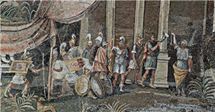
The machimoi were lower-ranking infantry, usually of Egyptian origin. Native troops served in the army from its founding; they were well regarded as fighters, but were sometimes looked down upon and distrusted for a reputation for disloyalty and for aiding local revolts. At least from about 230 BCE they too received land grants: lots of at least five arouras, considered enough for one family. They were sometimes made guards for officials, or helped to enforce the collection of taxes, and their standing was higher than that of the average Egyptian. At the Battle of Raphia in 217 BCE Egyptian soldiers fought beside the Greeks, and after it the ranks they reached and the lands they were given grew.
Moving in or out. An Egyptian entered the rank by enlisting. After Raphia, and under the reforms of Ptolemy V, native soldiers appeared more often as officers and cavalrymen, though Greeks kept the higher ranks of the royal guard, the officers’ posts and the generalships.
How many? Estimate: no count survives; the native soldiers with their families, granted lots of at least five arouras from about 230 BCE and numerous enough to prove themselves at Raphia in 217 BCE.
Picture: Soldiers in the Nile Mosaic of Palestrina, a Hellenistic view of Egypt · Unknown author · Public domain · Wikimedia Commons
Free commoners · c. 1–3% (est.)
Politeumata (Jews and other immigrant communities)
politeuma (a community of settlers of one origin)
People came to Egypt from many lands, and Jewish families in Alexandria had their own part of the city.
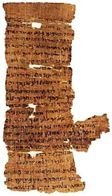
Of the many peoples who settled in Ptolemaic Egypt, the Greeks were the most privileged. Soldier-settlers of one origin formed communities of their own, the politeumata: those attested include Cilicians, Boeotians, Cretans, Phrygians, Idumaeans at Memphis and Jews at Heracleopolis. The Jews had come from the southern Levant; within a few generations they spoke Greek rather than Hebrew or Aramaic, and in Alexandria they had their own quarter, where conflicts with the Greeks broke out from time to time. Jewish tradition held that the Septuagint, the Greek translation of the Jewish scriptures, was made for Ptolemy II. The papyri of Zeno of Caunus, from the same reign, mention Arabs between the Nile and the Red Sea as police officers and shepherds.
Moving in or out. Many came as soldiers and were settled for their service: according to Josephus, Alexander the Great had settled Jews in Alexandria as a reward for military service. Their children grew up speaking Greek.
How many? Estimate: no count survives; the Jews, a sizable minority of Alexandria with a quarter of their own, and the communities of soldiers and settlers of other origins across the country.
Picture: The Nash Papyrus, a Hebrew text of the 2nd or 1st century BCE found in Egypt · Unknown author · Public domain · Wikimedia Commons

Free commoners · About 86% (the rest, est.)
Peasant farmers
-
Most Egyptians were farmers who grew wheat beside the Nile and gave much of their harvest in taxes.
As before the Greeks came, peasant farmers were the vast majority of the people. The land they worked and its produce belonged to the state, a temple or a noble family, and the bureaucracy was built to extract all it could. The Ptolemies extended the farmland with canals and drained the marshy Faiyum, settling it with Greeks and Egyptians, and introduced durum wheat for export and vines for the Greeks’ wine. The crown controlled the making and sale of linen, olive oil, beer and papyrus. Coins spread, though payment in kind remained common; rural labourers were paid in bronze, and when Ptolemy IV cut the weight of the bronze coins their spending power was roughly halved.
Moving in or out. A peasant’s son could enlist as a soldier and receive a small lot, or learn Greek and rise into the lower posts of the administration. Many Egyptians were moved from other parts of the country to new land in the Faiyum.
How many? Everyone not counted in the other ranks: the vast majority, Egyptian peasant farmers and their families, with labourers and village craftsmen. The other ranks below the king are estimates, so this share is one too.


Enslaved · c. 2–5% (est.)
Enslaved people
-
Some people were enslaved, many of them brought from Syria and sold, and some tried to run away.
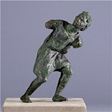
Slavery in Ptolemaic Egypt was supplied by war, purchase, debt and, probably more rarely, birth. The Zenon papyri show slaves imported chiefly from Syria and Israel, through the slave markets of coastal cities such as Tyre and Gaza; the capture and sale of free Syrians was so widespread that Ptolemy II issued a decree about it. In the 3rd century BCE a woman sold for about 50 to 300 drachmas and a man for about 112 to 150, more in great markets such as Alexandria. The state taxed slave imports, sales and manumissions. Sale documents described each slave carefully for identification, slaves could be handed over to pay debts, and runaways were pursued, often with rewards offered for their capture.
Moving in or out. Freedom came by manumission, on which the state took a tax. Running away was the other path, and the Ptolemaic period is the first from which documents of escape from slavery survive in any number.
How many? Estimate: no count survives; Egypt had long been a peasant economy in which slavery mattered more only from the Greco-Roman period, and even in Roman Egypt it existed beside extensive free labour and was not the main form of production.
Picture: Bronze figure of an enslaved man, Egypt, 2nd–1st century BCE (Walters Art Museum) · Walters Art Museum · CC BY 3.0 · Wikimedia Commons

Born into history
Where would you have stood? Chance places you on the ladder, as birth placed most people: weighted by how many each rank held.
Moving up and down
The ladder of Ptolemaic Egypt ran along the line between Greek and Egyptian, and language was the main way across it. Greeks held virtually all political and economic power and Egyptians generally only the lower posts, but over time Egyptians who spoke Greek were able to advance further, and many people identified as Greeks were of Egyptian descent. Within a century of the conquest intermarriage had produced a large Greco-Egyptian educated class, and the cleruchs’ descendants married into the Egyptian population and took up Egyptian beliefs. The army was the other ladder: native soldiers received land from about 230 BCE, and after Raphia in 217 BCE their ranks and grants grew. For most Egyptians there was little to share in the kingdom’s wealth, and uprisings were frequent. In 205 BCE the priest Horwennefer proclaimed himself pharaoh, and he and his son Ankhwennefer held Thebes and much of Upper Egypt until 186 BCE, the greatest challenge the dynasty ever faced.
Women on the ladder
The articles say most about the women of the royal house. Queens often ruled beside their husbands, who from Ptolemy II onwards were often their brothers. Arsinoe II was deified, with her own sanctuaries and festivals, and shown both in Greek forms, as Aphrodite or Hera, and as an Egyptian goddess; Berenice II was queen to Ptolemy III. Greek soldiers were allowed to settle in Egypt with their families, and their descendants, the epigonoi, intermarried with Egyptians, so that the mixed Greco-Egyptian society of the Faiyum was made by marriage. Among the enslaved, women were sold for a wider range of prices than men, from about 50 to 300 drachmas in the 3rd century BCE. Of the legal rights of ordinary Greek and Egyptian women under the Ptolemies these articles say nothing.
Compare with another society
Test yourself
5 questions on the ladder of Ptolemaic Egypt.
The questions open here once the page has loaded.
Sources and further reading
- Bevan, E. (1927) The House of Ptolemy: A History of Hellenistic Egypt under the Ptolemaic Dynasty.
- Fischer-Bovet, C. (2015) "The Ptolemaic Army", in Oxford Handbook Topics in Classical Studies. Oxford: Oxford University Press.
- Hölbl, G. (2000) A History of the Ptolemaic Empire. Trans. T. Saavedra. Routledge.
- Manning, J. G. (2003) Land and Power in Ptolemaic Egypt: The Structure of Land Tenure. Cambridge: Cambridge University Press.
- Peters, F. E. (1970) The Harvest of Hellenism. New York: Simon & Schuster.
The shares are of the whole population, children included. Where a scholar has counted or estimated a rank, its share follows that work, named on the rank; where no count survives, the share is an estimate, marked est. and drawn dashed, made from what the rank was and did, from related figures and from the same rank in comparable societies, and its note says what it rests on. Population: a modern estimate for the kingdom at its height, by the late Ptolemaic period; the 3rd century BCE may have had somewhat fewer.
Cite this page
- APA
- The Epoch Institute. (2026). Social Hierarchy of Ptolemaic Egypt. In Social Ladders. https://the-epoch-institute.org/societies/ptolemaic-egypt
- MLA
- “Social Hierarchy of Ptolemaic Egypt.” Social Ladders, The Epoch Institute, 2026, https://the-epoch-institute.org/societies/ptolemaic-egypt. Accessed .
- Chicago
- The Epoch Institute. “Social Hierarchy of Ptolemaic Egypt.” Social Ladders. 2026. https://the-epoch-institute.org/societies/ptolemaic-egypt.
- Harvard
- The Epoch Institute (2026) ‘Social Hierarchy of Ptolemaic Egypt’, Social Ladders. Available at: https://the-epoch-institute.org/societies/ptolemaic-egypt (Accessed: ).