Social ladder · 1271–1368 (from Kublai Khan's proclamation of the Great Yuan to the fall of the dynasty)
Social Hierarchy of Yuan China
From Great Khan to the Enslaved

Yuan China was ruled by a conquering minority. Kublai Khan, Great Khan of the Mongols, proclaimed the Great Yuan in 1271 and completed the conquest of the Southern Song in 1279. His government sorted its subjects into four categories for office, taxes and law: the Mongols; the semu, “various sorts”, peoples of Central and West Asia such as Uyghurs, Tanguts and Muslims; the Han ren, subjects of the former Jin state in the north; and the nanren, “southerners”, subjects of the Song and by far the most numerous. The order followed how early each people had submitted, not ethnicity alone. Historians debate how formal it was: Frederick Mote saw degrees of privilege rather than social classes, and some Japanese historians doubt that a four-class system existed at all. Alongside it the state registered households by hereditary calling, each owing its own service: soldiers, artisans, clergy, Confucian scholars and others.
Period 1271–1368 (from Kublai Khan's proclamation of the Great Yuan to the fall of the dynasty)People 60–65 millionRanks 10Profile Yuan Dynasty
The ladder
By rank, the ladder is drawn as a pyramid. To scale, each bar is as wide as that rank’s share of the people. Shares marked est. are estimates where no count survives; their boxes and bars are dashed.

Ruler · One ruler
Qa'an (The emperor and Great Khan)
huangdi, khagan (qa'an)
The Yuan ruler was called the Great Khan by the Mongols and the emperor by the Chinese.
The Yuan ruler was at once emperor (huangdi) to his Chinese subjects and khagan, Great Khan, to the Mongols. Kublai, a grandson of Genghis Khan, was elected Great Khan by an assembly (kurultai) at Kaiping in 1260, while a rival assembly chose his brother Ariq Böke, who surrendered in 1264. Kublai proclaimed the Great Yuan in 1271 and ruled from a new capital, Khanbaliq (Dadu), with a summer capital at Shangdu. He followed Confucian rites and ancestor veneration while keeping the customs of the steppe, and received Tibetan Buddhist initiation from the lama Phagpa. No law fixed the succession: any descendant of Kublai might rule, and the assemblies debated the choice until 1311, after which empress dowagers, the guards and great ministers made emperors. Most emperors spoke Chinese but could not master its writing. Reigns grew short after Kublai’s death in 1294: a group of princes murdered Emperor Gegeen in 1323, and in 1328 a civil war, the War of the Two Capitals, decided the throne.
Moving in or out. Any descendant of Kublai could rule, chosen by an assembly of princes or, later, by whichever faction held the guards and the capital. The last emperor, Toghon Temür, fled north to the steppe in 1368 as the Ming army approached.
How many? One man, with the imperial family of the Borjigin clan.

Nobility and officials · Fewer than 1 in 1,000 (est.)
Wang (Mongol princes and imperial in-laws)
küregen (imperial sons-in-law)
Mongol princes were relatives of the emperor who lived on the taxes of lands given to them.
Below the emperor stood the Golden Lineage, the princes descended from Genghis Khan, and the families that married into it. Princes held appanages, grants of land and households whose revenue they drew: as early as 1236 Kublai had received an estate of 10,000 households in North China. They sat in the assemblies that chose the khagan, commanded armies and kept their own followers, and they were the dynasty’s greatest danger. Prince Nayan, a descendant of one of Genghis Khan’s brothers, rose against Kublai in 1287 and was executed in the way reserved for princes, smothered under felt carpets, and his followers’ troops were shared out among the imperial family. Custom bound the emperors in marriage to a few Mongol clans, above all the Onggirat and the Ikires, whose daughters became empresses and whose sons married imperial princesses. Even the crown prince of Goryeo in Korea, the future King Chungnyeol, married a daughter of Kublai, making the kings of Goryeo imperial sons-in-law.
Moving in or out. Only birth into the line of Genghis Khan made a prince, and only marriage made an in-law. A prince who rebelled or backed the losing claimant could lose his troops, his appanage and his life.
How many? Estimate: the princes of Genghis Khan’s line and the families that married into it were few, though their households and followers were large.

Nobility and officials · c. 0.1–0.2% (est.)
Guan (Officials)
darughachi (overseers)
Yuan officials ran the government, and the very top jobs were kept for Mongols and peoples from Central and West Asia.
The Yuan kept the institutions of a Chinese state, a Central Secretariat, a Bureau of Military Affairs and a Censorate, but filled the posts by origin. The two grand chancellors could only be Mongols or semu, and the four managers of affairs below them only occasionally included a northern Chinese and never a southerner. In each district a darughachi, a Mongol or semu overseer, served beside the Chinese administrators. Kublai would not revive the civil service examinations: he chose officials by recommendation and by the hereditary privilege of officials’ sons, and he relied on Central Asians for finance, above all the Muslim Ahmad Fanakati, his finance minister for some twenty years until his murder in 1282. Chinese advisers kept real influence, and Chinese experts such as Guo Shoujing, director of the observatory from 1283 and head of the Water Works Bureau from 1292, held technical posts. Later Mongol chancellors such as Toghto had a Confucian education. In the 1320s the court even sold offices.
Moving in or out. Most officials entered by recommendation, through their fathers’ privilege or through the School for the Sons of the State, founded in 1271 for the sons of the imperial guards. From 1315 a few won office by examination, and half of those places were reserved for Mongols and semu.
How many? Estimate: some 20,000–26,000 officials in the empire, the most powerful offices reserved for Mongols and semu, with their families.
Picture: A courtier in a Mongol robe, detail of Liu Guandao's Kublai Khan Hunting, 1280 (National Palace Museum, Taipei) · Liu Guandao · Public domain · Wikimedia Commons

Religious and learned · c. 0.3–0.6% (est.)
Toyin (Clergy)
dishi (Imperial Preceptor), xiansheng (Daoist masters), erke'üd (Christian clergy)
Buddhist monks, above all the lamas of Tibet, were honoured at the Yuan court and excused from many taxes.
The Mongols honoured the holy men of every faith. A decree of Genghis Khan, renewed until the end of the dynasty, exempted Buddhist monks, Daoist priests, Christian clergy and Muslim clerics from taxes and labour service, though from 1264 Kublai taxed clergy who farmed or traded. Highest stood the lamas of Tibetan Buddhism, the favoured faith of the court. Kublai made the Sakya lama Phagpa his State Preceptor in 1260 and later Imperial Preceptor (dishi), with authority over all the empire’s Buddhist monks, and a bureau founded in 1264, from 1288 called the Bureau of Buddhist and Tibetan Affairs, governed both the monks and Tibet. Tibetan monks made free use of the official post-stations and won pardons for prisoners who bribed them; in 1309 their bureau decreed that anyone who struck a monk should lose a hand, until the emperor repealed it. Daoists lost ground to the Buddhists, while Christians of the Church of the East, such as the monk Rabban Sauma, had an office of their own.
Moving in or out. Men and women entered the clergy by taking vows, and service to the court could lead far: Sangha, who rose through the Buddhist bureau, became the dynasty’s chief fiscal officer in 1286. In 1329 foreign clerics, Muslims among them, lost their tax exemptions.
How many? Estimate: in 1291 the empire registered some 42,000 Buddhist monasteries and 213,000 monks and nuns, with the clergy of other faiths in households of their own.
Religious and learned · c. 0.3–1% (est.)
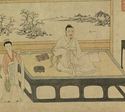
Ru (Confucian scholars)
ruhu (Confucian households)
With no government exams for many years, many Chinese scholars became teachers, doctors and writers.
The Confucian literati, who under the Song had filled the bureaucracy through the examinations, lost their road to power. The Mongols counted Confucian scholars among the learned men of the empire’s faiths and, like the clergy, exempted them from labour service and at first from taxes, but Kublai refused to restore the examinations, believing that Confucian learning was not needed for government. Southern scholars, heirs of the Song elite, suffered most. Many became teachers, clerks, physicians or writers: medicine paid well and suited Confucian ethics, and the zaju drama flourished as literati turned to the stage. Song loyalist writers complained that the new order ranked Confucians ninth of ten grades of people, just above beggars, a bitter jest rather than a law. Emperor Ayurbarwada, who had been taught by a Confucian tutor, restored the examinations by an edict of 1313; the first metropolitan examination was held in 1315 on Zhu Xi’s commentaries to the classics, but the degrees averaged only about twenty-one a year.
Moving in or out. From 1315 a scholar could again win office by examination, though southerners competed for a quarter of the places. Others reached office by recommendation, as the scholar and painter Zhao Mengfu, a descendant of the Song emperors, did after Kublai received him in 1286.
How many? Estimate: Confucian scholars were registered in households of their own, most of them in the south.
Picture: Portrait of the scholar-painter Ni Zan, handscroll, c. 1340 · Unknown painter; inscribed by Zhang Yu · Public domain · Wikimedia Commons
Soldiers, merchants and craftsmen · c. 2–4% (est.)
Ortogh (Merchants)
shang (merchants)
Some merchants were business partners of Mongol princes, who gave them silver to trade with.
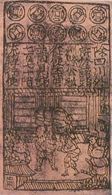
Trade prospered under Mongol rule, and the richest merchants were partners of the rulers themselves. The ortogh, from a Turkic word for “partner”, were semu merchants, many of them Muslims and Uyghurs, to whom princes, nobles and the state entrusted silver to invest in caravans and moneylending. They received high commissions, cheap loans from an office Kublai set up in 1268 and the use of the official post-stations, and, to the anger of Chinese officials, the right to bear arms; their lending at high interest made them hated. After the conquest of the Song, Muslim, Uyghur and Chinese merchants sailed from the southern ports such as Quanzhou to the South China Sea and the Indian Ocean, and from 1286 maritime trade was taxed through the Office of Market Taxes. Paper money, the jiaochao, issued from 1260, circulated across the empire, though over-issue later brought inflation. Most merchants were Chinese traders and shopkeepers, and the busy commerce of the south let southern manufacturers and merchants prosper.
Moving in or out. Trade could bring influence: in Quanzhou, Muslim merchant families combined commerce with political power. At the end of the dynasty their wealth drew a violent backlash from the Chinese.
How many? Estimate: from the ortogh partners of the court to the shopkeepers of the southern cities.

Soldiers, merchants and craftsmen · c. 3–6% (est.)
Junhu (Soldiers)
tammachi, hanjun (Han army), xinfujun ("Newly Adhered" army)
Soldiers’ families had to send a man to the army in every generation.
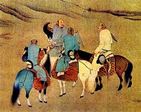
The Yuan drew its soldiers from hereditary military households, registered under the Bureau of Military Affairs, which had to supply men and their equipment generation after generation. There were four kinds, each with its own privileges of stipends, rations or tax exemptions: Mongol households; the Tammachi, Mongol and other steppe troops of the frontier; the Han army, northern Chinese who had joined the Mongols before the 1250s; and the “Newly Adhered” army of Song soldiers who surrendered in the 1270s. Officers passed their commands to their sons. Mongols settled in China found the duty ruinous: a typical garrison family lived on the harvests of its Chinese tenants, which the cost of equipping its men ate up; without pastures they had to buy horses at their own expense, and by the 1300s many could not afford the journey to join their units. Kublai also formed a new imperial guard, the suwei, 6,500 strong at first and some 100,000 by the dynasty’s end. After his death desertion became a massive problem.
Moving in or out. Service passed from father to son, and an officer’s command to his heir. Many Mongol households sank into poverty under its costs, and by 1290 some Mongol commoners were selling their children into slavery.
How many? Estimate: in 1241, before the period, military households made up one household in seven in North China; the empire’s military households were a smaller share of the whole.
Picture: Yuan soldiers shoot at a samurai during the invasion of Japan, from the Mōko Shūrai Ekotoba, c. 1293 · Made for Takezaki Suenaga · Public domain · Wikimedia Commons
Free commoners · 8–14%
Hanren (Northern Chinese)
Northern Chinese farmers ranked above the southern Chinese under Mongol rule.
The third category, the Han ren, took in the subjects of the former Jin state in the north: northern Chinese, together with Khitans, Jurchens and Koreans. They ranked above the southerners because they had come under Mongol rule decades earlier, and northern Chinese generals had led armies for the Mongols. The north had suffered most in the long wars of conquest, and in 1290 it held far fewer people than the south, some 2 million registered households against 12 million. Most northerners farmed the plains of the Yellow River, many of them on lands granted as appanages to Mongol princes and commanders. Like the southerners they paid taxes, owed labour on the state’s works and could not lawfully keep weapons: in 1351 the chancellor Toghto put 150,000 labourers and 20,000 soldiers to work cutting a new channel for the Yellow River. Plague and famine ravaged the Huai River lands in the 1330s, floods broke the Yellow River’s banks, and the Red Turban Rebellion broke out in 1351.
Moving in or out. Northern Chinese could rise through the army, as the Han generals who fought for the Mongols did, or from 1315 through the examinations, where they had a quarter of the places. Famine and the state’s demands drove others from their land.
How many? The census of 1290 recorded some 2 million households in North China against some 12 million in the south: roughly one registered household in seven was northern, and fewer if, as some historians think, millions of southerners escaped the census.

Free commoners · About 77% (the rest, est.)
Nanren (Southern Chinese)
manzi
Southern Chinese were the biggest group in Yuan China but the least favoured by its Mongol rulers.
The southerners (nanren), the subjects of the Southern Song conquered in the 1270s, were by far the largest group and the lowest of the four, because they had resisted longest. Their land was the richest in the empire: by about 1250 three-quarters of China’s people lived south of the Yangtze, most of them growing rice. Most southerners were farmers, many of them tenants of great landlords, and townspeople of cities such as Hangzhou, the former Song capital and the largest city of the Yuan realm. Commerce flourished, and southern manufacturers and merchants prospered, yet southerners were kept from high office: none sat among the grand chancellors or the managers of affairs, and in the restored examinations they had the same quota as the far smaller Mongol and semu groups. The censuses may have missed many of them, as many as 40 million people on one estimate. Taxes, the inflation of the paper money and the famines of the 1340s fed the Red Turban Rebellion of 1351.
Moving in or out. Southerners were the least likely of all to reach office, though a few scholars won posts by recommendation or examination. Wealth from land and trade let some southern families prosper despite their low legal standing.
How many? Everyone not counted in the other tiers: chiefly the farmers and townspeople of the former Song lands, some 12 million registered households in 1290. Several of the other ranks are estimates, so this share is one too.
Picture: A fisherman in his boat, from the handscroll Fisherman by Wu Zhen of Jiaxing, c. 1350 (Metropolitan Museum of Art) · Wu Zhen · Public domain · Wikimedia Commons


Enslaved · c. 2–5% (est.)
Qukou (Enslaved people)
nubi
Enslaved people were owned by others and made to work without pay; many had been captured in wars.
The Mongol conquests enslaved great numbers of people. By Mongol custom war captives could be enslaved, and when the Mongols took a city they set aside craftsmen and other skilled people; captives were divided among princes, dignitaries and commanders, and the Yuan scholar Song Zichen estimated that after the fall of the Jin they made up half the people of North China. These bondservants, the qukou or “driven people”, belonged to their masters, and their children were born into bondage. The state held slaves of its own, who worked in military farming colonies, brewhouses and workshops, and the imperial household kept enslaved artisans. Others were bought: poor and indebted families sold themselves or their children, and by 1290 Mongol commoners were selling their children too, until Kublai in 1291 forbade the sale of Mongols abroad. Korean girls were sought as concubines, and Chinese captives were exported to Mongolia and the Muslim world until the 1330s. Japanese historians note that some Han Chinese owned Mongol slaves.
Moving in or out. An owner could release a slave to live as a commoner; otherwise bondage passed to the slave’s children.
How many? Estimate: a Yuan scholar, Song Zichen, estimated that the captives held by princes, dignitaries and commanders made up half the people of North China after the conquest of the Jin; far fewer in the south.
Picture: Servants make music for the tomb's owners, wall painting in a Yuan tomb at Hengshan, Shaanxi · Unknown author · Public domain · Wikimedia Commons

Born into history
Where would you have stood? Chance places you on the ladder, as birth placed most people: weighted by how many each rank held.
Moving up and down
Birth and hereditary registers placed most people in Yuan China, binding families to their callings as soldiers, artisans or scholars, but war, favour and rebellion moved many. Foreigners rose fastest in the khans’ service: Ahmad Fanakati, a Muslim from Banakat in Central Asia, became Kublai’s finance minister, and Kublai’s minister Sangha rose through the Buddhist bureau to control the dynasty’s finances in 1286. Chinese gained less, though the scholar Zhao Mengfu, a descendant of the Song emperors, was received by Kublai in 1286 and won the favour of Emperor Ayurbarwada. Lady Gi, sent from Korea as a concubine in 1333, became Toghon Temür’s empress. Falls were common too: ordinary Mongol families sank into deep poverty, and conquered families became slaves. The greatest rise came as the dynasty collapsed. Zhu Yuanzhang, born to a poor peasant family in 1328, lost his parents to an epidemic in 1344, begged for alms as a novice monk, joined the Red Turban rebels in 1352 and in 1368 founded the Ming dynasty as the Hongwu Emperor.
Women on the ladder
A woman’s standing followed her family’s rank and category. Women of the ruling house could hold real power: after 1320 empress dowagers helped decide who would reign, and Lady Gi, a Korean sent to the court as a concubine, became empress and a leading figure at court in the 1350s and 1360s. The Mongol custom of marrying a widow to a kinsman of her late husband clashed with Chinese ideals of widow chastity, and Yuan law moved towards Confucian norms: in 1340 marriages were ordered to follow Confucian rules. Most women worked in the fields and at the loom. By tradition the weaver Huang Daopo, who had fled a marriage her family sold her into, learned cotton spinning on Hainan and around 1295 taught it to the women of Songjiang. The painter Guan Daosheng, wife of Zhao Mengfu, won fame of her own. Enslaved women had no protection, and Goryeo had to send young women to the court as concubines.
Compare with another society
Test yourself
4 questions on the ladder of Yuan China.
The questions open here once the page has loaded.
Sources and further reading
- Birge, B. (2002) Women, Property, and Confucian Reaction in Sung and Yüan China (960–1368). Cambridge: Cambridge University Press.
- Brook, T. (2010) The Troubled Empire: China in the Yuan and Ming Dynasties. Cambridge, MA: Belknap Press of Harvard University Press.
- Franke, H. and Twitchett, D. (eds) (1994) The Cambridge History of China, Volume 6: Alien Regimes and Border States, 907–1368. Cambridge: Cambridge University Press.
- Langlois, J. D. (ed.) (1981) China under Mongol Rule. Princeton: Princeton University Press.
- Mote, F. W. (1999) Imperial China, 900–1800. Cambridge, MA: Harvard University Press.
- Rossabi, M. (1988) Khubilai Khan: His Life and Times. Berkeley: University of California Press.
The shares are of the whole population, children included. Where a scholar has counted or estimated a rank, its share follows that work, named on the rank; where no count survives, the share is an estimate, marked est. and drawn dashed, made from what the rank was and did, from related figures and from the same rank in comparable societies, and its note says what it rests on. Population: the registered population in the censuses of about 1290–1300; historians think many more people, chiefly in the south, went unregistered.
Cite this page
- APA
- The Epoch Institute. (2026). Social Hierarchy of Yuan China. In Social Ladders. https://the-epoch-institute.org/societies/yuan-china
- MLA
- “Social Hierarchy of Yuan China.” Social Ladders, The Epoch Institute, 2026, https://the-epoch-institute.org/societies/yuan-china. Accessed .
- Chicago
- The Epoch Institute. “Social Hierarchy of Yuan China.” Social Ladders. 2026. https://the-epoch-institute.org/societies/yuan-china.
- Harvard
- The Epoch Institute (2026) ‘Social Hierarchy of Yuan China’, Social Ladders. Available at: https://the-epoch-institute.org/societies/yuan-china (Accessed: ).