Social ladder · c. 320 BCE – 550 CE (the Maurya and Gupta empires)
Social Hierarchy of Classical India
From King to Enslaved
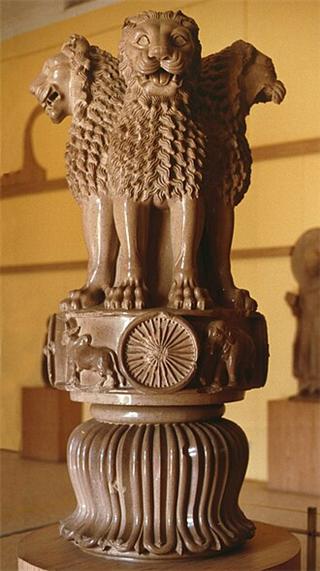
The Brahmanical law books of this age, the Dharmashastras such as the Manusmriti, ranked people in four varnas fixed by birth: Brahmins, Kshatriyas, Vaishyas and Shudras, with groups such as the Chandalas placed outside them. This was a Brahmin ideal, and it was contested. Buddhist texts put the Kshatriyas first and described society as householders, and the Greek envoy Megasthenes, around 300 BCE, counted seven hereditary classes. Lived society was made of many jatis, groups born to an occupation that married among themselves. Birth and calling, more than wealth, set a person’s rank, and the law books gave the three “twice-born” varnas rights that Shudras and outcastes lacked. Historians debate how rigid caste was, and how far British rule, much later, hardened it; genetic studies suggest that, at least in the north, marriage within one’s group became the rule only in the first half of the first millennium CE.
Period c. 320 BCE – 550 CE (the Maurya and Gupta empires)People 15–30 millionRanks 8Profile Maurya Empire, Gupta Empire
The ladder
By rank, the ladder is drawn as a pyramid. To scale, each bar is as wide as that rank’s share of the people. Shares marked est. are estimates where no count survives; their boxes and bars are dashed.
Ruler · One ruler
Rājan (The king)
mahārājādhirāja
Indian kings took part of every harvest as tax and were expected to protect their people.
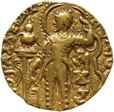
The law books made kingship the duty of a Kshatriya: to protect his subjects, punish wrongdoers and uphold the order of the varnas, in return for a share of the harvest, traditionally a sixth. The Maurya kings ruled from Pataliputra with a council of ministers, sent princes to govern the provinces and kept a great standing army, by Megasthenes’ count 600,000 infantry, 30,000 cavalry and 9,000 war elephants. Ashoka (r. c. 268–232 BCE) had edicts carved across his realm urging respect for Brahmins and ascetics and proper treatment of slaves and servants. The Gupta kings took the title maharajadhiraja, “great king of kings”, and performed the Vedic horse sacrifice; the Allahabad Pillar Inscription praised Samudragupta as a conqueror and a poet. The Chinese pilgrim Faxian, in India around 400 under Chandragupta II, reported that the king ruled without executions: most criminals were only fined, and repeated rebels lost their right hand.
Moving in or out. Kingship was meant for Kshatriyas, but few dynasties of the age were Kshatriyas by birth: the Nandas were said to be Shudras, the Shungas and Kanvas were Brahmins, and the Gupta records never name their varna. From the 4th century Brahmins gave rising dynasties Kshatriya standing by tracing their descent to the solar and lunar lines of the epics.
How many? One ruler, with the royal family and the women of the palace.
Religious and learned · c. 4–8% (est.)
Brāhmaṇa (Brahmins)
Brahmins were priests and teachers who learned the holy texts called the Vedas by heart.
The Brahmanical texts placed Brahmins first. With the Kshatriyas and Vaishyas they were “twice-born”, initiated into the study of the Vedas, which were learned by heart; but only Brahmins could teach the Vedas, perform sacrifices for others and live on gifts. The Manusmriti told kings never to tax a learned Brahmin and never to put a Brahmin to death, whatever his crime. Megasthenes counted Brahmins among his “philosophers”, few in number but the most honoured, exempt from public duties and hired to perform sacrifices and funeral rites. In practice many Brahmins lived as farmers or officials, and some as generals, and Buddhist texts show them in many trades. The Maurya kings patronised Buddhists, Jains and Ajivikas as well as Brahmins; the Guptas favoured Brahmins, performing Vedic sacrifices and granting them villages, with their revenue and free of tax, by charters engraved on copper plates. Brahmins wrote the law books, and Brahmin ministers served kings.
Moving in or out. In the law books Brahmin rank came by birth alone. A Brahmin in hard times was allowed to live by a Kshatriya’s or a Vaishya’s work, and one who committed a grievous sin could be cast out of his varna.
How many? Estimate: Megasthenes called his class of “philosophers” small but the most honoured; in the census of 1931, the first to count castes in detail, Brahmins were about 5–6 per cent of Hindus.
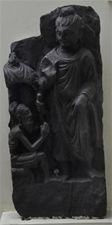
Picture: A Brahmin meets the young Siddhartha, relief from Gandhara, 2nd–3rd century (Indian Museum, Kolkata) · Biswarup Ganguly · CC BY 3.0 · Wikimedia Commons
Religious and learned · c. 0.5–1% (est.)
Śramaṇa (Buddhist and Jain monks and nuns)
bhikkhu, bhikkhunī, saṅgha
Buddhist and Jain monks and nuns gave up their homes to live simply and study their faith.
Buddhist and Jain monks and nuns, and the ascetics of smaller orders such as the Ajivikas, left household life and stood outside the varna order: the Buddhist order took people of every varna, though not slaves or debtors. Ashoka’s edicts paired “Brahmins and shramanas” as the holy men to be honoured, and Megasthenes counted ascetics with the Brahmins among his “philosophers”. Monks and nuns shaved their heads, wore robes and owned little beyond them and an alms bowl; Buddhist monks lived by a code of more than two hundred rules, kept celibate and ate only before noon. Kings, merchants and guilds gave the orders caves, monasteries and land: Ashoka gave the Ajivikas caves in the Barabar Hills and, by Sri Lankan tradition, sent his son Mahinda and his daughter Sanghamitta to take Buddhism to Sri Lanka. Under the Guptas, who favoured Brahmins but tolerated other faiths, great monasteries such as Nalanda became centres of learning, though the Huna king Mihirakula destroyed many others in the early 6th century.
Moving in or out. Anyone free of debt and servitude could take the robe, whatever their varna, and a monk or nun could leave the order and return to household life.
How many? Estimate: Faxian and later Xuanzang counted monks by the thousand in great monasteries, but monks and nuns were a small part of the people.
Nobility and officials · c. 3–8% (est.)
Kṣatriya (Kshatriyas)
rājanya
Kshatriyas were warriors and rulers whose duty was to protect the people.
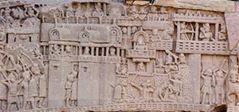
The Kshatriyas were the warrior and ruling varna. The law books told them to protect the people, fight and govern, to study the Vedas, sacrifice and give gifts, but not to teach the Vedas or live on gifts. Kingship belonged to them in theory, and the clans that ruled the old republics of the Ganges plain, such as the Licchavis, called themselves Kshatriyas and were patrons of Buddhism and Jainism. Buddhist texts placed the Kshatriyas above the Brahmins. Kshatriya lineages held land, commanded armies and governed provinces, and after the Mauryas many clan states in Punjab and Rajasthan claimed Kshatriya status. Brahmin writers counted the foreign conquerors, the Greeks (Yavanas) and Shakas, as Kshatriyas who had fallen to the rank of Shudras by neglecting the rites. Megasthenes described a hereditary class of soldiers, the second most numerous, paid by the state and idle in peacetime, but the Arthashastra expected troops of every varna.
Moving in or out. Kshatriya rank came by birth, but success could claim it: from the 4th century Brahmins gave newly risen royal families Kshatriya genealogies, while a Kshatriya people that abandoned the rites could be counted as fallen.
How many? Estimate: the ruling and warrior lineages; Megasthenes thought soldiers the second most numerous of his seven classes, but soldiers came from every varna.
Picture: Warriors of the Mallas defend Kushinagara in the War over the Buddha's Relics, Great Stupa of Sanchi, 1st century BCE · Photo Dharma · CC BY 2.0 · Wikimedia Commons
Free commoners · c. 5–10% (est.)
Vaiśya (Vaishyas)
śreṣṭhin, sārthavāha
Vaishyas were traders, bankers and farmers, and many of them belonged to guilds.
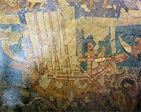
The Vaishyas were the third varna and, like the two above them, twice-born, entitled to study the Vedas. The law books gave them farming, herding cattle, trade and lending money, though the Manusmriti spends only a handful of verses on them and the Shudras. Over these centuries the name came to mean above all merchants and moneylenders, who prospered on the trade of the Ganges cities and the ports. Traders and craftsmen formed guilds (shrenis) with their own laws, which the Manusmriti told kings to respect. Guilds took deposits, lent money and paid for monuments: an inscription credits the ivory carvers of Vidisha with work on the southern gateway of the great stupa at Sanchi. Under the Guptas a district governor was advised by a council of the chief merchant, the chief caravan trader, the chief artisan and the chief scribe. Many merchants followed Buddhism or Jainism, and Faxian saw the heads of Vaishya families running houses that gave food and medicine to the poor and sick.
Moving in or out. The varna came by birth, but trade could make a family rich and powerful: guild heads sat on councils and advised kings, and some historians think the Gupta dynasty itself was of Vaishya origin.
How many? Estimate: the merchant and trading castes, with landowners and moneylenders among them.
Picture: A three-masted sailing ship, wall painting in Ajanta Cave 2, 5th century · Unknown 5th-century painter; photograph by Sweekar Bhushan Pamulaparthy · Public domain · Wikimedia Commons
Free commoners · About 74% (the rest, est.)
Śūdra (Shudras)
Shudras were farmers, workers and craftspeople, and old law books said they should serve the higher groups.
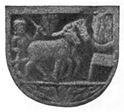
The Shudras were the fourth varna, born, the law books said, to serve the three twice-born varnas. They were barred from studying the Vedas and from Vedic sacrifice, and a Shudra was punished more harshly for offences against a person of higher varna. The Manusmriti held that a Shudra was created for servitude, should not pile up wealth and might have his goods taken by a Brahmin. Yet the texts disagree with one another, and Shudras were freer of the many ritual rules that bound the twice-born. The Arthashastra counted Shudras among the free Aryas, who could not be sold into slavery, and allowed them to serve as soldiers. In practice Shudras were peasants, artisans, labourers and servants, and by the 7th century the Chinese pilgrim Xuanzang described the Shudras as the farmers. Some grew rich, and the Nanda kings who ruled Magadha before the Mauryas were said to be Shudras.
Moving in or out. Birth fixed the varna in the texts, but some Shudras grew rich and powerful, and an outcaste group that took up farming could be absorbed into the Shudras.
How many? Everyone not counted in the other tiers: in the texts the labouring people, and by the 7th century, Xuanzang wrote, the farmers. The other varnas are estimates, so this share is one too.
Picture: Ploughing with oxen, drawing after an ancient Buddhist relief, from a History of India published in 1906 · After an ancient relief, in A History of India (1906) · Public domain · Wikimedia Commons
Outcast groups · c. 2–6% (est.)
Caṇḍāla (Chandalas and other outcastes)
śvapaca
Chandalas were made to live apart from others and did work such as carrying away the dead.
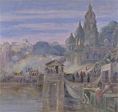
Below and outside the four varnas the texts placed groups they held to be impure, above all the Chandalas, along with the Shvapachas and peoples such as the Nishadas. The law books explained the Chandala as the child of a Shudra father and a Brahmin mother, the most condemned of mixed unions. The Manusmriti ordered that Chandalas live outside the village, own only dogs and donkeys, wear the clothes of the dead and eat from broken dishes, and gave them the work of carrying away the corpses of people with no kin and executing condemned criminals. Faxian, around 400, found that the Chandalas lived apart; when they entered a town or a market they struck a piece of wood so that others could avoid touching them, and only they hunted, fished and sold meat. Historians such as Vivekanand Jha see untouchability spreading over these centuries and reaching its height after 600; Patrick Olivelle notes that the law books speak of the impurity of individuals rather than of whole varnas.
Moving in or out. The texts made the status hereditary, but over generations groups could move: a forest people that settled to farming could be absorbed among the Shudras.
How many? Estimate: in the census of 1931 the castes then called “depressed” were about 15 per cent of Hindus; the Chandalas and the outcastes of the texts were a smaller group in the 4th–6th centuries.
Picture: The burning ghats at Benares, painted by Marianne North in 1878: the law books gave the Chandalas the work of carrying away the dead · Marianne North · Public domain · Wikimedia Commons


Enslaved · c. 1–3% (est.)
Dāsa (Enslaved people)
dāsī
Enslaved people were owned by others and made to work without pay, often as servants in homes.
Slavery existed throughout these centuries, but historians such as Romila Thapar note that slaves were not the main labour force, as they were in Greece; most served in households as servants, nurses and attendants, and some worked the land beside hired labourers. Megasthenes thought India had no slaves, perhaps because slaves there could buy back their freedom. Ashoka’s edicts urged proper treatment of slaves and servants, and his edict on the Kalinga war records 150,000 people deported. The Manusmriti lists seven kinds of slave: the war captive, the one who serves for food, the house-born, the bought, the given, the inherited and the one enslaved as punishment. The Arthashastra forbade selling a free Arya into slavery, though a man in distress might pledge himself. It let slaves keep their earnings and inheritance, and an owner who abused a slave, or forced himself on a slave woman, lost the price he had paid; she went free.
Moving in or out. Freedom came by the owner’s grant or by paying one’s price, a right the Arthashastra recognised; a free man pledged for a debt was released when it was repaid.
How many? Estimate: slaves were never counted, and historians such as Romila Thapar hold that they were not the main labour force; most served in households.
Picture: A servant in a palace scene, Ajanta Cave 17, late 5th century · Akshatha Inamdar · CC BY-SA 4.0 · Wikimedia Commons

Born into history
Where would you have stood? Chance places you on the ladder, as birth placed most people: weighted by how many each rank held.
Moving up and down
In theory birth fixed a person’s place, but power was open to newcomers. Chandragupta Maurya, whose origins are obscure, overthrew the Nanda kings, who were themselves said to be Shudras. Around 185 BCE the Brahmin general Pushyamitra Shunga killed the last Maurya king and founded his own dynasty, and the Gupta records never name the family’s varna. Brahmins gave rising royal families Kshatriya genealogies, and the law books fitted foreign conquerors, Greeks and Shakas, into the scheme as fallen Kshatriyas. New groups formed as the state grew: the Kayasthas, scribes and record-keepers, appear as officials in Gupta inscriptions. Wealth mattered too: guild heads sat on councils, and some Shudras grew rich. The Buddhist and Jain orders took members of every varna, though the Buddhists refused slaves and debtors, and a forest people that settled to farming could join the Shudras. Falls were real as well: the law books cast out of their varna those who committed grievous sins. Genetic and textual evidence suggests that the barriers hardened over these centuries.
Women on the ladder
A woman’s rank followed her father’s and then her husband’s varna. The law books placed her under the protection of father, husband and sons, and the Manusmriti declared that a woman should never be independent, though it let her own property, such as wedding gifts; Tim Dyson sees women’s rights declining in the Indo-Aryan heartland from Mauryan times. Royal women could hold real power: the Licchavi princess Kumaradevi appears beside her husband Chandragupta I on Gupta gold coins, and Chandragupta II’s daughter Prabhavatigupta ruled the Vakataka kingdom as regent for about twenty years from around 390, issuing land grants in her own name. Buddhist nuns had an order of their own, though bound by more rules than monks, and tradition says Ashoka’s daughter Sanghamitta took it to Sri Lanka. Megasthenes noted women studying philosophy among the ascetics. Widow-burning was rare: the first Indian inscription recording one, at Eran, dates from 510. Enslaved women served in royal households.
Compare with another society
Test yourself
4 questions on the ladder of Classical India.
The questions open here once the page has loaded.
Sources and further reading
- Dyson, T. (2018) A Population History of India: From the First Modern People to the Present Day. Oxford: Oxford University Press.
- Legge, J. (trans.) (1886) A Record of Buddhistic Kingdoms: Being an Account by the Chinese Monk Fâ-Hien of His Travels in India and Ceylon (A.D. 399–414) in Search of the Buddhist Books of Discipline. Oxford: Clarendon Press.
- Olivelle, P. (2005) Manu's Code of Law: A Critical Edition and Translation of the Mānava-Dharmaśāstra. New York: Oxford University Press.
- Olivelle, P. (2013) King, Governance, and Law in Ancient India: Kauṭilya's Arthaśāstra. New York: Oxford University Press.
- Sharma, R. S. (1990) Śūdras in Ancient India: A Social History of the Lower Order Down to Circa A.D. 600. 3rd edn. Delhi: Motilal Banarsidass.
- Thapar, R. (2002) Early India: From the Origins to AD 1300. London: Allen Lane.
The shares are of the whole population, children included. Where a scholar has counted or estimated a rank, its share follows that work, named on the rank; where no count survives, the share is an estimate, marked est. and drawn dashed, made from what the rank was and did, from related figures and from the same rank in comparable societies, and its note says what it rests on. Population: Tim Dyson's estimate for all of South Asia in Mauryan times (320–220 BCE); no firm figure exists for the Gupta age.
Cite this page
- APA
- The Epoch Institute. (2026). Social Hierarchy of Classical India. In Social Ladders. https://the-epoch-institute.org/societies/classical-india
- MLA
- “Social Hierarchy of Classical India.” Social Ladders, The Epoch Institute, 2026, https://the-epoch-institute.org/societies/classical-india. Accessed .
- Chicago
- The Epoch Institute. “Social Hierarchy of Classical India.” Social Ladders. 2026. https://the-epoch-institute.org/societies/classical-india.
- Harvard
- The Epoch Institute (2026) ‘Social Hierarchy of Classical India’, Social Ladders. Available at: https://the-epoch-institute.org/societies/classical-india (Accessed: ).