South & Southeast Asia
British Raj
At a glance
- Crown rule replaced the East India Company in 1858, after the rebellion of 1857, and lasted until independence in 1947.
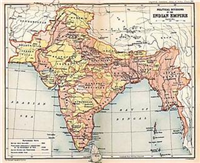
- A viceroy ruled British provinces directly and more than 560 princely states indirectly, with the Indian Civil Service at its core.
- Gandhi’s mass campaigns and the Second World War ended British rule, and partition into India and Pakistan cost hundreds of thousands of lives.
Rise & Fall
- 1858The Government of India Act transfers the East India Company’s territories to the Crown
- 1877Queen Victoria is proclaimed Empress of India at the Delhi Durbar
- 1885The Indian National Congress is founded in Bombay
- 1911George V announces the move of the capital from Calcutta to Delhi
- 1919Troops kill hundreds of unarmed people at the Jallianwala Bagh in Amritsar
- 1930Gandhi leads the Salt March to Dandi
- 1942Congress launches the Quit India movement
- 1947Independence and partition create India and Pakistan on 14–15 August
Foundation

The British Raj was born from the crisis of the Indian Rebellion of 1857. Since the mid-eighteenth century the East India Company had conquered most of the subcontinent, from Bengal after the Battle of Plassey in 1757 to the Punjab, annexed from the Sikh Empire in 1849. In May 1857 Indian soldiers (sepoys) of the Bengal Army mutinied at Meerut and marched to Delhi, where they proclaimed the aged Mughal emperor Bahadur Shah Zafar their leader; the revolt spread across northern and central India and was suppressed with great brutality by 1858. Parliament concluded that a trading company could no longer govern India, and the Government of India Act of August 1858 transferred its territories, army and powers to the Crown. On 1 November 1858 Lord Canning, the first viceroy, read Queen Victoria’s proclamation at Allahabad, promising religious toleration, equal access to office and respect for the rights of the Indian princes. Bahadur Shah was exiled to Rangoon, formally ending the Mughal dynasty. The new regime abandoned the Company’s policy of annexing princely states and sought instead to win the loyalty of landed and princely elites. Under the Royal Titles Act of 1876, Victoria was proclaimed Empress of India at the Delhi Durbar of 1 January 1877, giving the Raj an imperial monarchy that consciously borrowed Mughal ceremony.
Socioeconomy
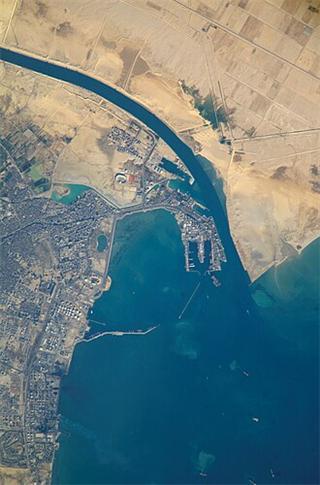
British India was a predominantly rural society of peasant cultivators, organised by caste, religion and region, with Hindus forming the majority and Muslims the largest minority, alongside Sikhs, Christians, Jains, Parsis and tribal peoples. The first census of 1871–1872 counted more than 200 million people, rising to about 390 million in undivided India by 1941. The Raj tied India closely to the British and world economy. A railway network, begun in 1853 and among the largest in the world by 1900, irrigation canals in the Punjab and the opening of the Suez Canal in 1869 encouraged exports of cotton, jute, wheat, tea, indigo and opium, while Indian markets absorbed British textiles. Bombay’s cotton mills and the Tata steelworks at Jamshedpur, opened in 1912, showed the growth of Indian industry, but overall incomes grew slowly. Repeated famines, above all the Great Famine of 1876–1878, the famines of 1896–1897 and 1899–1900, and the Bengal famine of 1943, killed many millions; Famine Codes adopted after 1880 improved relief only partly. Nationalist economists such as Dadabhai Naoroji argued that India suffered a ‘drain’ of wealth to Britain through home charges and profits. English-language education, newspapers and universities founded in 1857 at Calcutta, Bombay and Madras created a new professional middle class.
Military

The rebellion of 1857 reshaped the army that held the Raj together. The British proportion of troops was raised, artillery was kept largely in British hands, and recruitment shifted towards groups the British classed as ‘martial races’, above all Punjabi Muslims, Sikhs, Pathans, Gurkhas and Rajputs, while the regions of the 1857 revolt were less favoured. The three presidency armies were merged into a single Indian Army in 1895, and Lord Kitchener reorganised it in the early 1900s. It was the largest military force in Asia under a European power and served British interests far beyond India: in the Second Anglo-Afghan War of 1878–1880, in the Third Anglo-Burmese War of 1885, which led to the annexation of Upper Burma, in repeated campaigns on the North-West Frontier, and in Egypt, China and East Africa. In the First World War more than a million Indians served overseas in France, Mesopotamia, Gallipoli, Palestine and East Africa. On 13 April 1919 troops under Brigadier-General Reginald Dyer fired on an unarmed crowd at the Jallianwala Bagh in Amritsar, killing hundreds, a massacre that turned many moderates against British rule. In the Second World War the Indian Army grew to about 2.5 million men, often called the largest volunteer army in history, and helped defeat Japan in Burma after the battles of Imphal and Kohima in 1944.
Governance & Law

The Raj was governed from London by a Secretary of State for India and his India Council, and in India by a viceroy and governor-general, who ruled from Calcutta and, in summer, from Simla. Under him the provinces of British India, such as Bengal, Bombay, Madras, the Punjab and the United Provinces, were run by governors and lieutenant-governors, with districts under collectors and magistrates drawn from the Indian Civil Service, an elite of about a thousand officials recruited by competitive examination, which Indians could enter but which remained mostly British until the late 1930s. Law was codified in the Indian Penal Code of 1860 and codes of civil and criminal procedure. About two-fifths of the subcontinent consisted of more than 560 princely states, such as Hyderabad, Kashmir and Mysore, whose rulers governed internally under British residents and paramountcy. Legislative reform came slowly: Indian Councils Acts of 1861, 1892 and 1909, the last known as the Morley–Minto reforms, added appointed and then indirectly elected Indian members and separate electorates for Muslims. The Government of India Act of 1919 introduced dyarchy, giving elected ministers some provincial departments, and the Act of 1935 granted provincial autonomy, leading to elected Congress ministries in most provinces in 1937. Lord Curzon (viceroy 1899–1905) was the most energetic administrator, but his partition of Bengal in 1905 provoked mass protest and was reversed in 1911.
Global & Regional Impact

The Raj shaped the modern states of South Asia more than any earlier regime. India, Pakistan, Bangladesh and Myanmar inherited its borders, provinces, armies, railways, legal codes and civil services; the Indian Administrative Service and the Indian Penal Code descend directly from colonial institutions, and English became a language of government, law and higher education across the region. The Raj’s classification of Indians by caste and religion in the census and its separate electorates hardened communal identities, while the Indian National Congress, founded in 1885, and the All-India Muslim League, founded in 1906, developed into the parties that led India and Pakistan to independence. Mohandas Gandhi, who returned from South Africa in 1915, turned nationalism into a mass movement with the Non-Cooperation campaign of 1920–1922, the Salt March of 1930 and the Quit India movement of 1942, and his methods of non-violent resistance influenced civil rights movements worldwide. Cultural life flourished among the new middle classes: Rabindranath Tagore won the Nobel Prize in Literature in 1913, and the architecture of New Delhi, designed by Edwin Lutyens and Herbert Baker and inaugurated in 1931, still houses the government of India. Indian indentured labourers and soldiers carried communities across the empire, to Fiji, Mauritius, the Caribbean and East Africa.
Decline & Fall

British rule weakened steadily after the First World War. The Amritsar massacre, Gandhi’s campaigns and the spread of Congress membership among peasants eroded consent, while reforms that devolved provincial power failed to satisfy demands for self-government. In 1937 Burma was separated from India. The Second World War proved decisive. The viceroy declared war on India’s behalf in 1939 without consulting Indian leaders, Congress ministries resigned, and the Quit India movement of August 1942 was crushed with mass arrests. Subhas Chandra Bose led an Indian National Army alongside Japan, and the Bengal famine of 1943 discredited the government. The Muslim League, having adopted the Lahore Resolution of 1940 calling for independent Muslim states, won most Muslim seats in the elections of 1945–1946. Britain, exhausted and with a Labour government under Clement Attlee committed to withdrawal, sent the Cabinet Mission of 1946, but its plan for a united federal India collapsed, and communal killings followed Direct Action Day in Calcutta in August 1946. In February 1947 Attlee announced that Britain would leave by June 1948; the new viceroy, Lord Mountbatten, brought the date forward. The Indian Independence Act created the dominions of India and Pakistan on 14–15 August 1947. Partition displaced roughly 15 million people, and estimates of the dead range from about 200,000 to two million.
The British Raj ruled the Indian subcontinent as the centrepiece of the British Empire for nearly ninety years, building the railways, armies, laws and civil services inherited by South Asia’s modern states, while its economic policies, famines and communal politics fuelled the nationalist movements that ended it in independence and partition in 1947.
References
- Metcalf, B.D. and Metcalf, T.R. (2006) A Concise History of Modern India. 2nd edn. Cambridge: Cambridge University Press.
- Bose, S. and Jalal, A. (2004) Modern South Asia: History, Culture, Political Economy. 2nd edn. London: Routledge.
- Brown, J.M. (1994) Modern India: The Origins of an Asian Democracy. 2nd edn. Oxford: Oxford University Press.
- Sarkar, S. (1983) Modern India, 1885–1947. Delhi: Macmillan.
- Khan, Y. (2007) The Great Partition: The Making of India and Pakistan. New Haven: Yale University Press.
Connections
Open the full connections map →