Americas
Argentine Republic
At a glance
- Reunited in 1861 after Bartolomé Mitre’s victory at Pavón, under the federal Constitution of 1853 as amended in 1860.
- Mass European immigration and exports of beef and grain made it one of the world’s richest countries by 1914.
- From 1930 coups, Peronism and economic crises alternated, until democracy returned in 1983 after the Falklands War.
Rise & Fall
- 1861Bartolomé Mitre defeats the Confederation at Pavón, reuniting Buenos Aires and the provinces
- 1865Argentina joins Brazil and Uruguay in the war against Paraguay
- 1879Julio Argentino Roca leads the Conquest of the Desert
- 1912The Sáenz Peña Law introduces secret and compulsory male suffrage
- 1930General José Félix Uriburu overthrows Hipólito Yrigoyen in the first military coup
- 1946Juan Perón is elected president
- 1982Argentina loses the Falklands War to Britain
- 2001Economic collapse ends in riots and a sovereign default
Foundation

The Argentine Republic took its modern form after decades of conflict between Buenos Aires and the interior provinces that followed independence from Spain, declared at the Congress of Tucumán in 1816. In 1853 a constituent congress at Santa Fe adopted a federal constitution inspired partly by that of the United States and by the ideas of Juan Bautista Alberdi, but the province of Buenos Aires refused to join and existed as a separate State of Buenos Aires, while the other provinces formed the Argentine Confederation under Justo José de Urquiza, with its capital at Paraná. Defeated at the Battle of Cepeda in 1859, Buenos Aires accepted the constitution in amended form in 1860, a reform that also confirmed the name Argentine Republic. Renewed conflict ended at the Battle of Pavón on 17 September 1861, when Urquiza withdrew his troops from a field he had not clearly lost, leaving Bartolomé Mitre and the Buenos Aires army in control. The Confederation’s president, Santiago Derqui, resigned, the provinces delegated national powers to Mitre, and in 1862 he was elected the first president of the reunified republic. Buenos Aires served as the seat of the national government, although its status as federal capital was not settled until 1880.
Socioeconomy

Between the 1870s and 1914 Argentina became one of the great export economies of the world. British capital financed railways that fanned out from the port of Buenos Aires across the pampas, reaching more than 30,000 kilometres by 1914, and land taken from Indigenous peoples was divided into large estates, or estancias, which raised cattle and sheep and grew wheat, maize and linseed, often through tenant farmers. Refrigerated shipping, first tried in the late 1870s, opened the British market to Argentine beef. Several million European immigrants arrived, mostly from Italy and Spain, and by the census of 1914 about 30 per cent of the population was foreign-born. Buenos Aires grew into one of the largest cities in the Americas and the birthplace of the tango, while Law 1420 of 1884 made primary education free, compulsory and secular. The Great Depression ended the export model, and from the 1930s, above all under Juan Perón after 1946, governments promoted import-substituting industry, nationalised railways and utilities and expanded labour rights and welfare. Since the 1950s growth has been repeatedly interrupted by high inflation, debt crises and swings between protectionist and market-oriented policies, although agriculture, now led by soybeans, remains the main source of exports.
Military
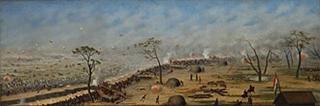
The new republic’s army was tested almost at once. When Paraguay under Francisco Solano López seized Corrientes in 1865, Argentina joined Brazil and Uruguay in the Treaty of the Triple Alliance, and Mitre commanded the allied armies in the early campaigns, including the costly defeat at the Battle of Curupayty in 1866. The war ended in 1870 with Paraguay devastated and Argentina confirmed in possession of Misiones and part of the Chaco. At home the army put down provincial uprisings and then, in the Conquest of the Desert led by General Julio Argentino Roca in 1878–1879 and continued into the mid-1880s, used Remington rifles, the telegraph and railways to overrun the lands of the Mapuche, Ranquel and Tehuelche peoples, killing and displacing thousands and opening Patagonia to settlement. The Riccheri Law of 1901 introduced conscription, and a naval race with Chile ended with the Pactos de Mayo of 1902. Argentina remained neutral in both world wars until it declared war on Germany and Japan in March 1945. The armed forces became arbiters of politics, staging coups in 1930, 1943, 1955, 1962, 1966 and 1976. In April 1982 the junta occupied the Falkland Islands, which Argentina calls the Malvinas; British forces retook them by 14 June, at a cost of 649 Argentine lives, 323 of them on the cruiser General Belgrano.
Governance & Law
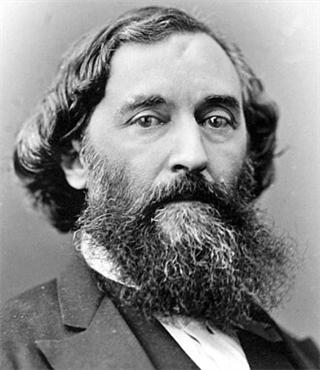
The Constitution of 1853, as amended in 1860, created a federal republic with a president elected indirectly for six years without immediate re-election, a bicameral Congress and a Supreme Court, and allowed the central government to intervene in the provinces. Mitre, Domingo Faustino Sarmiento and Nicolás Avellaneda built a national army, courts, schools and customs administration, and after the defeat of a Buenos Aires rising in 1880 the city was federalised as the national capital, the province moving its seat to the new city of La Plata. From 1880 Roca’s National Autonomist Party dominated a conservative order sustained by limited and often fraudulent elections. The Sáenz Peña Law of 1912 introduced secret and compulsory male suffrage, and in 1916 Hipólito Yrigoyen of the Radical Civic Union won the presidency. The coup of 1930 began a long cycle in which civilian governments alternated with military regimes. Perón, elected in 1946 and 1951, built a movement based on the trade unions, gave women the vote in 1947 and rewrote the constitution in 1949, before he was overthrown in 1955 and his movement banned for nearly two decades. The dictatorship of 1976–1983, which called itself the National Reorganisation Process, abducted and killed thousands of people; human rights groups estimate up to 30,000 disappeared. A reform of 1994 introduced direct presidential elections and four-year terms.
Global & Regional Impact

Argentina became the most prosperous and urbanised country in Latin America in the early twentieth century and, by some estimates, among the ten richest nations in the world by income per head before the First World War. Its later relative decline from a position comparable to that of Canada and Australia became a classic puzzle of economic history. Peronism, a mass movement combining nationalism, state-led industry and organised labour, shaped populist politics across Latin America, and Eva Perón remains one of the best-known Latin American women of the century. Argentine diplomacy produced the Drago Doctrine of 1902 against the forcible collection of public debts, and Carlos Saavedra Lamas won the Nobel Peace Prize in 1936 for mediating the end of the Chaco War. The country has produced Nobel laureates in science, including Bernardo Houssay, Luis Federico Leloir and César Milstein, writers such as Jorge Luis Borges and Julio Cortázar, and the tango, inscribed by UNESCO as intangible cultural heritage in 2009. The Trial of the Juntas in 1985 made Argentina an early example of a new democracy prosecuting a former military regime, and the Mothers of the Plaza de Mayo became a worldwide symbol of human rights activism. In 2013 the Archbishop of Buenos Aires, Jorge Mario Bergoglio, became Pope Francis, the first pope from the Americas.
Into the Present

The Argentine Republic still exists, and its recent history is one of rebuilding democracy after the collapse of the military regime. Raúl Alfonsín of the Radical Civic Union took office in December 1983, a commission chaired by the writer Ernesto Sabato documented the disappearances in the report Nunca más, and the junta leaders were tried in 1985, although later laws and pardons halted further prosecutions until they were annulled in the 2000s. Hyperinflation forced Alfonsín to hand over power early to the Peronist Carlos Menem in 1989, who pegged the peso to the US dollar in 1991, privatised state companies and joined Brazil, Uruguay and Paraguay in founding Mercosur. The peg collapsed in the crisis of 2001, when riots brought down President Fernando de la Rúa and the country defaulted on nearly 100 billion dollars of debt. Néstor Kirchner and Cristina Fernández de Kirchner presided over a commodity-led recovery from 2003 to 2015, followed by the centre-right Mauricio Macri and the Peronist Alberto Fernández. In 2023, with inflation above 100 per cent a year, voters elected the libertarian economist Javier Milei. Today Argentina is a federal republic of 23 provinces and the autonomous city of Buenos Aires with about 46 million people, the second-largest economy in South America, and it maintains its claim to the Falkland Islands.
The Argentine Republic rose faster than almost any other country on European immigration and pampas exports, becoming one of the richest nations by 1914, and its long relative decline, military coups and Peronist mass politics made it a defining case of Latin American instability and democratic renewal.
References
- Rock, D. (1987) Argentina, 1516–1987: From Spanish Colonization to Alfonsín. Berkeley: University of California Press.
- Romero, L.A. (2002) A History of Argentina in the Twentieth Century. Trans. J.P. Brennan. University Park: Pennsylvania State University Press.
- Shumway, N. (1991) The Invention of Argentina. Berkeley: University of California Press.
- della Paolera, G. and Taylor, A.M. (eds) (2003) A New Economic History of Argentina. Cambridge: Cambridge University Press.
Connections
Open the full connections map →