Culture · Americas
Maya civilisation
At a glance
- From the 1st millennium BCE to the Spanish conquest, the Maya of southern Mexico and Central America built hundreds of cities, from El Mirador and Tikal to Chichén Itzá, but never a single state.
- Their scribes created the most complete writing system of the ancient Americas, recording the deeds of holy kings in precisely dated inscriptions, most of which have been deciphered since the 1950s.
- The southern lowland cities were abandoned in the 9th and 10th centuries, but Maya kingdoms lasted in Yucatán and the highlands until the Spanish conquest, and well over six million Maya live today.
Timeline
- c. 1000 BCEMaya farming communities build the first great ceremonial platforms, at Ceibal and Aguada Fénix
- c. 300 BCE–150 CEEl Mirador flourishes, its La Danta complex rising some 70 metres above the forest floor
- 378Siyaj K’ak', a war leader linked with Teotihuacan, arrives at Tikal and a new dynasty takes power
- 615K’inich Janaab Pakal begins his 68-year reign at Palenque
- c. 750–950In the Classic Maya collapse the southern lowland kingdoms stop raising monuments, and their cities empty
- c. 900–1100Chichén Itzá is the leading power of northern Yucatán
- 1524Pedro de Alvarado conquers the K’iche' kingdom of the Guatemalan highlands
- 1697The Spanish take Nojpetén, capital of the Itza, the last independent Maya kingdom
Origins
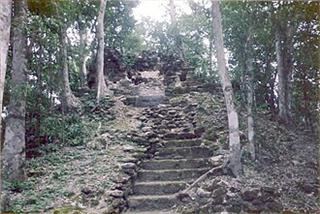
The Maya were never a single nation or empire but many peoples and kingdoms who spoke related Mayan languages and shared a common culture; the collective name is modern and probably derives from Mayapan, the last great capital of Yucatán. Their world spanned three contrasting regions: the Pacific coastal plain; the volcanic highlands of Guatemala and Chiapas, rich in obsidian and jade; and the lowlands, from the rainforests of the Petén in northern Guatemala to the dry limestone plain of the Yucatán Peninsula, which has almost no rivers and draws its water from cenotes, natural sinkholes.
Archaeologists date the beginning of the Preclassic period to about 2000 BCE, when farming based on maize, beans and squash was spreading through the region, and by about 1000 BCE villages of farmers who made pottery were appearing across the lowlands. Some of them soon built on a monumental scale. At Ceibal, on the Pasión river in Guatemala, a formal plaza with ceremonial platforms was laid out around 1000 BCE, and at Aguada Fénix in Tabasco, revealed by an airborne laser survey and published in 2020, people raised between about 1000 and 800 BCE an earthen platform some 1,400 metres long and 400 metres wide, the oldest and largest Maya ceremonial structure known. No images of rulers have been found there, and its excavators think it was built by communities working together.
In the following centuries cities grew in the Mirador Basin of northern Petén. Nakbe had large platforms and temples by about 800 BCE, and El Mirador, at its height from the 3rd century BCE, covered some 16 square kilometres; its La Danta complex rises about 72 metres above the forest floor, and raised causeways linked the city to Nakbe and its other neighbours. At San Bartolo, murals painted around 100 BCE show the maize god and the crowning of a king, and texts of the 3rd century BCE found there are among the earliest Maya writing. Around the 1st and 2nd centuries CE many great Preclassic cities, El Mirador among them, were abandoned, for reasons still debated. The Classic period opened in the 3rd century with the spread of dated royal monuments, among the earliest of them raised at Tikal in 292.
Society

In the Classic period, from about 250 to 900, the lowlands were divided among dozens of kingdoms, each ruled by a k’uhul ajaw, a “holy lord”, and identified in the inscriptions by its emblem glyph. Kings traced their descent from founding ancestors, were enthroned in elaborate ceremonies and led in war and ritual, and royal women could hold power, as Lady Six Sky did at Naranjo in the late 7th century. Kingdoms were bound together in networks of overlords and vassals. The two greatest powers, Tikal and the Snake kingdom of Kaanul, ruled from Dzibanche and later from Calakmul, contended for supremacy through much of the 6th to 8th centuries, drawing in allies from Caracol to Dos Pilas and Naranjo.
A Classic city had a ceremonial core of temple-pyramids, palaces, plazas and ballcourts, linked by raised white causeways, the sacbeob, to outlying groups and surrounded by a wide spread of houses, gardens and fields. Farmers cleared fields from the forest for maize, beans and squash, built terraces, as at Caracol, and raised fields and canals in wetlands, and kept kitchen gardens, orchards, turkeys and dogs. Cacao, cotton cloth and fine crafts were produced for exchange and tribute, and water was stored in reservoirs and underground cisterns through the long dry season. The largest cities may have had 50,000 people or more, and airborne laser surveys have revealed much denser settlement across the lowlands than was once thought, with a Late Classic population that probably ran into millions.
Beneath the kings and their courts were nobles who served as governors, war captains and scribes; artists and artisans who carved stone, painted books and pottery and worked jade; merchants; and the farming families who made up most of the population and lived in houses of poles and thatch on low platforms around shared patios. War was frequent. Rulers raided rival cities to take captives, who were displayed, humiliated and often sacrificed, and the greatest wars could end reigns: in 738 Waxaklajuun Ub’aah K’awiil, king of Copán, was captured and executed by his former vassal, the king of Quiriguá.
Beliefs & Worldview
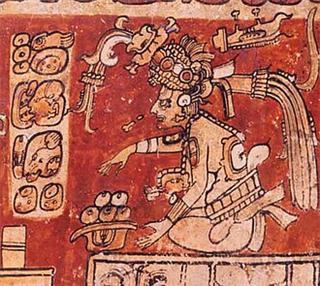
The Maya shared in Mesoamerican religion, the tradition of gods of rain, maize and the sun, of sacred calendars and of offerings of blood that bound together the peoples of the region, but they gave it their own forms. Among their gods were Itzamna, an aged creator associated with the sky and with writing; Chaac, the god of rain and lightning; K’awiil, a god of lightning and abundance whose image kings held as a sceptre; the young maize god, whose death and rebirth mirrored the farming year; the sun god, K’inich Ajaw; and the lords of Xibalba, the underworld. The world was imagined in layers, with a great tree at its centre and a colour and gods for each of its four directions.
Kings stood at the centre of religious life. They let their own blood as offerings, danced in the guise of gods, called up the spirits of ancestors and marked the endings of periods of time, above all the twenty-year k’atun, with ceremonies and new monuments. Dead kings were buried within temples raised over their tombs, like that of K’inich Janaab Pakal at Palenque, and honoured as ancestors. Caves, as entrances to the underworld, and cenotes, as sources of water and rain, were sacred: the Sacred Cenote at Chichén Itzá received offerings of jade, gold, copal incense and human lives. The ballgame, played in courts at the heart of the cities, echoed the struggles of the myths, and captives were sacrificed on great occasions.
Much of this is known from the Maya themselves: inscriptions that name the gods and describe royal rituals, scenes painted on pottery, the almanacs of the surviving books, and the Popol Vuh, written down by K’iche' nobles in the 1550s, which tells of the making of the first people from maize and of the Hero Twins, Hunahpu and Xbalanque, who defeated the lords of Xibalba. Spanish friars such as Diego de Landa described the ceremonies of Yucatán even as they suppressed them. Much survived the conquest, and in highland Guatemala Maya day-keepers still count the 260-day calendar and hold ceremonies at mountains and caves.
Arts & Knowledge

Maya scribes developed the most complete writing system of the ancient Americas, combining signs for words with some 200 signs for syllables, so that a word could be written by its meaning, by its sound or by both; no more than about 500 signs were in use at any one time. Texts were written in blocks set in pairs of columns, read from left to right and top to bottom, on stelae, lintels, stairways, pottery, jade and bone, and in folding books of bark paper. The longest surviving text covers the 62 steps of the Hieroglyphic Stairway of Copán, given its final form in 755. Knowledge of the script was lost after the conquest, and its decipherment was one of the great intellectual achievements of the 20th century: Yuri Knorozov argued in 1952 that many of its signs stood for syllables, Heinrich Berlin identified the signs naming kingdoms, and Tatiana Proskouriakoff showed in 1960 that the monuments recorded the lives of rulers. Today more than 90 per cent of Maya texts can be read.
Maya mathematics used a base of twenty, written with dots for ones, bars for fives and a shell sign for zero, one of the earliest known. With it scribes kept several calendars at once: the 260-day sacred count, the 365-day year and the Mesoamerican Long Count calendar, which numbered the days from a starting point in 3114 BCE. The Dresden Codex, one of the four Maya books that survive, contains tables that follow the cycle of Venus and predict eclipses.
Builders worked in limestone and lime plaster, roofing rooms with corbelled vaults and crowning temples with tall roof combs. Tikal’s Temple IV rises about 65 metres; Palenque’s Temple of the Inscriptions held the tomb of Pakal, found by Alberto Ruz Lhuillier in 1952; the Puuc cities of Yucatán, such as Uxmal and Kabah, covered their façades with stone mosaics of masks and fretwork; and El Castillo at Chichén Itzá, with four stairways and nine terraces, casts a serpent-like shadow along its northern stairway at the equinoxes. The murals of Bonampak in Chiapas, painted at the end of the 8th century, show a royal court, a battle and the fate of captives in vivid colour; potters painted vessels with scenes of court life and myth, and jade workers made mosaic masks for royal burials.
Contact & Exchange

The Maya were never isolated. In the Preclassic they shared symbols and ideas with the Olmecs of the Gulf Coast and other neighbours. In the Early Classic the great city of Teotihuacan in central Mexico exercised a powerful influence: in 378 Siyaj K’ak', a war leader linked to it, installed a new dynasty at Tikal, and in 426 K’inich Yax K’uk' Mo', a founder with Teotihuacan connections, began the royal line of Copán. Teotihuacan styles of building, pottery and dress appear in both cities and at Kaminaljuyu in the highlands.
Trade bound the regions together. The highlands supplied obsidian, jade from the Motagua valley and the green feathers of the quetzal; the coasts supplied salt, shells and stingray spines; and cacao, grown in the wetter lowlands and on the Pacific coast, was drunk by the elite and later used as money. Goods travelled on porters’ backs and, increasingly in the Postclassic, by canoe around the coasts of Yucatán, where Chontal Maya traders were active. In 1502, off the coast of Honduras, Christopher Columbus met a great Maya trading canoe with some 25 paddlers, carrying cacao, cotton textiles, pottery, obsidian, and copper bells and axes.
After about 900 Chichén Itzá dominated northern Yucatán, and its colonnaded halls, warrior columns and reclining chacmool figures closely resemble those of Tula, the Toltec capital in central Mexico, though whether this reflects conquest, migration or shared fashion is debated. The League of Mayapan then held the northern lords together until the 1440s, and pilgrims crossed to the shrine of the goddess Ix Chel on the island of Cozumel. The Spanish conquest was slow and fiercely resisted. Pedro de Alvarado conquered the K’iche' kingdom in 1524 and burned its capital, Q’umarkaj; the Montejos founded Mérida in 1542 and crushed the Great Maya Revolt of 1546–1547; and the Itza kingdom of Nojpetén, on an island in Lake Petén Itzá, held out until Martín de Ursúa stormed it on 13 March 1697.
Legacy

The Classic Maya collapse transformed the civilisation. Between the late 8th and the 10th centuries the kingdoms of the southern lowlands stopped raising dated monuments, royal courts disappeared, and cities such as Tikal, Copán and Palenque were abandoned; the last Long Count date of the Classic era was carved at Toniná in 909. Dozens of explanations have been proposed. Sediments from lakes in Yucatán show severe droughts in the 9th and 10th centuries, and warfare, a large population on exhausted land and the failure of kings who claimed to bring rain and victory are thought to have combined with them. Yet the northern lowlands, the highlands and the coasts went on flourishing, and Maya civilisation continued, changed, for another six centuries.
The Spanish conquest brought epidemics, forced labour and the suppression of Maya religion; in 1562 Diego de Landa burned Maya books and images at Maní. The Maya peoples nevertheless survived. Using the Latin alphabet, they wrote down their histories and sacred traditions in works such as the Popol Vuh, the Books of Chilam Balam and the Annals of the Kaqchikels. They rose many times against colonial and national rule, most powerfully in the Caste War of Yucatán (1847–1901), and the great majority of the victims of Guatemala’s civil war of 1960–1996 were Maya. Today well over six million people are Maya and some thirty Mayan languages are spoken, and in 1992 the K’iche' Maya activist Rigoberta Menchú received the Nobel Peace Prize.
Outsiders rediscovered the ruins slowly. John Lloyd Stephens, who bought the ruins of Copán for 50 dollars, and the artist Frederick Catherwood travelled through the region in 1839–1842, and their books showed the cities to be the work of the ancestors of the local Maya rather than of some vanished foreign people. For much of the 20th century scholars such as J. Eric S. Thompson pictured peaceful astronomer-priests; the Bonampak murals, first shown to outsiders by Lacandon Maya in 1946, and the decipherment of the script revealed instead a world of rival kings, wars and dynastic politics. The completion of the 13th b’ak’tun of the Long Count on 21 December 2012 was widely misrepresented as a Maya prophecy of the end of the world, a claim the inscriptions do not support.
The Maya of southern Mexico and Central America built one of the great civilisations of the ancient world: city-kingdoms ruled by holy kings, temple-pyramids rising from the forest, and the most complete writing system of the Americas, with calendars and astronomy of great precision. Their southern cities fell silent in the 9th century, but the civilisation endured until the Spanish conquest, and millions of Maya live on today.
Test yourself
5 questions on this page, from its key events and facts.
The questions open here once the page has loaded.
References
- Christenson, A.J. (trans.) (2003) Popol Vuh: The Sacred Book of the Maya. Winchester: O Books.
- Coe, M.D. (1992) Breaking the Maya Code. London: Thames & Hudson.
- Coe, M.D. (2011) The Maya. 8th edn. London: Thames & Hudson.
- Demarest, A. (2004) Ancient Maya: The Rise and Fall of a Rainforest Civilization. Cambridge: Cambridge University Press.
- Martin, S. and Grube, N. (2008) Chronicle of the Maya Kings and Queens: Deciphering the Dynasties of the Ancient Maya. Rev. edn. London: Thames & Hudson.
- Sharer, R.J. with Traxler, L.P. (2006) The Ancient Maya. 6th edn. Stanford: Stanford University Press.