
Language · Islamic Caliphates & Middle East
Ottoman Turkish
At a glance
- Ottoman Turkish was the Turkish of the empire’s court, poetry and administration, so full of Arabic and Persian that words from them made up as much as 88% of its vocabulary.
- It was largely unintelligible to rural Turks, who spoke kaba Türkçe, “rough Turkish”, with far fewer loanwords, the basis of modern standard Turkish.
- In 1928, under Mustafa Kemal Atatürk, the Republic of Turkey replaced the Perso-Arabic script with an extended Latin alphabet and began replacing Arabic and Persian loanwords with Turkish ones.
Timeline
- 14th centuryOld Ottoman Turkish, almost identical with the Turkish of the Seljuks and the Anatolian beyliks, is the language of the young Ottoman state
- 16th centuryClassical Ottoman Turkish becomes the language of poetry and administration, as it remains until the Tanzimat
- 1839–1876In the Tanzimat era the language comes to be called “Ottoman”, lisân-ı Osmânî or Osmanlıca
- 1850sNew Ottoman Turkish begins to take shape under the influence of journalism and Western-oriented literature
- 1928Atatürk’s reforms replace the Perso-Arabic script with an extended Latin alphabet and begin replacing Arabic and Persian loanwords
- 1960sOttoman Turkish is still at least partly intelligible to speakers of the Turkish of the day
- 2014Turkey’s Education Council decides that Ottoman Turkish should be taught in Islamic high schools and as an elective in other schools
Origins
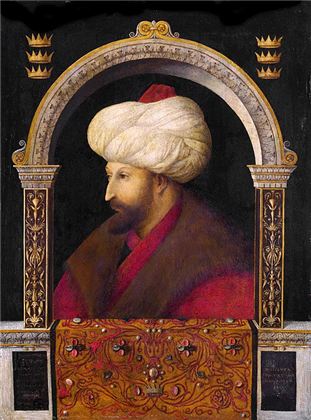
Ottoman Turkish was the standardised register of the Turkish language in the Ottoman Empire, which lasted from the 14th to the 20th century. Its oldest stage, Old Ottoman Turkish, used until the 16th century, was almost identical with the Turkish of the Seljuk empire and the Anatolian beyliks, and is often counted as part of Old Anatolian Turkish. Its users called it lisân-ı Türkî or zebân-ı Türkî, “the Turkish language”, or lisân-ı Rûm, “the language of Rum”, and more generally Türkçe or Türkî, “Turkish”; only in the Tanzimat era (1839–1876) did the name “Ottoman”, lisân-ı Osmânî or Osmanlıca, come into use.
The language’s Persian and Arabic character goes back before the empire. Turks took their Arabic words through Persian, not directly from Arabic, as the typically Persian changes to the sound of those words show. The borrowings also keep old sound features, which suggests that Persian already laden with Arabic was absorbed into pre-Ottoman Turkic at an early stage, while its speakers still lived north-east of Persia, before the westward migration of the Islamic Turkic tribes. Tatar, Bashkir and Uyghur, which had even less contact with Arabic, share the same Persian character in their Arabic loans. Under Mehmed II, and with his encouragement, Ottoman Turkish was developed and promoted as an imperial and court language and became heavily Persianised.
Sounds, Script & Grammar
Most Ottoman Turkish was written in the Ottoman Turkish alphabet, the elifbâ, a variant of the Perso-Arabic script. Only some vowels were written, with the letters elif, vav, he and ye, so the spelling did not always show what was said. The definite accusative ending was always written ی, -ı or -i, although speakers pronounced it with vowel harmony, the matching of a suffix’s vowel to the vowels of the word: göli, “the lake”, for modern Turkish gölü.
Its grammar was no different from that of modern Turkish. Turkish is agglutinative: one root takes a chain of suffixes, each adding a meaning, so that tep, “kick”, yields a whole family of verbs. Nouns take case suffixes, as paşanıñ, “of the pasha”, eve, “to the house”, mektebde, “at school”, and adamdan, “from the man”. Having is said with var, “there is”, and a possessive ending: evim var, literally “my house exists”, means “I have a house”.
What set Ottoman Turkish apart was its borrowing. Arabic and Persian words made up as much as 88% of its vocabulary, and much of the grammar of both languages came with them. Whole passages of Arabic and Persian could stand in a text; phrases were built on the Persian pattern, as takdîr-i ilâhî, “divine dispensation” or “destiny”; and compound verbs joined an Arabic or Persian word to etmek, “to do”, or olmaq, “to become”, as teşekkür etmek, “to thank”, and razı olmaq, “to consent”.
Speakers & Spread
Ottoman Turkish was the language of the empire’s poetry and administration and of its higher classes. In social terms there were at least three varieties: Fasih Türkçe, “eloquent Turkish”, the language of poetry and administration and Ottoman Turkish in its strict sense, the most heavily laden with Arabic and Persian words; Orta Türkçe, “middle Turkish”, the language of the higher classes and of trade; and Kaba Türkçe, “rough Turkish”, the language of the lower classes, with the fewest. One person would use each variety for different purposes, choosing the learned word in writing and the plain one in the market.
The high register was largely unintelligible to rural Turks, who kept to kaba Türkçe, “raw” or “vulgar” Turkish, with far fewer foreign loanwords, much as Vulgar Latin stood beside Latin and Demotic Greek beside the learned language. Ottoman Turkish was used beyond the Turks themselves: Armenians, Greeks and Jews of the empire sometimes wrote it in their own scripts, and Karamanli Turkish was a dialect of Ottoman written in the Greek script.
When the reform came in 1928, most of the Turkish population was illiterate, which made the switch to the Latin alphabet much easier, although some households went on using the Arabic script in private.
Literature & Learning
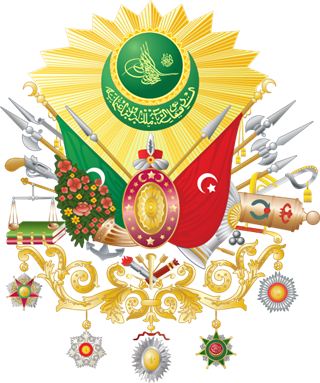
Ottoman Turkish was above all the written language of poetry and administration. Classical Ottoman Turkish, the language of the empire’s poets and of its documents from the 16th century until the Tanzimat, was the most heavily suffused with Arabic and Persian, and writers could set whole passages in Arabic and Persian into their texts. The language of documents stood apart from the language of daily life: a scribe chose the Arabic word where a buyer in the market used the Turkish one.
From the 1850s journalism and Western-oriented literature shaped New Ottoman Turkish, which lasted into the 20th century, and the name “Ottoman” for the language spread in the same Tanzimat age.
European learners produced a long line of grammars and dictionaries of the language: Thomas Vaughan’s A Grammar of The Turkish Language (1709), Charles Boyd’s The Turkish interpreter (1842), William Burckhardt Barker’s grammar and reading book of 1854, whose tales were given with the pronunciation “as now used in Constantinople”, and the works of Sir James William Redhouse, from his English and Turkish dictionary of 1856 to his simplified grammar of the Ottoman-Turkish language of 1884. In Oriental studies today the transliteration system of the İslâm Ansiklopedisi has become the de facto standard for rendering Ottoman texts in Latin letters, and the New Redhouse, Karl Steuerwald and Ferit Devellioğlu dictionaries are the standard for transcription.
Change & Descendants

Ottoman Turkish passed through three stages. Old Ottoman Turkish, Eski Osmanlı Türkçesi, was used until the 16th century. Middle or Classical Ottoman Turkish, Orta Osmanlı Türkçesi or Klasik Osmanlıca, was the language of poetry and administration from the 16th century until the Tanzimat. New Ottoman Turkish, Yeni Osmanlı Türkçesi, was shaped from the 1850s into the 20th century by journalism and Western-oriented literature.
In 1928, after the fall of the Ottoman Empire following World War I and the founding of the Republic of Turkey, widespread language reforms instituted by Mustafa Kemal Atatürk, part of the larger framework of Atatürk’s reforms, replaced many Persian and Arabic loanwords with Turkish equivalents and the Perso-Arabic script with an extended Latin alphabet. The Turkish nationalist Ziya Gökalp was one of the reform’s main supporters. The aim was a written Turkish closer to the spoken vernacular and a spoken Turkish that reinforced Turkey’s new national identity as a post-Ottoman state.
The change was not instant. At first only the script changed; then loanwords were taken out and new words were introduced for the growing amount of technology. Until the 1960s Ottoman Turkish was at least partly intelligible to speakers of the Turkish of the day.
Legacy
Ottoman Turkish is the predecessor of modern Turkish, but today’s standard is essentially Türkiye Türkçesi, the Turkish of Turkey, written in the Latin alphabet and enriched with many new words, so that it has far fewer loanwords. The modern standard rests not on the court register but on kaba Türkçe, the plainer speech of the rural majority.
One major difference is that modern Turkish has abandoned building compound phrases by the rules of Arabic and Persian grammar. Such phrases survive only to a very limited extent, usually in specialist use: the Persian-style takdîr-i ilâhî, literally “the preordaining of the divine”, is used beside the normal modern Turkish ilâhî takdîr. Many Arabic loanwords also remain in use alongside their Turkic synonyms.
Interest in the old language has returned. In 2014 Turkey’s Education Council decided that Ottoman Turkish should be taught in Islamic high schools and as an elective in other schools, a decision backed by President Recep Tayyip Erdoğan, who said that it should be taught so that younger generations do not lose touch with their cultural heritage. Scholars read its texts with the transliteration systems of the İslâm Ansiklopedisi and the Deutsche Morgenländische Gesellschaft, which differ little from each other.
Ottoman Turkish was the standardised register of Turkish in the Ottoman Empire, the language of its court, poetry and administration, written in a Perso-Arabic alphabet and so full of Arabic and Persian that rural Turks could barely follow it. In 1928 the Republic of Turkey replaced its script with a Latin alphabet and many of its loanwords with Turkish words, and modern Turkish grew from the plainer speech of the people.
References
- V. H. Hagopian (1907). Ottoman-Turkish conversation-grammar: a practical method of learning the Ottoman-Turkish language, Volume 1. D. Nutt.
- Charles Wells (1880). A practical grammar of the Turkish language (as spoken and written). B. Quaritch.
- Sir James William Redhouse (1884). A simplified grammar of the Ottoman-Turkish language. Trübner.
- Lewis, Geoffrey. The Jarring Lecture 2002. “The Turkish Language Reform: A Catastrophic Success”.
- Kerslake, Celia (1998). “La construction d'une langue nationale sortie d'un vernaculaire impérial enflé: la transformation stylistique et conceptuelle du turc ottoman”. In Chaker, Salem (ed.). Langues et Pouvoir de l'Afrique du Nord à l'Extrême-Orient. Aix-en-Provence: Edisud. pp. 129–138.
- Korkut M. Buğday (1999). Osmanisch: Einführung in die Grundlagen der Literatursprache. Otto Harrassowitz Verlag.