
Culture · Americas
Mapuche
At a glance
- The Mapuche lived in farming lineages along the rivers of south-central Chile, led by lonkos in peace and by elected toquis in war, without ever forming a state.
- After 1550 they fought the Arauco War against Spain for nearly 350 years, and from 1598 kept their lands south of the Biobío River free of Spanish rule.
- Chile and Argentina conquered their lands between 1861 and the 1880s; today the Mapuche are the largest Indigenous people of Chile and struggle for their land and rights.
Timeline
- c. 600–500 BCEArchaeological finds show a Mapuche culture in what is now Chile
- 11 September 1541Michimalonco attacks the new Spanish town of Santiago in the Destruction of Santiago
- 1553Mapuche led by Lautaro defeat the Spanish at the Battle of Tucapel, where Governor Pedro de Valdivia is killed
- 1598Warriors led by Pelantaro defeat the Spanish at the Battle of Curalaba, starting the uprising that destroys the Spanish cities south of the Biobío
- 1641The Parliament of Quillín frees Spanish captives under an agreement between Mapuche and Spanish
- 1861–1883Chile conquers Araucanía in the Occupation of Araucanía, ending Mapuche independence
- 1993Chile’s Indigenous Law officially recognises the Mapuche people, their language Mapudungun and their culture
Origins
The Mapuche are an Indigenous people of south-central Chile and south-western Argentina who share a social, religious and economic structure and a common language, Mapudungun. Their name means “people of the land”, from mapu, “land”, and che, “person”; it is a relatively recent name, and in the early colonial period the various groups seem to have called themselves Reche, “pure people”. Spanish colonisers called them Araucanians, a name some now find pejorative. They also name themselves by their lands: the Pikunche of the north, the Williche of the south, the Pewenche of the pewen (monkey-puzzle) forests, the Lafkenche of the coast and the Pwelche of the east.
Archaeological finds show a Mapuche culture in Chile and Argentina as early as 600 to 500 BCE. Where it came from is not settled. Genetically the Mapuche differ from the neighbouring peoples of Patagonia, which suggests a different origin or a long separation; mitochondrial DNA points in part to peoples of the Amazon Basin who reached Chile by Andean and lowland routes. Grete Mostny proposed in 1954 a link with the El Molle culture of the north, while the theory of Ricardo E. Latcham and Francisco Antonio Encina that the Mapuche came from the pampas east of the Andes is rejected by modern scholars for lack of evidence. Linguists have not agreed on any relatives of Mapudungun.
It has been suggested that the collapse of Tiwanaku about 1000 CE sent migrants south, which would explain loanwords from the Puquina language, such as antu (sun) and cuyen (moon), and, as Tom Dillehay and colleagues argue, the spread of raised and canalised fields to Mapuche lands. Troops of the Inca Empire reached the Maule River and fought the Mapuche; most scholars place the Inca border between Santiago and the Maule, so most Mapuche escaped Inca rule. Meeting a state for the first time gave them, it is thought, a shared sense of themselves.
Society
Before the Spanish arrived, Mapuche life was organised around lineages of local communities called lov, which were joined into the larger rehue. Lineages were patrilineal and patrilocal, and polygamy was common; the historian José Bengoa credits polygamy and the custom of women marrying outside their own group with welding the Mapuche into one people. Each extended family was led by a lonko, or chief, and in time of war the Mapuche united in larger groupings and elected a toqui, “axe-bearer”, to lead them. There were also religious leaders, among them the machi.
The heartland between the Itata River and the Chiloé Archipelago held the largest Indigenous population of Chile when the Spanish came: Bengoa estimates 705,000–900,000 people between the Itata and Reloncaví Sound in the mid-16th century. They lived in scattered hamlets along the great rivers, with the main centres where rivers met, and preferred to build on hills rather than on plains. A network of roads crossed their territory, as the speed of the first Spanish advances shows.
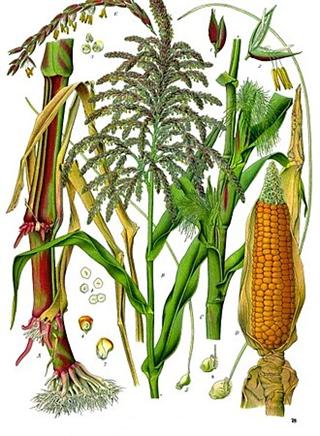
Most Mapuche were farmers. They cleared glades in the forest or burned land for fields, and around Budi Lake and in the Lumaco and Purén valleys they built more labour-intensive raised and canalised fields. The potato was the staple, especially in the south and on the coast where maize did not ripen, and they also grew quinoa. They raised chilihueque, a kind of llama, and Araucana chickens, gathered the seeds of the monkey-puzzle tree and the Chilean hazel, hunted, and fished the rich southern coast. Women spun and wove, and a man gave a larger dowry for a bride who was a skilled weaver.
Beliefs & Worldview
At the centre of Mapuche cosmology is the creator Ngenechen, who is embodied in four parts: an old man, an old woman, a young man and a young woman. The Mapuche speak of worlds known as the Wenu Mapu and the Minche Mapu, and of spirits who live alongside people and animals in the natural world: the Pillan and Wangulen, ancestral spirits; the Ngen, spirits of nature; and the wekufe, evil spirits. Prayer and animal sacrifice have been part of ritual to keep the balance of the cosmos. Like many peoples they tell of a great flood, in which Kai Kai, the waters, fought Tren Tren, the dry earth, until order was restored.
The best-known ceremony is the Ngillatun, “general prayer”, a communal event of great spiritual and social importance; others are kept within the family. We Tripantu is the Mapuche New Year. Central to belief is the machi, a healer and spiritual specialist, usually a woman who has served an apprenticeship with an older machi. The machi performs ceremonies to cure illness, ward off evil and influence the weather and harvests, works with dreams, and knows medicinal herbs, sacred stones and sacred animals; the main healing ceremony is the machitun. A chronicle of 1673 also describes male machi weye, who wore women’s clothing.
Archaeology adds glimpses of older ritual: ancient earthwork mounds near Purén served ceremonies, and canoes, wampus, appear in funerals and in stories about death. Some of the Mapuche world view may be shared with the peoples of the central Andes, perhaps through the migrations after Tiwanaku. Memory itself is part of Mapuche tradition: the remembered history of independence and resistance since 1540, and of the treaties of the 1870s, often very local, remains a significant part of their culture.
Arts & Knowledge
Weaving is one of the best-known Mapuche arts. Excavations at the Pitrén Cemetery near Temuco, at Alboyanco in the Biobío Region and at the Rebolledo Arriba Cemetery in Neuquén Province have found fabrics of complex technique and design dated to 1300–1350 CE. Women spun and wove, and mothers, grandmothers and aunts taught girls the techniques and the patterns of their locality; women who excelled were highly honoured. Many Mapuche women still weave ponchos, blankets, bands and belts, learning as before by watching and copying as the cloth is made.
Early Mapuche tools were mostly of wood and stone, more rarely of copper or bronze; they made many tools of pierced stone, often of easily shaped volcanic scoria, and farmed with digging sticks and heavy trident-like ploughs that needed many men to pull. Rivers and lakes were crossed in dugout canoes, wampos, and in the Chiloé Archipelago people put to sea in plank boats called dalcas. Gold was the most important metal before the Spanish came, used for adornments. A stone hand club, the clava, with a disc-shaped head often carved with a face, was a mark of distinction carried by chiefs.
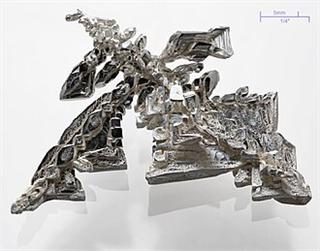
In the later 18th century Mapuche silversmiths began to produce silver finery in large amounts, perhaps because the Parliament of Negrete in 1726 reduced hostilities and allowed trade with colonial Chile to grow. They worked silver coins, mostly from the mines of Potosí, into jewellery and coin headdresses called trarilonko, with designs that marked families, lands, lonkos and machis. The craft reached its height around 1800, though by 1984 the Mapuche scholar Carlos Aldunate found no living silversmiths. Mapuche culture was oral in the 16th century; today Mapuche literature in Spanish and Mapudungun includes poets such as Elicura Chihuailaf and Leonel Lienlaf.
Contact & Exchange
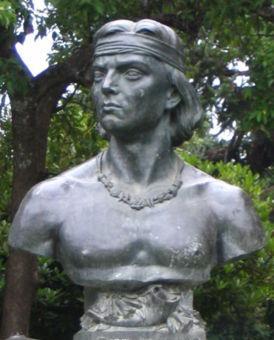
The Spanish came south as an offshoot of the conquest of Peru. Diego de Almagro’s expedition was turned back after the Battle of Reynogüelén in 1536, and Pedro de Valdivia founded Santiago in 1541, where the northern Mapuche leader Michimalonco, who had recently defeated the Inca governor, attacked and destroyed the town on 11 September 1541. From 1550 the Spanish built cities and forts in Mapuche lands, among them Concepción, Valdivia, Imperial, Villarrica and Angol, hoping to work the gold deposits with unpaid Mapuche labour. This began the Arauco War, a sporadic conflict of nearly 350 years. In 1553 the Mapuche elected Caupolicán as toqui and Lautaro, who had served with the Spanish cavalry, as his deputy; Lautaro built the first Mapuche cavalry and defeated and killed Valdivia at Tucapel, before his army was crushed at Mataquito in 1557.
In 1598 warriors led by Pelantaro killed Governor Martín García Óñez de Loyola and his troops at the Battle of Curalaba. The general uprising that followed destroyed or emptied the Spanish cities south of the Biobío River, and except for Chiloé that land stayed free of Spanish rule. The war was harsh on both sides: the Mapuche took many Spanish captives, among them women, while from 1608 to 1683 the Spanish legally enslaved Mapuche taken in war and sold them north. Wars, epidemics and the gold mines reduced the Mapuche population.
Over time the frontier became a place of trade and treaties, the parliaments such as Quillín in 1641 and Negrete in 1726. The Mapuche adopted the horse, wheat, sheep and iron working selectively, which kept their way of life largely intact. Between roughly 1550 and 1850 Mapuche groups also moved east into the Andes and the pampas; the Tehuelche adopted their language and some of their culture, and Patagonia came under Mapuche influence, an expansion known as Araucanization.
Legacy

In the 19th century Chile and Argentina, seeking continuous territory and new land for farms and herds, conquered the free Mapuche. Chile’s Occupation of Araucanía from 1861 to 1883 ended with the refounding of Villarrica, and Argentina waged similar campaigns east of the Andes in the 1870s. Thousands of Mapuche died in combat, from pillage, starvation and smallpox; many were displaced and left to roam in search of food and shelter, and the traditional economy collapsed. Laws dividing community lands, in 1931 and in 1979, broke up their holdings further, and from the 1920s many Mapuche moved to Santiago and Buenos Aires, often to poorly paid work as labourers or domestic workers.
The Mapuche remain a living people. In Chile’s 2002 census 604,349 people identified as Mapuche, and today they make up 77.16 per cent of Chile’s Indigenous peoples. The Indigenous Law of 1993 recognised the Mapuche people, Mapudungun and their culture, and the language, once prohibited, is now taught in some elementary schools around Temuco, though only about 200,000 fluent speakers remain. The Mapuche are reviving the machi’s knowledge of medicinal herbs in their communities, women still weave, and Mapuche writers, politicians and activists are active in public life; in 2017 Aracely Leuquén and Emilia Nuyado became the first Mapuche women elected to the Chilean Congress.
The struggle for land and rights continues in both countries. In 2003 Chile’s Commission for Historical Truth and New Treatments called for recognition of the political and territorial rights of Indigenous peoples. Disputes over land and forestry plantations in Araucanía have led to violent confrontations, the prosecution of activists under anti-terrorism laws, and hunger strikes against those laws in 2010. Many Mapuche also identify as Chileans or Argentines, and the historian Gonzalo Vial has spoken of Chile’s “historical debt” to them.
The Mapuche are an Indigenous people of south-central Chile and south-western Argentina whose culture goes back to c. 600–500 BCE. Farmers organised in lineages, without a state, they resisted the Spanish for nearly 350 years and kept their independence south of the Biobío River until Chile and Argentina conquered them in the 1870s and 1880s. Today they are Chile’s largest Indigenous people and still press for their land, language and rights.
Test yourself
5 questions on this page, from its key events and facts.
The questions open here once the page has loaded.
References
- Bengoa, José (2000) Historia del pueblo mapuche: Siglos XIX y XX. 7th ed. LOM Ediciones.
- Bengoa, José (2003) Historia de los antiguos mapuches del sur. Santiago: Catalonia.
- Dillehay, Tom (2007) Monuments, Empires, and Resistance: The Araucanian Polity and Ritual Narratives. Cambridge University Press.
- Foerster, Rolf (1993) Introducción a la religiosidad mapuche. Editorial Universitaria.
- Pinto Rodríguez, Jorge (2003) La formación del Estado y la nación, y el pueblo mapuche. 2nd ed. Ediciones de la Dirección de Bibliotecas, Archivos y Museos.
- Faron, Louis (1961) Mapuche Social Structure. Urbana: University of Illinois Press.