
Culture · Sub-Saharan Africa
Khoekhoe
At a glance
- By one account a proto-Khoe people emerged between 400 BCE and 100 CE in southern Zimbabwe, as San peoples met herding communities drifting south from East Africa; with their sheep and later cattle, Khoekhoe herders spread south to the Cape.
- In 1510 ox-mounted ǃUriǁ’aekua defeated the party of Francisco de Almeida at the Battle of Salt River, killing him and fifty of his men.
- Smallpox, land seizure and war under Dutch rule broke up Khoekhoe society, and in German South-West Africa from 1904 to 1907 over 10,000 Nama, more than half the people, may have died.
Timeline
- 400 BCE–100 CEBy Mellet’s account a proto-Khoe people emerges in southern Zimbabwe as San peoples meet herders from East Africa
- After 1000 CEWidespread Khoekhoe settlements and large herds appear south of the Orange River
- 1510Ox-mounted ǃUriǁ’aekua defeat and kill Francisco de Almeida at the Battle of Salt River
- 1738Georg Schmidt founds Genadendal among the Khoe-speaking peoples, the first mission station in southern Africa
- 1829The Kat River Settlement gives Khoekhoe land of their own near the eastern frontier of the Cape Colony
- 1853The Cape franchise gives the vote to men meeting a low property test, regardless of colour
- 1904–1907In the war with German forces in German South-West Africa more than half of the Nama may die
- 1994Apartheid ends, and with it the racial designation “Coloured” imposed on some Khoekhoe
Origins
The Khoekhoe, also written Khoikhoi, are the traditionally pastoralist Indigenous peoples of southern Africa. The name is a kare, a praise address, rather than an ethnic name for themselves, but it has come to stand for the Khoe-speaking herding peoples such as the Inqua, Gonaqua, Nama and Attequa. Groups to the west called themselves ǀAwakhoen, and those of the south and the Eastern Cape ǀKx’abakhoena, both meaning “Red People”. Europeans called them Hottentots, a term now considered offensive. Their language belongs to the Khoe family, with the speech of Kalahari San groups such as the Khwe and Tshwa, and with the San they are grouped as Khoisan.
Their origins are debated. Mellet holds that a proto-Khoe people emerged between 400 BCE and 100 CE in southern Zimbabwe, and also in northern Botswana and along the Limpopo, as the San peoples Tshua and Khwe met herding communities drifting slowly south from East Africa. Between 200 BCE and 300 CE small communities that hunted, herded and farmed grew into larger herding groups, first of sheep and later of cattle, and by 500 CE they were spreading south. Sadr finds no evidence of widespread Khoekhoe settlements or large herds south of the Orange River before 1000 CE.
The lines between herders and foragers were never strict. At ǁHuiǃgaeb the cattle-keeping ǃUriǁ’aes and the foraging ǃUriǁ’aeǀ’ona, the “Strandlopers”, were closely related, and the labels “Khoekhoe pastoralists” and “San hunter-gatherers” do not hold up to scrutiny. The Damara were, with the San, among the first inhabitants of Namibia.
Society
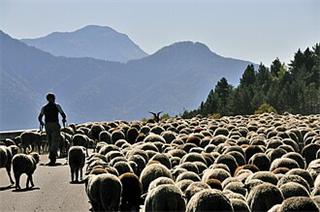
The Khoekhoe were herders. Sheep, goats and cattle grazed in fertile valleys gave them a stable, balanced diet and let their way of life spread across a region once held by foragers, and in the 17th century they kept large herds of Nguni cattle in the Cape region. They were traditionally nomadic pastoralists and mostly gave up that life in the 19th and 20th centuries. The Richtersveld is today the only place where transhumance linked to Khoe culture continues to any great extent.
Society was built of nations and clans, which split and re-formed. The Nama clans include the Khaiǁkhaun, the Red Nation at Hoachanas, the main group and the oldest Nama clan in Namibia, the ǃGamiǂnun or Bondelswarts at Warmbad and the Topnaars at Rooibank and Sesfontein, each with its own centre and its captain, the gaob; the Kharoǃoan left the Red Nation in 1850 to settle at Keetmanshoop. The Southern Khoekhoe of the Cape were divided into Eastern, Central, Western and Peninsular groups, each made up of nations and subtribes that formed part of the Khoekhoe form of government.
Herders and foragers lived side by side, as the cattle-keeping ǃUriǁ’aes and their foraging kin show. Under colonial rule the old structures broke down: many Khoekhoe became bondservants or farm workers on settlers’ farms, and others were taken into clans that survived.
Beliefs & Worldview
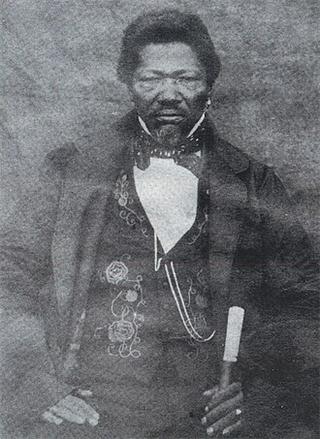
The religious mythology of the Khoe-speaking peoples gives special significance to the Moon, which may have been seen as the physical manifestation of a supreme being associated with heaven. Thiǁoab, called Tsui’goab by the Nama and ǁGamab by the Damara, is believed to be the creator and the guardian of health, while ǁGaunab is chiefly an evil being who causes sickness or death.
Christianity came with the missions. Georg Schmidt, a Moravian Brother from Herrnhut in Saxony, founded Genadendal in 1738 among the Khoe-speaking peoples at Baviaanskloof in the Riviersonderend Mountains, the first mission station in southern Africa, and the Griqua states founded by the Kok dynasty arguably answered the influence of missionaries. Many Khoe-speakers have become Christians, and Nama Muslims make up a large share of Namibia’s Muslims.
Europeans built theories on what they took for Khoekhoe belief. A commissioned Grammar and Dictionary of the Zulu Language, published in 1859, put forward an origin in Egypt, a view that seems to have been popular at the time, pointing to a supposed “wont to worship the moon”, to supposed resemblances to Egyptian antiquities and to features of appearance and language.
Arts & Knowledge
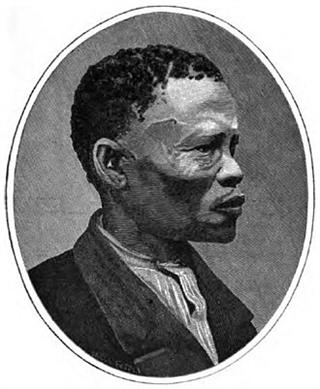
The heritage of the Khoekhoe lives above all in language. Khoekhoe is a Khoe language, related to the speech of Kalahari San groups such as the Khwe and Tshwa, and the Nama and Damara may both have helped to shape it as it spread south. The name Khoikhoi itself is a kare, a praise address. Khoekhoe tales were collected in the 19th century, among them those Wilhelm Bleek published in 1864 as Reynard the Fox in South Africa; or Hottentot Fables and Tales, and the night sky keeps Khoekhoe names: the International Astronomical Union has named the star Mu¹ Scorpii Xami di mûra, “eyes of the lion”.
The herding life shaped the material culture. Khoekhoe riders went to war on oxen, as at the Battle of Salt River in 1510, and in the 19th century the Khoekhoe of Kat River were known as very good marksmen. In the Richtersveld, inscribed by UNESCO as a World Heritage Site in recognition of Khoe-speaking culture, the transhumant herding of the past still continues.
Clan names carry history: the Red Nation, the Bondelswarts and the Veldschoendragers, and the Orlam Afrikaners, who built the fortress of ǁKhauxaǃnas before settling at Windhoek.
Contact & Exchange
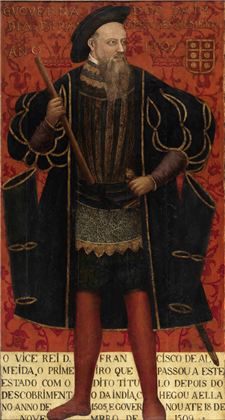
Portuguese explorers and merchants were the first to record contact, in the 15th and 16th centuries, and the encounters were often violent. In 1510, at the Battle of Salt River, ox-mounted ǃUriǁ’aekua, the Goringhaiqua of Dutch records, defeated the party of Francisco de Almeida, killing him and fifty of his men. Later in the century ships of many nations stopped in Table Bay and traded tobacco, copper and iron with the Khoekhoe clans for fresh meat.
Smallpox brought through European contact killed many, for the Khoe-speaking clans had no acquired immunity, and the Dutch East India Company began to enclose their grazing land for farms. Over the following century the Khoekhoe were steadily driven from their land; nations and clans migrated north, re-formed or dissolved. Tens of thousands of Khoekhoe and San died through genocide, murder, mistreatment and disease. From the late 18th century Oorlam communities moved north from the Cape into Namaqualand, partly to escape conscription, and under Jonker Afrikaner came to dominate the Nama and fight the Herero.
In the Cape, the Kat River Settlement of 1829 gave Khoekhoe land of their own on the eastern frontier, probably also meant as a buffer, and it thrived. Its marksmen fought for the Colony against the Xhosa, notably under Andries Botha in the Seventh Frontier War (1846–1847), but harsh laws pushing them off their land led many to join the Xhosa rising of 1850.
Legacy

After that rising the Cape Government enacted the Cape franchise of 1853, giving the vote to every man who met a low property test, whatever his colour; a literacy test eroded it from the late 1880s, and the apartheid government abolished it. In German South-West Africa, from 1904 to 1907, German forces fought the Nama and the Herero: over 10,000 Nama, more than half their number, may have died, the greatest massacre the Khoekhoe have suffered, and the Damara lost around 57% of their people. Hendrik Witbooi, captain of the ǀKhowesin, was killed fighting the Germans in 1905.
Under apartheid some Khoekhoe were classified as “Coloured”, a blanket label that ignored their own cultures. They faced discrimination and segregation, and forced removals under the Group Areas Act broke up families and communities, adding to an erasure of Khoekhoe identity that their people are still working to undo. Apartheid and its “Coloured” designation ended in 1994.
Since then Khoekhoe activists have worked to restore their culture and their ties to the land, bringing cases for restitution for “cultural genocide”, for land rights and for the return of Khoesan remains from European museums. The Nama, Damara, Griqua and Orana nations endure; the ǀKhowesin of Gibeon are led by Ismael Hendrik Witbooi, their ninth gaob.
The Khoekhoe are the Indigenous herding peoples of southern Africa, who grew from meetings between San foragers and herders from East Africa around the turn of the era and spread south with their sheep and cattle. Smallpox, land seizure and war under colonial rule broke up their societies, and in 1904–1907 more than half of the Nama may have died at German hands, but the Nama, Damara, Griqua and other nations endure.
Test yourself
5 questions on this page, from its key events and facts.
The questions open here once the page has loaded.
References
- P. Kolben, Present State of the Cape of Good Hope (London, 1731–38)
- A. Sparman, Voyage to the Cape of Good Hope (Perth, 1786)
- Sir John Barrow, Travels into the Interior of South Africa (London, 1801)
- Bleek, Wilhelm, Reynard the Fox in South Africa; or Hottentot Fables and Tales (London, 1864)
- G. W. Stow, Native Races of South Africa (New York, 1905)
- Richard Elphick, Khoikhoi and the Founding of White South Africa (London, 1977)