
Culture · Europe
Iberians
At a glance
- In the narrow sense, the Iberians were the pre-Indo-European peoples of the eastern and southern coasts of the peninsula that bears their name, distinct from the Celts and Celtiberians of its interior.
- From the late 5th century BCE their societies centred on fortified towns, oppida, led by aristocracies and by chieftains bound to their followers by a tie the Romans called fides.
- Iberian soldiers fought in Italy, Greece and Sicily and for both sides in the Second Punic War, after which their lands became Roman provinces and their language gave way to Latin.
Timeline
- 6th century BCEGreek colonists make the first historical reference to the Iberians, as the non-Celtic peoples south of the Ebro
- 5th century BCEA great fortress is built at Saguntum, and Iberian soldiers begin to fight in Italy, Greece and Sicily
- late 5th–early 4th century BCEAn aristocracy and a system of clients take hold, and the oppidum becomes the centre of political life
- 324 BCEIberian envoys seek the friendship of Alexander the Great
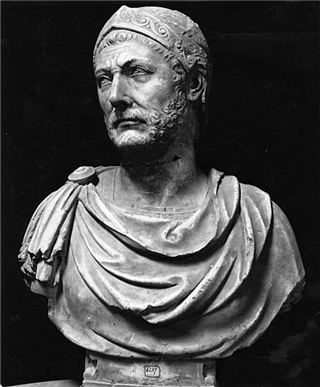
- 221 BCEHannibal takes command of the Carthaginian forces and completes the conquest of the Iberians south of the Ebro
- 210 BCEPublius Cornelius Scipio Africanus arrives in Iberia and turns the war against Carthage
- 197 BCEThe Iberian tribes of Hispania Citerior revolt against Rome
- 1st–2nd century CEThe Iberian language dies out, replaced by Latin
Origins
The name comes from the Greek Iberes, Latin Hiberi, and Roman writers also called them Hispani. Ancient authors used it in two senses: broadly, for all the peoples of the Iberian Peninsula, and narrowly, for the peoples of its eastern and southern coasts. In the narrow sense they were a pre-Indo-European group who spoke the Iberian language, from the 7th to at least the 1st century BCE. The north, centre and north-west of the peninsula, most of its area, were home to other peoples: the Vascones, Celts and Celtiberians, and the possibly pre-Celtic or Proto-Celtic Indo-European Lusitanians, Vettones and Turdetani. The Greeks first wrote of the Iberians in the 6th century BCE, defining them as the non-Celtic peoples south of the Ebro, the Iber. They also called a people of the Caucasus Iberians, but the two are thought to be unconnected.
Iberian culture developed from the 6th century BCE, and perhaps as early as the fifth to third millennium BCE, on the eastern and southern coasts. By the 6th century BCE it had absorbed influences from the Phoenicians, Carthaginians and Greeks.
The origin of the Iberian language is uncertain. It remains an unclassified, non-Indo-European language. It shares some elements with Basque, and a 1978 study claimed many similarities with Messapic, while links have also been found with Etruscan and Minoan Linear A. One view, the Catalan theory, holds that it began in northern Catalonia and spread north and south from there.
Society
The Iberians lived in villages and in oppida, fortified settlements, and their communities were organised by tribe; those of the Spanish Levant were more urban than their neighbours of the centre and north-west. In the centuries before the Carthaginian and Roman conquests their settlements grew more complex and more unequal, helped probably by trade with Phoenicians, Greeks and Carthaginians. In the late 5th and early 4th centuries BCE an aristocracy consolidated itself and a system of clients emerged, towns grew up around these leaders, and the oppidum became the centre of the landscape and of political life. Saguntum had a large fortress by the 5th century BCE, and Castellet de Banyoles at Tivissa was one of the most important settlements of the north-east.
Society was divided into kings or chieftains, nobles, priests, artisans and slaves. The aristocracy met in a council that ancient writers often called a “senate”, and chieftains kept their forces through a bond of obligation or vassalage that the Romans termed fides. Each tribe or confederation had its centres: Basti (Baza) for the Bastetani, the largest confederation, Edeta (Llíria) for the Edetani, Iltrida (Lleida) for the Ilergetes, Kese for the Cessetani, Laieta for the Laietani.
Farming, horses and mining sustained them. They took wine and olives from the Greeks, horse breeding mattered greatly to the nobility, and they worked the silver mines near Gadir and Carthago Nova, iron in the Ebro valley, and tin and copper.
Beliefs & Worldview

Iberian religion was polytheistic and shaped by Greek, Carthaginian and Phoenician practice, and Tanit, Baal, Melqart, Artemis, Demeter and Asclepius were known and worshipped in the region. Few native gods are known: an oracular healing god, Betatun, is named in a Latin inscription from Fuertes del Rey, and the goddess Ataegina is widely attested in inscriptions. An important female deity of the earth and of renewal, linked with birds, flowers and wheat, appears in the Lady of Baza. The horse was a religious figure too: a sanctuary of horses has been found at Mula in Murcia, and many images show a “horse-taming god” or “lord of the horses”. The man-bull Bicha of Balazote, perhaps a fertility god, and many sphinxes and lions resemble creatures of eastern Mediterranean myth.
The Iberians held rites in the open and kept sanctuaries in holy places such as groves, springs and caves. Archaeology suggests a priestly class, and Silius Italicus mentions priests at a temple of Melqart in the region of Tartessos. Pottery shows a festive ritual dance, described by Strabo and carved in the relief from Fuerte del Rey known as the “Bastetania dance”, and the meeting of the dead with a wolf. Animals were often sacrificed.
Death was seen as the start of a journey across the sea, the land or even the sky, on which supernatural beings such as the sphinx or the wolf, and sometimes a god, guided the dead. The Iberians cremated their dead and placed the ashes in urns, which were laid in stone tombs.
Arts & Knowledge

The Iberians made sculpture in stone and bronze, much of it influenced by Greek, Carthaginian and Phoenician art, with Assyrian, Hittite and Egyptian influences as well. Its styles are grouped by region into Levantine, Central, Southern and Western, the Levantine showing the strongest Greek influence. The Lady of Baza and the Lady of Elche are thought to be the work of Iberians who knew Greek art well, and the Lady of Elche and the Lady of Guardamar show clear Hellenistic influence. The Iberians may have learned some techniques from the Greek colonists of Emporion, Rhode and Hemeroskopeion.
Iberian pottery and painting were distinctive and widespread. Pots were mainly decorated with red geometric patterns, but from Murcia to the south of Catalonia some also bear figures, which reveal something of Iberian myth and ritual. Metalwork was fine, and the Iberians forged iron weapons of high quality, above all the falcata, a curved sword. The Treasure of Tivissa, a unique group of silver votive offerings, was found at Castellet de Banyoles in 1927.
The Iberians wrote, using three scripts for their language: the north-eastern Iberian script, in a dual variant of the 4th and 3rd centuries BCE and a non-dual variant of the 2nd and 1st, the south-eastern Iberian script, and the Greco-Iberian alphabet. The two native scripts are semi-syllabaries, with syllabic signs for the stops and single-sound signs for the other consonants and the vowels. Some scholars derive them from the Phoenician alphabet alone, while others see Greek influence too.
Contact & Exchange
The Iberians traded widely in the Mediterranean, and their pottery and metalwork have been found in France, Italy and North Africa. They had close contact with the Greek colonies of Emporion, Rhode and Hemeroskopeion and with the Phoenicians of southern Andalusia, whose first colony in the peninsula, Gadir (Roman Gades, modern Cádiz), was founded in 1100 BCE, followed by Malaka, Sexi and Abdera. Thucydides wrote that the Sicani of Sicily were of Iberian origin, though “Iberian” then may have included Gaul. From the 5th century BCE Iberian soldiers often fought in Italy, Greece and above all Sicily.
Warfare among the tribes was endemic, based on raiding and plunder. In battle Iberians charged and fell back, throwing javelins and shouting without closing with the enemy, a way of fighting the Romans called concursare, and they favoured ambushes and guerrilla tactics. Their infantry included heavily armoured scutati with large shields and caetrati with a small buckler, and their cavalry was among the best of the ancient Mediterranean.
After the First Punic War Carthage expanded into the peninsula. Hamilcar Barca, then Hasdrubal the Fair, founder of Qart Hadasht (Cartagena), and from 221 BCE Hannibal conquered the Iberians south of the Ebro, and Hannibal’s siege of Saguntum, an ally of Rome, began the Second Punic War. Iberians fought on both sides, most tribes for Carthage. Rome sent Gnaeus and Publius Cornelius Scipio, who both died in the fighting, and then Publius Cornelius Scipio Africanus, who arrived in 210 BCE and won at Baecula and Ilipa.
Legacy

After the defeat of Carthage the Iberian territories were divided into two provinces, Hispania Ulterior and Hispania Citerior. The Ilergetes and other tribes had already revolted after Ilipa, and in 197 BCE the Iberian tribes of Hispania Citerior rose again. Once these regions were secured, Rome went on to conquer Lusitania and Celtiberia, and wars in the north of the peninsula went on until the last rebellions were defeated in the Cantabrian Wars.
Iberian towns lived on under Rome. Kese, the centre of the Cessetani, became Tarraco, the capital of Hispania Tarraconensis; Arse became Saguntum, Iltrida Ilerda, Laieta Barcino, now Barcelona, and Salduie, in the land of the Sedetani, Caesaraugusta, now Zaragoza. The Iberian language, like the other paleohispanic languages except Basque, was gradually replaced by Latin and had died out by the 1st to 2nd centuries CE.
The Iberians gave their name to the whole peninsula, because the Greeks, the Romans and other Mediterranean peoples first met peoples who were Iberian in the ethnic and linguistic sense, although most of the peninsula’s peoples were not. Their remains are still being uncovered and studied: the settlement of Castellet de Banyoles was discovered in 1912, the ruins of Ullastret are identified with Indika, the centre of the Indigetes, and the mausoleum of Pozo Moro near Chinchilla de Monte-Aragón seems to mark the site of another large settlement.
The Iberians were the pre-Indo-European peoples of the eastern and southern coasts of the Iberian Peninsula, known from Greek and Roman writers from the 6th century BCE. Living in tribes centred on fortified oppida, they absorbed Greek and Phoenician influences in their sculpture and religion, wrote in scripts of their own and were famed as soldiers, until Carthage and then Rome conquered them and Latin replaced their language.
Test yourself
5 questions on this page, from its key events and facts.
The questions open here once the page has loaded.
References
- Beltrán, Miguel (1996). Los iberos en Aragón. Zaragoza.
- Ruiz, Arturo; Molinos, Manuel (1993). Los iberos. Barcelona.
- Sanmartí, Joan; Santacana, Joan (2005). Els ibers del nord. Barcelona.
- Sanmartí, Joan (2005). «La conformación del mundo ibérico septentrional». Palaeohispanica 5, pp. 333–358.