Central & East Asia
Baekje
At a glance
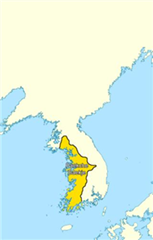
- Baekje grew from a Mahan statelet on the Han River into a kingdom of south-western Korea, ruled from Hanseong, Ungjin and Sabi.
- Its court was celebrated for refined Buddhist art, metalwork and stone pagodas, seen in King Muryeong's tomb and the Baekje incense burner.
- Baekje passed Chinese writing, Buddhism and skilled craftsmen to Yamato Japan, its closest ally, before falling to Silla and the Tang in 660.
Rise & Fall
- 18 BCETraditional founding of Baekje by Onjo at Wiryeseong
- 371Geunchogo's army kills the Goguryeo king Gogugwon at Pyongyang
- 384The monk Marananta brings Buddhism from the Eastern Jin
- 475Goguryeo takes Hanseong; the court moves to Ungjin
- 538King Seong moves the capital to Sabi
- 554King Seong is killed fighting Silla at Gwansanseong
- 660Silla and Tang take Sabi; King Uija surrenders
- 663Tang and Silla defeat Baekje loyalists and a Yamato fleet at Baekgang
Foundation
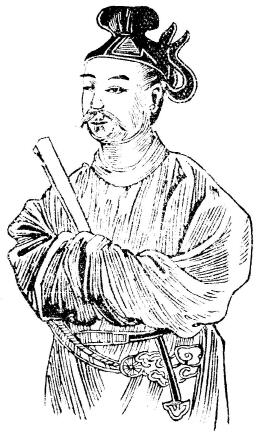
Baekje arose in the Han River basin, around modern Seoul, among the walled-town communities of the Mahan confederacy, which Chinese sources of the 3rd century list as some fifty small polities in south-western Korea. Korean tradition, preserved in the Samguk sagi, holds that Onjo, a son of Jumong, the founder of Goguryeo, came south with followers and founded the kingdom in 18 BCE at Wiryeseong; another version credits his elder brother Biryu. The royal house claimed descent from Buyeo, a claim later expressed in the royal surname Buyeo and in the alternative state name Nambuyeo, 'Southern Buyeo'. Archaeologically, the earthen walls of Pungnap Toseong and Mongchon Toseong in south-eastern Seoul, raised around the 3rd century CE, mark the emergence of a sizeable royal centre, and most historians date Baekje's development into a true kingdom to the reign of King Goi (traditionally 234–286) or later. King Geunchogo (r. 346–375) is generally credited with absorbing the remaining Mahan polities towards the south-west coast. He opened relations with the Eastern Jin court in 372, and in 371 his army killed the Goguryeo king Gogugwon at Pyongyang, making Baekje for a time the strongest of the Korean kingdoms.
Socioeconomy

Baekje's core lay in the fertile plains of the Han, Geum and Yeongsan river basins, where rice grown in irrigated paddies, together with millet and barley, formed the basis of the economy. Society was led by a small group of great families; the Chinese Sui shu names eight leading clans, including the Sa, Yeon, Hae, Jin and Mok, who supplied the highest officials and royal consorts. Below them stood free farmers liable to taxes, military service and corvée labour, and unfree people. Buddhism, brought from the Eastern Jin by the monk Marananta in 384, became the faith of the court, and the Sabi period saw great temples such as Jeongnimsa, whose five-storey stone pagoda still stands, and Mireuksa at Iksan, one of the largest temple complexes of its age, whose reliquary inscription dates its western pagoda to 639. Baekje craftsmen were renowned: the tomb of King Muryeong at Gongju, found intact in 1971, yielded gold crown ornaments, jewellery and Chinese ceramics, and the gilt-bronze incense burner discovered at Neungsan-ri in 1993 is among the masterpieces of East Asian metalwork. Sea routes linked Baekje with the southern Chinese courts, the Gaya states and the Japanese archipelago, bringing silks, ceramics and books from China and carrying Baekje goods, scholars and artisans to Japan.
Military

Baekje's armies were led by aristocratic commanders and raised from provincial levies, supported by earthen and stone fortresses along its frontiers and by ships that controlled the coastal crossings of the Yellow Sea. For most of its history Baekje fought on two fronts. Its early wars against Goguryeo culminated in Geunchogo's victory at Pyongyang in 371, but under Gwanggaeto the Great Goguryeo struck back, taking dozens of Baekje fortresses in 396 and forcing King Asin to submit. The decisive blow came in 475, when King Jangsu of Goguryeo captured Hanseong and executed King Gaero, compelling the court to flee south to Ungjin (Gongju). From 433 Baekje was allied with Silla against Goguryeo, and in 551 their combined forces recovered the Han River basin, only for Silla to seize it for itself in 553. King Seong (r. 523–554) attacked Silla in revenge and was killed at the Battle of Gwansanseong in 554, a defeat in which, according to the Samguk sagi, nearly 30,000 Baekje soldiers died. Baekje regained the initiative under King Uija, who took some forty Silla fortresses and the stronghold of Daeya in 642, but in 660 the general Gyebaek fell with his last army at Hwangsanbeol against Kim Yu-sin, and the capital was lost.
Governance & Law
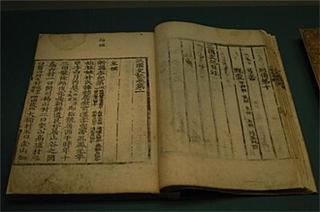
Baekje was a hereditary monarchy in which the king, of the Buyeo lineage, shared power with the great aristocratic clans. Tradition credits King Goi with a system of sixteen official ranks headed by the jwapyeong, distinguished by the colours of official robes; whatever its exact date, a graded bureaucracy of this kind was in place by the 6th century. Early local control rested on the damno, districts often entrusted to royal kinsmen. After the move to Sabi in 538 the government was organised into twenty-two departments, divided between those serving the royal household and those handling state affairs; the capital was divided into five bu and the territory into five bang, or regions, each governed from a fortress by an appointed commander. Kings sought legitimacy through investiture by Chinese emperors, from whom they received titles of general and king, and Baekje envoys appear at the courts of the Eastern Jin, Liu Song, Liang, Sui and Tang. Records were kept in Chinese: the Samguk sagi reports that the scholar Go Heung compiled a history called Seogi under Geunchogo. King Muryeong's epitaph stone, which records his death in 523 in Chinese-style dating, and the many inscribed wooden tablets excavated at Sabi show a literate court and administration.
Global & Regional Impact
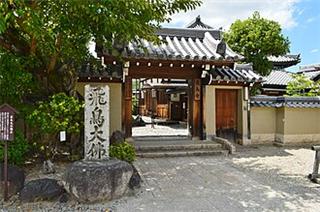
Baekje's most enduring influence lay across the sea in Japan. Its close alliance with the Yamato court, sealed by exchanges of princes and envoys, made it a main route by which Chinese-derived learning, Buddhism and technology reached the Japanese archipelago. Japanese chronicles relate that the scholar Wani came from Baekje bringing the Analects and, anachronistically, the Thousand Character Classic, and that King Seong sent a Buddhist image and sutras to the Yamato court, in 552 according to the Nihon shoki, though another Japanese source gives 538, the date most often preferred today. Baekje monks, carpenters, tile-makers, painters and physicians helped build Japan's first great temples, including Asuka-dera. The Seven-Branched Sword kept at the Isonokami Shrine, inscribed with a date usually read as 369, is generally interpreted as a gift from a Baekje king to a Wa ruler. In Korea, Baekje's art, marked by gentle Buddhist sculpture such as the rock-carved triad at Seosan, and its stone pagodas influenced Silla and later Korean styles. After 660 thousands of Baekje refugees, including members of the royal family, settled in Japan, where the prince Zenkō received the surname Kudara no Konikishi and refugee experts helped build Korean-style mountain fortresses. The Baekje Historic Areas at Gongju, Buyeo and Iksan joined the UNESCO World Heritage List in 2015.
Decline & Fall
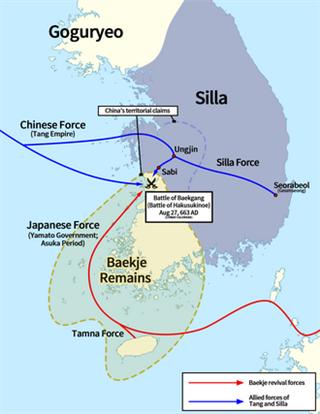
Baekje's fall resulted from its long struggle with Silla, which after taking the Han River basin in 553 gained direct sea access to China and courted the Tang. King Uija's successful offensives of the 640s, including the capture of Daeya fortress in 642, in which the son-in-law of the Silla noble Kim Chunchu was killed, pushed Silla to seek Tang help, and Kim Chunchu travelled to Chang'an in 648 to negotiate an alliance. In 660 a Tang fleet under Su Dingfang landed at the mouth of the Geum River while Silla forces under Kim Yu-sin advanced overland and defeated Gyebaek at Hwangsanbeol. Sabi fell in the seventh month of 660; King Uija surrendered at Ungjin and was taken with his family and many officials to the Tang court at Luoyang, where he died. Later Korean histories blamed his luxury and neglect of loyal advisers, a view probably coloured by the victors. A restoration movement led by Boksin and the monk Dochim, with Prince Buyeo Pung brought back from Japan, held out for three years with Yamato support, until a Tang and Silla fleet destroyed the Japanese navy at the Battle of Baekgang in 663 and the last fortress, Imjonseong, fell. The Tang briefly administered the former kingdom through the Ungjin Area Command before Silla absorbed its lands by 676.
Baekje, the south-western kingdom of Korea's Three Kingdoms period, created a refined Buddhist and literate court culture and served as the main bridge between the Korean peninsula and Japan, transmitting writing, Buddhism and craftsmanship to Yamato before Silla and the Tang destroyed it in 660.
References
- Best, J.W. (2006) A History of the Early Korean Kingdom of Paekche, together with an Annotated Translation of The Paekche Annals of the Samguk sagi. Cambridge, MA: Harvard University Asia Center.
- Farris, W.W. (1998) Sacred Texts and Buried Treasures: Issues in the Historical Archaeology of Ancient Japan. Honolulu: University of Hawai'i Press.
- Lee, K.-b. (1984) A New History of Korea. Trans. E.W. Wagner with E.J. Shultz. Cambridge, MA: Harvard University Press.
- Seth, M.J. (2010) A History of Korea: From Antiquity to the Present. Lanham: Rowman & Littlefield.
Connections
Open the full connections map →