Central & East Asia
Qin dynasty
At a glance
- Beginning in 230 BCE, King Ying Zheng of Qin conquered Han, Zhao, Yan, Wei, Chu and Qi in turn, and in 221 BCE took the new title Shi Huangdi, 'First Emperor'.
- The empire was divided into 36 commanderies and more than 1,000 districts run by appointed officials, ending aristocratic rule; the Han dynasty inherited this administrative state.
- The dynasty's 14 years make it the shortest of any major Chinese dynasty, with only two emperors, yet it is credited with originating the imperial system that lasted until 1911.
Rise & Fall
- 230 BCEQin attacks the state of Han directly to its east and takes its capital city of Xinzheng, opening the wars of unification.
- 221 BCEQin conquers Qi, taking its capital at Linzi, and King Zheng declares himself Shi Huangdi, the First Emperor.
- 215 BCEThe general Meng Tian conquers the Ordos region from the Xiongnu and agriculture is established there.
- 214 BCESome 500,000 men are sent south against the Baiyue peoples; after heavy losses, Qin takes the coastal lands around Guangzhou and the provinces of Fuzhou and Guilin.
- 210 BCEQin Shi Huang dies on a journey to the eastern frontiers; Li Si and Zhao Gao hide his death, alter his will and place Huhai on the throne as Qin Er Shi.
- 209 BCEPopular revolt breaks out as men across China attack officials, raise armies and declare themselves kings.
- 207 BCEZiying, a son of Fusu, surrenders to Liu Bang on his arrival at Xianyang and is soon executed by Xiang Yu.
- 206 BCEXianyang is destroyed, marking the end of the imperial Qin dynasty; the Chu–Han Contention follows.
Foundation

According to the Shiji, Feizi, said to descend from the legendary adviser Gao Yao, was granted the settlement of Qin, in modern Qingshui County, Gansu, in the 9th century BCE, and in 897 BCE the area became a dependency for raising horses. In 770 BCE Duke Xiang escorted the Zhou court of King Ping from Fenghao to Chengzhou, the move that divides the Western from the Eastern Zhou; sent against the Western Rong in reward, he formally established Qin as a major vassal state and took in Fenghao and much former Zhou land. Qin began expeditions into central China in 672 BCE; by the 4th century BCE the tribes to its west had been subdued or conquered.
Between 359 BCE and his execution in 338 BCE the statesman Shang Yang introduced the reforms that made Qin a centralised state with a large army, and helped build the capital at Xianyang on the Wei River, in the Guanzhong heartland of fertile farmland protected by mountains. After a defeat by an alliance of the other states in 295 BCE, the aggressive Fan Sui became prime minister in 266 BCE and pursued conquest. Qin took Han's capital Xinzheng in 230 BCE, forced Zhao to surrender in 228 and Yan in 226, took the Wei capital of Daliang in 225, forced Chu to surrender in 223, deposed the Zhou remnants at Luoyang and conquered Qi in 221 BCE. King Zheng, on the throne since the age of nine, combined the titles of the Three Sovereigns and Five Emperors into Shi Huangdi, 'First Emperor'.
Socioeconomy
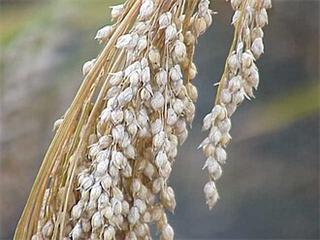
Commoners and villagers made up more than 90 per cent of the population and rarely left the villages where they were born. Most worked the land: millet, wheat and barley were the staples, pasture was scarce, and meat was largely for the wealthy. Under Shang Yang the state set out to maximise the area under cultivation, clearing most of the forest of the Yellow River valley, dividing the land into household-sized allotments and forcibly relocating people to work them. Irrigation works, and the Wei River canal of 246 BCE, sustained the army. Other professions were hereditary.
Qin political economy, following Shang Yang and Li Kui, treated labour as the realm's primary resource and commerce as 'inherently sterile'. The merchant class of the Warring States period was seen as a threat; a law of 214 BCE allowed merchants to be impressed into the army and deported to the frontiers. From the 330s BCE the state minted round bronze banliang coins of a nominal 8 grams; after unification they replaced spade money and knife money as the first currency used throughout China, and private minting counted as counterfeiting. A registration system, thought to date from 375 BCE and expanded under Shang Yang, recorded households organised in 'groups of five' whose heads were mutually responsible for reporting wrongdoing; from 231 BCE the ages of adult men were recorded. This control of people made possible projects employing hundreds of thousands of peasants and convicts.
Military

Qin kept an army superior in doctrine and practice to those of the other Warring States: large, efficient, led by capable generals, and quick to adopt advances in weaponry and transport. It fought without the restraints of the Spring and Autumn period, when war had been a gentleman's activity: Qin exploited every weakness, and a nobleman of Wei called it 'avaricious, perverse, eager for profit, and without sincerity'. A system of twenty ranks rewarded soldiers by the number of enemies killed or units led to victory; each rank carried dwellings, slaves and land and could remit punishments. Abuses followed: a commander named Hu had his men attack peasants to inflate his count of 'bandits' killed.
The wars of unification ran from the capture of Xinzheng in 230 BCE to the fall of Linzi in 221 BCE. In 214 BCE Qin Shi Huang kept roughly 100,000 men on the northern border and sent some 500,000 south against the Baiyue peoples. Unused to jungle terrain, the army lost more than 100,000 men to guerrilla tactics, but a canal built during the defeat supplied a second attack that took the coastal lands around Guangzhou and the provinces of Fuzhou and Guilin, perhaps reaching Hanoi; more than 100,000 prisoners and exiles were then moved to colonise the conquests. In 215 BCE the general Meng Tian conquered the Ordos from the Xiongnu, who had raided Qin peasants forbidden to trade with them. Earlier lords' walls were joined along the northern border into the base of the Great Wall of China.
Governance & Law
The Qin government was a bureaucracy of officials serving the emperor and put into practice the teachings of Han Fei. The empire was divided into 36 commanderies and more than 1,000 districts, assigned to officials rather than to members of the royal family; new laws ended aristocratic rule, and a supervisory Censorate checked officials at every level. Everything was standardised, from measurements and language to the length of chariot axles. The script of Qin was consolidated into small seal script and spread on public stone inscriptions, and an imperial academy and library were founded to interpret and control texts.
Qin law was primarily administrative. It knew intent, defendants' rights, judicial procedure and retrials, and the code focused mainly on theft. Tattooing was the most common heavy mutilating punishment, cutting of nose or foot rare, and capital punishment infrequent; hard labour on roads and canals was the most common heavy punishment, with only a minority sent to the wall, and criminals were often pardoned for fines, labour or demotion and resettled in frontier colonies. Religion centred on spirits of the human dead, of heaven such as Shangdi, and of mountains and rivers, reached by animal sacrifice; the emperor's touring of ritual sites, continued by the Han, presented him as semi-divine, and stelae invoking divine protection called him a sage.
Global & Regional Impact

Though it lasted only 14 years, the Qin dynasty is credited with inaugurating the Chinese imperial system, which persisted in some form until the Xinhai Revolution of 1911. The Han dynasty inherited the administrative state it had built, including the household registration system; historians have often grouped Qin and Han together, treating the founding of the Han 'mainly as a change in ruling houses rather than a system or method of rule'. The standardised currency, weights, measures and writing outlived the dynasty, as did the roads, the northern walls that became the base of the Great Wall of China, and the Mausoleum of Qin Shi Huang with its Terracotta Army, not discovered until 1974.
The Qin also left a reputation. In the 2nd and 1st centuries BCE Han scholars portrayed the dynasty as a monolithic, legalist tyranny, citing the purges of 213 and 212 BCE known as the burning of books and burying of scholars, whose earliest account is in the Shiji of about 91 BCE and whose truth some modern scholars dispute. The state's capacity to transform the environment through the management of people and land has led its rise to be called one of the most important events in East Asian environmental history. Qin is the likeliest origin of the name China, attested in Sanskrit as Cina and Sina and in Greek as Thinai or Sinai, although some scholars note that Sina appears in Sanskrit centuries before the dynasty.
Decline & Fall

Three attempts were made on Qin Shi Huang's life, one by Jing Ke in 227 BCE and two around 218 BCE, and the emperor grew obsessed with immortality. In 210 BCE, on a journey to the eastern frontiers, he died while seeking an elixir of immortality. The chief eunuch Zhao Gao and the prime minister Li Si hid his death until they had altered his will: a forged order drove the intended heir Fusu to suicide, and the emperor's son Huhai was enthroned as Qin Er Shi. He executed ministers and princes, continued vast building projects and raised taxes, and men across China revolted.
Li Si and Zhao Gao fell out; Zhao had Li tried and executed, then deceived Qin Er Shi into believing hostile forces had reached the capital, and the emperor was forced to kill himself when cornered by Zhao's son-in-law Yan Le. Ziying, a son of Fusu, took the throne and executed Zhao Gao, but could only claim to be one king among many. Popular revolt had broken out in 209 BCE, and when Chu rebels under Liu Bang attacked, Ziying surrendered to him at Xianyang in 207 BCE; spared at first, he was soon executed by the Chu leader Xiang Yu. In 206 BCE Xianyang was destroyed, which historians consider the end of the imperial Qin dynasty. The former Qin lands were divided into the Eighteen Kingdoms until Liu Bang turned on Xiang Yu in the Chu–Han Contention and, victorious, declared himself emperor of the Han dynasty on 28 February 202 BCE.
The Qin dynasty unified China in 221 BCE after a decade of conquest and ruled it for fourteen years through appointed officials, standard coins, measures and script, and vast works of forced labour. Its collapse after the First Emperor's death in 210 BCE gave way to the Han, who kept the imperial system the Qin had made.
Test yourself
5 questions on this page, from its key events and facts.
The questions open here once the page has loaded.
References
- Mark Edward Lewis, The Early Chinese Empires: Qin and Han (Belknap Press, 2007)
- Derk Bodde, "The State and Empire of Ch'in", in Denis Twitchett and Michael Loewe (eds), The Cambridge History of China, vol. 1 (Cambridge University Press, 1986)
Connections
Open the full connections map →