Culture · Americas
Mississippian culture
At a glance
- The Mississippian culture was a way of life shared from about 800 to 1600 by many Native American peoples of the Mississippi valley and the South-East, built on maize farming and hereditary chiefs.
- Its towns centred on earthen platform mounds and plazas, from Cahokia, the largest, to Moundville in Alabama, Etowah in Georgia and Spiro in Oklahoma.
- Spanish expeditions from 1539 met its last great chiefdoms; after epidemics, wars and slave raids their peoples regrouped as the Creek, Choctaw, Chickasaw and other nations.
Timeline
- c. 800–1000Emergent Mississippian villages in the central Mississippi valley come to depend on maize
- c. 1050Cahokia is rebuilt around a great plaza and becomes the largest town north of Mexico
- c. 1120–1250Mississippian ways spread across the South-East; Moundville becomes a regional capital
- c. 1350Cahokia, long in decline, is largely abandoned
- c. 1450Towns around the meeting of the Ohio and Mississippi are abandoned, leaving a “Vacant Quarter”
- 1539–1543Hernando de Soto’s expedition marches through the Mississippian chiefdoms
- 1540De Soto’s army burns the town of Mabila after an ambush; thousands of its people die
- 1566–1568Juan Pardo’s expeditions build forts at Joara and other towns, destroyed by their people by 1568
Origins
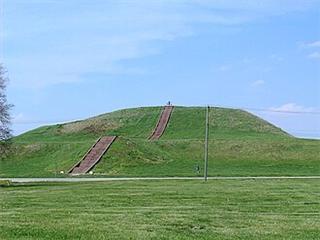
The Mississippian culture is the name archaeologists give to a way of life that took shape in the central Mississippi valley between about 800 and 1050 CE and spread across much of eastern North America. Its peoples never formed one nation or state and spoke many languages, among them Muskogean, Siouan, Caddoan and Iroquoian tongues. Archaeologists recognise the culture by a group of features found together: farming based on maize, towns built around plazas with flat-topped earthen mounds that carried temples and chiefs’ houses, pottery tempered with crushed mussel shell, ranked societies led by hereditary chiefs, and a shared religious art.
Much of this had deep roots. Native Americans had raised earthworks in the East for thousands of years, at Watson Brake in Louisiana about 3500 BCE and at Poverty Point from about 1700 BCE, and in the Ohio valley the Adena and Hopewell peoples built burial mounds and great geometric enclosures between about 500 BCE and 500 CE. Long before maize, first domesticated in Mexico, reached the East, its peoples had domesticated native plants such as squash, sunflower, marsh elder and goosefoot, and for centuries after its arrival maize remained a minor crop. In the lower Mississippi valley the Coles Creek culture was building flat-topped mounds around plazas from about 700 CE, although it still lived mainly by hunting, gathering and native crops.
In the Late Woodland period, after about 500 CE, the bow and arrow spread through the East and maize grew more important. Between about 800 and 1050, in the American Bottom, the broad floodplain of the Mississippi opposite present-day St Louis, villages of the Emergent Mississippian period came to depend on maize, built houses around courtyards and began to make shell-tempered pottery. About 1050 Cahokia was rebuilt to a grand plan around a vast plaza, a change so sudden that the archaeologist Timothy Pauketat called it a “big bang”; for more than a century it was the largest town north of Mexico.
Over the next two centuries the new way of life spread up the Mississippi to Wisconsin, where Aztalan, a palisaded town with platform mounds on the Crawfish River, was occupied until the 13th century, and through the South-East from the Arkansas River to Georgia and Florida. Archaeologists debate how far it travelled with migrants and how far local peoples adopted it by choice, and most see both at work.
Society

Mississippian societies were chiefdoms. A chief from a ranked lineage ruled a town and the farmsteads around it, and the strongest, whom archaeologists call paramount chiefs, drew tribute and warriors from several towns. Chiefs lived on the summits of mounds, received food, cloth and prestige goods, and led in war and ritual. The chroniclers of Hernando de Soto’s expedition describe chiefs borne in litters by their leading men, a woman ruler at Cofitachequi in present-day South Carolina, and the paramount chiefdom of Coosa in north-western Georgia, whose ruler commanded a string of chiefdoms from eastern Tennessee into Alabama. Such powers rarely lasted long: centres grew for a few generations and then declined as power passed to rivals.
The great centres were few. Cahokia may have held 10,000 to 20,000 people at its height. Moundville, on the Black Warrior River in Alabama, became a regional capital from about 1150, with 29 platform mounds around a rectangular plaza and a bastioned palisade; perhaps 1,000 to 3,000 people lived within its walls and about 10,000 in the valley around, and after about 1300 most moved out, leaving it a centre of ceremony and burial for the elite. Etowah in Georgia, occupied from about 1000 to 1550, had three main platform mounds, the largest 19 metres high, behind a palisade and ditch, and Spiro, on the Arkansas River in eastern Oklahoma, was a centre of the Caddoan Mississippian world from about 800 to 1450. Most people, however, lived in small towns with a single mound or in scattered farmsteads.
The economy rested on maize, grown with squash, sunflower and native seed plants in the fertile soils of river floodplains and worked with hoes bladed with stone or shell; the chert of Mill Creek in southern Illinois was quarried for hoe blades traded across the Midwest. Hunting deer and turkey, fishing and gathering nuts and wild plants filled out the diet. Among the South-Eastern peoples whom Europeans later described, women did most of the farming and men hunted and fought, and archaeologists think the division was old. Skeletons show the cost of the maize diet: more tooth decay and signs of poorer nutrition than among earlier hunters and gatherers.
Houses had walls of posts set in trenches, covered with woven cane and clay and roofed with thatch, and stood around plazas used for ceremonies, councils and the game of chunkey. Palisades with bastions, rebuilt again and again, especially after about 1200, along with burned towns and skeletons with arrow wounds, show that war was frequent.
Beliefs & Worldview

Mississippian religion has to be reconstructed from objects, from the layout of towns and burials, and from comparison with the beliefs of descendant peoples recorded since the 18th century, such as the Muscogee, Cherokee, Natchez, Osage and Ho-Chunk; these comparisons are valuable but uncertain, since centuries separate the two.
From about 1200 the same symbols appear on copper, shell, stone and pottery across much of the Mississippian world. The archaeologists Antonio Waring and Preston Holder first described this shared art in 1945 as the Southeastern Ceremonial Complex; many scholars now prefer names such as the Mississippian Ideological Interaction Sphere. Its motifs include the cross inside a circle, probably the sun and the sacred fire; the forked eye, taken from the markings of the peregrine falcon; a hand with an eye in its palm; and horned and winged serpents. The best-known figure is the Birdman, a dancer or warrior with falcon wings and a beaked mask, whom many scholars link with Red Horn, also called Morning Star, a hero of Ho-Chunk oral tradition. Together the images suggest a cosmos of three levels, as in later South-Eastern and Plains traditions: an Upper World of the sun, thunder beings and birds, the Middle World of people, and a Beneath World of serpents, water monsters and the powers of fertility.
Platform mounds were raised in stages, each new layer of earth burying the old summit building, perhaps in rites of renewal like the Green Corn ceremony, at which later South-Eastern peoples put out old fires and lit new ones. Early 18th-century French observers saw a temple with a perpetual fire on a mound of the Natchez, whose ruler, the Great Sun, was held to be descended from the sun. Figurines carved at Cahokia from red flint clay show kneeling women with hoes, plants and serpents, probably linked to the fertility of the earth, and circles of timber posts there, which archaeologists call Woodhenge, appear to have marked the solstices and equinoxes.
Elite burials show the power and ritual that surrounded chiefs. In Mound 72 at Cahokia, excavated by Melvin Fowler from 1967, some 270 people were buried in the 11th century, among them leaders laid on thousands of shell beads arranged in the shape of a bird and groups of young women who appear to have been killed for the ceremonies. At Etowah, Mound C held leaders buried with copper plates, axes and a pair of marble figures of a man and a kneeling woman, and at Spiro the chamber in Craig Mound known as the Great Mortuary preserved shell cups, copper, textiles and feathers.
Arts & Knowledge

The platform mounds were the greatest works of Mississippian builders. Raised basket-load by basket-load in successive stages, they carried temples, chiefs’ houses and charnel houses on their flat summits. Monks Mound at Cahokia, about 30 metres high and some 6 hectares at its base, is the largest prehistoric earthwork in the Americas; Mound A at Etowah rises 19 metres, and Emerald Mound near Natchez, Mississippi, covers about 3 hectares. The builders had no draught animals or wheeled vehicles, and all the earth was carried in baskets.
Mississippian potters tempered their clay with burned and crushed mussel shell, which allowed thinner and stronger vessels. Besides cooking jars and serving bowls they made bottles and vessels shaped like animals and people, and in the central Mississippi valley, in the last Mississippian centuries, “head pots” modelled as human heads. At Moundville potters engraved bottles and bowls in the Hemphill style with winged serpents and other beings of the Beneath World.
Craftsmen hammered copper from the Great Lakes and the Appalachians into thin sheets and embossed them with figures such as the winged falcon dancers on the plates from Etowah, which are thought to have been made at Cahokia in the 13th century. They engraved cups and gorgets cut from the shells of large whelks brought from the Gulf coast and Florida with warriors, birds and serpents, many of the finest from Spiro. Stone carvers made pipes in the form of human figures and animals, ceremonial axes and maces of polished stone, and flat stone palettes such as the disc from Moundville engraved with two horned rattlesnakes. Textiles, baskets and featherwork were made in quantity, although they survive only where burial chambers kept them dry, as at Spiro.
Players of chunkey rolled discs of polished stone, and chunkey stones are among the most widespread Mississippian finds. The Mississippians had no writing, but their symbols, repeated from Oklahoma to Georgia, formed a shared visual language whose meanings scholars are still working out with the help of descendant communities.
Contact & Exchange

Long-distance exchange linked Mississippian towns. It carried copper from the Great Lakes and the Appalachians, marine shell from the Gulf coast and Florida, mica from the southern Appalachians, galena from Missouri, salt and fine stone; hoes of Mill Creek chert from southern Illinois travelled across the Midwest. Much of the exotic material passed between elites, who displayed it and took it to their graves, and the shared symbols travelled with it.
Mississippian influence reached far beyond its heartland. The Oneota peoples of the upper Midwest and the Fort Ancient villages of the Ohio valley took up some of its crops, pottery and symbols without building great mound towns; Caddoan centres such as Spiro linked it with the southern Plains; and in the lower Mississippi valley the Plaquemine culture, which grew out of Coles Creek, mixed Mississippian ways with its own. Maize had come from Mexico long before, and some Mississippian images recall Mesoamerican ones, but no direct contact has been demonstrated, and scholars debate how far ideas travelled between the two regions.
War shaped relations between neighbours. Rival chiefdoms raided one another, and some were separated by empty land: in 1540 de Soto’s army spent about two weeks crossing the uninhabited wilderness between the chiefdoms of Ocute, in Georgia, and Cofitachequi, in South Carolina, where war had emptied whole river valleys.
The first Europeans to see Mississippian chiefdoms came with Hernando de Soto, who landed in Florida in May 1539 with more than 600 men and over 200 horses in search of gold. For four years his army lived off the land, wintering at Anhaica, the Apalachee capital, crossing to Cofitachequi and spending a month in Coosa, and it took food, porters and women by force. On 18 October 1540 the paramount chief Tuskaloosa ambushed the Spaniards at the fortified town of Mabila; they burned the town, and by the chroniclers’ count thousands of its people died. De Soto reached the Mississippi on 8 May 1541 and died near it on 21 May 1542; about 300 survivors under Luis de Moscoso Alvarado reached New Spain in 1543. Detachments of Tristán de Luna y Arellano’s colony found Coosa much reduced in 1560, and Juan Pardo’s expeditions of 1566–1568 built small forts at Joara and other towns, which local people destroyed by 1568.
Legacy
The Mississippian world changed long before Europeans arrived. Cahokia declined from the late 12th century and was largely abandoned by about 1350; drought, the colder climate of the following centuries, the exhaustion of soil and timber, political strife and war have all been proposed, and most scholars combine several causes. By about 1450 many towns around the meeting of the Ohio and Mississippi had been deserted, a region archaeologists call the Vacant Quarter. Elsewhere, chiefdoms such as Etowah and Coosa flourished into the 16th century.
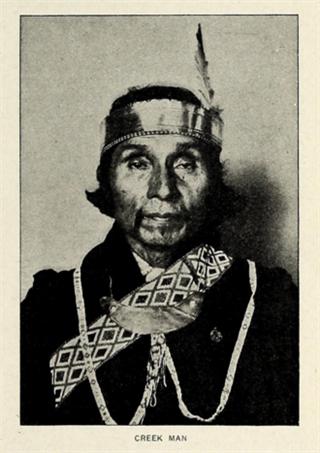
The chiefdoms that de Soto met did not survive the next century and a half. Historians long blamed epidemics brought by his army; many now argue that the heaviest blows fell later, with the smallpox epidemic that began in 1696 and the slave raids encouraged by English traders from Carolina in the late 17th century, which turned the South-East into what the historian Robbie Ethridge calls a “shatter zone”. Survivors regrouped in new confederacies, among them the Muscogee or Creek, the Choctaw, the Chickasaw and the Catawba, which kept much of the old ceremony but rarely built mounds. The Natchez of the lower Mississippi, heirs of the Plaquemine culture, kept a chiefdom ruled by the Great Sun until France destroyed it in 1729–1731.
Euro-American settlers of the 18th and 19th centuries often refused to believe that the ancestors of the Native peoples they were displacing had built the mounds, and imagined a vanished race of “Mound Builders”, Israelites, Welsh or Vikings; Aztalan in Wisconsin owes its name to a 19th-century guess that it was the northern homeland of the Aztecs. Ephraim Squier and Edwin Davis surveyed the earthworks in Ancient Monuments of the Mississippi Valley (1848), and the mound survey of the Bureau of Ethnology, published by Cyrus Thomas in 1894, showed that the ancestors of Native Americans had built them. Meanwhile ploughing and building destroyed thousands of mounds; St Louis, still nicknamed the Mound City, levelled almost all of its own.
Cahokia Mounds has been a UNESCO World Heritage Site since 1982, and Moundville, Etowah, Spiro and Ocmulgee are among the centres preserved as parks and historic sites. Archaeology since the mid-20th century has shown the Mississippian world as many chiefdoms, varied and changing, rather than one state, though scholars still debate how large and centralised Cahokia’s power was. Since the Native American Graves Protection and Repatriation Act of 1990, human remains and sacred objects taken from the mounds have been returning to descendant nations.
The Mississippian culture, from about 800 to 1600, was the way of life of many Native American peoples of the Mississippi valley and the South-East: maize farmers ruled by hereditary chiefs from towns of earthen platform mounds, Cahokia the greatest. Its art and ceremonies left a lasting mark, and its peoples, broken by war, disease and slave raids after European contact, rebuilt themselves as the nations of the South-East.
References
- Ethridge, R. and Shuck-Hall, S.M. (eds) (2009) Mapping the Mississippian Shatter Zone: The Colonial Indian Slave Trade and Regional Instability in the American South. Lincoln: University of Nebraska Press.
- Hudson, C. (1976) The Southeastern Indians. Knoxville: University of Tennessee Press.
- Hudson, C. (1997) Knights of Spain, Warriors of the Sun: Hernando de Soto and the South's Ancient Chiefdoms. Athens: University of Georgia Press.
- Milner, G.R. (2004) The Moundbuilders: Ancient Peoples of Eastern North America. London: Thames & Hudson.
- Pauketat, T.R. (2004) Ancient Cahokia and the Mississippians. Cambridge: Cambridge University Press.
- Townsend, R.F. and Sharp, R.V. (eds) (2004) Hero, Hawk, and Open Hand: American Indian Art of the Ancient Midwest and South. Chicago: Art Institute of Chicago; New Haven: Yale University Press.