South & Southeast Asia
Champa
At a glance
- Champa was less a single kingdom than a confederation of Cham principalities along the coast, Indrapura, Amaravati, Vijaya, Kauthara and Panduranga, united by language and culture, with a king of kings in some periods.
- Between the 7th and 10th centuries Cham fleets controlled the spice and silk trade of the South China Sea, and eaglewood from the highlands was the kingdom's chief export.
- The Vietnamese conquest of Vijaya in 1471, in which 120,000 people were killed or captured, reduced Champa to Kauthara and Panduranga; Panduranga was annexed by Minh Mạng in 1832.
Rise & Fall
- 192Khu Liên, an official at Xianglin, rebels against the Eastern Han dynasty and founds Lâm Ấp, the predecessor state of Champa.
- 380–413Bhadravarman, the first king acknowledged in the inscriptions, establishes the linga Bhadresvara at Mỹ Sơn.
- 605The Sui Empire invades Lâm Ấp, overruns Sambhuvarman's resistance and sacks the capital at Trà Kiệu.
- 875Indravarman II founds Indrapura and a Buddhist dynasty; the years to 982 are called the Golden Age of Champa art.
- 1177Jaya Indravarman IV's fleet takes Angkor by surprise, kills the Khmer king and begins a four-year Cham occupation of Cambodia.
- 1283–1285The Yuan army under Sogetu takes Vijaya; Indravarman V and Prince Harijit wage a two-year guerrilla war and drive the Mongols out.
- 1471Lê Thánh Tông's army destroys Vijaya; 120,000 Cham are killed or captured and the kingdom shrinks to Kauthara and Panduranga.
- 1832Minh Mạng arrests the last king, Po Phaok The, and annexes Panduranga as the provinces of Ninh Thuận and Bình Thuận.
Foundation
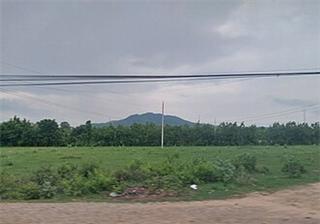
Champa grew out of the Sa Huỳnh culture, an Austronesian seafaring people settled on the coast of present-day central Vietnam between about 1000 BCE and 200 CE, who traded across the South China Sea with the Philippine archipelago and Taiwan. The Cham language belongs to the Austronesian family and is most closely related to Acehnese in northern Sumatra. The first state in the region was Lâm Ấp, known to the Chinese as Linyi, founded in 192 when Khu Liên (Ou Lian), an official of the Eastern Han dynasty at Xianglin, rebelled against Chinese rule; how Linyi related to the later Champa is not clear.
From about the 4th century the Cham polities absorbed Indian influences, probably through wars with the neighbouring Kingdom of Funan and the acquisition of Funanese territory. Sanskrit became the scholarly language, Shaivism the state religion, and red brick Hindu temples rose along the coast. The first king named in the inscriptions is Bhadravarman (r. 380–413), who at Mỹ Sơn established a linga called Bhadresvara, joining his own name to Shiva's; the god-king was worshipped there for centuries afterwards. King Gangaraja (r. 413–?) abdicated and went on pilgrimage to the Ganges, perhaps the only Southeast Asian ruler known to have travelled to India. Rudravarman I (r. 529–572) descended from Gangaraja through the maternal line, and the 4th-century Vo Canh inscription already records matrilineal descent among the early Cham rulers.
Socioeconomy
Unlike most mainland Southeast Asian kingdoms, Champa did not rest on agriculture. The Cham, a seafaring people, built a trading network from the ports of Hội An and Thị Nại into the mountainous hinterland, with a chain of wells along the coast and on the islands of Cù Lao Chàm and Lý Sơn to water Cham and foreign ships. Most exports came from the highlands, from as far as Attapeu in southern Laos: gold and silver, slaves, animals and animal products, and precious woods. The most important was eaglewood, the one product Marco Polo mentioned; in 1155 a Cham envoy shipped 55,020 catties, about 33 tons, of incense to the Song court. The kilns of Gò Sành near Vijaya made olive-green and brown glazed pottery, at its peak in the 14th to 16th centuries and found as far away as Egypt, the Emirates, Malaysia and the Philippines.
Wealth was concentrated in port-cities: Simhapura, a riverine port and political centre from about 400 CE, Amarendrapura and Visnupura in the north, Indrapura, Amaravati and Vijaya in the centre, Nha Trang, Virapura and Panduranga in the south, crowded with Chinese, Khmer, Malay, Viet, Arab and Indian traders. The Zhu Fan Zhi of about 1225 says officials boarded each arriving ship with a leather-bound register, took 20 per cent of the cargo as tax and confiscated the whole if anything was hidden. Kenneth R. Hall holds that Champa lived by raiding rather than by taxes on trade; Hardy argues that its prosperity rested above all on commerce.
Military
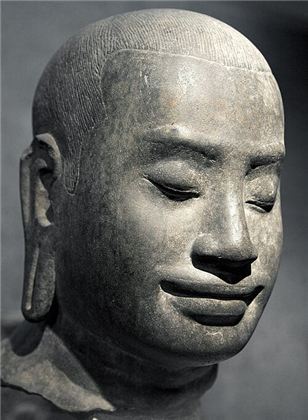
Compared with the Khmer and Đại Việt, Champa's army was small and loosely organised. Its strength was at sea: between the 7th and 10th centuries Cham fleets controlled the spice and silk trade of the South China Sea and added piracy and raiding to their income. The port-cities were walled; Khu Túc on the Kiến Giang had a revetted wall and moat by the 4th century, and when the Chinese sacked it in 446 every inhabitant over fifteen was put to the sword and some 48,000 of gold carried off.
Champa was attacked from every side: by the Chinese in 605, when the Sui sacked Trà Kiệu; by Javanese or Kunlun raiders who demolished the temples of Po Nagar in 774 and Virapura in 787 and held the southern coast until Indravarman I drove them off in 799; by the Khmer, who conquered northern Champa in 1145 and under Jayavarman VII in the 1190s made it a dependency for thirty years; by the Vietnamese in 982, 1044, 1069, 1073, 1446 and 1471; and by the Mongol Yuan in 1283–85. The Cham struck back. In 803 they seized Nghệ An from the Tang, and in June 1177 Jaya Indravarman IV's surprise naval assault plundered Angkor, killed the Khmer king and began a four-year occupation of Cambodia. Che Bong Nga (r. 1360–1390) launched six invasions of Đại Việt, sacking its capital in 1371, 1377, 1378 and 1383, until he was killed in a naval battle in 1390 in which the Vietnamese used firearms for the first time.
Governance & Law

The ruler bore Hindu titles, raja-di-raja, king of kings, or pu po tana raya, lord of all territories, and regnal names formed from prefixes such as Jaya, Maha and Sri with the -varman suffix of the Kshatriya class. He was the patron of the great temples, where kings erected stone lingas named after themselves with the ending -iśvara, and he was consecrated in the abhiseka ceremony. From the 17th century, after the royal family converted to Bani Islam, kings also used the Malay title Paduka Seri Sultan.
How far Champa was ever one state is disputed. Georges Maspero and George Coedès wrote of a unified kingdom; Po Dharma and Trần Quốc Vượng, from the 1980s, read the Chinese texts, the inscriptions and the Cham annals, the Sakkarai dak rai patao, as evidence of several Champas, a confederation of kingdoms and city-states in which, for periods between the 700s and 1471, a king of kings at Indrapura or Vijaya held sway over lesser kings and regional commanders within a mandala. Under Prakasadharma (r. 653–686) the realm stretched from Quảng Bình to Khánh Hòa and was divided into districts called viṣaya; in the 12th and 13th centuries northern Champa comprised Amaravati, Ulik, Vvyar, Jriy and Traik, while Panduranga stayed quietly autonomous, kept its own list of kings from the 13th century to 1832 and conducted its own foreign affairs.
Global & Regional Impact
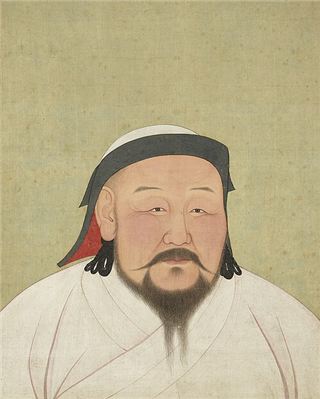
Champa was a link in the spice trade from the Persian Gulf to South China and, later, a supplier of aloe on the Arab routes. Chinese histories of the 7th century counted it the chief tributary state of the South, on a par with Koguryŏ and Baekje, and Kublai Khan ordered a mobile secretariat set up there to dominate the trade of the South China Sea and the Indian Ocean. Cham merchants settled in Sulu from the 10th to the 13th centuries, where they were called Orang Dampuan; Champa traded with Ma-i and Butuan in the Philippines and with Srivijaya and later Majapahit. Cham princesses married Javanese kings: Princess Daravati is said to have led her husband Kertawijaya and the Majapahit royal family to Islam.
The Vietnamese who absorbed Champa were changed by it. In 1044 Lý Thái Tông brought back some 5,000 prisoners, among them court dancers, and in 1060 ordered his musicians to study Cham drum rhythms and songs he had translated himself; bricks inscribed in Cham script show that many Vietnamese temples were built by Cham engineers. Cham culture shaped the Acehnese language of Sumatra and the Tsat speakers of Hainan. Denys Lombard called Champa "not only the name of a former kingdom but it is also of a vast network that extended all over the main Southeast Asian centers". Mỹ Sơn and Hội An are World Heritage Sites, and the Bacam are among the few surviving non-Indic indigenous Hindu peoples in the world.
Decline & Fall

Signs of decline appear long before the end: Sanskrit inscriptions stopped in 1253, no grand temple was built after 1300, and between 1307 and 1401 no indigenous source survives at all. No inscription survives after 1456. In early 1471 Lê Thánh Tông's army destroyed Vijaya and most of northern Champa: 120,000 people were captured or killed, 20–30,000 deported along with fifty members of the royal family, and King Tra Toan died on the way north in captivity. A Cham envoy told the Chinese court that "Annam destroyed our country". Champa shrank to Kauthara and Panduranga; Kauthara was annexed in 1653, and from 1799 Panduranga's kings were appointed by the court at Huế.
In August 1832 Minh Mạng, purging the faction of Lê Văn Duyệt, accused the Cham leaders of supporting him, had the last king Po Phaok The and the viceroy Po Dhar Kaok arrested, and made Panduranga the provinces of Ninh Thuận and Bình Thuận under Vietnamese bureaucrats. Cham customary law was abolished, Vietnamese speech and customs made compulsory, settlers seized most Cham farmland, and heavy taxes and conscription followed. Revolts in 1833–1835, the second led by the Bani cleric Ja Thak Wa, briefly refounded a Cham state before Minh Mạng crushed them; in the massacres of 1832–1836 Bani mosques were razed, temples burned and the Cham lost their seafaring and shipbuilding traditions. Only about 40,000 Cham remained in the old Panduranga when the French completed their conquest in 1885.
Champa was a confederation of Austronesian Cham principalities on the coast of present-day central and southern Vietnam, Hindu and later partly Muslim, which from Lâm Ấp's revolt against the Han in 192 built a maritime trading power at its height in the 9th and 10th centuries, lost Vijaya to Đại Việt in 1471 and was annexed by Minh Mạng in 1832.
Test yourself
5 questions on this page, from its key events and facts.
The questions open here once the page has loaded.
References
- Georges Maspero, The Champa Kingdom: The History of an Extinct Vietnamese Culture, trans. Walter E. J. Tips (White Lotus Press, 2002)
- Michael Vickery, Champa Revised (Asia Research Institute Working Paper 37, 2005)
- Trần Kỳ Phương and Bruce M. Lockhart (eds), The Cham of Vietnam: History, Society and Art (NUS Press, 2011)
Connections
Open the full connections map →