South & Southeast Asia
Funan
At a glance
- Funan is generally considered the first known kingdom in Southeast Asia, though its own name is unknown: 'Funan' is Chinese, and its people may have been Khmer, Austronesian or a mixture of both.
- Roman gold medallions of Antoninus Pius and Marcus Aurelius and Persian, Indian and Greek goods found at Óc Eo show a trading state that may have been Ptolemy's Kattigara, where Roman and Chinese merchants met.
- Fan Shiman, the 3rd-century 'Great King of Funan', built great ships, attacked more than ten kingdoms and extended his territory five or six thousand li before dying on campaign against Chin-lin, the 'Frontier of Gold'.
Rise & Fall
- 1st century CEBy the legend in the Book of Liang, the foreigner Hùntián lands in the Mekong Delta, marries the queen Liǔyè and founds Funan.
- 225–230The first Funanese embassy reaches Lü Dai, governor of Eastern Wu; a second follows in 243, and the envoys Kang Tai and Zhu Ying sojourn in Funan.
- 243Fan Chan sends embassies to India and China; around 245 the Chinese describe walled villages, palaces, archives and taxes paid in gold, silver, pearls and perfumes.
- 5th centuryThe Brahmin Qiáochénrú (Kaundinya) is chosen king at Pánpán and changes all the laws to conform to the system of India.
- 480Jayavarman, 'Protégé of Victory', begins a reign that lasts until his death in 514.
- 514Rudravarman kills his brother Gunavarman for the throne and becomes the last known king of Funan, reigning to about 545.
- 6th centuryChenla, Funan's vassal, subjugates the capital T'e-mu and the king migrates south to Nafuna.
- 627–649Isanavarman of Chenla annexes the territory of Funan at the beginning of the Zhenguan era.
Foundation

Funan is the Chinese name for a polity whose own name is unknown; it appears in no local text, and George Cœdès's suggestion that it transcribes the Khmer bnaṃ or vnaṃ, "mountain", is disputed by the epigraphist Claude Jacques, who would rather speak of the cities the inscriptions name, Bhavapura, Aninditapura, Shresthapura and Vyadhapura. Chinese histories place its foundation in the 1st century CE in the Mekong Delta, though archaeology shows settlement there from at least the 4th century BCE. Its people's ethnicity is debated: Michael Vickery holds that on present evidence they can only have been Khmer, Vietnamese scholars such as Mac Duong think them Austronesian, and the only writings of the period are Sanskrit inscriptions in Pallava Grantha script, which say nothing of the vernacular.
The Book of Liang tells how a foreigner, Hùntián, dreamed that his genie gave him a divine bow and bade him sail; landing in Funan he shot an arrow through the ship of its queen Liǔyè, "Willow Leaf", who surrendered and married him, and he ruled the country and passed it to a son who founded seven cities. Scholars identify Hùntián with the Brahmin Kaundinya who in a Sanskrit inscription of 658 at Mỹ Sơn marries the nāga princess Somā, and Khmer folklore retells the story as Preah Thaong and Neang Neak. Funan is generally considered the first known kingdom in Southeast Asia.
Socioeconomy
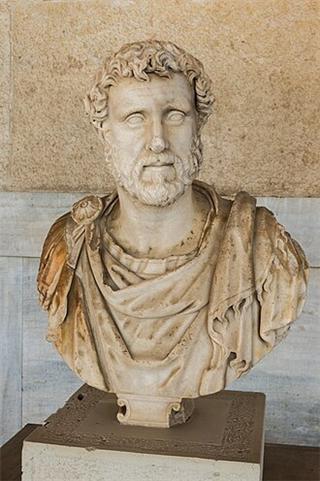
Funan was Southeast Asia's first great economy, prospering by maritime trade and agriculture. It rose when the route from India to China ran by sea to the Isthmus of Kra, overland across the isthmus, then along the Gulf of Siam, past the Mekong Delta and up the Vietnamese coast; Funanese kings of the 2nd century conquered polities on the isthmus and may thus have held the whole route from Malaysia to central Vietnam. Óc Eo, its port and entrepôt, has yielded Roman, Persian, Indian and Greek artefacts: Louis Malleret found there in the 1940s gold medallions of Antoninus Pius and Marcus Aurelius and locally made gold discs imitating coins of Antoninus, Commodus and Septimius Severus. Albrecht Dihle and Cœdès thought Óc Eo the Kattigara of Ptolemy.
Around 245 the Chinese described "walled villages, palaces, and dwellings. They devote themselves to agriculture ... Many of their eating utensils are silver. Taxes are paid in gold, silver, pearls, perfumes. There are books and depositories of archives." The people lived in stilt houses, grew rice and sent tribute of gold, silver, ivory and exotic animals; a canal system linked Angkor Borei to Óc Eo and the coast, and an elaborate system of water storage and irrigation supported fishing and rice along the delta's rivers. Excavations at Angkor Borei since 1994 have found brick structures, burials, mounds, canals and reservoirs, evidence of two thousand years of urban life.
Military
Funan's wars are known from Chinese reports. Its apex came under the 3rd-century king Fan Shiman, the "Great King of Funan", who "had large ships built, and sailing all over the immense sea he attacked more than ten kingdoms ... he extended his territory five or six thousand li", expanding the navy before he died on an expedition against Chin-lin, the "Frontier of Gold". The kings of the 2nd century had already conquered polities on the Isthmus of Kra, giving Funan control of the portage on the India–China route. Succession was often violent: after Fan Shiman came Chin-cheng, Fan Chan, Ch'ang and Fan Hsun "in successive assassinations", and at the end of the kingdom Rudravarman killed his brother Gunavarman to take the throne after Jayavarman's death in 514.
Funan also fought on the Chinese frontier: in the 270s it joined its neighbour Linyi, the region of Champa, to attack Tongking in northern Vietnam, then a Chinese colony. An Eastern Wu embassy came in 228, Funanese embassies went to Lü Dai between 225 and 230 and in 243, and the envoys Kang Tai and Zhu Ying lived in Funan in the mid-3rd century and wrote the accounts on which most knowledge of it rests. The end came by conquest from within. Chenla, a vassal in the interior, "suddenly" subjugated the capital T'e-mu and drove the king south to Nafuna, and the Book of Sui says Citrasena's ancestors had grown powerful until he annexed Funan and possessed it.
Governance & Law
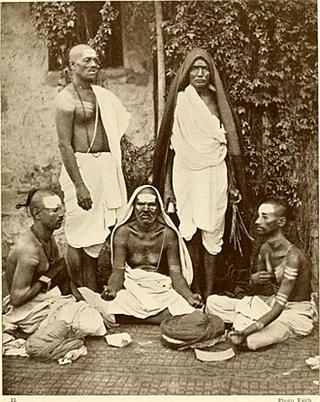
Chinese authors described Funan as a single unified empire, but modern scholars suggest a collection of city-states, sometimes at war with one another and sometimes united. The kings' names are Chinese transcriptions until the inscriptions begin: Hùntián, Hun-p'an-huang, P'an-p'an, then Fan Shiman and the Fan kings; in 357 the Indianised Tiānzhú Zhāntán, "Candana from India", sent tamed elephants to Emperor Mu of Jin; in the 5th century a Brahmin from India, Qiáochénrú, heard a voice telling him to reign over Funan, was chosen king by the whole people and "changed all the laws to conform to the system of India". From 480 Jayavarman, "Protégé of Victory", reigned until 514, and his son Rudravarman, who murdered his brother for the throne, ruled from 514 to about 545 as the last known king.
Indianisation quickened in the late 4th and 5th centuries under renewed influence from the Pallavas and the Guptas; Sanskrit in Pallava Grantha script was the language of the learned and ruling elite, and the Tháp Mười inscription names a king Ja[yavarman] of the Kauṇḍinya line and his younger son Guṇavarman as chief "of a realm wrested from the mud". Fan Shiman's reforms left local customs and identities largely intact, and he and his successors sent ambassadors to China and India to regulate the sea trade. The canal system that joined Angkor Borei to the coast points to a highly organised government, and Funan kept extensive book collections and archives.
Global & Regional Impact

Funan likely accelerated the Indianisation of Southeast Asia. Both Hinduism and Buddhism reached the mainland through its trade networks, and two Funanese monks, Mandrasena and Sanghapala, settled in China in the 5th and 6th centuries and each translated the Saptaśatikā Prajñāpāramitā Sūtra into Chinese. The Chinese emperor who heard Funanese musicians in 263 founded an institute for their music near Nanking. Funan's sailors tied the Roman world to China: Óc Eo may be Ptolemy's Kattigara, and the first Roman embassy recorded in China arrived in 166 CE through Jiaozhi.
Later peoples claimed its inheritance. The Java-based Shailendras claimed the Funan monarchs as their ancestors, and the "Mountain Kings" of Funan were claimed as forebears by the Malacca and Brunei Sultanates, though Cœdès's hypothesis that the Shailendra title "mountain lord" descended from Funan is rejected by scholars who find no such title in early Cambodian epigraphy. People from Funan's coast founded Chi Tu, the Red Earth Kingdom, in the Malay Peninsula, and the Khmer Krom of the lower Mekong hold themselves descendants of Funan. Revire sees Funan as the catalyst for Dvāravatī in central Thailand, where similar artefacts occur, although Stephen Murphy warns that the ceramics of Nakhon Pathom show trade contact only. Murphy and Miriam Stark read the delta's archaeology as continuity: pre-Angkorian Cambodia grew directly out of the polity the Chinese called Funan.
Decline & Fall

Funan's dependence on maritime trade is seen as a cause of its downfall. The shift of trade to Sumatra, the rise of Srivijaya and China's taking of the routes through Southeast Asia brought economic instability to the south and forced politics and the economy northward. In the 6th century the Khmer polity of Chenla, which the Chinese call Funan's vassal, superseded and absorbed it: "The king had his capital in the city of T'e-mu. Suddenly his city was subjugated by Chenla, and he had to migrate south to the city of Nafuna." The Book of Sui of 636 says the ancestors of Chenla's king Citrasena "had gradually become more powerful and flourishing" until he annexed Funan, and the New Book of Tang credits his son Isanavarman with subduing Funan at the beginning of the Zhenguan era, 627–649.
The first inscription in Khmer dates from shortly after the fall, and Vickery concludes that Funan's dominant groups were Khmer; Mac Duong reads the same change as the arrival of the Khmer in the delta, displacing an Austronesian population. Stephen Murphy and Miriam Stark see continuity rather than a break, and Revire a displacement of the coastal rulers by inland Khmer rulers from about the middle of the 6th or early 7th century. The delta's settlements did not vanish: the mounds of Angkor Borei carry Chinese, Thai, Vietnamese and Cham ceramics of the 13th to 16th centuries, though the Funan period remains their heyday.
Funan, the Chinese name for a network of Indianised polities in the Mekong Delta from the 1st to the 7th century, is counted the first kingdom of Southeast Asia; its port of Óc Eo traded with Rome, India and China, Fan Shiman's fleets reached the Isthmus of Kra, and its inland vassal Chenla absorbed it in the 6th and 7th centuries.
Test yourself
5 questions on this page, from its key events and facts.
The questions open here once the page has loaded.
References
- George Cœdès, The Indianized States of Southeast Asia, translated by Susan Brown Cowing (East West Center Press, 1968)
- Paul Pelliot, 'Le Fou-nan', Bulletin de l'École française d'Extrême-Orient 3 (1903)
- Michael Vickery, 'Funan reviewed: Deconstructing the Ancients', Bulletin de l'École Française d'Extrême Orient (2003–2004)
- Claude Jacques, "'Funan', 'Zhenla'. The reality concealed by these Chinese views of Indochina", in R. B. Smith and W. Watson (eds.), Early South East Asia (Oxford University Press, 1979)
- Miriam T. Stark, 'From Funan to Angkor: Collapse and Regeneration in Ancient Cambodia', in G. Schwartz and J. Nichols (eds.), After Collapse (University of Arizona Press, 2006)
- Pierre-Yves Manguin, 'The archaeology of Fu Nan in the Mekong River Delta: the Oc Eo culture of Viet Nam', in Arts of Ancient Viet Nam (Museum of Fine Arts, Houston, 2009)
Connections
Open the full connections map →