Americas
Republic of Cuba (1902-1959)
At a glance
- From 1902 to 1934 the Platt Amendment, written into both Cuban and American law, gave the United States the right to intervene in Cuba, restricted its foreign relations and leased it the naval base at Guantánamo Bay.
- Sugar ruled its politics: the First World War boom and the 1920 crash known as the Dance of the Millions ruined the country and handed more power to foreign investors, and by 1959 American firms owned about 40 per cent of the sugar land, 90 per cent of the mines and 80 per cent of the utilities.
- The 1940 constitution wrote the right to work and to health care into law, but after his coup of 1952 Batista suspended it, and his secret police killed between hundreds and about 20,000 people before he fled in December 1958.
Rise & Fall
- 1902On 20 May Cuba gains formal independence as the Republic of Cuba, its constitution granting the United States the right to intervene under the Platt Amendment.
- 1906After a rigged election veterans rise in the August Revolution; President Tomás Estrada Palma resigns with his cabinet, and the United States occupies the island until 1909.
- 1912The Partido Independiente de Color's attempt to set up a separate Black republic in Oriente is crushed by the army under General Monteagudo with considerable bloodshed.
- 1920Sugar prices peak and crash in the Dance of the Millions, ruining the country financially and strengthening foreign investors.
- August 1933A general strike, sugar workers' uprisings and an army revolt force Gerardo Machado into exile; in September the Sergeants' Revolt under Fulgencio Batista overthrows his successor.
- 1934The Treaty of Relations ends the Platt Amendment, binding Cuba to favour the American economy in return for a guaranteed 22 per cent of the U.S. sugar market.
- 1940A new constitution with the rights to labour and health care is adopted, and Batista is elected president.
- 1952Batista seizes power in a coup before the presidential election, suspends the 1940 constitution and revokes most political liberties.
Foundation
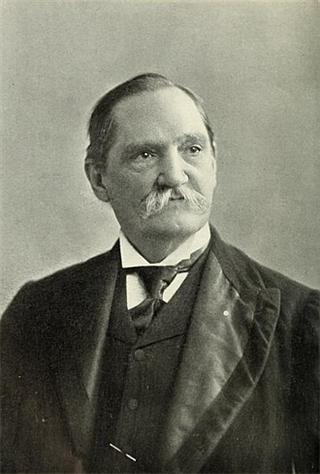
The republic was born of defeat and occupation. After the Spanish–American War, Spain ceded Cuba, Puerto Rico, Guam and the Philippines to the United States by the Treaty of Paris of 1898 for US$20 million, and Cuba, which had declared independence from the Spanish Empire that year, passed under an American military government. It gained formal independence on 20 May 1902 as the Republic of Cuba, but under its new constitution the United States kept the right to intervene in Cuban affairs and to supervise its finances and foreign relations. The Platt Amendment, part of both Cuban and American law until 1934, also leased the naval base at Guantánamo Bay to the United States; historians have regarded the governments of these decades as those of a client state.
The first president, Tomás Estrada Palma, did not last. After political purging and a corrupt, rigged election in 1906 veterans of the war of independence took up arms; Afro-Cubans, over-represented in the insurgent army as in the war of independence, saw in the August Revolution a hope of their rightful share in government. On 16 August 1906 the former Liberation Army general Pino Guerra raised the revolt, Estrada Palma arrested every Liberal politician within reach, and when Theodore Roosevelt's emissaries sought a compromise rather than back him he resigned with his whole cabinet, forcing the United States to take control until 1909, when José Miguel Gómez was inaugurated as the second president.
Socioeconomy
Sugar dominated the economy and the politics built on it. During and after the First World War a world shortage fuelled a boom, more and more farmland went to cane and prices peaked, then crashed in 1920, ruining the country financially and letting foreign investors gain still more power: the Dance of the Millions. The Treaty of Relations of 1934 bound Cuba to give the American economy preferential treatment in return for a guaranteed 22 per cent of the U.S. sugar market. By 1959 American firms owned about 40 per cent of the sugar land, almost all the cattle ranches, 90 per cent of the mines and 80 per cent of the utilities, and the United States controlled 80 per cent of Cuba's trade.
Tourism became the third source of foreign currency after sugar and tobacco: between 1915 and 1930 Havana hosted more tourists than anywhere else in the Caribbean, Americans escaping Prohibition. The Depression and the war cut the trade until the 1950s, when American organised crime, following the Havana Conference of 1946, came to dominate leisure and Havana became "the Latin Las Vegas" and a main route for narcotics. Cuba had the region's highest per capita consumption of meat, cereals, cars and radios, yet about a third of its people were poor: 8 per cent of landowners held some 75 per cent of the land, the top fifth took 58 per cent of national income and the bottom fifth 2 per cent, and rural infant mortality stood at 100 per 1,000 births.
Military
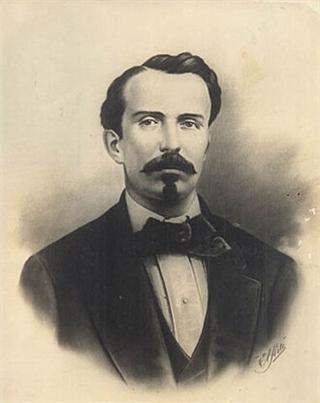
The republic's wars were fought at home. The August Revolution of 1906, raised by Pino Guerra against Estrada Palma's rigged election, ended in American occupation rather than battle. In the War of 1912 the Partido Independiente de Color tried to establish a separate Black republic in Oriente Province and was suppressed by the Cuban National Army under General Monteagudo with considerable bloodshed. Abroad, Cuba declared war on the side of the Allied Powers in the First World War and committed 10,000 soldiers for Europe; in the Second World War it declared neutrality, signed a Lend-Lease agreement for US$7.2 million of equipment in November 1941, of which little arrived, and declared war on the Axis after Pearl Harbor.
The army made and unmade governments. In August 1933 an army revolt joined a general strike and sugar workers' uprisings to drive Machado out, and in September the Sergeants' Revolt, led by Sergeant Fulgencio Batista, overthrew Carlos Manuel de Céspedes y Quesada and the Pentarchy that followed. Batista's coup of 1952, backed by American financial, military and logistical support, suspended the constitution; his Bureau for the Repression of Communist Activities carried out wide-scale violence, torture and public executions, the murders mounting in 1957, with estimates of the dead ranging from hundreds to about 20,000, until the Cuban Revolution forced him into exile in December 1958.
Governance & Law
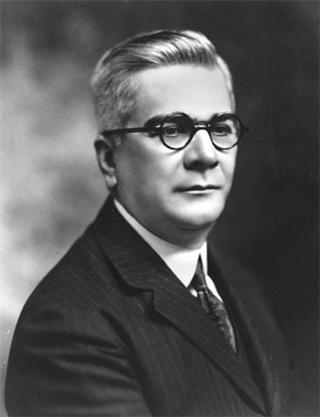
Cuba was a presidential republic under American tutelage. The Platt Amendment gave Washington the right to intervene and to supervise finances and foreign relations. Gerardo Machado, elected in 1924 on unrest at dependence on the United States and at corruption, had pledged a single term but directed a constitutional convention in 1928 that gave him a further six years. After his fall in 1933 came Céspedes, the Pentarchy of 1933 and, by the Student Directory's appointment, Ramón Grau San Martín's One Hundred Days Government of reforms; when Grau resigned in 1934 Batista dominated politics for 25 years, at first through puppet presidents.
The constitution of 1940 engineered radical progressive ideas, among them the right to labour and to health care, and made Cuba a semi-presidential republic; Batista, elected that year, carried out major social reforms with members of the Communist Revolutionary Union in office and obeyed the bar on his re-election. Grau won in 1944 and, by undermining the flawed Congress and Supreme Court, further corroded the system's legitimacy; his protégé Carlos Prío Socarrás followed in 1948. Batista's coup of 1952 suspended the constitution, revoked most liberties including the right to strike, outlawed the Popular Socialist Party and tightened censorship, while he allied with the largest sugar landowners and sold contracts to the American Mafia and U.S. multinationals.
Global & Regional Impact
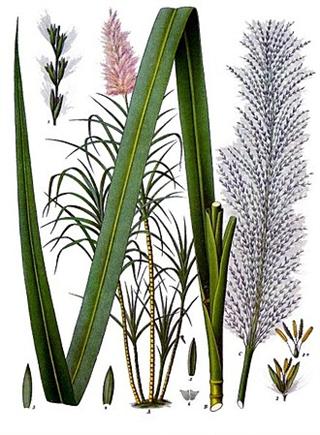
The republic's history is the history of Cuba's dependence on the United States and of the resistance it bred. The Platt Amendment made the island the model of a client state, and the Treaty of Relations of 1934 replaced the right of intervention with economic obligation, a guaranteed share of the American sugar market in exchange for preferential treatment of American business. By world standards Cuba in 1958 was relatively well advanced, with Latin America's highest ratio of hospital beds to people and a middle class comparable to that of the United States, and it was a member of the League of Nations and the United Nations.
Its labour movement left a deep mark. The general strike of 1930, a long series of militant stoppages and the first national union of sugarcane workers made Cuban labour by 1933 more highly organised and more radically led than almost any proletariat in Latin America, and the unions later won perhaps the largest privileges in the region, including bans on dismissals and mechanisation, at the cost of the unemployed and the peasants. The World Bank's finding in 1951 that 80 to 90 per cent of rural children had intestinal parasites, a 1959 survey showing 72 per cent of the population afflicted, chronic unemployment of 25 per cent and a bottom fifth taking 2 per cent of income, the lowest share recorded anywhere, are the measure of the inequality against which the revolution of 1959 was made.
Decline & Fall
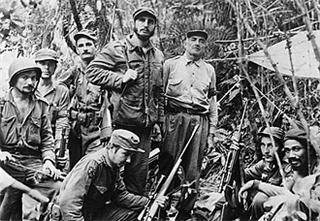
The Wall Street crash of 1929 collapsed the price of sugar and brought unrest and repression. The students of the Generation of 1930 and the clandestine ABC turned to violence against Machado, and the American ambassador Sumner Welles, arriving in May 1933, so weakened the government by "mediation" with the opposition, backed by the threat of intervention, that a general strike, sugar workers' risings and an army revolt forced Machado into exile in August. Batista's Sergeants' Revolt followed in September, and from Grau's resignation in 1934 he ruled through others until his own election in 1940. The constitution of that year promised much, but Grau and Prío corroded its institutions, and before the election of 1952 Batista took power by coup.
His dictatorship presided over a stagnating economy that widened the gap between rich and poor while most of the sugar industry passed into American hands. To quell student riots and demonstrations he tightened censorship and turned his secret police to violence, torture and public executions; the killings mounted in 1957 as socialism grew more influential. The middle class grew dissatisfied with unemployment and persecution, though the unions supported Batista to the end. In December 1958, during the Cuban Revolution, he was forced into exile. The republic of 1902 ended in 1959; its constitution of 1940 nominally remained the law until a new one was promulgated in 1976.
The Republic of Cuba of 1902–1959 lived under the Platt Amendment and then the sugar quota as a client state of the United States, swung from the Dance of the Millions to the revolution of 1933 and the progressive constitution of 1940, and ended when Fulgencio Batista, who had seized power in 1952 and ruled by torture and execution, fled in December 1958.
Test yourself
5 questions on this page, from its key events and facts.
The questions open here once the page has loaded.
References
- Louis A. Pérez Jr., Cuba: Between Reform and Revolution (Oxford University Press, 1988)
- Hugh Thomas, Cuba: The Pursuit of Freedom (Eyre & Spottiswoode, 1971)
- Eric N. Baklanoff, "Cuba on the Eve of the Socialist Transition: A Reassessment of the Backwardness-Stagnation Thesis", Cuba in Transition 8 (ASCE, 1998)
Connections
Open the full connections map →