
Oceania
Commonwealth of Australia
At a glance
- Six British colonies federated by popular referendum on 1 January 1901, with Edmund Barton as first prime minister.
- Its constitution blends Westminster responsible government with an American-style Senate, federalism and a High Court.
- A British dominion became an independent, multicultural nation by gradual steps, ending in the Australia Act of 1986.
Rise & Fall
- 1901Six colonies federate as the Commonwealth of Australia on 1 January
- 1902Women gain the right to vote and stand in federal elections
- 1915Australian and New Zealand troops land at Gallipoli on 25 April
- 1942Singapore falls and Japanese aircraft bomb Darwin
- 1951The ANZUS Treaty allies Australia with the United States
- 1967A referendum allows Aboriginal people to be counted in the census
- 1986The Australia Act ends the remaining legal links with Britain
- 1992The High Court’s Mabo decision recognises native title
Foundation
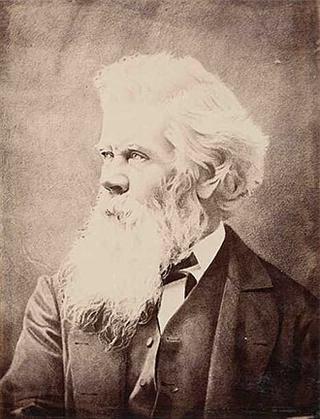
The Commonwealth of Australia grew out of six British colonies founded between 1788, when the First Fleet established a penal settlement at Sydney Cove, and 1859, when Queensland was separated from New South Wales, on a continent inhabited by Aboriginal and Torres Strait Islander peoples for at least 50,000 years. By the 1850s most of the colonies had won responsible self-government, but they levied tariffs against one another and kept separate railways, defences and immigration laws. From the 1880s concern about French and German colonies in the Pacific, Asian immigration and intercolonial trade encouraged the movement for federation, famously advanced by Henry Parkes, premier of New South Wales, in his Tenterfield Oration of 1889. Constitutional conventions in 1891 and 1897–1898 drafted a constitution, which voters approved in referendums held between 1898 and 1900, with Western Australia joining last, and which the British Parliament enacted as the Commonwealth of Australia Constitution Act 1900. The Commonwealth was proclaimed in Centennial Park, Sydney, on 1 January 1901, with Edmund Barton of the Protectionist Party as first prime minister. Parliament sat in Melbourne until 1927, when it moved to Canberra, a new capital built on federal territory between Sydney and Melbourne as a compromise between the two rival cities.
Socioeconomy
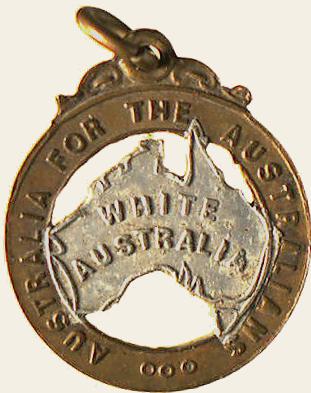
At federation Australia had about 3.8 million people, mostly of British and Irish descent, and an economy built on wool, gold, wheat and minerals. Early federal legislation created a distinctive social settlement: the Immigration Restriction Act of 1901, the basis of the White Australia policy, excluded most non-European migrants, while tariffs protected manufacturing and compulsory arbitration, given force by the Harvester judgement of 1907, set a basic wage intended to support a family. Women gained the right to vote and stand in federal elections in 1902, among the first in the world to do so, although most Aboriginal people were excluded from the federal vote until 1962. Aboriginal communities were confined to reserves and missions under state laws, and many children were removed from their families, the Stolen Generations, a practice acknowledged in a national apology in 2008. After the Second World War a large immigration programme brought several million people, first from Britain and continental Europe and, after the end of White Australia, from Asia, so that today nearly a third of residents were born overseas. Trade shifted from Britain to Japan and then China, centred on iron ore, coal, natural gas and education. Reforms from the 1980s floated the dollar and cut tariffs, and Australia went almost three decades without a recession between 1991 and 2020.
Military

Australian defence policy was shaped by distance from Britain and fear of a hostile power in Asia. The Commonwealth took over the colonial forces in 1901, and the Royal Australian Navy was formed and compulsory military training for home defence introduced in 1911. In the First World War about 416,000 Australians enlisted, all volunteers after conscription was rejected in referendums in 1916 and 1917, and more than 60,000 died. The landing of the Australian and New Zealand Army Corps at Gallipoli on 25 April 1915, commemorated as Anzac Day, became a founding national legend, and the Australian Corps under Sir John Monash fought with distinction on the Western Front in 1918. In the Second World War Australian forces fought at Tobruk, in Greece and on Crete. After Japan entered the war, Singapore fell in February 1942 with the capture of most of the 8th Division, Darwin was bombed, and Australian troops halted the Japanese advance on the Kokoda Track in New Guinea, while Prime Minister John Curtin turned to the United States for protection. The ANZUS Treaty of 1951 made the American alliance the basis of Australian security. Australia fought in Korea, Malaya and Vietnam, where national servicemen served from 1966, led the international force in East Timor in 1999 and joined the wars in Afghanistan and Iraq. The AUKUS agreement of 2021 provides for nuclear-powered submarines.
Governance & Law
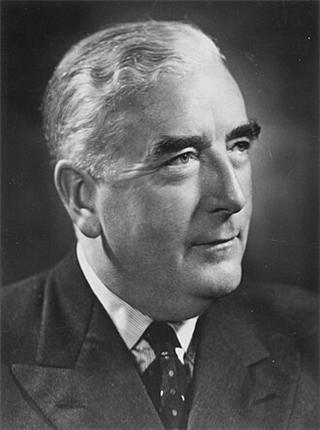
The Australian Constitution combined the British tradition of responsible government, in which the ministry is drawn from and answerable to the House of Representatives, with American-style federal features: a Senate in which each original state has equal representation, a written division of powers between the Commonwealth and the states, and a High Court, established in 1903, with power to review legislation. The constitution can be changed only by referendum, requiring a national majority and majorities in most states, and only eight of 45 proposals have passed. Over time the Commonwealth gained financial dominance, above all after it took over income taxation in 1942. Australia adopted preferential voting for the House of Representatives in 1918 and compulsory voting in federal elections in 1924. Politics has been dominated by the Australian Labor Party, founded in the 1890s, and by a coalition of the Liberal Party, formed under Robert Menzies in 1944–1945, and the Country, later National, Party; Menzies was the longest-serving prime minister, in 1939–1941 and 1949–1966. The constitutional crisis of 1975, in which Governor-General Sir John Kerr dismissed the Labor government of Gough Whitlam after the Senate blocked supply, remains controversial. The Statute of Westminster was adopted in 1942, backdated to 1939, and the Australia Act of 1986 ended the remaining British legislative and judicial links.
Global & Regional Impact
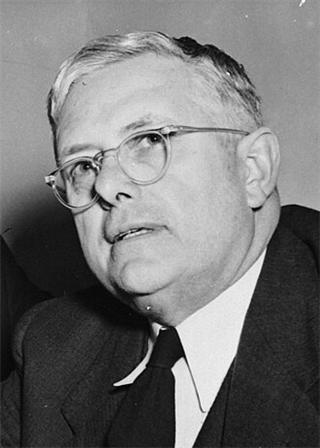
Australia pioneered several democratic practices. The secret ballot, first used in Victoria and South Australia in 1856, became known internationally as the Australian ballot, and the federal grant in 1902 of the right of women both to vote and to stand for the national parliament followed South Australia’s lead of 1894 and was among the earliest in the world. Its arbitration system and basic wage made it a laboratory of social policy studied by reformers abroad, while the White Australia policy, maintained until the 1970s, made it a byword for racial exclusion. The Anzac tradition shaped national identity in both Australia and New Zealand. After 1945 Australia became an active middle power: the foreign minister H.V. Evatt was President of the United Nations General Assembly in 1948–1949, and Australia helped create the Colombo Plan of 1950 and the Asia-Pacific Economic Cooperation forum in 1989. Australian scientists and writers have had wide influence, including Howard Florey, who shared the Nobel Prize in 1945 for the development of penicillin, and the novelist Patrick White, Nobel laureate in 1973. The High Court’s Mabo decision of 1992, which rejected the doctrine that the land had been terra nullius at British colonisation, transformed the law of Indigenous land rights, and Aboriginal art has become one of the most widely recognised contemporary art movements.
Into the Present

The Commonwealth of Australia has continued without interruption since 1901, but it has changed from a self-governing British dominion with a largely British population into an independent, multicultural nation oriented towards Asia and the Pacific. The fall of Singapore in 1942 broke faith in British protection, and Australia adopted the Statute of Westminster in the same year. A separate Australian citizenship was created in 1949, and Advance Australia Fair replaced God Save the Queen as the national anthem in 1984. The referendum of 1967, approved by more than 90 per cent of voters, allowed the Commonwealth to make laws for Aboriginal people and to count them in the census, and the Whitlam government formally ended the White Australia policy in 1973. Australia administered Papua New Guinea until its independence in 1975. The Australia Act of 1986 ended appeals to the Privy Council and the power of the British Parliament to legislate for Australia. A proposal to become a republic was rejected by referendum in 1999, and a proposal for an Indigenous Voice to Parliament was rejected in 2023, so the British monarch remains King of Australia. Today the country is a federation of six states and two self-governing mainland territories with about 27 million people, one of the world’s wealthiest nations per head, and a close ally of the United States.
The Commonwealth of Australia matters as a continental federation created by popular vote rather than war, an early pioneer of democratic reforms such as the secret ballot and votes for women, and a former British dominion that became an independent, multicultural middle power in Asia and the Pacific.
References
- Macintyre, S. (1999) A Concise History of Australia. Cambridge: Cambridge University Press.
- Hirst, J. (2000) The Sentimental Nation: The Making of the Australian Commonwealth. Melbourne: Oxford University Press.
- Reynolds, H. (1981) The Other Side of the Frontier: Aboriginal Resistance to the European Invasion of Australia. Townsville: James Cook University.
- Bolton, G. (2000) Edmund Barton. St Leonards: Allen & Unwin.
Connections
Open the full connections map →

