Europe
Principality of Monaco
At a glance
- Francesco Grimaldi captured the fortress on the Rock of Monaco in 1297 with his men disguised as Franciscan friars; after a century of feud with Genoa the family bought Monaco outright from the Crown of Aragon in 1419, and Honoré II styled himself Prince in 1612.
- In 1861 Charles III ceded Menton and Roquebrune, some 95% of the principality's territory, to France for 4,100,000 francs in exchange for recognition of Monaco's sovereignty; the Monte Carlo casino paid so well that income tax was abolished in 1869.
- Monaco has the world's highest nominal GDP per head (US$185,742), 31% of its residents are millionaires, and fewer than 10,000 of its 38,423 inhabitants are Monégasque; France still provides its defence, and in June 2024 the FATF put it under increased monitoring for money laundering.
Rise & Fall
- 1297Francesco Grimaldi, 'Malizia', and his men dressed as Franciscan friars capture the fortress protecting the Rock of Monaco.
- 1419The Grimaldi family purchases Monaco from the Crown of Aragon and becomes its official and undisputed ruler.
- 1612Honoré II begins to style himself Prince of Monaco; Spain recognises his sovereignty in 1633 and Louis XIII of France by the Treaty of Péronne in 1641.
- 1793Revolutionary French forces capture Monaco, which remains occupied and annexed until the Grimaldi are restored in 1814.
- 1861The Franco-Monégasque Treaty recognises Monaco's sovereignty; Charles III cedes Menton and Roquebrune to France for 4,100,000 francs.
- 1869Flush with the casino's earnings, the principality stops collecting income tax from its residents.
- 1911The Monégasque Revolution of 1910 forces the first constitution on the hitherto absolute princes.
- 1993Monaco becomes a member of the United Nations with full voting rights.
Foundation
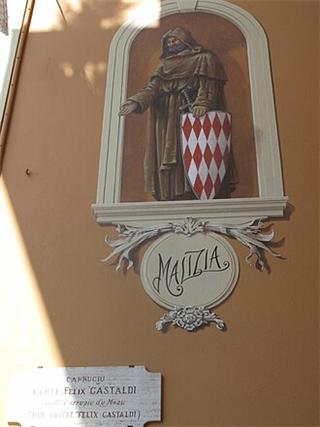
The rock on the Ligurian coast was Monoikos to the Greeks. In 1191 the Emperor Henry VI granted the site to Genoa in return for action against pirates, and the Genoese refounded Monaco as a colony in 1215. In 1297 Francesco Grimaldi, called Malizia, 'the cunning one', of an ousted Genoese family, captured the fortress with his men dressed as Franciscan friars. He was evicted within a few years, and the struggle for the Rock, as much a Genoese family feud as a war, went on for a century. Between 1346 and 1355 the Grimaldi annexed Menton and Roquebrune, increasing their territory almost tenfold, and in the late 1300s Genoa lost Monaco while fighting the Crown of Aragon over Corsica.
In 1419 the family purchased Monaco from Aragon and became its official and undisputed rulers. Honoré II began to style himself Prince of Monaco in 1612, won recognition of his sovereignty from Spain in 1633, sought French protection against Spanish forces in the 1630s and in 1641, by the Treaty of Péronne, obtained it from Louis XIII, who received him at court in 1642 as a duc et pair étranger. The princes were thereafter vassals of the kings of France while remaining sovereign, and the principality lived as a French protectorate until the Revolution.
Socioeconomy
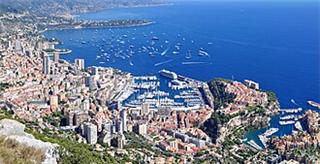
Monaco is 2.08 square kilometres of hillside and reclaimed shore on the French Riviera, the second-smallest sovereign state after Vatican City and the most densely populated. Its only natural resource is fishing. Of 38,423 residents fewer than 10,000 are Monégasque nationals, 24.1% in 2024, beside French, Italian, British and other communities. French is the official language, Italian was until 1860, and Monégasque, a variety of Ligurian, is taught in schools. Life expectancy is nearly 90, the highest in the world.
The economy was made by a casino. The House of Grimaldi, in dire need of money and losing the taxes of Menton and Roquebrune, planned casino gambling under Florestan I in 1846; the concession passed for 1.7 million francs to François and Louis Blanc, who had the seaside quarter of Les Spelugues renamed Monte Carlo and opened their casino there in 1858 as the French railway reached the coast. In 1869 income tax was abolished, drawing the rich of Europe to live there. Today Monaco has the highest nominal GDP per head in the world, US$185,742, unemployment of 2%, over 48,000 workers commuting daily from France and Italy and 31% of residents millionaires, some 12,248 people in 2019; property reached €100,000 a square metre in 2018. Banks hold over €100 billion, VAT is 20% and companies pay 33% unless three-quarters of their turnover is Monégasque. Monaco uses the euro with coins of its own design.
Military
Monaco has seldom been defended by its own arms. The Grimaldi held the Rock under greater powers, and from 1641 the princes were vassals of France. That protection failed in 1793, when Revolutionary forces captured the principality and France held it until 1814. The Congress of Vienna made Monaco a protectorate of Sardinia in 1815; Sardinian forces withdrew under the Treaty of Turin in 1860 and Monaco became a French protectorate once more. The Franco-Monégasque Treaty of July 1918, endorsed at Versailles, provided for limited French protection.
The Second World War brought the only invasion of modern times. In 1943 the Italian Army occupied Monaco and formed a fascist administration; in September, after Mussolini's fall, the Wehrmacht took over and the deportation of the Jews began. René Blum, founder of the Ballet de l'Opéra in Monte Carlo, was murdered at Auschwitz, and in August 1944 the Germans executed three Resistance leaders. In all 90 Jews and resistance fighters were handed over, nine of whom survived; Prince Albert II apologised in 2015. France remains responsible for Monaco's defence under the treaty of 2002. Monaco has no navy or air force; its forces are the Compagnie des Carabiniers du Prince, 116 officers and men created by Honoré IV in 1817, and the militarised fire and civil defence corps. Its police, 515 officers for 38,000 people under a French commander, is among the largest in the world per head.
Governance & Law
Until the Monégasque Revolution of 1910 forced the constitution of 1911 on them, the princes of Monaco were absolute rulers. The new constitution slightly reduced the Grimaldi autocracy. The constitution of 1962 abolished capital punishment, gave women the vote and created a Supreme Court; by it the prince shares his veto with the National Council of 24 members elected for five years, 16 by majority vote and 8 by proportional representation. Since the 2023 election all 24 seats belong to the pro-monarchist Monegasque National Union. Freedom House ranked Monaco 60th of 207 countries in 2024, marking it down for an unelected head of state and head of government.
The executive is the Minister of State, who presides over five other members of the Council of Government. Until 2002 he had to be a French citizen chosen from candidates proposed by France; an amendment of that year allows a Monégasque, though the prince still consults Paris, and since July 2025 the office is held by Christophe Mirmand. The key judges are French magistrates appointed by the prince. State and city are one: the three municipalities of 1911, Monaco-Ville, Monte Carlo and La Condamine, were merged in 1917 into the Municipality of Monaco, governed by a Communal Council of 14 under a mayor, Georges Marsan since 2003. Catholicism is the official religion. Rainier III reigned for 56 years, from 1949 until his death in April 2005; his son Albert II assumed the crown on 12 July 2005.
Global & Regional Impact
Monaco's influence is that of a model and a magnet. The casino and the railway made it from the 1860s the playground of Europe's rich, and the abolition of income tax in 1869 invented the tax-haven residence: foreigners whose income arises abroad settle there to escape their own countries' taxes. The OECD named it an uncooperative jurisdiction in 2004 and moved it to the white list in 2009 after twelve information-exchange treaties; in June 2024 the Financial Action Task Force placed Monaco on its grey list.
Its fame outruns its size. The marriage of Rainier III to the American actress Grace Kelly on 19 April 1956, widely televised, fixed the world's attention on the principality. The Monaco Grand Prix, founded in 1929 and on the Formula One calendar since the first season of 1950, runs through the streets of Monte Carlo; AS Monaco has been French champion many times, and World Athletics is headquartered in the principality. Monaco is a centre of marine science, home to one of the world's first protected marine habitats, the Oceanographic Museum and the IAEA Marine Environment Laboratories, the only marine laboratory in the UN system. It joined the United Nations in 1993 and the Council of Europe in 2004, uses the euro without EU membership; Pope Leo XIV's visit on 28 March 2026 renewed the old ties between the Grimaldi and the papacy, the two smallest states in the world.
Into the Present
Monaco has not declined but grown richer and more crowded, and its difficulties are those of success. Rainier III, after the great development of the 1970s, banned high-rise building; Albert II, who succeeded him in 2005, overturned the order, and the accelerating demolition of villas and Belle Époque heritage, in a state with no heritage protection law, has caused dismay. Housing is desperately short: a six-hectare expansion into the sea, opened as Le Portier in December 2024, and a further eight hectares at Fontvieille have been approved. Some 48,000 commuters cross the open border each day.
The principality's standing as a financial centre is under scrutiny. Having worked its way off the OECD grey list by 2009, Monaco was placed on the FATF grey list in June 2024 for statewide problems of money laundering and terrorist financing. Freedom House's ranking of 60th in 2024 reflects a prince with substantial powers, a Minister of State chosen in consultation with Paris, French magistrates in the courts and a National Council held entirely by one party since 2023. Yet the Grimaldi have reigned, with brief interruptions, for more than seven centuries; the treaty of 2002 guarantees the state's survival even without an heir; and in 2015 Albert II confronted the darkest page of its history, apologising for the handing over of 90 Jews and resistance fighters in 1943–44.
The Principality of Monaco, held by the House of Grimaldi since Francesco Grimaldi seized its rock in 1297, survived as a vassal and protectorate of France, lost 95% of its land in 1861 and recovered on the Monte Carlo casino and the abolition of income tax. Today it is the world's richest and most densely peopled state, a banking centre under watch for money laundering.
Test yourself
5 questions on this page, from its key events and facts.
The questions open here once the page has loaded.
References
- Françoise de Bernardy, Princes of Monaco: The Remarkable History of the Grimaldi Family (Arthur Barker, 1961)
- Anne Edwards, The Grimaldis of Monaco (William Morrow, 1992)
Connections
Open the full connections map →