Europe
Republic of Estonia
At a glance
- Estonia declared independence in 1918 and won it in the War of Independence, confirmed by the Treaty of Tartu in 1920.
- Occupied by the Soviet Union in 1940, it was restored in 1991 as the legal continuation of the pre-war republic.
- Since 2004 it has been a member of the EU and NATO, known worldwide for e-government and internet voting.
Rise & Fall
- 1918The Salvation Committee declares the Republic of Estonia on 24 February
- 1920The Treaty of Tartu ends the War of Independence
- 1934Konstantin Päts declares a state of emergency and rules by decree
- 1940The Soviet Union occupies and annexes Estonia
- 1989The Baltic Way human chain links Tallinn, Riga and Vilnius
- 1991Independence is restored on 20 August
- 2004Estonia joins NATO and the European Union
- 2011Estonia adopts the euro
Foundation

The Republic of Estonia grew out of the Estonian national awakening of the nineteenth century and the collapse of the Russian Empire. After the February Revolution of 1917 the Russian Provisional Government created the Autonomous Governorate of Estonia, uniting the Estonian-speaking districts of the old Estonian and Livonian governorates, and an elected provincial assembly, the Maapäev, met in Tallinn. When the Bolsheviks seized power the Maapäev declared itself the supreme authority in November 1917 and set up a Salvation Committee of Konstantin Päts, Jüri Vilms and Konstantin Konik. On 24 February 1918, as Russian forces withdrew and a day before German troops entered Tallinn, the committee issued the Manifesto to the Peoples of Estonia, proclaiming an independent democratic republic. German occupation followed until Germany's defeat in November 1918, when the Provisional Government under Päts took control. Almost at once the Red Army invaded, beginning the Estonian War of Independence. Estonian forces, aided by Finnish volunteers and a British naval squadron, drove the invaders out by early 1919, defeated the Baltic German Landeswehr at the Battle of Cēsis in June 1919, and fought on until Soviet Russia recognised Estonian independence in perpetuity by the Treaty of Tartu on 2 February 1920.
Socioeconomy

Interwar Estonia was a small, mainly rural country of about 1.1 million people, roughly 88 per cent of them ethnic Estonians, with Russian, German, Swedish and Jewish minorities. The land reform of October 1919 expropriated the great estates of the Baltic German nobility, which had dominated the countryside for centuries, and created tens of thousands of new farms. Agriculture, especially dairy and bacon for export to Britain and Germany, was the mainstay of the economy, alongside timber, textiles and the oil-shale industry of the north-east. The Cultural Autonomy Act of 1925 allowed minorities to run their own schools and cultural institutions, a pioneering measure in Europe, used by the German and Jewish communities. The University of Tartu became an Estonian-language university, and the song festival tradition begun in 1869 remained central to national life. Most Estonians were Lutheran, with an Orthodox minority. Soviet rule after 1944 brought collectivisation, industrialisation and large-scale immigration of Russian speakers, so that ethnic Estonians made up only about 61 per cent of the population by 1989. Since 1991 Estonia has built an open market economy with a flat income tax, rapid growth and a strong technology sector associated with Skype, whose software was written by Estonian developers.
Military
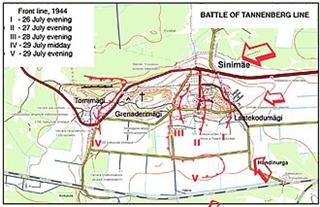
The Estonian army was created in the War of Independence of 1918–1920, under Johan Laidoner as commander-in-chief, together with the volunteer Defence League, the Kaitseliit, and armoured trains that became a hallmark of the campaign. Victory over the Red Army and the Landeswehr gave the republic its founding military myth, and 23 June, the anniversary of the Battle of Cēsis, is still Victory Day. Interwar defence depended on a small conscript army and a defensive alliance with Latvia from 1923, but no ally could protect Estonia against the great powers. Under the Molotov–Ribbentrop Pact of 1939 the Soviet Union forced Estonia to accept military bases, and in June 1940 the government did not resist the Soviet occupation. During the Second World War Estonians were conscripted by both the Soviet and German armies, and in 1944 Estonian units fought the Red Army on the Tannenberg Line at Sinimäed. Armed resistance by the Forest Brothers continued into the early 1950s. After 1991 the Estonian Defence Forces were rebuilt on conscription and the reserve, and Russian troops left in August 1994. Estonia joined NATO in 2004, sent troops to Iraq and Afghanistan, and has hosted a NATO battlegroup at Tapa since 2017.
Governance & Law
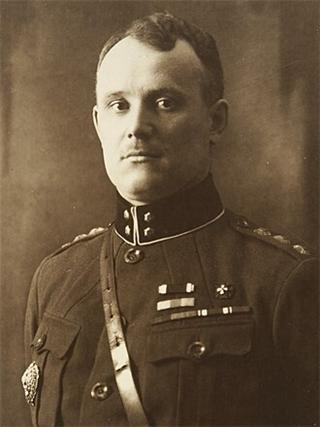
The constitution of 1920 created an unusually parliamentary system: the single-chamber Riigikogu held supreme power, and the head of government, the State Elder, also served as head of state, without a separate presidency. Frequent changes of coalition and the Depression undermined it, and a failed communist coup attempt in Tallinn in December 1924 heightened fears of subversion. In 1933 voters approved a new constitution drafted by the radical veterans' movement, the Vaps, which created a powerful head of state. To forestall a Vaps victory, Konstantin Päts, with the support of General Laidoner, declared a state of emergency on 12 March 1934, banned the movement and ruled by decree in what became known as the Era of Silence. A third constitution in 1938 restored a limited parliament with Päts as president. After 1940 Estonia was governed as the Estonian Soviet Socialist Republic, though Western states, including the United States, refused to recognise the annexation as lawful. The restored republic of 1991 based itself on legal continuity with the pre-war state. The 1992 constitution established a parliamentary democracy with a president elected by parliament or an electoral body, and citizenship was restored to pre-1940 citizens and their descendants, leaving many Soviet-era settlers initially stateless.
Global & Regional Impact

Estonia's history is a central case in the study of small states, national self-determination and occupation in twentieth-century Europe. Its land reform and its Cultural Autonomy Act were watched as experiments elsewhere in the region, and the Treaty of Tartu became the legal foundation on which Estonia later claimed restored independence. The Soviet occupation, deportations of June 1941 and March 1949 and the Great Flight of tens of thousands of refugees to Sweden and Germany in 1944 shaped a large exile community that kept the republic's claims alive. The doctrine of state continuity, which treated the half-century of Soviet rule as an illegal occupation, influenced the legal arguments of all three Baltic states. The Singing Revolution, in which mass song festivals expressed national demands, became one of the best-known examples of non-violent resistance at the end of the Cold War. Since independence Estonia has gained an international reputation for digital government, introducing a national electronic ID card in 2002, nationwide internet voting in parliamentary elections in 2007 and e-Residency for foreigners in 2014. After the cyberattacks of 2007, NATO located its Cooperative Cyber Defence Centre of Excellence in Tallinn, making Estonia a reference point in debates on cyber security.
Into the Present
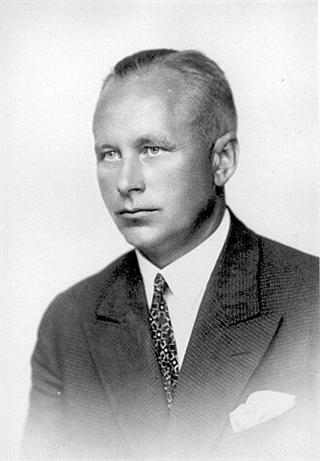
The Republic of Estonia did not end but was suspended and later restored. In June 1940 the Soviet Union occupied the country, staged elections and annexed it in August; Päts and Laidoner were deported and died in Soviet captivity. German occupation from 1941 to 1944 was followed by renewed Soviet rule, and an attempt by Otto Tief to re-establish an independent government in September 1944 was crushed within days. Under Mikhail Gorbachev's reforms, protests against phosphate mining in 1987 grew into a mass national movement. The Popular Front was founded in 1988, the Estonian Supreme Soviet declared sovereignty in November 1988, and on 23 August 1989 about two million people formed the Baltic Way, a human chain through Estonia, Latvia and Lithuania. During the failed coup in Moscow the Supreme Council declared full independence on 20 August 1991, and international recognition followed within weeks. Estonia introduced the kroon and a new constitution in 1992 and, under President Lennart Meri and the reforming government of Mart Laar, carried out rapid market reform. It joined NATO and the European Union in 2004, the OECD in 2010 and the eurozone in 2011. Today it is a parliamentary republic of about 1.4 million people, closely focused on deterring Russia.
The Republic of Estonia shows how a small nation could win independence in war, lose it to occupation and recover it peacefully: its doctrine of legal continuity, its Singing Revolution and its later pioneering digital government have made it a model often cited in debates on small-state survival and modern administration.
Test yourself
5 questions on this page, from its key events and facts.
The questions open here once the page has loaded.
References
- Lieven, A. (1993) The Baltic Revolution: Estonia, Latvia, Lithuania and the Path to Independence. New Haven: Yale University Press.
- Misiunas, R.J. and Taagepera, R. (1993) The Baltic States: Years of Dependence, 1940–1990. Expanded edn. Berkeley: University of California Press.
- Plakans, A. (2011) A Concise History of the Baltic States. Cambridge: Cambridge University Press.
- Raun, T.U. (2001) Estonia and the Estonians. Updated 2nd edn. Stanford: Hoover Institution Press.
- Taagepera, R. (1993) Estonia: Return to Independence. Boulder: Westview Press.
- von Rauch, G. (1974) The Baltic States: The Years of Independence, Estonia, Latvia, Lithuania 1917–1940. London: C. Hurst.
Connections
Open the full connections map →