Europe
Kingdom of Yugoslavia
At a glance
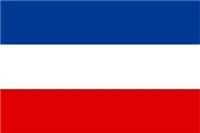
- Proclaimed on 1 December 1918 as the Kingdom of Serbs, Croats and Slovenes, it united Serbia, Montenegro and former Habsburg lands.
- Conflict between Serbian centralism and Croatian autonomy led to the royal dictatorship of 1929 and the name Yugoslavia.
- The Axis invasion of April 1941 destroyed the kingdom in eleven days and partitioned it among its enemies.
Rise & Fall
- 1917The Corfu Declaration agrees on a South Slav kingdom under the Karađorđević dynasty
- 1918The Kingdom of Serbs, Croats and Slovenes is proclaimed in Belgrade
- 1921The centralist Vidovdan Constitution is adopted
- 1928Stjepan Radić is shot in parliament and dies weeks later
- 1929King Alexander imposes a dictatorship and renames the country Yugoslavia
- 1934King Alexander is assassinated in Marseille
- 1939The Cvetković-Maček Agreement creates the Banovina of Croatia
- 1941Germany and its allies invade and the army surrenders on 17 April
Foundation
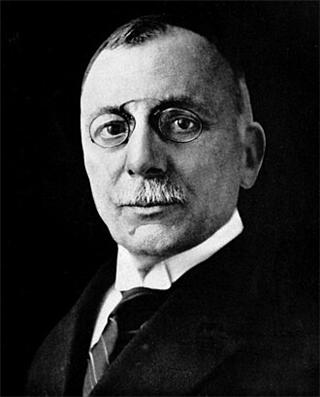
The idea of a common state of the South Slavs grew in the nineteenth century among Croat and Serb intellectuals, and the First World War made it possible. The Kingdom of Serbia, which had fought Austria-Hungary since 1914 and was occupied in 1915, sought to unite the Serbs and their kin, while South Slav politicians from the Habsburg lands, organised in exile as the Yugoslav Committee under Ante Trumbić, wanted a union of equals. In the Corfu Declaration of July 1917 the Serbian prime minister Nikola Pašić and Trumbić agreed on a single kingdom under the Serbian Karađorđević dynasty. As Austria-Hungary collapsed in October 1918, a National Council in Zagreb proclaimed the State of Slovenes, Croats and Serbs, which, threatened by Italian advances along the Adriatic, sought rapid union with Serbia. In November an assembly at Podgorica deposed King Nicholas of Montenegro and voted for union with Serbia, a decision that led to armed resistance by his supporters. On 1 December 1918 the Prince Regent Alexander proclaimed the Kingdom of Serbs, Croats and Slovenes in Belgrade, with his father Peter I as king. The borders were settled in the peace treaties of Saint-Germain, Neuilly and Trianon and, with Italy, in the Treaty of Rapallo of 1920, while Carinthia voted to stay with Austria.
Socioeconomy

The kingdom united some twelve million people in 1921, rising to about sixteen million by 1941, from regions with very different pasts: former Habsburg Slovenia, Croatia, Vojvodina and Bosnia-Herzegovina, and the formerly Ottoman lands of Serbia, Montenegro, Kosovo and Macedonia. Nearly half the population was Orthodox, about two-fifths Catholic and about a tenth Muslim, and there were large German, Hungarian and Albanian minorities, while Macedonians were officially treated as southern Serbs. Around three-quarters of the people lived from farming, mostly on small plots. The agrarian reform begun in 1919 abolished the remaining serf-like tenancies in Bosnia and Macedonia and redistributed large estates, but productivity stayed low and rural overpopulation severe; in 1921 about half the adult population was illiterate. Industry, banking and the best schools were concentrated in Slovenia, Croatia and Vojvodina, while mining, including the French-owned copper mine at Bor, attracted foreign capital. The Great Depression collapsed grain prices and pushed many peasants into debt, and in the later 1930s trade shifted heavily towards Nazi Germany. Belgrade, Zagreb and Ljubljana nonetheless grew as modern cities, and writers such as Ivo Andrić and Miroslav Krleža and the sculptor Ivan Meštrović were active in the period.
Military

The Royal Yugoslav Army was built on the Serbian army that had retreated through Albania in 1915 and returned in triumph after the breakthrough on the Salonika front in September 1918, and its officer corps remained overwhelmingly Serbian, which alienated Croats and Slovenes. Conscription filled the ranks, and the gendarmerie and army were used against internal unrest, including the Montenegrin rising of 1919 and Albanian kaçak rebels in Kosovo in the early 1920s. The kingdom maintained a small navy on the Adriatic and an air force equipped with French, British, German and domestically built aircraft, but the army as a whole remained poorly mechanised and dependent on horses and oxen. Foreign policy relied on alliances rather than strength: the Little Entente with Czechoslovakia and Romania from 1920–1921 guarded against Hungarian revisionism, a treaty of friendship with France followed in 1927, and the Balkan Entente of 1934 linked Yugoslavia with Greece, Romania and Turkey. In April 1941 the army, only partly mobilised and strung out along long frontiers, collapsed within eleven days under attack from Germany, Italy and Hungary. Several hundred thousand soldiers became prisoners, many of them Serbs held in Germany until 1945.
Governance & Law
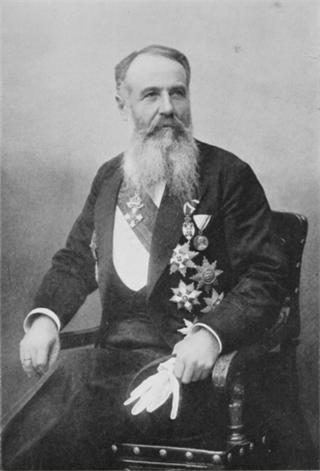
The kingdom was a constitutional monarchy, but the Vidovdan Constitution, adopted on 28 June 1921 by a narrow majority while Croat deputies boycotted the assembly, created a centralised state run from Belgrade and divided it into 33 administrative districts that ignored historic regions. Serbian parties, above all Nikola Pašić’s People’s Radical Party, dominated governments, the army and the civil service. The Communist Party, the third-largest party in the 1920 elections, was banned in 1920–1921. The Croatian Peasant Party of Stjepan Radić demanded autonomy or a federal republic; Radić was imprisoned, then briefly joined the government in 1925. On 20 June 1928 the Radical deputy Puniša Račić shot Radić and others in parliament, and Radić died that August. On 6 January 1929 King Alexander suspended the constitution and banned national parties, renamed the country the Kingdom of Yugoslavia in October and replaced the districts with nine banovinas, most of them named after rivers. The constitution he imposed in 1931 kept royal power dominant. After Alexander’s assassination in 1934 a regency led by his cousin Prince Paul ruled for the young Peter II. Prime Minister Milan Stojadinović governed from 1935 to 1939, and the Cvetković-Maček Agreement of August 1939 created an autonomous Banovina of Croatia.
Global & Regional Impact

The Kingdom of Yugoslavia was the first state to unite most South Slavs and established the framework of Yugoslavia that, in a very different communist form, would last until 1991. It brought together Slovenes, Croats, Serbs, Bosniaks, Montenegrins and Macedonians under one government for the first time, and many of its borders became the internal and external borders of Tito’s federation and of today’s successor states. Its central problem, whether the state should be a centralised kingdom dominated by Serbs or a federation of equal nations, shaped all later Yugoslav politics. The failure to answer it fed radical movements: the Ustaše, founded by Ante Pavelić after 1929, sought Croatian independence through terrorism and, with the Macedonian revolutionary organisation, organised the assassination of King Alexander in Marseille in 1934, in which the French foreign minister Louis Barthou also died. In 1941 the Ustaše state and the occupation regimes turned these divisions into mass murder of Serbs, Jews and Roma, notably at the Jasenovac camp, and civil war between Chetniks and Partisans. The interwar kingdom also produced an active cultural life, including the future Nobel laureate Ivo Andrić, who served as its diplomat, and the monumental work of Ivan Meštrović.
Decline & Fall

By 1941 the kingdom was surrounded by Axis states and their allies. Under heavy German pressure, the government of Dragiša Cvetković signed the Tripartite Pact in Vienna on 25 March 1941. Two days later, on 27 March, air force officers led by General Dušan Simović overthrew the regency in a coup welcomed by crowds in Belgrade, and the seventeen-year-old Peter II was declared of age. Adolf Hitler ordered the destruction of Yugoslavia, and on 6 April 1941 German aircraft bombed Belgrade, killing thousands, while German, Italian and Hungarian forces invaded. Croatian units in particular showed little will to fight, the Ustaše proclaimed the Independent State of Croatia in Zagreb on 10 April, and the army signed an unconditional surrender on 17 April. King Peter II and the government fled into exile, eventually to London. The country was partitioned: Germany annexed northern Slovenia and occupied Serbia, Italy annexed Ljubljana and much of Dalmatia and controlled Montenegro and, through Albania, most of Kosovo, Hungary took Bačka and Baranja, Bulgaria took most of Macedonia, and the Independent State of Croatia received Bosnia-Herzegovina. The government-in-exile backed Draža Mihailović’s Chetniks, but Tito’s Partisans won the war, and a constituent assembly abolished the monarchy on 29 November 1945.
The Kingdom of Yugoslavia was the first state to unite most South Slavs, created in 1918 from Serbia, Montenegro and former Habsburg lands, but unresolved conflict between Serbian centralism and Croatian demands for autonomy left it fragile and it collapsed within days of the Axis invasion in April 1941.
References
- Banac, I. (1984) The National Question in Yugoslavia: Origins, History, Politics. Ithaca: Cornell University Press.
- Djokić, D. (2007) Elusive Compromise: A History of Interwar Yugoslavia. London: Hurst.
- Lampe, J.R. (2000) Yugoslavia as History: Twice There Was a Country. 2nd edn. Cambridge: Cambridge University Press.
- Rothschild, J. (1974) East Central Europe between the Two World Wars. Seattle: University of Washington Press.
- Tomasevich, J. (1975) War and Revolution in Yugoslavia, 1941–1945: The Chetniks. Stanford: Stanford University Press.
Connections
Open the full connections map →