Europe
Czechoslovakia
At a glance
- A state of Czechs and Slovaks created from the ruins of Austria-Hungary in 1918, with Prague as its capital.
- Its interwar democracy was the only one in Central Europe to last until the Munich Agreement of 1938 dismembered it.
- After 1948 it was a communist state of the Soviet bloc; the Velvet Revolution of 1989 led to its peaceful division in 1992.
Rise & Fall
- 1918Independence proclaimed in Prague on 28 October; Masaryk becomes president
- 1938The Munich Agreement forces the cession of the Sudetenland to Germany
- 1939Germany occupies Bohemia and Moravia; Slovakia becomes a separate state
- 1948The Communist Party seizes full power in February
- 1968Warsaw Pact armies invade to end the Prague Spring
- 1977Dissidents publish the Charter 77 declaration
- 1989The Velvet Revolution ends communist rule; Václav Havel becomes president
- 1992The federation is dissolved peacefully on 31 December
Foundation
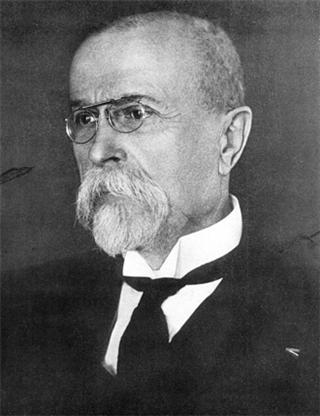
Czechoslovakia was created as Austria-Hungary collapsed at the end of the First World War. Its case had been made abroad by Tomáš Garrigue Masaryk, Edvard Beneš and the Slovak astronomer and general Milan Rastislav Štefánik, whose Czechoslovak National Council in Paris won Allied recognition in 1918, helped by the fame of the Czechoslovak Legion, which had fought its way along the Trans-Siberian Railway during the Russian Civil War. On 18 October 1918 Masaryk issued a declaration of independence in Washington, and on 28 October the National Committee in Prague proclaimed the new state as Habsburg authority dissolved. Two days later Slovak leaders meeting at Turčiansky Svätý Martin declared their wish to join a common state. The Revolutionary National Assembly elected Masaryk president in November 1918. Frontiers were fixed only after fighting: troops occupied the German-speaking borderlands of Bohemia and Moravia, defended Slovakia against the Hungarian Soviet Republic in 1919 and clashed with Poland over Teschen, which was divided in 1920. The Treaty of Saint-Germain added Subcarpathian Ruthenia, and the Treaty of Trianon in 1920 set the border with Hungary. The constitution of February 1920 completed the foundation of the First Republic.
Socioeconomy

The new state was a land of several nations. The 1921 census counted about 13.6 million people, of whom Czechs and Slovaks, officially treated as one Czechoslovak nation, formed about two-thirds; there were also more than three million Germans, about 750,000 Hungarians, Ruthenes, Jews and Poles. The Czech lands had been the industrial heart of the Habsburg monarchy, and Czechoslovakia inherited a large share of its industry, from the Škoda Works at Plzeň to textile, glass, sugar and brewing concerns, while Tomáš Baťa built a world-scale shoe business at Zlín. Slovakia and Ruthenia remained largely agrarian and poorer. A land reform broke up great estates, many of them owned by German and Hungarian nobles. The Great Depression struck the export industries of the German borderlands especially hard, feeding resentment there. Under communist rule after 1948 the economy was nationalised, collectivised and redirected towards heavy industry and trade within Comecon; living standards rose but stagnated from the 1960s. Religious life was mainly Catholic, with strong Protestant and secular traditions in the Czech lands. Cultural life was rich: Karel Čapek, Leoš Janáček, Jaroslav Hašek, the Czechoslovak New Wave in film and later Milan Kundera and Václav Havel.
Military
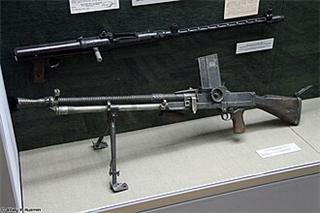
The Czechoslovak army grew out of the wartime legions and the troops that secured the frontiers in 1918–1920. The First Republic relied on alliances: the Little Entente with Yugoslavia and Romania, a treaty with France in 1924 and a pact with the Soviet Union in 1935 that obliged Moscow to help only if France acted first. Its arms industry was among the most advanced in Europe, and the ZB vz. 26 light machine gun from Brno became the model for the British Bren gun. From 1935 the state built a chain of border fortifications facing Germany, and in September 1938 it mobilised well over a million men. At Munich the great powers decided its fate without it, and the army surrendered the fortified Sudetenland without a fight. During the Second World War Czechoslovak airmen flew with the Royal Air Force, a battalion fought at Tobruk, and the 1st Czechoslovak Army Corps under Ludvík Svoboda fought alongside the Red Army, including at the Dukla Pass in 1944. After 1948 the Czechoslovak People's Army became a pillar of the Warsaw Pact, and Czechoslovak arms went to Israel in 1948 and Egypt in 1955. In August 1968 Warsaw Pact troops invaded unopposed, and Soviet forces stayed until 1991.
Governance & Law
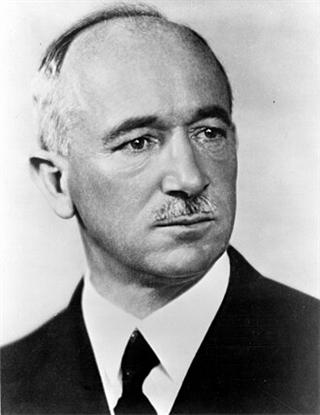
The First Republic was a parliamentary democracy with a bicameral National Assembly, proportional representation and a strong presidency shaped by Masaryk, who served from 1918 to 1935 and was succeeded by Beneš. Coalitions of the main Czech and Slovak parties, the so-called Pětka, managed government, and German parties joined cabinets from 1926. It was the only democracy in Central Europe to last until 1938, but centralism angered Slovak autonomists such as Andrej Hlinka, and the Sudeten German Party of Konrad Henlein won more votes than any other party in 1935. After Munich a federalised Second Republic lasted until March 1939. A government-in-exile under Beneš in London was recognised by the Allies, and the Košice Programme of 1945 set the post-war order. The Communist Party of Klement Gottwald, the largest party in the 1946 elections, took full power in February 1948. Thereafter the party ruled through its Central Committee and the security police, staging show trials such as that of Rudolf Slánský in 1952. The 1960 constitution renamed the state the Czechoslovak Socialist Republic, and from 1 January 1969 it became a federation of Czech and Slovak republics, the one reform of the Prague Spring that survived.
Global & Regional Impact
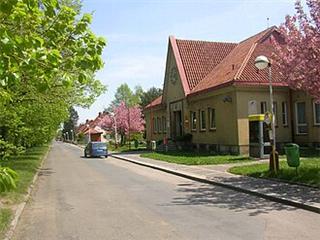
Czechoslovakia was the clearest product of the post-1918 principle of national self-determination and became a measure of its successes and failures. For two decades its democracy, cultivated by Masaryk as a moral as well as political project, set it apart from the authoritarian regimes around it, and the betrayal at Munich in 1938 became a lasting lesson of the failure of appeasement. The occupation brought the persecution and murder of most of the country's Jews, while the assassination of Reinhard Heydrich in 1942 and the destruction of Lidice in reprisal became symbols of resistance and terror. The post-war expulsion of about three million Germans under the Beneš decrees ended centuries of Czech-German coexistence in Bohemia and Moravia and remains a sensitive subject. The Prague Spring of 1968, Alexander Dubček's attempt at 'socialism with a human face', and its suppression shaped reform communism and Eurocommunism across Europe, and Jan Palach's self-immolation in January 1969 became an emblem of protest. Charter 77 and Václav Havel's essays on 'living in truth' influenced dissidents throughout the Soviet bloc. Finally, the peaceful 'Velvet Divorce' of 1992 offered a rare example of a state dissolving by negotiation rather than war, in sharp contrast to Yugoslavia.
Decline & Fall
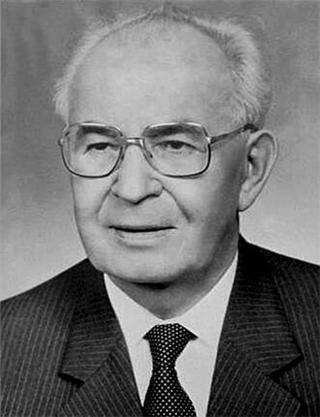
Communist rule in Czechoslovakia ended suddenly. After the crushing of the Prague Spring, Gustáv Husák presided over two decades of 'normalisation', with purges, censorship and economic stagnation. When the police broke up a student march in Prague on 17 November 1989, mass demonstrations and a general strike followed, organised by Civic Forum in the Czech lands and Public Against Violence in Slovakia. Within weeks the party gave up its leading role, and on 29 December 1989 Václav Havel was elected president, with Dubček as chairman of the Federal Assembly. Free elections followed in June 1990. Yet the end of communism exposed old Czech-Slovak differences, visible in the 'hyphen war' over the state's name, settled in April 1990 as the Czech and Slovak Federative Republic. Slovak politicians wanted looser ties and a gentler economic transition than the rapid market reforms and voucher privatisation favoured in Prague. The June 1992 elections were won by Václav Klaus in the Czech lands and Vladimír Mečiar in Slovakia, who agreed to separate. Slovakia declared sovereignty in July, Havel resigned, and the Federal Assembly voted in November to dissolve the federation. Czechoslovakia ceased to exist on 31 December 1992, succeeded on 1 January 1993 by the Czech Republic and Slovakia.
Czechoslovakia was the most durable democracy of interwar Central Europe and an industrial power whose abandonment at Munich in 1938 opened the way to the Second World War, then a Soviet-bloc state whose Prague Spring and Velvet Revolution shaped European politics before it dissolved peacefully in 1992.
References
- Agnew, H. (2004) The Czechs and the Lands of the Bohemian Crown. Stanford: Hoover Institution Press.
- Heimann, M. (2009) Czechoslovakia: The State That Failed. New Haven: Yale University Press.
- Leff, C.S. (1988) National Conflict in Czechoslovakia: The Making and Remaking of a State, 1918–1987. Princeton: Princeton University Press.
- Mamatey, V.S. and Luža, R. (eds) (1973) A History of the Czechoslovak Republic, 1918–1948. Princeton: Princeton University Press.
- Orzoff, A. (2009) Battle for the Castle: The Myth of Czechoslovakia in Europe, 1914–1948. New York: Oxford University Press.
- Williams, K. (1997) The Prague Spring and its Aftermath: Czechoslovak Politics, 1968–1970. Cambridge: Cambridge University Press.
Connections
Open the full connections map →