Europe
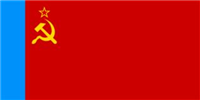
Russian SFSR
At a glance
- Created by the Bolsheviks in the October Revolution of 1917, it was the world’s first state committed to building socialism.
- It won the Civil War and in 1922 co-founded the Soviet Union, holding about three-quarters of its territory.
- In 1990–1991 it declared sovereignty, elected Boris Yeltsin president and became the Russian Federation.
Rise & Fall
- 1917The Bolsheviks seize power in Petrograd in the October Revolution
- 1918The capital moves to Moscow and the first Soviet constitution is adopted
- 1920The Red Army defeats Wrangel’s last White army in Crimea
- 1922The RSFSR co-founds the Soviet Union
- 1941Germany invades; Leningrad is besieged and Moscow threatened
- 1990The RSFSR declares state sovereignty on 12 June
- 1991Boris Yeltsin is elected president and resists the August coup
- 1991The republic is renamed the Russian Federation on 25 December
Foundation

Soviet Russia was born in the October Revolution of 1917. After the fall of the monarchy in February, the Provisional Government of the Russian Republic lost authority as the war with Germany dragged on, and on 25 October (7 November in the Western calendar) the Bolsheviks under Vladimir Lenin seized power in Petrograd through the Military Revolutionary Committee of the Petrograd Soviet. The Second Congress of Soviets approved a new government, the Council of People’s Commissars (Sovnarkom), chaired by Lenin, and adopted decrees on peace and land. The Constituent Assembly, elected in November with a socialist but non-Bolshevik majority, was dispersed after its single session in January 1918, and the Third Congress of Soviets proclaimed the Russian Soviet Republic. In March 1918 the government moved the capital from Petrograd to Moscow and signed the Treaty of Brest-Litovsk with the Central Powers, giving up Poland, the Baltic lands, Finland and Ukraine. The first constitution, adopted on 10 July 1918, named the state the Russian Socialist Federative Soviet Republic, defined it as a dictatorship of the proletariat and poorest peasantry and denied the vote to former nobles, clergy and employers of hired labour. The name Russian Soviet Federative Socialist Republic was adopted under the constitution of 1937.
Socioeconomy
The Bolsheviks set out to abolish private property and the old social order. Land was nationalised and handed to peasant communities, banks and large industry were nationalised, and during the Civil War the policy known as War Communism requisitioned grain and banned private trade. The result was economic collapse, peasant revolts such as that in Tambov, and the famine of 1921–1922, which killed several million people. In 1921 the New Economic Policy restored private trade and small business, allowing recovery. The separation of church and state in 1918 was followed by the confiscation of church property and persecution of clergy. From 1928 Joseph Stalin’s five-year plans transformed the republic, which held most of the Soviet Union’s industry and resources: new industrial centres such as Magnitogorsk rose in the Urals and Siberia, cities grew rapidly and literacy became almost universal. Forced collectivisation of agriculture from 1929, the deportation of so-called kulaks and the famine of 1932–1933, which struck the Volga, the North Caucasus and Kazakhstan as well as Ukraine, caused millions of deaths, and the Gulag camp system spread across the north and east. Post-war decades brought urbanisation, mass housing and a welfare system, followed by slowing growth and shortages in the 1970s and 1980s.
Military

The Red Army was founded in early 1918, and under Leon Trotsky, People’s Commissar for War from March 1918, it grew into a mass conscript force led partly by former tsarist officers under the supervision of political commissars. It fought the Civil War of 1918–1921 against the White armies of Alexander Kolchak in Siberia, Anton Denikin in the south and Nikolai Yudenich near Petrograd, against the Czechoslovak Legion and against Allied interventions, and defeated Pyotr Wrangel’s last White army in Crimea in November 1920. The Red Army also reconquered Ukraine, the Caucasus and Central Asia, but its advance into Poland was stopped at the Battle of Warsaw in August 1920, and the Treaty of Riga of 1921 fixed the western border. The Kronstadt sailors’ revolt of March 1921 was crushed. After 1922 defence became a responsibility of the Soviet Union, but the RSFSR remained its heartland. In the Second World War it bore much of the fighting after Germany invaded on 22 June 1941: Leningrad endured a siege of almost 900 days, the Germans were stopped before Moscow in December 1941, and the battles of Stalingrad in 1942–1943 and Kursk in 1943 turned the war. Factories were evacuated to the Urals and Siberia, which became the arsenal of victory.
Governance & Law
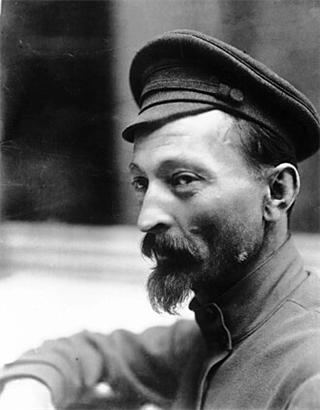
Formally, supreme power belonged to the All-Russian Congress of Soviets and its Central Executive Committee, chaired by Yakov Sverdlov and, from 1919, Mikhail Kalinin, with the Sovnarkom as the government. In practice power lay with the Communist Party, whose Politburo decided policy, and with the secret police, the Cheka, founded in December 1917 under Felix Dzerzhinsky, which waged a Red Terror against opponents. Other parties were suppressed by 1922. As a federation the RSFSR contained autonomous republics and regions for non-Russian peoples, beginning with the Bashkir and Tatar republics in 1919–1920. On 30 December 1922 it joined Ukraine, Byelorussia and the Transcaucasian Federation in founding the Soviet Union, after which most important powers passed to Union institutions in Moscow. Unlike the other republics, the RSFSR had no Communist Party, academy of sciences or secret police of its own, a deliberate choice to avoid a rival centre of power. Its borders changed repeatedly: Turkestan was divided in 1924, the Kazakh and Kirghiz autonomous republics became separate Union republics in 1936, Tuva was annexed in 1944, the Kaliningrad region was added in 1946, and Crimea was transferred to Ukraine in 1954. Its Supreme Soviet, created in 1938, had little real power until the reforms of Mikhail Gorbachev.
Global & Regional Impact

The RSFSR was the first state to declare socialism as its goal, and its revolution shaped the twentieth century. The Communist International, founded in Moscow in 1919, spread Bolshevik parties across the world, and Soviet Russia became the model for communist states in Eastern Europe, China, Vietnam, Cuba and elsewhere. Its creation of a federation of national units, with autonomous republics for peoples such as the Tatars, Bashkirs and Yakuts, set the pattern of Soviet nationality policy and survives in the republics of today’s Russian Federation. As the largest Soviet republic, with about three-quarters of the Union’s territory and roughly half its population, it supplied most of its industry, scientific centres and armed forces, and Russian became the common language of the Soviet Union. Early Soviet culture produced an influential avant-garde, from Constructivist art and architecture to the films of Sergei Eisenstein and the poetry of Vladimir Mayakovsky, before Socialist Realism was imposed in the 1930s. The darker legacy includes the Red Terror, collectivisation, the Gulag, the Great Terror of 1937–1938 and the deportation of whole peoples such as the Chechens, Kalmyks, Crimean Tatars and Volga Germans during the Second World War, whose consequences still shape relations in the North Caucasus and beyond.
Decline & Fall
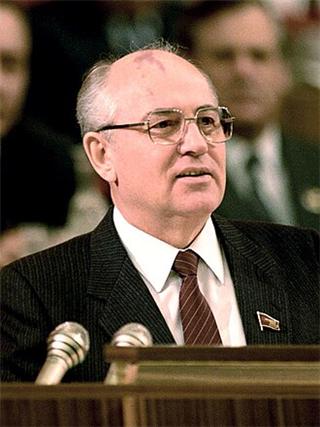
The RSFSR did not decline so much as reclaim the power it had ceded to the Soviet Union. Gorbachev’s reforms allowed competitive elections, and in March 1990 a Congress of People’s Deputies of the RSFSR was elected; in May it chose Boris Yeltsin as chairman of its Supreme Soviet, and on 12 June 1990 it adopted a Declaration of State Sovereignty proclaiming that Russian laws took precedence over Soviet ones. A Communist Party of the RSFSR was founded the same year. On 12 June 1991 Yeltsin was elected the republic’s first president by popular vote. When hardliners attempted a coup against Gorbachev in August 1991, Yeltsin led the resistance from the Russian parliament building, the White House, and after the coup collapsed the RSFSR suspended the Communist Party and took over Union ministries and assets. On 8 December 1991 Yeltsin and the leaders of Ukraine and Belarus signed the Belovezha Accords, declaring that the Soviet Union had ceased to exist and founding the Commonwealth of Independent States. On 25 December 1991, the day Gorbachev resigned, the republic was renamed the Russian Federation, which was accepted internationally as the continuing state of the Soviet Union and took over its permanent seat on the United Nations Security Council.
The Russian SFSR was the world’s first socialist state, created by the Bolshevik revolution of 1917; it won the Civil War, founded the Soviet Union in 1922 and remained its largest republic, and in 1991 it reasserted its sovereignty and became the Russian Federation.
References
- Fitzpatrick, S. (2008) The Russian Revolution. 3rd edn. Oxford: Oxford University Press.
- Hosking, G. (1992) A History of the Soviet Union, 1917–1991. Final edn. London: Fontana.
- Martin, T. (2001) The Affirmative Action Empire: Nations and Nationalism in the Soviet Union, 1923–1939. Ithaca: Cornell University Press.
- Pipes, R. (1990) The Russian Revolution. New York: Alfred A. Knopf.
- Service, R. (2009) A History of Modern Russia: From Tsarism to the Twenty-First Century. 3rd edn. Cambridge, MA: Harvard University Press.
- Smith, S.A. (2017) Russia in Revolution: An Empire in Crisis, 1890 to 1928. Oxford: Oxford University Press.
Connections
Open the full connections map →