Historical factor
Agricultural surplus
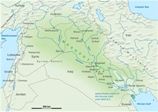
Agricultural surplus refers to the production of more food than farmers need for their own subsistence, which allows states to feed armies, cities, officials and religious institutions. Many empires rose on fertile river valleys or irrigated lands that generated such surpluses, which could be taxed. Examples include the Akkadian and Assyrian empires in Mesopotamia, the Egyptian New Kingdom in the Nile valley, and the Garamantian Empire, whose irrigated oases sustained its power.
Mentioned in 16 profiles
Akkadian EmpireSocioeconomyAlmohad CaliphateSocioeconomyAssyrian EmpireSocioeconomyAyyubid EmpireSocioeconomyByzantine EmpireSocioeconomyEgyptian Empire New KingdomSocioeconomyElamite ConfederationSocioeconomyFatimid CaliphateSocioeconomyGaramantian EmpireSocioeconomy, GovernanceKaabu EmpireFoundationOttoman EmpireSocioeconomyPolish-Lithuanian CommonwealthSocioeconomyRashidun CaliphateSocioeconomyRozvi EmpireDeclineSrivijaya EmpireFoundationUmayyad CaliphateSocioeconomy
See also





Cite this entry
- APA
- The Epoch Institute. (2026). Agricultural surplus. In The Epoch Institute Encyclopedia. https://the-epoch-institute.org/encyclopedia/agricultural-surplus
- MLA
- “Agricultural surplus.” The Epoch Institute Encyclopedia, The Epoch Institute, 2026, https://the-epoch-institute.org/encyclopedia/agricultural-surplus. Accessed .
- Chicago
- The Epoch Institute. “Agricultural surplus.” The Epoch Institute Encyclopedia. 2026. https://the-epoch-institute.org/encyclopedia/agricultural-surplus.
- Harvard
- The Epoch Institute (2026) ‘Agricultural surplus’, The Epoch Institute Encyclopedia. Available at: https://the-epoch-institute.org/encyclopedia/agricultural-surplus (Accessed: ).
Last reviewed October 2026Random entry ↻