Encyclopedia: A
2,700 entries under A · page 7 of 27: Agis IV – Ahmed Karamanli
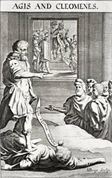 Agis IVPersonAgis IV was a Eurypontid king of Sparta who came to the throne about 245 BCE and tried to restore the shrinking citizen body by cancelling debts and redistributing land…
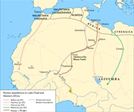 AgisymbaPlaceAgisymba was a land in the interior of Africa south of the Sahara, known from Ptolemy's Geography, which drew on the earlier geographer Marinus of Tyre.
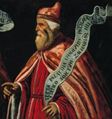 Agnello ParticipazioPersonAgnello Participazio was Doge of Venice from 811 to 827.
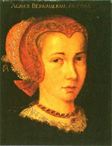 Agnes BernauerPersonAgnes Bernauer was the daughter of an Augsburg barber-surgeon who became the wife, probably by secret marriage, of Albert, heir to the Duchy of Bavaria-Munich.
 Agnes of MeraniaPersonAgnes of Merania (d. 1201) was queen of France as the third wife of Philip II Augustus, and a daughter of Berthold IV, Duke of Merania.
- AgnikulaReligion / ideaAgnikula, the 'fire lineage', is a legend of origin claimed by four Rajput clans: the Pratiharas, Paramaras, Chaulukyas and Chahamanas.
 AgnimitraPersonAgnimitra was the second king of the Shunga dynasty of northern India, son of its founder Pushyamitra Shunga, in the 2nd century BCE.
 Agno RiverPlaceThe Agno is a river of northern Luzon in the Philippines, rising in the Cordillera Central of Benguet and flowing south and then west across the plain of Pangasinan…
- AgokoliPersonAgokoli is remembered in Ewe tradition as a tyrannical king of Notsie, in modern Togo.
 Agoli-agboPersonAgoli-agbo was the last king of Dahomey, installed by the French in 1894 after the defeat and surrender of his brother Behanzin.
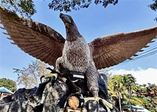 AgooPlaceAgoo is a town in La Union province on the Lingayen Gulf in northern Luzon, Philippines.
- AgoraTermAn agora was the central public space of an ancient Greek city, used for markets, assemblies and civic life.
- AgordatPlaceAgordat is a town in western Eritrea on the Barka River.
 Agostino DepretisPersonAgostino Depretis was an Italian statesman who served as prime minister several times between 1876 and 1887, leading the parliamentary Left after the fall of the Right…
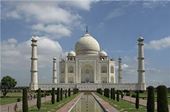 AgraPlaceAgra is a city on the Yamuna River in northern India.
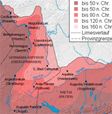 Agri DecumatesPlaceThe Agri Decumates were a region of the Roman Empire between the upper Rhine and the upper Danube, roughly the Black Forest and Swabian Jura in present-day south-west…
- Agricultural surplusHistorical factorAgricultural surplus refers to the production of more food than farmers need for their own subsistence, which allows states to feed armies, cities, officials and…
 AgrigentoPlaceAgrigento is a city on the south coast of Sicily, built on the site of the Greek city of Acragas, founded around 580 BCE.
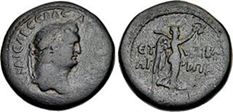 Agrippa IIPersonAgrippa II was the last ruler of the Herodian dynasty, son of Herod Agrippa I.
 AgronPersonAgron was king of the Ardiaean kingdom of Illyria from about 250 to 231 BCE.
 Águas Livres AqueductWork / monumentThe Águas Livres Aqueduct is a stone aqueduct that brought water to Lisbon, begun in 1731 under King John V and paid for largely by a tax on the city's residents.
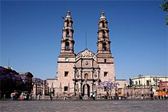 AguascalientesPlaceAguascalientes is one of the smallest states of Mexico, in the centre-north of the country, with its capital at the city of the same name, founded in 1575 as a…
- AgudásPeople / groupThe Agudás are the descendants of Afro-Brazilians, many of them freed slaves, and Brazilian traders who settled on the coast of present-day Benin, Togo and Nigeria in…
- Agüeybaná IPersonAgüeybaná I was the paramount cacique of the Taíno of Puerto Rico when the Spanish arrived, ruling the chiefdom of Guaynía on the island's south coast.
 Agüeybaná IIPersonAgüeybaná II was a Taíno cacique of Puerto Rico, successor to his brother Agüeybaná I as leading chief of the island.
 Agum IIPersonAgum II, also called Agum-kakrime, was an early Kassite king of Babylonia in the 16th century BCE.
 Agustín de IturbidePersonAgustín de Iturbide was a Mexican royalist officer who changed sides in 1821 and, with the insurgent Vicente Guerrero, issued the Plan of Iguala, which brought Mexico…
 Agustín GamarraPersonAgustín Gamarra was a Peruvian general and president from 1829 to 1833 and again from 1838 to 1841.
- Ah Dzun XiuPersonAh Dzun Xiu was the lord of the Xiu lineage of Maní in northern Yucatán.
- Ah Kukum XiuPersonAh Kukum Xiu was the ruler of the Maya province of Maní in Yucatán, head of the Xiu lineage, in the mid-16th century.
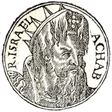 AhabPersonAhab was king of Israel in the 9th century BCE, the son of Omri, reigning from Samaria roughly between 871 and 852 BCE.
 Ahaggar MountainsPlaceThe Ahaggar, or Hoggar, Mountains are a highland of volcanic peaks and plateaus in southern Algeria, in the central Sahara.
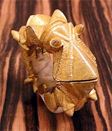 Ahanta peoplePeople / groupThe Ahanta are an Akan people of the western coast of Ghana, between the Ankobra River and Takoradi.
- Ahar (Iran)PlaceAhar is a city in East Azerbaijan province of north-western Iran, north-east of Tabriz, the main town of the Qaradagh or Arasbaran region.
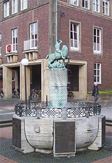 AhausPlaceAhaus is a town in the Borken district of North Rhine-Westphalia, Germany, close to the Dutch border.
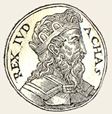 AhazPersonAhaz was king of Judah in the second half of the 8th century BCE.
 Ahaziah of JudahPersonAhaziah was king of Judah for about a year around 842–841 BCE, the son of Jehoram and Athaliah.
 AhichchhatraPlaceAhichchhatra was an ancient city in Bareilly district of Uttar Pradesh, India, remembered as the capital of northern Panchala.
- Ahilyabai HolkarPersonAhilyabai Holkar was the Maratha queen who ruled the Holkar domains of Malwa, later Indore State, from 1767 until her death in 1795.
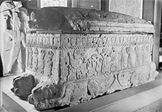 AhiramPersonAhiram was a king of Byblos, known from his stone sarcophagus found in the city's royal necropolis in 1923.
 AhlamuPeople / groupThe Ahlamu were nomadic groups of Syria and Mesopotamia named in cuneiform sources from the 14th century BCE, including the Amarna letters and Kassite letters from…
- AhlatPlaceAhlat is a town on the north-western shore of Lake Van in eastern Turkey, known in medieval sources as Khilat.
- Ahluwalia mislPeople / groupThe Ahluwalia misl was one of the twelve Sikh confederacies of 18th-century Punjab, led by Jassa Singh Ahluwalia, who also commanded the Dal Khalsa.
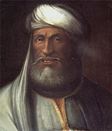 Ahmad al-ArajPersonAhmad al-Araj was the first Saadi sultan of Morocco.
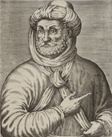 Ahmad al-MansurPersonAhmad al-Mansur was the Saadi sultan of Morocco from 1578 to 1603, enriched by his victory over the Portuguese at Alcácer Quibir.
- Ahmad al-MukarramPersonAhmad al-Mukarram was the second ruler of the Sulayhid dynasty of Yemen, succeeding his father Ali al-Sulayhi after Ali was killed by the Najahids in the 1060s.
- Ahmad al-MuqtadirPersonAhmad al-Muqtadir (died 1081) was the Hudid king of the Taifa of Zaragoza from 1046 and its most powerful ruler.
- Ahmad al-Mustain IIPersonAhmad al-Mustain II (died 1110) was the Hudid king of the Taifa of Zaragoza from 1085, the last of his line to rule the city.
 Ahmad AlaqPersonAhmad Alaq, also called Sultan Ahmad Khan, was a Chagatai khan of the eastern part of Moghulistan from 1487, a son of Yunus Khan, ruling from Turpan.
- Ahmad Baba al-TimbuktiPersonAhmad Baba al-Timbukti was a celebrated scholar and jurist of Timbuktu in the late sixteenth and early seventeenth century.
- Ahmad Bakhsh KhanPersonAhmad Bakhsh Khan was the first Nawab of Loharu.
 Ahmad bin Rashid Al MuallaPersonAhmad bin Rashid Al Mualla was ruler of Umm al-Quwain, one of the Trucial States, from 1929 to 1981.
- Ahmad Fadl al-QumandanPersonAhmad Fadl al-Qumandan was a prince of the Abdali ruling house of the Sultanate of Lahej in southern Arabia, a poet and musician who also commanded the sultanate's…
- Ahmad FanakatiPersonAhmad Fanakati was a Central Asian Muslim from Banakat who served as chief finance minister of the Yuan dynasty under Kublai Khan for some twenty years.
- Ahmad I BeyPersonAhmad I Bey was the Husainid bey of Tunis from 1837 to 1855.
- Ahmad ibn Abd al-Aziz ibn Abi DulafPersonAhmad ibn Abd al-Aziz was the most notable ruler of the Dulafid dynasty, which governed the region of Jibal in western Iran under the Abbasid caliphs.
- Ahmad ibn FadlanPersonAhmad ibn Fadlan was an Arab member of the embassy sent by the Abbasid caliph al-Muqtadir to the king of the Volga Bulgars in 921 to 922.
- Ahmad ibn FurtuPersonAhmad ibn Furtu was the chief imam and chronicler of Mai Idris Alooma of the Bornu Empire in the late sixteenth century.
- Ahmad ibn Hasan MaymandiPersonAhmad ibn Hasan Maymandi was a Persian administrator who served as vizier to the Ghaznavid sultan Mahmud of Ghazni from about 1013 to 1024.
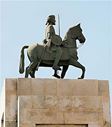 Ahmad ibn Ibrahim al-GhaziPersonAhmad ibn Ibrahim al-Ghazi, known as Ahmad Gragn, was the imam and military leader of the Adal Sultanate who led a jihad against the Ethiopian Empire from 1527 to 1543.
- Ahmad ibn IdrisPersonAhmad ibn Idris al-Fasi was a Moroccan Sufi teacher whose reformist teaching stressed the direct study of the Quran and hadith.
- Ahmad ibn Said al-BusaidiPersonAhmad ibn Said al-Busaidi was the founder of the Al Bu Said dynasty of Oman.
- Ahmad ibn TulunPersonAhmad ibn Tulun was a Turkish soldier sent to govern Egypt for the Abbasids in 868 who made himself its independent ruler and founded the Tulunid dynasty.
- Ahmad ibn Yahya al-YahsubiPersonAhmad ibn Yahya al-Yahsubi was the founder of the Taifa of Niebla in south-western al-Andalus.
 Ahmad JalayirPersonAhmad Jalayir was the Jalayirid sultan of Baghdad and Tabriz from 1382 to 1410, a poet, calligrapher and patron of manuscript painting.
 Ahmad Khan BangashPersonAhmad Khan Bangash was the Afghan Nawab of Farrukhabad from 1750 to 1771.
- Ahmad Khan DonboliPersonAhmad Khan Donboli was khan of Khoy from 1763 to 1786 and the most powerful ruler of the Kurdish Donboli family.
- Ahmad Khan MuqaddamPersonAhmad Khan Muqaddam was the best-known khan of Maragheh, a small khanate south-east of Lake Urmia ruled by the Muqaddam family in the 18th century.
 Ahmad KhaniPersonAhmad Khani was a Kurdish poet, scholar and mystic from the Hakkari region who settled at Bayazid and wrote in Kurmanji Kurdish.
- Ahmad Muadzam Shah of PahangPersonAhmad al-Muadzam Shah, born Wan Ahmad, was ruler of Pahang on the Malay Peninsula.
 Ahmad NamiPersonAhmad Nami was a Syrian politician of Circassian origin, a son-in-law of the Ottoman sultan Abdul Hamid II, who served as head of the French-mandated State of Syria…
 Ahmad Nizam Shah IPersonAhmad Nizam Shah I was the founder of the Nizam Shahi dynasty and the Ahmadnagar Sultanate in the Deccan.
- Ahmad Pasha of BaghdadPersonAhmad Pasha of Baghdad succeeded his father Hasan Pasha as Ottoman governor of Baghdad in 1723 and ruled, with a short interruption, until 1747.
 Ahmad QavamPersonAhmad Qavam, also known as Qavam os-Saltaneh, was an Iranian statesman who served five times as prime minister between 1921 and 1952.
 Ahmad SanjarPersonAhmad Sanjar was a Seljuk sultan who ruled from Khurasan in the first half of the twelfth century, the last ruler to hold authority over much of the Great Seljuk realm.
- Ahmad Sayf al-NasrPersonAhmad Sayf al-Nasr was the leader of the Awlad Sulayman's Sayf al-Nasr family, which had long resisted Italian rule in Fezzan.
 Ahmad Shah AbdaliPersonAhmad Shah Abdali, also known as Ahmad Shah Durrani, was an Afghan commander in Nader Shah's army who founded the Durrani Empire after Nader's death in 1747.
 Ahmad Shah BahadurPersonAhmad Shah Bahadur was Mughal emperor from 1748 to 1754, the son of Muhammad Shah.
- Ahmad Shah I of GujaratPersonAhmad Shah I was sultan of Gujarat from 1411 to 1442, grandson of the dynasty's founder Muzaffar Shah.
 Ahmad Shah I WaliPersonAhmad Shah I Wali was sultan of the Bahmani Sultanate of the Deccan from 1422 to 1436.
- Ahmad Shah MassoudPersonAhmad Shah Massoud was an Afghan mujahideen commander of the Jamiat-e Islami, known as the Lion of Panjshir for defending the Panjshir valley against Soviet offensives…
- Ahmad Shah of DivriğiPersonAhmad Shah was the Mengujekid ruler of Divriği in eastern Anatolia in the early thirteenth century, under the overlordship of the Seljuk Sultanate of Rum.
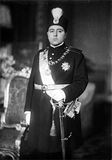 Ahmad Shah QajarPersonAhmad Shah Qajar was the last shah of the Qajar dynasty of Iran, coming to the throne as a boy in 1909 after his father was deposed in the Constitutional Revolution.
- Ahmad SimbaPersonAhmad Simba was a Nabhani prince of Pate who fled the Sultanate of Zanzibar's control and founded the sultanate of Witu on the Kenyan coast in the 1860s.
 Ahmad Yar KhanPersonAhmad Yar Khan was the last ruling Khan of Kalat, from 1933 to 1955.
 Ahmad YasawiPersonAhmad Yasawi was a Turkic Sufi poet and teacher of the 12th century, based at the town of Yasi, now Turkistan, in southern Kazakhstan.
- Ahmadil ibn IbrahimPersonAhmadil ibn Ibrahim was a Kurdish emir of the Rawwadid family who held Maragheh in north-western Iran under the Seljuk sultans.
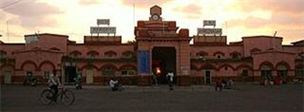 AhmadnagarPlaceAhmadnagar is a city in Maharashtra, western India, founded in 1494 by Ahmad Nizam Shah I as the capital of the Nizam Shahi sultanate.
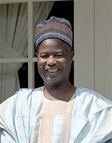 Ahmadou AhidjoPersonAhmadou Ahidjo was a Cameroonian politician from the Muslim north who became prime minister of French Cameroon in 1958 and led it to independence in 1960.
 Ahmadu BelloPersonAhmadu Bello, the Sardauna of Sokoto, was a Nigerian politician and leader of the Northern People's Congress.
 Ahmadu TallPersonAhmadu Tall was the son and successor of El Hadj Umar Tall and ruler of the Toucouleur Empire from Ségou after his father's death in 1864.
 Ahmed AbdallahPersonAhmed Abdallah was a Comorian politician who headed the government of the French Territory of the Comoros and unilaterally declared its independence on 6 July 1975.
- Ahmed al-FatehPersonAhmed al-Fateh, Ahmad ibn Muhammad Al Khalifa, was the first Al Khalifa ruler of Bahrain.
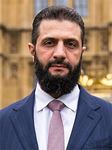 Ahmed al-SharaaPersonAhmed al-Sharaa, earlier known as Abu Mohammad al-Julani, is a Syrian militant leader and politician.
- Ahmed Ali Abdullah SalehPersonAhmed Ali Abdullah Saleh is the eldest son of the Yemeni president Ali Abdullah Saleh.
- Ahmed BelkadiPersonAhmed Belkadi was a Kabyle leader from a family of judges who founded the Kingdom of Kuku in the Djurdjura mountains around 1515.
- Ahmed Bey of ConstantinePersonAhmed Bey of Constantine was the last bey of the eastern province of Ottoman Algeria, from 1826.
- Ahmed BukrPersonAhmed Bukr was a sultan of the Darfur Sultanate who reigned c. 1682–1722.
 Ahmed Hassan al-BakrPersonAhmed Hassan al-Bakr was an Iraqi army officer and Ba'athist politician who was President of Iraq from 1968 to 1979.
- Ahmed KaramanliPersonAhmed Karamanli was an Ottoman cavalry officer in Tripoli who seized power in 1711, killed the Janissary officers and founded the hereditary Karamanli dynasty of pashas.