Islamic Caliphates & Middle East
Ayyubid Empire
At a glance
- Founded by the Kurdish commander Saladin, it united Egypt, Syria and Upper Mesopotamia against the Crusader states.
- Saladin's victory at Hattin and recapture of Jerusalem in 1187 permanently shifted the balance in the Levant.
- Divided among quarrelling kinsmen, it was overthrown by its own mamluk soldiers in 1250 and finished by the Mongols.
Rise & Fall
- 1171Saladin ends the Fatimid Caliphate, restoring Egypt to Sunni Abbasid allegiance
- 1174After Nur al-Din's death, Saladin takes Damascus
- 1187Saladin destroys the Crusader army at Hattin and takes Jerusalem
- 1192Treaty of Jaffa ends the Third Crusade with Jerusalem still in Ayyubid hands
- 1193Saladin dies, triggering a succession struggle among his sons
- 1229Al-Kamil cedes Jerusalem to Holy Roman Emperor Frederick II
- 1250Bahri mamluks murder Sultan Turanshah and seize Egypt
- 1259–1260Mongols invade the Levant, sack Aleppo and end Ayyubid rule in Syria
Foundation
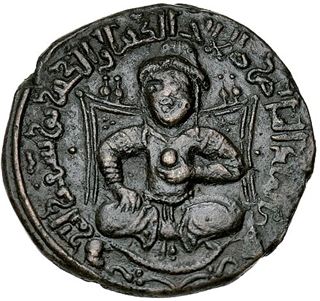
The Ayyubid Empire was the product of one of medieval history's most remarkable careers of personal state-building, that of Salah al-Din Yusuf ibn Ayyub, known in the West as Saladin, a Kurdish commander of exceptional political intelligence who transformed himself from a constrained vizier in Cairo into the master of the largest Muslim realm between the Nile and the Tigris. Saladin's path to power began in March 1169, when his uncle Shirkuh, the Zengid general who had taken control of Fatimid Egypt, died suddenly and Saladin was appointed vizier in his place. Two years later, as the last Fatimid caliph al-Adid lay dying in September 1171, Saladin had the Friday sermon pronounced in the name of the Abbasid caliph of Baghdad, ending the Shi'a Fatimid Caliphate and returning Egypt to Sunni allegiance; the Ayyubid state dates from this moment. His position was at first constrained by nominal subordination to the Zengid ruler Nur al-Din in Damascus, but Nur al-Din's death in May 1174 freed Saladin to pursue independent expansion. He took Damascus that autumn, progressively absorbed the Zengid principalities of Syria and northern Mesopotamia through a combination of military pressure and diplomacy, sent his brother Turanshah to conquer Yemen in 1174, securing the Red Sea route, took Aleppo in 1183 and received the submission of Mosul in 1186. The strategic logic of this long consolidation was explicit: Saladin was encircling the Crusader states of the Levant before delivering the decisive blow. The ideological foundation of this project was jihad, above all the recovery of Jerusalem from Christian rule, which gave Saladin's empire a purpose and a legitimacy that transcended the Kurdish origins of his family.
Socioeconomy

The Ayyubid Empire governed the most economically productive region of the medieval Middle East, spanning Egypt, sustained by the annual Nile flood, and the commercial centres of Syria, the Levantine coast and Upper Mesopotamia. Egypt's agricultural surplus, drawn from the fertile Nile Delta and the irrigation networks of the Nile valley, financed Saladin's campaigns and the court culture of the Ayyubid sultans, and was distributed to commanders through the iqta system of revenue assignments. The period was a significant one for Egyptian commercial development: the Cairo Citadel, begun by Saladin in 1176 and expanded by his successors, served as both the seat of government and a symbol of the dynasty's investment in urban infrastructure, and al-Kamil in particular promoted trade with the Italian maritime republics, as Venice, Pisa and Genoa secured commercial privileges in Alexandria that brought European goods into Egypt in exchange for spices, alum, sugar and textiles. The Syria-Palestine corridor was one of the most commercially vital regions of the medieval world, connecting the overland routes from Iraq, Persia and Central Asia to the Mediterranean ports of Acre, Beirut and Tyre. The Ayyubid tolerance of Crusader coastal enclaves, formalised in successive truces from the Treaty of Jaffa (1192) onward, was partly a commercial calculation: the Frankish ports channelled Mediterranean trade on which Muslim merchants also depended. The empire's structural economic weakness was its fragmentation into semi-autonomous principalities, which divided revenues among competing princes and prevented the accumulation of resources for sustained campaigns against either the Crusaders or the Mongols.
Military

The Ayyubid army was built on the Kurdish and Turkic warrior traditions of Saladin's milieu, organised around a professional cavalry core of mamluks, slave soldiers mostly of Turkic origin, supplemented by Kurdish and Turkmen contingents, Arab auxiliaries and the forces of subordinate princes. Saladin's genius was less tactical than strategic and psychological: he understood that the Crusader states could only be defeated by a unified Muslim army that denied them the chance to exploit divisions among their neighbours, and his patient consolidation of Egypt, Syria and Mesopotamia was designed to create precisely that force. The Battle of Hattin on 4 July 1187 was the culmination of this strategy: by drawing the Crusader army out from the springs of Sephoria into waterless terrain at the height of summer and denying it access to the Sea of Galilee, Saladin forced the entire field army of the Kingdom of Jerusalem to fight under extreme disadvantage. The victory was total: the army was destroyed, the relic of the True Cross captured and King Guy of Lusignan taken prisoner. Jerusalem surrendered on 2 October 1187. The Third Crusade (1189–1192) revealed the limits of Ayyubid power against determined European opponents: Saladin lost Acre to the combined forces of Richard I of England and Philip II of France in 1191 and was defeated in the field at Arsuf, though he retained Jerusalem under the Treaty of Jaffa. Later Ayyubid military performance deteriorated as the structural problem of the system took hold: sultans spent disproportionate resources suppressing the ambitions of rival Ayyubid princes rather than confronting external enemies, and the growing reliance on mamluk regiments, above all al-Salih Ayyub's Bahriyya, created a professional military establishment that proved more durable and cohesive than the dynasty it served.
Governance & Law

Ayyubid government reflected a fundamental tension between Saladin's decision to distribute the empire's territories as appanages among his kinsmen and the practical requirements of centralised rule. Saladin's logic was pragmatic: by giving his brothers, sons and nephews direct control of Egypt, Damascus, Aleppo, Yemen and the Jazira, he secured their loyalty and their military contribution to the jihad while retaining supremacy as sultan. The result was a decentralised family confederation, often described as semi-feudal, in which each prince maintained his own court, army and revenues while acknowledging the senior sultan's authority. Egypt, the economic heartland, was usually the senior ruler's direct domain and the principal source of the resources that sustained central authority. The Cairo Citadel, built on a spur of the Muqattam Hills overlooking the city and continuously developed by Saladin's successors, became the administrative centre of Ayyubid Egypt and remains one of the most impressive surviving monuments of medieval Islamic rule. The Ayyubid sultans patronised religious scholarship, endowed madrasas that consolidated Sunni learning in former Fatimid Egypt, and restored the Dome of the Rock and the al-Aqsa Mosque to Muslim worship after the reconquest of Jerusalem. Shafi'i jurisprudence predominated at the Ayyubid court, though the dynasty also endowed institutions for the other Sunni schools, and the sultans cultivated the religious legitimacy essential to their role as defenders of Islam and protectors of the holy places. The critical failure was the absence of any accepted mechanism of succession: there was no rule of primogeniture, and the death of a senior sultan repeatedly triggered conflict among his heirs that drained the dynasty's military and financial resources.
Global & Regional Impact

The Ayyubid Empire's historical legacy is dominated by the towering figure of Saladin, whose reconquest of Jerusalem in 1187 and relatively merciful treatment of its Christian inhabitants, contrasting sharply with the massacre that accompanied the First Crusade's capture of the city in 1099, created one of the medieval world's most enduring legends of noble warfare. Saladin's reputation transcended religious boundaries: Christian writers celebrated him as a model of chivalric virtue even though he had taken Jerusalem from them, and his exchanges of courtesies with Richard I during the Third Crusade passed into Western literary tradition. The Ayyubid reconquest permanently reshaped the political geography of the Levant: the Crusader coastal states that survived the Third Crusade endured for another century but never again threatened Muslim dominance of the interior, and the balance of power established after Hattin set the course that led to the fall of Acre in 1291. The dynasty's patronage of Sunni scholarship through madrasa foundations across Egypt and Syria strengthened the institutional foundations of Sunni learning in the region, and the Ayyubid period saw significant intellectual and artistic production, particularly in Cairo, Damascus and Aleppo, where the Citadel was rebuilt in its present form. The dynasty's greatest unintended legacy was the Mamluk Sultanate that replaced it: the slave-soldier system on which the later Ayyubids relied produced an institution of exceptional military effectiveness that defeated the Mongols at Ain Jalut in 1260, the first decisive check to Mongol expansion in the Middle East, and governed Egypt and Syria until the Ottoman conquest of 1517.
Decline & Fall

The Ayyubid Empire's decline was rooted in the governing decisions Saladin made during his rise. By settling the empire's territories as autonomous principalities on his sons, brothers and nephews, notably in the arrangements of 1186, Saladin secured the loyalty needed to win at Hattin and recover Jerusalem, but ensured that his death would trigger a dynastic struggle capable of undoing much of what he had spent nearly two decades building. The succession conflict that erupted soon after Saladin's death in March 1193 was the first of many: his sons al-Afdal and al-Aziz fought over Damascus and Egypt, and only the patient statesmanship of Saladin's brother al-Adil allowed the realm to be reunited under his authority by 1200. Al-Adil's capable reign (1200–1218) and that of his son al-Kamil (1218–1238) showed that a strong sultan could maintain Ayyubid coherence, but each succession brought renewed conflict. Al-Kamil's diplomatic cession of Jerusalem to the Holy Roman Emperor Frederick II in the Treaty of Jaffa (1229), giving up the city whose recovery had defined Saladin's reign in return for support against his own Ayyubid relatives, was the ideological nadir of the dynasty, showing how far the founding jihad ideal had been subordinated to dynastic survival. The loss of Egypt to the Mamluks in 1250, after Sultan Turanshah was murdered by his father's own Bahri mamluks, removed the economic foundation of the entire system. The Mongol invasion of the Levant in 1259–1260, which followed the destruction of Baghdad in 1258, sacked Aleppo and ended the principalities of Aleppo and Damascus under al-Nasir Yusuf, extinguished most of what remained, although Hama survived as a Mamluk vassal into the fourteenth century. The Battle of Ain Jalut was fought and won by the Mamluks, not the Ayyubids, demonstrating which institution had proved the more durable product of the dynasty's military system.
The Ayyubid Empire's brief, brilliant arc, from Saladin's unification of Egypt and Syria against the Crusaders to the dynasty's displacement by the very mamluk soldiers its later sultans had relied upon, encapsulates one of history's most poignant lessons: that a state built on the genius of a single founder and on the generous distribution of power among kinsmen may be undone by those same kinsmen the moment the founder's hand is removed.
References
- Ehrenkreutz, A.S. (1972) Saladin. Albany: State University of New York Press.
- Gibb, H.A.R. (1973) The Life of Saladin. Oxford: Clarendon Press.
- Hillenbrand, C. (1999) The Crusades: Islamic Perspectives. Edinburgh: Edinburgh University Press.
- Humphreys, R.S. (1977) From Saladin to the Mongols: The Ayyubids of Damascus, 1193–1260. Albany: State University of New York Press.
- Lev, Y. (1999) Saladin in Egypt. Leiden: Brill.
- Lyons, M.C. and Jackson, D.E.P. (1982) Saladin: The Politics of the Holy War. Cambridge: Cambridge University Press.
Connections
Open the full connections map →