
Form of government · Europe
Aristocracy
At a glance
- Aristocracy, Greek for “rule of the best”, was praised by Plato and Aristotle as government by the most virtuous, but in practice it almost always meant rule by a hereditary, landowning nobility.
- Noble elites governed most of Europe and much of Asia for over two thousand years, through bodies as varied as the Roman Senate, Venice’s Great Council, the Polish Sejm and Britain’s House of Lords.
- Revolutions, new commercial and industrial wealth, mass democracy and the First World War stripped aristocracies of their power; only remnants, such as the noble seats in Tonga’s parliament, survive.
Timeline
- c. 750 BCEThe Bacchiad clan replaces the kings of Corinth with a magistrate chosen yearly from among its own members
- 509 BCEBy Roman tradition the last king is expelled, and patrician families rule through the Senate and two annual consuls
- c. 330 BCEAristotle’s Politics defines aristocracy as rule by the best for the common good and oligarchy as its corruption
- 1016Fujiwara no Michinaga becomes regent for his grandson Emperor Go-Ichijō, the height of Fujiwara power in Japan
- 1573The Polish–Lithuanian nobility holds its first free royal election and binds the new king by the Henrician Articles
- 1789On 4 August France’s National Assembly abolishes noble privileges; hereditary nobility itself is abolished in 1790
- 1911The Parliament Act ends the House of Lords’ power to veto bills passed by the House of Commons
- 1918Revolution topples the German and Austrian monarchies, sweeping away noble chambers such as the Prussian House of Lords
How It Works

Aristocracy is government by a small privileged class. The Greek word means “rule of the best”, and for Plato and Aristotle it meant rule by the few citizens most fitted by virtue and education to govern for the good of all. In historical practice the few were almost always a hereditary nobility, defined by birth and sustained by land, and the word came to mean both that class and the government it ran. In the early Greek cities and in Rome aristocrats governed through a council of elders or former magistrates, such as the Areopagus at Athens or the Roman Senate, and through annual offices reserved for men of their own families. In the kingdoms of medieval and early modern Europe the great nobles sat in the king’s council, dominated the estates and diets, held the highest commands in the army and the church, and ruled their own lands as lords.
Power was exercised collectively and personally at once. Decisions were taken among peers, in debate and by vote, while families competed for office and built followings through marriage, patronage and kinship. On their estates nobles held courts and police powers over their peasants and collected rents, dues and labour services, and in France they were exempt from the taille, the main direct tax. An aristocracy was limited by custom and law, by the rivalry of its own families, by the power of a monarch, and at times by assemblies of commoners or the threat of revolt.
Aristotle distinguished aristocracy from oligarchy: in an aristocracy the few rule for the common good and are chosen for merit, in an oligarchy the rich rule in their own interest. In practice the line was hard to draw, because hereditary power rested on wealth, and later writers often used the two words for the same regimes. Aristocracy also differs from monarchy, the rule of one, and from a bureaucracy recruited by merit such as that of imperial China, whose scholar-officials owed their posts to examinations rather than to birth. Historians further separate the titled magnates, who held real power, from the more numerous lesser nobility or gentry.
Origins
The word aristokratia, from aristos, “best”, and kratos, “power”, was coined by Greek thinkers of the 5th and 4th centuries BCE, but the kind of rule it described is older. In many Greek city-states of the 8th and 7th centuries BCE the power of kings passed to leading families who owned the best land, fought on horseback or in costly armour, and controlled law and cult. At Corinth the Bacchiad clan, by tradition around 747 BCE, replaced its own kings with a magistrate chosen yearly from among its members; Herodotus recorded that the Bacchiadae married only among themselves. At Athens the Eupatridae, the “well-born”, monopolised the archonships, and former archons formed the council of the Areopagus, until the reforms of Solon in 594 BCE made wealth rather than birth the qualification for office.
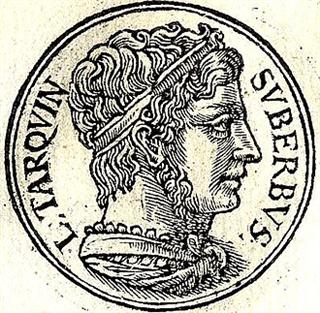
Rome followed a similar path. By the traditional date of 509 BCE the Romans expelled their last king, Tarquinius Superbus, and the patricians, a closed group of noble families, governed through the Senate and two consuls elected each year. During the Conflict of the Orders, which ended in 287 BCE, plebeians won access to the magistracies, and a new nobility, the nobiles, formed from the patrician and plebeian families whose ancestors had held the consulship. A man without such ancestors who reached that office, such as Cicero, was called a novus homo, a “new man”.
Philosophers turned the practice into theory. In Herodotus’s Histories the Persian noble Megabyzus argues for handing power to a group of the best men. Plato’s Republic imagined a state ruled by philosopher-kings trained to know the good, compared government to steering a ship or practising medicine, and traced the decline of the best constitution into timocracy, oligarchy, democracy and tyranny. Aristotle’s Politics set out six constitutions, three good and three corrupt, with aristocracy as the good form of rule by the few. Polybius, a Greek hostage in Rome in the 2nd century BCE, described the Roman Republic as a mixed constitution in which the Senate formed the aristocratic element beside the monarchic consuls and the democratic assemblies.
Through History

Greek aristocracies were challenged first by tyrants, such as Cypselus, who overthrew the Bacchiadae around 657 BCE, and then by democracy, but rule by the few survived in many cities, and Sparta kept its Gerousia, a council of twenty-eight elders over sixty and the two kings. In Rome the senatorial nobility governed an empire; in the 1st century BCE Cicero praised the optimates, the “best men” who upheld the Senate’s authority, although historians from Ronald Syme to Henrik Mouritsen deny that they formed a party. Medieval Europe’s nobility grew from mounted warriors who held land in return for military service. Great lords limited kings, as the English barons did through Magna Carta in 1215, and in some states nobles ruled outright: the patricians of the Republic of Venice, or the szlachta of the Polish–Lithuanian Commonwealth, who from 1573 elected their kings.
Aristocracies flourished far beyond Europe. In Heian Japan the Fujiwara family dominated the court by marrying its daughters to emperors, and in 1016 Fujiwara no Michinaga became regent for his grandson Emperor Go-Ichijō; later the daimyō, warrior lords with their own samurai, held real power. In China the great clans held office for centuries through recommendation and the nine-rank system introduced in 220, until the imperial examinations, begun under the Sui dynasty, transferred power to scholar-officials, a change complete by the Song dynasty. Korea’s Silla kingdom fixed rank and office by birth in its bone-rank system. In Ethiopia the hereditary princes ruled their provinces while emperors were powerless during the Zemene Mesafint, the Era of the Princes, until Tewodros II ended it in 1855.
In 18th-century Europe nobles still dominated government, and Britain was ruled by a small peerage and the landed gentry. England’s revolutionaries had abolished the House of Lords from 1649 to 1660, but the French Revolution struck the heavier blow, abolishing noble privileges on 4 August 1789 and hereditary nobility in June 1790. Industrial wealth, a widening franchise and taxes on land eroded aristocratic power in the 19th century, yet around 1900 nobles still dominated politics in Britain, Germany, Austria, Russia, Denmark and Sweden. The Parliament Act of 1911 ended the House of Lords’ veto. The First World War completed the decline: in Russia the Bolsheviks expropriated the nobility and imprisoned, killed or exiled many nobles, and in 1918 revolution swept away the monarchies of Germany and Austria and their noble upper houses.
Strengths

The classical case for aristocracy rested on the idea that government is a skill and a moral calling that few possess. Plato argued that just as not everyone can navigate a ship or practise medicine, so only those trained to know the good should rule, and both he and Aristotle held that true rule by the best surpassed rule by the many. Aristotle valued the leisure, education and experience that let a few citizens devote themselves to public life. Polybius set out to explain how Rome had come to rule almost the whole known world in under fifty-three years, and he placed his account of its constitution after his narrative of the Battle of Cannae in 216 BCE, crediting the balance of Senate, consuls and people with Rome’s recovery from that disaster.
Later defenders stressed the nobility’s role as a check on power. Montesquieu, in The Spirit of the Laws (1748), saw the nobility as the most natural of the “intermediate powers” that kept a monarchy from becoming a despotism, summing up its place in the maxim “no monarch, no nobility; no nobility, no monarch”. Edmund Burke defended a “natural aristocracy” of men raised to public responsibility, and property handed down within families, as sources of continuity and prudence against revolutionary experiment. Alexis de Tocqueville argued in Democracy in America that aristocratic bodies had protected liberty against the central power, and that democracies needed voluntary associations to take their place. Even Thomas Jefferson agreed, in a letter to John Adams in 1813, that there was a “natural aristocracy” among men, grounded in “virtue and talents”, although he wanted it chosen by election rather than by birth.
Defenders also pointed to results. Venice’s patricians governed a stable republic for five centuries after closing their ruling council, serving the state in short and often poorly paid offices. The peers and gentry who governed Britain in the 18th and 19th centuries presided over constitutional stability, commercial and imperial expansion and the first industrial revolution, while the gentry ran county government without pay as justices of the peace. Families rooted in their estates, their defenders argued, took a longer view than politicians who depended on the next election.
Weaknesses
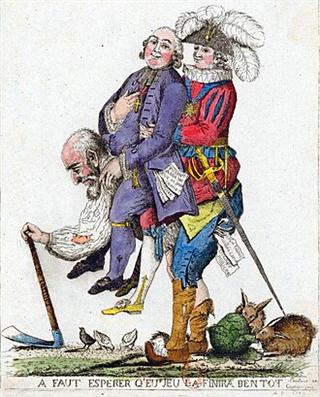
Critics argued from the start that rule by the best decays into rule by the privileged. Aristotle himself warned that aristocracies slide into oligarchy when the few begin to rule for their own advantage, and in Plato’s Republic Socrates describes oligarchy as a city divided between the rich and the poor. Hereditary privilege bore heavily on those outside it. Nobles exempt from the main taxes, judging their own peasants and, across much of central and eastern Europe, holding them as serfs bound to the land, lived on dues and labour taken from the many. In What Is the Third Estate? (1789) the Abbé Sieyès attacked the French nobility as a privileged caste living off the nation, and in Rights of Man (1791) Thomas Paine called the idea of hereditary legislators “as absurd as an hereditary mathematician”.
History gave the critics their examples. The Roman Senate resisted land reform, and in 133 BCE senators clubbed to death the tribune Tiberius Gracchus; a century of political violence and civil war followed until the Republic fell. Ronald Syme described its politics as driven not by parties and programmes but by “the strife for power, wealth and glory” among the nobles. In Poland–Lithuania the liberum veto let a single deputy break up the Sejm, and the paralysed Commonwealth was partitioned out of existence by its neighbours in 1772, 1793 and 1795. In France the refusal of the Assembly of Notables and the noble-dominated parlements to accept new taxes in 1787–1788 forced the crown to summon the Estates-General and opened the way to the Revolution, although William Doyle has questioned the older view that the nobility was also closing its ranks in an “aristocratic reaction”. Ethiopia’s Era of the Princes and the civil wars of Japan’s warrior lords showed how rival nobles could tear a realm apart.
Aristocracies were also accused of blocking change. In many countries trade and manual work cost a noble his status, and wealth lay locked in entailed estates. In the American South the planter class, the slaveholding elite that dominated the region’s politics, defended slavery until the Civil War, which in C. Vann Woodward’s judgement weakened and in places destroyed it. To many liberals the exclusion of talent by birth seemed both unjust and wasteful.
Impact & Legacy
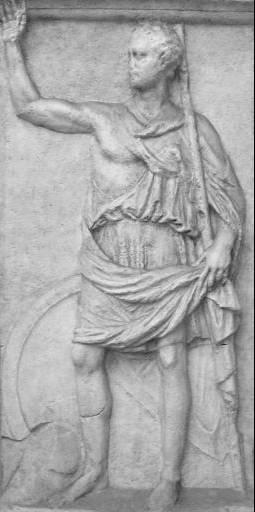
The aristocratic tradition shaped later constitutions. The theory of the mixed constitution, carried from Polybius and Cicero to Montesquieu, taught that a stable state needs a body of experienced and independent members to check both rulers and people, and many countries kept or created upper houses for that purpose. The founders of the United States forbade titles of nobility in their constitution yet debated how far the Senate should temper popular majorities. In Britain the House of Lords Act 1999 removed all but 92 hereditary peers from the House of Lords. Japan’s peerage, created on the British model after the Meiji Restoration, sat in the House of Peers until both were abolished in 1947.
After the First World War most republics abolished noble privileges or titles outright: Austria abolished its nobility in 1919, the Weimar Constitution reduced titles to part of the surname, and India’s Twenty-Sixth Amendment of 1971 ended the privileges of the former princes. Nobility now survives mainly as a social distinction, though by one recent estimate aristocratic and gentry families still own nearly a third of England’s land, and traditional nobilities keep their standing in many African and Asian societies. Tonga is a rare case of a formal political role: its noble titleholders elect nine members of the Legislative Assembly.
Scholars have read the history of aristocracy in several ways. The elite theorists Gaetano Mosca and Vilfredo Pareto held that every society is ruled by a minority, and Pareto wrote that “history is a graveyard of aristocracies”, each elite giving way to another. Arno Mayer argued in The Persistence of the Old Regime (1981) that landed nobilities kept their grip on Europe’s states until 1914, while David Cannadine traced the decline and fall of the British aristocracy from the 1880s. Historians now stress how often aristocracies absorbed new wealth through ennoblement and marriage. The classical ideal of government by the best lives on in debates about meritocracy, a word popularised in 1958 by Michael Young’s satire The Rise of the Meritocracy, which warned of a new elite of merit.
Aristocracy, rule by a privileged few who claimed to be the best, governed much of the world from the early Greek city-states to the First World War, usually as a hereditary landed nobility. Its defenders saw it as a school of experience and a check on kings and crowds, its critics as privilege and exclusion. Revolutions and democracy ended its power, but its institutions and ideals left lasting traces.
Test yourself
5 questions on this page, from its key events and facts.
The questions open here once the page has loaded.
References
- Aristotle (1998) Politics, trans. C. D. C. Reeve. Indianapolis: Hackett.
- Polybius (2010) The Histories, trans. R. Waterfield. Oxford: Oxford University Press.
- Mayer, A. J. (1981) The Persistence of the Old Regime: Europe to the Great War. New York: Pantheon Books.
- Cannadine, D. (1990) The Decline and Fall of the British Aristocracy. New Haven: Yale University Press.
- Doyle, W. (2009) Aristocracy and its Enemies in the Age of Revolution. Oxford: Oxford University Press.
- Doyle, W. (2010) Aristocracy: A Very Short Introduction. Oxford: Oxford University Press.