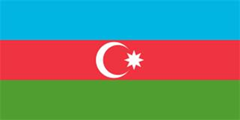
Islamic Caliphates & Middle East
Azerbaijan
At a glance
- The Supreme Council of Azerbaijan adopted a Declaration of Independence on 18 October 1991, affirmed by a referendum in December, days before the Soviet Union ceased to exist on 26 December.
- The First Nagorno-Karabakh War left Armenians in control of 14–16 percent of Azerbaijani territory by 1994; the Second War of 2020 and the offensive of September 2023 returned it all and ended with the expulsion of nearly all ethnic Armenians from Nagorno-Karabakh.
- Oil and gas from the Azeri–Chirag–Guneshli and Shah Deniz fields, carried west by the Baku–Tbilisi–Ceyhan pipeline from 2006, raised GDP twenty-fold between 1995 and 2012 while the New Azerbaijan Party kept power from 1993.
Rise & Fall
- 1991The Supreme Council of Azerbaijan adopts a Declaration of Independence on 18 October, affirmed by a nationwide referendum in December.
- 1993President Abulfaz Elchibey is overthrown by a military insurrection led by Colonel Surat Huseynov, which brings Heydar Aliyev to power.
- 1994The First Nagorno-Karabakh War ends with Armenians holding 14–16 percent of Azerbaijani territory; in September SOCAR signs a 30-year contract with 13 oil companies.
- 1995The constitution is adopted on 12 November, completing the formation of the political system.
- 2003Ilham Aliyev succeeds his father Heydar as President and chairman of the New Azerbaijan Party.
- 2006The Baku–Tbilisi–Ceyhan pipeline becomes operational in May, carrying Caspian oil to Turkey and world markets; the new manat is launched on 1 January.
- 2020The Second Nagorno-Karabakh War, six weeks from 27 September, ends in a ceasefire that returns the seven districts and parts of Nagorno-Karabakh to Azerbaijani control.
- 2023An offensive in September ends the Republic of Artsakh, dissolved on 1 January 2024, and nearly all ethnic Armenians are expelled from Nagorno-Karabakh.
Foundation

The land between the Caspian Sea and the Caucasus was ruled first by Caucasian Albania and then by a succession of Persian empires. It remained part of Qajar Iran until the Russo-Persian wars of 1804–1813 and 1826–1828, when the treaties of Gulistan and Turkmenchay ceded the khanates north of the Aras River to the Russian Empire. An Azerbaijani national identity emerged in Russian-held Baku, Ganja and Tiflis at the end of the nineteenth century, and when the empire collapsed the Musavat party declared the Azerbaijan Democratic Republic in May 1918, the first modern parliamentary republic in the Muslim world. It lasted 23 months: the Bolshevik 11th Red Army invaded in April 1920, as many as 20,000 Azerbaijani soldiers died resisting, and the Azerbaijan Soviet Socialist Republic followed.
In the Second World War Baku supplied 80 percent of the Soviet Union's oil on the Eastern Front. Under glasnost the dispute over Nagorno-Karabakh, an autonomous region with an Armenian majority, grew into open conflict and calls for independence, culminating in the Black January events in Baku. In 1990 the Supreme Council dropped the words 'Soviet Socialist', adopted a Declaration of Sovereignty and restored the flag of the Democratic Republic; after the failed Soviet coup of 1991 it adopted a Declaration of Independence on 18 October, affirmed by referendum in December, and the Soviet Union ceased to exist on 26 December.
Socioeconomy
Two-thirds of Azerbaijan is rich in oil and natural gas, an industry reaching back to antiquity. In September 1994 the State Oil Company of Azerbaijan Republic (SOCAR) signed a 30-year contract with 13 oil companies, among them Amoco, BP, ExxonMobil, Lukoil and Equinor, opening deepwater fields untouched by Soviet exploitation; the State Oil Fund was set up to hold the revenue for future generations. The Baku–Tbilisi–Ceyhan pipeline, 1,774 km through Azerbaijan, Georgia and Turkey, opened in May 2006 and can carry 50 million tons of crude a year; the South Caucasus Pipeline followed at the end of 2006, and the Trans-Anatolian and Trans Adriatic pipelines deliver Shah Deniz gas to Turkey and Europe.
The boom brought growth and strain alike. Chronic inflation was tamed in the early 2000s and a new manat launched on 1 January 2006, but demand pushed inflation to 16.6 percent in the first quarter of 2007, and the economy shows signs of 'Dutch disease'. By 2012 GDP had increased twenty-fold from its 1995 level. About 54.9 percent of the land is agricultural, growing grain, cotton, tobacco, potatoes and sugar beet, with wine, livestock and a Caspian sturgeon fishery; tourism, damaged by the war of the 1990s, recovered in the 2000s. In March 2022 the population was 10,164,464, 52.9 percent urban; by the 2019 census 94.8 percent were Azerbaijanis, and emigration restrained growth.
Military

The Armed Forces of the Republic of Azerbaijan were created by the law of 9 October 1991, though Army Day is kept on 26 June, when the Azerbaijan Democratic Republic founded its National Army in 1918. The new state was at once at war. The First Nagorno-Karabakh War with the region's Armenian majority, backed by Armenia, lasted until 1994; both sides committed atrocities and pogroms, among them the Khojaly massacre, the Baku pogrom, the Maraga massacre and the Kirovabad pogrom. An estimated 30,000 people were killed and more than a million displaced, and Armenians were left controlling 14–16 percent of Azerbaijani territory. Defeat fed coups at home: Colonel Surat Huseynov's insurrection of 1993, his second attempt in 1994 and the 1995 revolt of the OMON commander Rovshan Javadov.
By 2021 the armed forces had 126,000 active personnel and 17,000 paramilitary troops, a defence budget of $2.24 billion in 2020, 5.4 percent of GDP, and an arms industry of its own; Azerbaijan cooperates with NATO through the Partnership for Peace and sent peacekeepers to Iraq and Afghanistan. On 27 September 2020 fighting resumed along the Line of Contact, and the six-week Second Nagorno-Karabakh War ended in a ceasefire that returned the seven districts and parts of Nagorno-Karabakh. In September 2023 an offensive ended the Republic of Artsakh, dissolved on 1 January 2024, and nearly all ethnic Armenians were expelled from the region.
Governance & Law
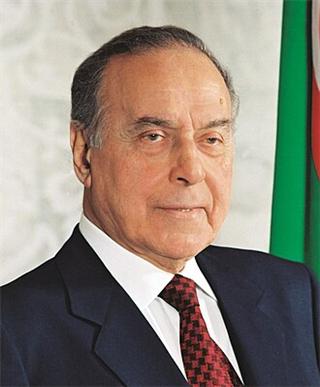
The constitution adopted on 12 November 1995 describes a presidential republic with three branches of power. The president is elected by direct vote for a seven-year term, forms the Cabinet of Ministers and may veto but not dissolve the legislature. The unicameral Milli Majlis has 125 deputies elected by majority vote for five years. The president nominates the judges of the Constitutional, Supreme and Economic Courts and appoints the governors of the 66 rayons and 11 cities, grouped in 14 economic regions, so that local executive authority is a continuation of the presidency. Under article 48 the state is secular, though every religious community must register to meet, and registration is often denied.
In practice the government has functioned as an authoritarian regime. The New Azerbaijan Party founded by Heydar Aliyev has ruled since 1993; Aliyev was re-elected in 1998, and on his death in 2003 his son Ilham Aliyev became party chairman and president, winning a third term in 2013 and in April 2018 a fourth in an election the main opposition boycotted as fraudulent. Freedom House rated the country 'not free' at 7 of 100 in 2024. The media environment deteriorated sharply in 2014, all foreign broadcasts are banned, journalists of Abzas Media, Toplum TV and Meydan TV were tried in 2024 and 2025, and in 2025 there were 375 political prisoners.
Global & Regional Impact
Azerbaijan is one of six independent Turkic states and an active member of the Organization of Turkic States and TÜRKSOY, and it has placed a particular emphasis on its 'special relationship' with Turkey. It holds diplomatic relations with 182 countries and belongs to 38 international organizations, among them the United Nations, the Council of Europe since 2001, the OSCE and NATO's Partnership for Peace; it was a founder of GUAM, the Commonwealth of Independent States and the OPCW. Its weight abroad rests on energy: the Southern Gas Corridor from Shah Deniz to Europe is meant to reduce the European Union's dependence on Russian gas.
The wars reshaped the region's peoples. Many Russians and Armenians fled in the 1990s, where the 1970 census had counted 510,000 Russians and 484,000 Armenians, and the Armenian population of Nagorno-Karabakh was expelled in 2023. Baku has sought another image through spectacle: Ell and Nikki won the Eurovision Song Contest in 2011 and the city hosted it in 2012, then the 2015 European Games, the first Formula One Grand Prix in 2016, the Islamic Solidarity Games in 2017 and UEFA Euro 2020, and UNESCO has recognised mugham, ashiq art and the Azerbaijani carpet. Its revenues also bought influence: the Azerbaijani laundromat bribed foreign politicians and journalists to legitimise its elections, a practice termed caviar diplomacy.
Into the Present

The three decades since independence have been shaped by one family's rule and one region's war. Since Heydar Aliyev took power in 1993 the Aliyev family and the New Azerbaijan Party have governed without interruption, criticised for election fraud, high economic inequality and domestic corruption even as the Azeri–Chirag–Guneshli and Shah Deniz fields transformed the economy. Amnesty International reported in 2015 the near wiping out of civil society and persistent reports of torture; Azerbaijan had the largest number of imprisoned journalists in Europe that year. The country ranks 81st on the Human Development Index and uses more biocapacity than it contains.
The Nagorno-Karabakh conflict, which cost some 30,000 lives and displaced over a million in the 1990s, turned decisively in Azerbaijan's favour in the six-week war of 2020 and in the offensive of September 2023, which dissolved the Republic of Artsakh on 1 January 2024 and expelled nearly all its ethnic Armenians. On 8 August 2025 President Ilham Aliyev and the Armenian prime minister Nikol Pashinyan signed a joint declaration at the White House committing to a peace deal, facilitated by the Trump administration, to end nearly four decades of conflict. The state now faces the tasks it has set itself, lessening dependence on oil through tourism and technology, while its political prisoners, banned broadcasters and 'not free' rating remain the measure of its rule.
Azerbaijan, independent of the Soviet Union since 1991, turned Caspian oil and gas into pipelines to Turkey and Europe and a twenty-fold rise in GDP, fought three wars for Nagorno-Karabakh that ended in 2023 with the region's Armenians expelled, and has been ruled since 1993 by Heydar and Ilham Aliyev's New Azerbaijan Party amid charges of fraud and repression.
Test yourself
5 questions on this page, from its key events and facts.
The questions open here once the page has loaded.
References
- Audrey L. Altstadt, Frustrated Democracy in Post-Soviet Azerbaijan (Columbia University Press, 2017)
- Laurence Broers, Armenia and Azerbaijan: Anatomy of a Rivalry (Edinburgh University Press, 2019)
- Svante E. Cornell, Azerbaijan since Independence (Routledge, 2015)
- Thomas Goltz, Azerbaijan Diary: A Rogue Reporter's Adventures in an Oil-Rich, War-Torn, Post-Soviet Republic (M. E. Sharpe, 1998)
- Suha Bolukbasi, Azerbaijan: A Political History (I.B. Tauris, 2011)
Connections
Open the full connections map →