Islamic Caliphates & Middle East
Armenia
At a glance
- Armenia declared its statehood on 21 September 1991 after the failed August coup in Moscow, and the Soviet Union's dissolution in December recognised its independence.
- The First Nagorno-Karabakh War ended in a Russian-brokered ceasefire in 1994 with Armenian-backed forces holding almost the whole former autonomous oblast and most of seven adjacent districts, which they kept until the six-week war of 2020.
- Azerbaijan's offensive of 19–20 September 2023, after a blockade that starved Artsakh of food and medicine, drove almost its entire Armenian population of about 139,000 into Armenia.
Rise & Fall
- 1991Armenia declares its statehood on 21 September after the failed August coup in Moscow; Levon Ter-Petrosyan is elected the first president in October.
- 1993Turkey joins Azerbaijan's railway and air blockade of Armenia; the new currency, the dram, is introduced and suffers hyperinflation.
- 1994A Russian-brokered ceasefire ends the First Nagorno-Karabakh War, with some 30,000 dead and over a million displaced.
- 2009Armenia and Turkey sign protocols on 10 October to normalise relations and reopen their border, but they are never ratified.
- 2018Protests from April to May, the 'velvet revolution', force Serzh Sargsyan's resignation; parliament elects Nikol Pashinyan prime minister in May.
- 2020On 27 September Full-scale war erupts over Nagorno-Karabakh; the ceasefire after six weeks is seen by many as Armenia's defeat and capitulation.
- 2023Azerbaijan's offensive of 19–20 September ends the Republic of Artsakh, and almost its entire Armenian population flees to Armenia.
- 2025Parliament approves a bill endorsing EU accession on 12 February; on 8 August Pashinyan and Ilham Aliyev sign a joint declaration committing to a peace deal.
Foundation
Armenians trace their state to Urartu, founded in 860 BCE, and to the Kingdom of Armenia that in 301 CE became the first state to adopt Christianity as its official religion. From the sixteenth century the homeland was divided between the Ottoman and Persian empires; Eastern Armenia passed to Russia by the treaties of Gulistan (1813) and Turkmenchay (1828), while Western Armenia stayed Ottoman. There the Hamidian massacres of 1894–1896 killed close to 200,000 Armenians, and from the arrests of 24 April 1915 between 1 and 1.5 million were exterminated in the Armenian genocide, which Turkish authorities deny to this day. The First Republic of Armenia, declared on 28 May 1918, was invaded in 1920 by Turkish nationalist forces and by the 11th Red Army, which entered Yerevan in early December; the Treaty of Kars then ceded Kars, Ardahan and Surmalu, with Mount Ararat, to Turkey.
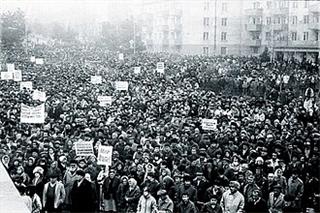
Soviet Armenia joined the USSR within the Transcaucasian SFSR in 1922 and became a republic of its own in 1936. Stalin's purges killed leading writers and the Catholicos Khoren I; 500,000 Armenians served in the Red Army in the Second World War and 175,000 died. Under glasnost the Karabakh movement brought nearly a million demonstrators to Yerevan in 1988; the Spitak earthquake of 1988 killed more than 25,000 people, and the Baku pogrom of January 1990 drove some 200,000 Armenians to Armenia. The republic declared sovereignty on 23 August 1990 and statehood on 21 September 1991.
Socioeconomy
Soviet Armenia had built a modern industrial sector, chemicals, electronics, machine tools and textiles, supplied to sister republics, with agriculture under 20 percent of output. Independence broke those patterns. Azerbaijan's railway and air blockade crippled an economy that received 85 percent of its cargo by rail, Turkey closed its border in 1993, and the shutdown of the Metsamor nuclear plant in 1989 brought an energy crisis; GDP fell nearly 60 percent between 1989 and 1993, the dram, introduced in 1993, suffered hyperinflation, and agriculture rose above 30 percent of GDP and 40 percent of employment. Growth resumed after the plant reopened in 1995.
A liberal investment law of 1994, privatisation from 1997 and more than $1.1 billion in loans from the IMF, World Bank and EBRD brought steady growth and negligible inflation, and Armenia joined the WTO on 5 February 2003. Mines yield copper, zinc, gold and lead, and copper prices drove growth of 7.5 percent in 2017; gas and nuclear fuel come from Russia, and hydroelectricity is the main domestic source. The diaspora, some 8 million against 3 million at home, finances much reconstruction, and information technology, jewellery and tourism have grown beside farming. GDP stood at $39.4 billion in 2022, when an influx of Russian citizens lifted growth. The population, 3.6 million at its 1991 peak, fell through emigration to 3,081,100 in 2025, 98.1 percent of them Armenians.
Military

The Armed Forces of Armenia were formed after the Soviet collapse in 1991, with a Ministry of Defence from 1992; the prime minister is commander-in-chief. Active forces number about 81,000 with 32,000 in reserve. Armenia ratified the Treaty on Conventional Armed Forces in Europe in 1992, acceded to the Nuclear Non-Proliferation Treaty in 1993, joined the Collective Security Treaty Organisation and sent troops to NATO's KFOR in Kosovo in 2004; Russia keeps a base at Gyumri as a deterrent against Turkey.
The first war was fought as the state was born. Levon Ter-Petrosyan and his defence minister Vazgen Sargsyan led Armenia through the First Nagorno-Karabakh War, which the Karabakh Armenian forces won, taking practically the whole former autonomous oblast and most of seven adjacent districts of Azerbaijan before the Russian-brokered ceasefire of 1994; an estimated 30,000 people had been killed and over a million displaced. On 27 September 2020 full-scale war returned, and the ceasefire after six weeks was seen by many as Armenia's defeat and capitulation. Azerbaijan then blockaded Artsakh until food and medicine ran short and on 19–20 September 2023 launched the offensive that ended it; the European Parliament called it a violation of the 2020 ceasefire, genocide scholars warned of ethnic cleansing, and almost the entire population fled. In February 2024 Pashinyan said the CSTO had failed its obligations and froze Armenia's participation.
Governance & Law

Armenia is a representative parliamentary democratic republic. The constitution followed a semi-presidential model until April 2018, when a reform reduced the presidency to largely representational functions and strengthened the prime minister, who heads the government. Since 1995 legislative power has rested in the National Assembly, a unicameral parliament of 105 members elected by universal suffrage from the age of 18. The country is divided into ten provinces (marzer), each under a marzpet appointed by the government, and the capital Yerevan. The Armenian Apostolic Church is recognised as the country's primary religious establishment.
Levon Ter-Petrosyan, elected in October 1991, was the first president. The crisis of the system came in 2018, when Serzh Sargsyan's third consecutive term provoked protests led by the parliamentarian Nikol Pashinyan of Civil Contract; Sargsyan resigned, parliament elected Armen Sarkissian president in March and Pashinyan prime minister in May. After the defeat of 2020 the March of Dignity protests forced early elections, won by Civil Contract on 20 June 2021. Sarkissian resigned in January 2022 and Vahagn Khachaturyan was elected on 3 March 2022. The Democracy Index scored Armenia 5.63 for 2022, still a 'hybrid regime' but the strongest improvement in Europe; Freedom House rated it 'partly free' in 2019, and in October 2023 Armenia ratified the Rome Statute of the International Criminal Court.
Global & Regional Impact
Armenia's weight in the world lies in its diaspora and its history. Some 8 million Armenians live abroad, the largest communities in Russia (1.1–2.9 million), the United States (1–1.5 million) and France (250,000–750,000); they finance public works at home and carry the campaign, now more than thirty years old, for recognition of the genocide of 1915, commemorated every 24 April. Turkey, though among the first to recognise the republic in 1991, has no diplomatic relations with it, closed the border in 1993 and let the normalisation protocols of 10 October 2009 lapse. With both frontiers under blockade, Armenia has built economic ties, including a gas pipeline, with Iran.
The republic joined the United Nations on 2 March 1992 and belongs to the Council of Europe, the OSCE, the Commonwealth of Independent States and the Eurasian Economic Union, which it chose in 2013 over an EU association agreement before signing the Comprehensive and Enhanced Partnership Agreement with the EU on 24 November 2017; it hosted the Francophonie summit in 2018. The Karabakh conflict remade populations on both sides: virtually all of Armenia's Azerbaijanis, 2.5 percent of the people in 1989, left for Azerbaijan, while Armenian refugees from Azerbaijan arrived. Armenia has won the World Chess Olympiad three times, and the world's largest Yazidi temple was completed at Aknalich in 2019.
Songs in history
Into the Present
The republic's third decade turned on the loss of Nagorno-Karabakh. The 'velvet revolution' of 2018 brought Nikol Pashinyan to power and the best democracy scores in the country's history, but on 27 September 2020 the unresolved conflict exploded into a six-week war whose ceasefire many Armenians saw as capitulation; the March of Dignity protests followed, and Civil Contract's victory in June 2021 kept Pashinyan in office. On 19–20 September 2023 Azerbaijan, after months of blockading Artsakh, overran it; by 1 October almost the entire population of about 139,000 had fled to Armenia, and the former ICC prosecutor Luis Moreno Ocampo warned that another Armenian genocide could take place.
The defeat broke the alliance with Russia. In February 2024 Pashinyan said the CSTO had not fulfilled its security obligations and called it a threat to national security; in March Russian border guards were expelled from Zvartnots airport, and the government announced it would seek EU candidacy, which parliament endorsed on 12 February 2025. On 8 August 2025 Pashinyan and Ilham Aliyev signed a joint declaration at the White House committing to a peace deal. Armenia ranks 69th on the Human Development Index; it still depends on Russian gas and nuclear fuel, the Metsamor plant is to be modernised against EU calls to close it, the borders with Turkey and Azerbaijan stay shut, and a population that peaked at 3.6 million in 1991 has only lately begun to grow again.
Armenia, independent since 21 September 1991, carried the memory of the 1915 genocide and the first Christian state into a republic at war from its birth: it won Nagorno-Karabakh in 1994, lost it in 2020 and 2023, overthrew its entrenched rulers in the 'velvet revolution' of 2018, and now turns from Russia towards the European Union and a peace deal with Azerbaijan.
Test yourself
5 questions on this page, from its key events and facts.
The questions open here once the page has loaded.
References
- Ronald Grigor Suny, Looking toward Ararat: Armenia in Modern History (Indiana University Press, 1993)
- Thomas de Waal, Black Garden: Armenia and Azerbaijan through Peace and War (New York University Press, 2003)
Connections
Open the full connections map →