Islamic Caliphates & Middle East
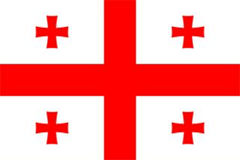
Georgia
At a glance
- The Supreme Council declared independence on 9 April 1991 after a referendum on 31 March, making Georgia the first non-Baltic Soviet republic to do so; its first president, Zviad Gamsakhurdia, was deposed in a coup within the year and civil war lasted until December 1993.
- Abkhazia and South Ossetia won de facto independence with Russian support in the wars of the early 1990s, when 230,000 to 250,000 Georgians were expelled from Abkhazia; after the war of August 2008 Russia recognised both, and Georgia regards them as occupied territory.
- The Rose Revolution of 2003 turned a near-failed state into a market economy that the World Bank called the world's number one reformer, and the European Union made Georgia a candidate in December 2023, before the ruling Georgian Dream party paused accession in 2024.
Rise & Fall
- 1991The Supreme Council declares independence on 9 April after the referendum of 31 March; Zviad Gamsakhurdia is elected president on 26 May with 86.5 percent.
- 1993The civil war that began with the coup against Gamsakhurdia ends in December; Abkhaz separatists and North Caucasian militants expel some 230,000 to 250,000 Georgians from Abkhazia.
- 1995A new constitution is adopted and Eduard Shevardnadze, head of state since 1992, is elected president.
- 2003The Rose Revolution led by Mikheil Saakashvili, Zurab Zhvania and Nino Burjanadze deposes Shevardnadze after the fraudulent elections of 2 November.
- 2008Russia invades on 8 August after fighting in South Ossetia; a ceasefire follows on 12 August, and on 26 August Russia recognises Abkhazia and South Ossetia as independent.
- 2012Georgian Dream defeats Saakashvili's United National Movement in the first peaceful electoral transfer of power, as the state becomes a parliamentary republic.
- 2023The European Council grants Georgia candidate status for EU membership in December, despite unfulfilled conditions.
- 2024The disputed election of 26 October and the suspension of EU accession until 2028 plunge the country into crisis; the outgoing president Salome Zourabichvili refuses to recognise her successor.
Foundation
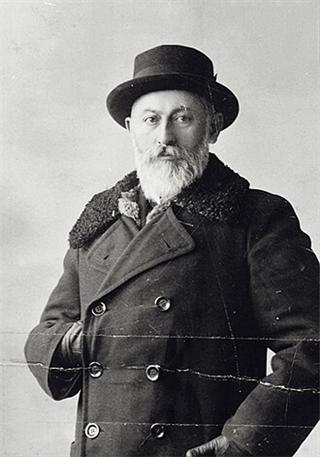
Georgians trace their state to Colchis and Iberia; King Mirian III adopted Christianity in 337, Bagrat III was crowned King of Georgia in 1010, and the Golden Age of David IV and Queen Tamar (r. 1184–1213) left cathedrals and a national epic. Mongols and Timur broke the kingdom, which fell into anarchy by 1466 and was divided between Ottomans and Iranians. Russia, protector by the Treaty of Georgievsk of 1783, gave no help when Iran sacked Tbilisi in 1795, then annexed eastern Georgia in 1801, abolishing the Bagrationi dynasty and the autocephaly of the Georgian Church. After the Russian Revolution the Democratic Republic of Georgia declared independence on 26 May 1918 under the Menshevik Noe Zhordania, one of the first states in Europe to give women the vote; the Red Army entered Tbilisi on 25 February 1921.
Soviet Georgia lost thousands in the Great Purge of 1936–1938 and an estimated 350,000 of the 700,000 Georgians who fought in the Second World War. Mass protests for independence began in 1988, and the Soviet army's brutal suppression of a peaceful demonstration in Tbilisi on 4–9 April 1989 discredited Soviet rule. Gamsakhurdia's Round Table–Free Georgia coalition won the first multi-party elections in the Soviet Union in October 1990; after a referendum on 31 March 1991 the Supreme Council declared independence on 9 April, and on 26 May Gamsakhurdia was elected president with 86.5 percent of the vote.
Socioeconomy
Georgia has about 3.9 million people, 3,914,000 at the census of November 2024, over a third of them in Tbilisi; 86.8 percent are Georgians, and 82 percent belong to the Georgian Orthodox Church, with Muslims 11.1 percent. Independence emptied the country: net emigration took more than a million people between 1990 and 2010. The Soviet command economy collapsed with the civil war and the wars in Abkhazia and South Ossetia, and by 1994 GDP had shrunk to a quarter of its 1989 level; 54 percent of the population lived below the poverty line in 2001.
The Rose Revolution transformed the economy. A flat income tax of 2004 raised budget revenues fourfold, growth reached 12 percent in 2007, the World Bank named Georgia 'the number one economic reformer in the world' as it rose from 112th to 18th in ease of doing business, and sixth by 2020, and poverty fell to 10.1 percent by 2015. Services make 59.4 percent of GDP and agriculture 6.1; wine, made for millennia in kvevri jars that UNESCO listed in 2013, suffered a Russian embargo in 2006. Georgia is a transit corridor between Europe and Asia bypassing Russia, through Batumi and Poti, the Baku–Tbilisi–Ceyhan pipeline and the Baku–Tbilisi–Kars railway opened in 2017. Tourism reached a record 9.3 million arrivals in 2019, yet unemployment stays in double digits and 73 percent of Georgians called it a significant problem that year.
Military
The Georgian Defense Forces comprise land and air forces, the navy having been merged into the Coast Guard in 2009; more than a fifth are conscripts, and the budget was about $280 million in 2021. The new state was born fighting itself. Part of the National Guard and the Mkhedrioni paramilitaries deposed Gamsakhurdia in a bloody coup from 22 December 1991 to 6 January 1992, and civil war lasted until December 1993. Separatists in Abkhazia and South Ossetia, supported by Russia, won de facto independence; in the War in Abkhazia of 1992–1993 Abkhaz forces and North Caucasian militants expelled some 230,000 to 250,000 Georgians, and around 23,000 Georgians fled South Ossetia.
On 1 August 2008 South Ossetian separatists began shelling Georgian villages; Saakashvili declared a unilateral ceasefire on 7 August, then sent troops towards Tskhinvali on the night of 8 August, and Russia invaded by land, sea and air under the pretext of 'peace enforcement'. Russian troops seized Tskhinvali by 10 August; a campaign of ethnic cleansing destroyed Georgian settlements in South Ossetia, 192,000 people were displaced and 30,000 remained so a year later. Nicolas Sarkozy negotiated a ceasefire on 12 August, Russia recognised both regions on 26 August, and Georgia severed diplomatic relations. Georgia sent up to 2,000 soldiers to Iraq and 1,560 to Afghanistan in 2013, the largest non-NATO contingent, where 32 died.
Governance & Law
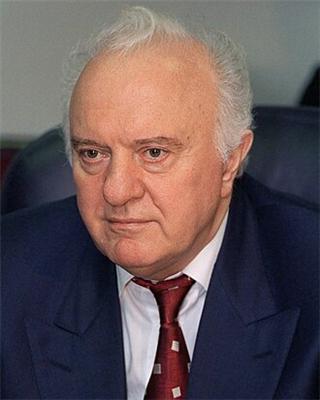
Georgia is a parliamentary republic: the president is a largely ceremonial head of state, the prime minister heads a cabinet appointed by Parliament, and the unicameral Parliament of 150 members, 30 from single-member districts and 120 by proportional representation, sits for four years. Eduard Shevardnadze headed the government from March 1992 and was president from 1995 until the Rose Revolution of 2003 removed him after fraudulent elections. Mikheil Saakashvili, elected in 2004, fired the entire 30,000-strong traffic police for corruption in 2005 and rebuilt the state; Transparency International called Georgia 'the best corruption-buster in the world' in 2010.
Constitutional reforms for the 2012 elections moved executive power from president to prime minister, and Georgian Dream, founded by the businessman Bidzina Ivanishvili, has governed since, winning a constitutional supermajority of 115 seats in 2016. Protests in 2019 forced a more proportional system for 2020, when the party took 90 seats on 48 percent amid fraud accusations. In May 2024 Parliament passed a law obliging NGOs with over 20 percent foreign funding to register as agents of foreign influence. Freedom House rates Georgia 'partly free', the Economist calls it a hybrid regime, and V-Dem in 2025 classed it for the first time an electoral autocracy, recording one of the largest one-year declines on its list.
Global & Regional Impact
Georgia's post-Soviet course has been a Western orientation that set it against Moscow. It joined the Council of Europe and GUAM, sought NATO membership from 2004, boosted its troops in the Iraq coalition, and received George W. Bush, the first sitting American president to visit. The Association Agreement with the European Union, signed in June 2014, entered into force on 1 July 2016, visa-free travel to the EU followed in 2017, and on 3 March 2022, days after Russia invaded Ukraine, Georgia applied for membership with Ukraine and Moldova; the European Council granted candidate status in December 2023.
The country's geography makes it a corridor. The Baku–Tbilisi–Ceyhan oil pipeline and South Caucasus gas pipeline cross it to Turkey, and the Baku–Tbilisi–Kars line opened on 30 October 2017 tied the Caucasus to Turkey by standard gauge, so that Georgia forms part of the Trans-Caspian route linking the EU with Asia while bypassing Russia. Since 2022 it has topped the list of destinations for Russian exiles, whom it admits for a year without a visa. Its culture travels too: Georgian polyphony, the kvevri winemaking method listed by UNESCO in 2013, the 1.8-million-year-old Dmanisi hominins, the oldest in Eurasia, and a diplomatic campaign that has persuaded Israel, Japan, South Korea, Hungary and Lithuania to drop the Russian name 'Gruzia'.
Into the Present
Since October 2024 Georgia has been immersed in a deep political crisis. Georgian Dream turned Eurosceptic and socially conservative after the EU withheld candidate status in 2022, adopted the Law on Transparency of Foreign Influence in May 2024, and after the disputed parliamentary election of 26 October 2024 Prime Minister Irakli Kobakhidze announced that EU accession would be suspended until 2028, citing blackmail. The parliamentary electoral college then inaugurated the party's candidate Mikheil Kavelashvili as president, which the outgoing president Salome Zourabichvili declared illegitimate; the presidency remains disputed.
V-Dem describes the reversal as a 'bell-turn', a failed democratisation in which the gains of the Saakashvili years in judicial independence, free speech and civil liberties eroded gradually from 2018 and collapsed from 2023, while Transparency International notes stagnation in the fight against corruption since 2012. A fifth of the territory remains under Russian occupation, unemployment stays in double digits and the 2024 law against LGBT people drew EU condemnation after the murder of Kesaria Abramidze. Against this stand the achievements of two decades: one of the world's freest business climates, ranked sixth for ease of doing business in 2020 and twelfth for economic freedom in 2021, and a people who still, by the polls, want Europe.
Georgia, independent since 9 April 1991, lost Abkhazia and South Ossetia in the wars that followed, rebuilt itself after the Rose Revolution of 2003 into one of the world's most reformed economies, was invaded by Russia in 2008 and won EU candidate status in 2023, only for the Georgian Dream government to pause accession in 2024 amid a crisis over a disputed election and a contested presidency.
Test yourself
5 questions on this page, from its key events and facts.
The questions open here once the page has loaded.
References
- Ronald Grigor Suny, The Making of the Georgian Nation, 2nd ed. (Indiana University Press, 1994)
- Donald Rayfield, Edge of Empires: A History of Georgia (Reaktion Books, 2012)
Connections
Open the full connections map →