Sub-Saharan Africa
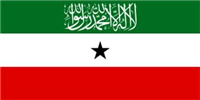
Republic of Somaliland
At a glance
- A self-declared republic in former British Somaliland, which broke away from Somalia on 18 May 1991.
- It built peace through clan conferences and combines an elected president and parliament with a house of elders.
- It has its own army, currency and passports and holds competitive elections, but recognition remains very limited.
Rise & Fall
- 1960British Somaliland is independent for five days, then unites with Somalia
- 1988Government forces bombard Hargeisa and Burao in the war with the SNM
- 1991Independence is declared at Burao on 18 May
- 1993The Borama conference chooses Muhammad Haji Ibrahim Egal as president
- 2001A referendum approves the constitution and independence
- 2010Silanyo defeats the incumbent president and power passes peacefully
- 2023Somaliland forces are driven from positions around Las Anod
- 2025Israel becomes the first UN member state to recognise Somaliland
Foundation

The Republic of Somaliland claims to restore a state that existed briefly in 1960. British Somaliland, a protectorate on the Gulf of Aden coast since the 1880s, became independent as the State of Somaliland on 26 June 1960 and five days later, on 1 July, united with the former Italian trust territory of Somalia to form the Somali Republic. Many northerners soon felt marginalised in the new state, whose capital was Mogadishu. Under the military regime of Siad Barre, which seized power in 1969, opposition grew among the Isaaq, the largest clan family in the north, and in 1981 exiles in London founded the Somali National Movement (SNM). After the SNM attacked Burao and Hargeisa in 1988, government forces bombarded the cities, destroying much of Hargeisa and killing many thousands of civilians, while hundreds of thousands of people fled to Ethiopia. When Barre fell in January 1991, the SNM controlled most of the north. At a conference of the northern clans at Burao, independence was declared on 18 May 1991 within the borders of the former British protectorate. The SNM chairman Abdirahman Ahmed Ali Tuur became the first president, and a second conference at Borama in 1993 transferred power to Muhammad Haji Ibrahim Egal, a former prime minister of the Somali Republic.
Socioeconomy

Somaliland is a dry country of pastoralists, and its economy rests on livestock, above all sheep, goats and camels, exported through the port of Berbera to Saudi Arabia and the Gulf states, especially for the hajj season. Remittances from a large diaspora in Britain, the Gulf, North America and Scandinavia have been the other main source of income, paying for housing, schools and businesses in Hargeisa, which was rebuilt after its destruction in 1988. With little foreign aid reaching a state that no one recognised, private enterprise filled many gaps: telecommunications companies such as Telesom and money-transfer firms such as Dahabshiil, which began in the region, grew into major businesses of the Horn of Africa, and mobile money has become the usual way of paying. The Somaliland shilling, introduced in 1994, circulates alongside the US dollar. Society is almost entirely Somali-speaking and Sunni Muslim, organised around clans and lineages whose elders still settle many disputes through customary law, xeer. In 2016 the Dubai company DP World took a concession to operate and expand Berbera port, opening a new container terminal in 2021, and the Berbera corridor to Ethiopia has become central to hopes of economic growth. Unemployment, especially among the young, and recurrent droughts remain severe problems.
Military
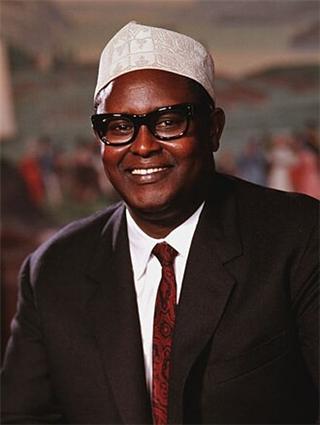
Somaliland’s armed forces grew out of the Somali National Movement, whose guerrillas fought Siad Barre’s army from bases in Ethiopia during the 1980s. After 1991 the new state faced numerous clan militias, and in 1992 and again from 1994 to 1996 fighting broke out between clan-based forces, notably around Berbera, Hargeisa and Burao, over control of revenues and of the government. Egal’s government gradually demobilised militias and absorbed them into a national army and police force, financed largely from the state’s own revenues, and by the late 1990s Somaliland was mostly at peace. Its main security problems since have lain on its eastern borders. Puntland, the autonomous region of Somalia founded in 1998, disputes the Sool and Sanaag regions, whose Dhulbahante and Warsangeli clans are divided in their loyalties, and Somaliland forces took the town of Las Anod in 2007. In 2023 local SSC-Khatumo forces, which reject Somaliland’s rule, fought the Somaliland army around Las Anod and in August drove it from its positions near the town, a significant loss of territory. Somaliland has also faced attacks by al-Shabaab, which carried out suicide bombings in Hargeisa in October 2008, but it has remained largely free of the insurgency that has afflicted southern Somalia.
Governance & Law
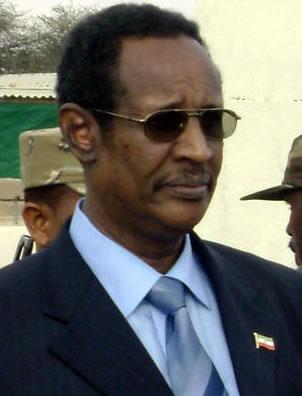
Somaliland’s political system combines elected institutions on a Western model with the authority of clan elders. The Borama conference of 1993 adopted a national charter that created an executive president, a house of representatives and an upper house of elders, the Guurti, which gave clan leaders a formal role in keeping the peace. A constitution approved by referendum on 31 May 2001, which also endorsed independence, introduced multi-party democracy, limited to three national parties so as to discourage clan-based politics. After Egal died in 2002, his vice-president Dahir Riyale Kahin succeeded him and won the presidential election of 2003 by only about 80 votes, a result the opposition accepted. Ahmed Mohamed Mohamoud, known as Silanyo, defeated Riyale in 2010, and Muse Bihi Abdi won in 2017. In November 2024 the opposition candidate Abdirahman Mohamed Abdullahi, known as Irro, defeated Bihi, who handed over power peacefully. The system has weaknesses: the Guurti has never been elected, elections have often been delayed for years, the House of Representatives elected in 2005 sat until 2021, and the postponement of the presidential vote in 2022 led to violent protests. Even so, transfers of power through the ballot box remain rare in the region.
Global & Regional Impact

Somaliland is one of the most widely discussed cases of a functioning unrecognised state. While southern Somalia collapsed into civil war, warlordism and later the al-Shabaab insurgency after 1991, Somaliland built peace largely through its own clan conferences with little foreign help, and scholars have cited it as an example of state-building from below that drew on customary institutions rather than imported models. Its claim to independence rests on the borders of the former British protectorate and on its brief existence as a sovereign state in 1960; the African Union, however, has been wary of any change to colonial-era borders, and most governments support the territorial integrity of Somalia. Somaliland has nevertheless built informal ties abroad, with representative offices in several countries, mutual representative offices with Taiwan opened in 2020, and close links with Ethiopia, for which Berbera offers an alternative to the port of Djibouti. In January 2024 Ethiopia and Somaliland signed a memorandum of understanding on sea access that provoked a sharp crisis with Somalia, although it has not been put into effect. The 1988 destruction of Hargeisa, which many in Somaliland regard as genocide against the Isaaq, remains central to its sense of nationhood and to debates about the Somali state.
Into the Present

Somaliland has survived for more than three decades as a de facto state without general recognition. It controls most of the territory of former British Somaliland, from Zeila and Borama in the west to Burao and Erigavo in the east, with its own government, army, police, currency, passports and elections, and its capital at Hargeisa. Somalia regards it as part of its national territory, and international aid has largely been channelled through Somalia or through non-governmental organisations. The state’s weaknesses are economic and territorial: it depends on livestock exports that are vulnerable to drought and to Gulf import bans, it has almost no access to international finance, and the loss of positions around Las Anod in 2023 showed that its authority in the contested east is fragile. Its strengths are a record of competitive elections and peaceful transfers of power, the development of Berbera port and the commitment of most of its population to independence. In December 2025 Israel announced its recognition of Somaliland, the first member state of the United Nations to take that step, which Somalia rejected. Whether other states will follow, and how Somaliland’s relationship with Somalia will finally be settled, remains unresolved.
Somaliland, the former British protectorate that broke away from collapsing Somalia in 1991, built a largely peaceful state through clan conferences and has held competitive elections with peaceful handovers of power, making it one of Africa’s most durable unrecognised states and a test case for the principle of colonial borders.
Test yourself
5 questions on this page, from its key events and facts.
The questions open here once the page has loaded.
References
- Bradbury, M. (2008) Becoming Somaliland. Oxford: James Currey.
- Lewis, I.M. (2002) A Modern History of the Somali. 4th edn. Oxford: James Currey.
- Lewis, I.M. (2008) Understanding Somalia and Somaliland: Culture, History, Society. London: Hurst.
- Renders, M. (2012) Consider Somaliland: State-Building with Traditional Leaders and Institutions. Leiden: Brill.
Connections
Open the full connections map →