Europe
Duchy of Savoy
At a glance
- Emperor Sigismund made Savoy a duchy in 1416, joining French-speaking Alpine lands with Italian-speaking Piedmont.
- Restored in 1559 after French occupation, it moved its capital to Turin and became a disciplined absolutist military state.
- Its dukes became kings of Sicily and then Sardinia, and their kingdom later united Italy; Savoy itself passed to France in 1860.
Rise & Fall
- 1416Emperor Sigismund raises Amadeus VIII to the rank of duke
- 1439Amadeus VIII is elected antipope Felix V by the Council of Basel
- 1536France occupies Savoy and Piedmont; Bern takes the Vaud
- 1559Treaty of Cateau-Cambrésis restores Emmanuel Philibert
- 1563The capital moves from Chambéry to Turin
- 1706Victor Amadeus II and Prince Eugene relieve the Siege of Turin
- 1720The dukes of Savoy become kings of Sardinia
- 1847The ‘perfect fusion’ merges the mainland states with Sardinia
Foundation
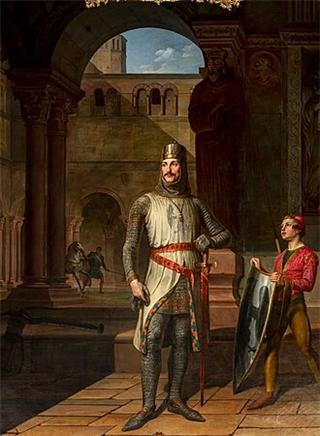
The house of Savoy had ruled lands on both sides of the western Alps since the eleventh century, when Humbert the White-Handed held counties around the Lake of Geneva and the valleys leading to the Mont Cenis and Great St Bernard passes. By the early fifteenth century the County of Savoy stretched from Bresse and the Vaud in the north-west to the coast at Nice, which had placed itself under Savoyard protection in 1388. Count Amadeus VIII bought the County of Geneva, the Genevois, in 1401, and on 19 February 1416 Emperor Sigismund, visiting Chambéry, raised him to the rank of duke, making Savoy an imperial duchy. Two years later the extinction of the Savoy-Achaea branch brought the principality of Piedmont, with Turin, back under the main line. Amadeus VIII thus created a state that combined French-speaking lands in Savoy, Bresse and the Vaud with Italian-speaking Piedmont. In 1434 he retired to his priory at Ripaille on the Lake of Geneva, and in 1439 the Council of Basel elected him antipope as Felix V, a dignity he gave up in 1449. His reign left a larger, more coherent duchy, but its position between France, the Swiss and the powers of Italy would expose it to repeated invasion.
Socioeconomy
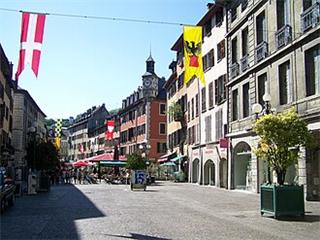
The duchy was poor in comparison with its neighbours. Savoy proper was a land of mountain pastures, forests and small towns, with Chambéry as its seat of government; the population lived largely from livestock, dairying and seasonal migration to France. Piedmont, more fertile and populous, produced grain, wine, rice and later raw silk, which became its main export in the seventeenth and eighteenth centuries, sent to the looms of Lyon and England. Tolls on the Alpine passes and the salt trade brought steady revenue, and the port of Nice and nearby Villefranche gave a modest outlet to the Mediterranean. Society was dominated by a landed nobility, many of whom served the dukes as officers and officials, alongside a clergy loyal to the Catholic Church. The duchy acquired the Shroud of Turin in 1453, and the relic, moved from Chambéry to Turin in 1578, became a focus of dynastic devotion, housed from 1694 in Guarino Guarini’s Chapel of the Holy Shroud. Protestant Waldensian communities in the valleys west of Turin were repeatedly persecuted, most notoriously in the massacres of 1655 known as the Piedmontese Easter and in the expulsion of 1686, before they returned in 1689 and won toleration.
Military

Weak in the fifteenth and early sixteenth centuries, Savoy suffered its worst disaster in 1536, when Francis I of France occupied Savoy and most of Piedmont, Bern conquered the Vaud and Geneva established its independence under the Reformation. Duke Charles III was left with a few fortresses. His son Emmanuel Philibert, serving Philip II of Spain, commanded the Spanish army that crushed the French at the Battle of Saint-Quentin in 1557, and the Treaty of Cateau-Cambrésis in 1559 restored most of his lands. He built a militia and the pentagonal citadel of Turin. Charles Emmanuel I seized the Marquisate of Saluzzo in 1588 and kept it by the Treaty of Lyon in 1601, ceding Bresse and Bugey to France, but his night assault on Geneva, the Escalade of 1602, failed. Victor Amadeus II fought both sides in the wars of Louis XIV: defeated by the French at Staffarda in 1690 and Marsaglia in 1693, he made a separate peace in 1696 that returned Pinerolo, and in 1706 he and Prince Eugene of Savoy broke the French Siege of Turin. Under Charles Emmanuel III the Savoyard army defended the Alps, winning the Battle of the Assietta in 1747.
Governance & Law

Amadeus VIII gave the duchy one of the first general law codes of a European state, the Statuta Sabaudiae of 1430, and ruled through a council and an itinerant court. Representative estates met for Savoy and Piedmont but lost importance after the sixteenth century. Emmanuel Philibert, restored in 1559, laid the foundations of an absolute state: he moved the capital from Chambéry to Turin in 1563, made Italian the language of administration in Piedmont and French in Savoy, ceased summoning the estates and built up a permanent army and tax system. The state was nonetheless shaken by regencies, above all the civil war of 1639–1642 between the regent Christine of France and her brothers-in-law. Victor Amadeus II (r. 1675–1730) completed the absolutist programme. He carried out a general land survey to tax noble and church land, reformed the University of Turin, reduced feudal privileges and issued the Royal Constitutions of 1723 and 1729, a consolidated code. From 1713 the dukes of Savoy were also kings, first of Sicily and from 1720 of Sardinia, but the mainland duchy, Piedmont and Nice remained the heart of the composite Savoyard state, each with its own law and institutions until the reforms of Charles Albert.
Global & Regional Impact

The Duchy of Savoy is best known as the seed of the Italian monarchy. From an Alpine duchy its rulers built, by marriage, war and diplomacy, the state that unified Italy in the nineteenth century: the Kingdom of Sardinia, enlarged by Genoa in 1815, led the wars against Austria, and in 1861 Victor Emmanuel II became the first King of Italy. The house of Savoy reigned there until 1946. Turin, chosen as capital in 1563, was rebuilt as a planned baroque city with arcaded streets and squares; Guarino Guarini and later Filippo Juvarra, who designed the Basilica of Superga, the hunting lodge of Stupinigi and the façade of Palazzo Madama, made it one of the architectural capitals of Europe, and the Savoy residences are now a UNESCO World Heritage Site. Savoyard reforms under Victor Amadeus II, especially the cadastre and the codification of law, were studied by other eighteenth-century rulers. On the French side, the loss of Geneva and the Vaud in 1536 shaped the Reformation in western Switzerland, and Savoy proper, French in language, eventually joined France. Both the Shroud of Turin, owned by the house of Savoy until 1983, and the Order of Saints Maurice and Lazarus remain legacies of the dynasty.
Decline & Fall

The duchy was absorbed into the larger state its rulers created. After 1720 the Savoyard sovereigns took their highest title from Sardinia, though Turin remained their capital. The French Revolutionary Wars broke this composite state apart: French troops overran Savoy and Nice in 1792, and Savoy was annexed as the department of Mont-Blanc. After the Armistice of Cherasco in 1796 King Victor Amadeus III ceded both territories, and in December 1798 Charles Emmanuel IV was forced to give up Piedmont and withdraw to the island of Sardinia; France annexed Piedmont in 1802. The Congress of Vienna restored the mainland territories in 1814–1815 and added the former Republic of Genoa. On 29 November 1847 King Charles Albert decreed the ‘perfect fusion’, which abolished the separate administrations of Sardinia and the mainland states and created a single kingdom with common institutions, ending the Duchy of Savoy as a distinct state; the Statuto Albertino of 1848 then gave the kingdom a constitution. In 1860, by the Treaty of Turin, Victor Emmanuel II and Count Cavour ceded Savoy and Nice to France in return for French support for Italian unification, and the ancestral duchy became the French departments of Savoie and Haute-Savoie.
The Duchy of Savoy turned an Alpine dynasty astride France and Italy into an absolutist military state, rebuilt Turin as a baroque capital and won royal crowns, creating the Kingdom of Sardinia that led Italian unification while its own ancestral lands finally passed to France in 1860.
References
- Symcox, G. (1983) Victor Amadeus II: Absolutism in the Savoyard State, 1675–1730. London: Thames and Hudson.
- Storrs, C. (1999) War, Diplomacy and the Rise of Savoy, 1690–1720. Cambridge: Cambridge University Press.
- Vester, M. (ed.) (2013) Sabaudian Studies: Political Culture, Dynasty, and Territory, 1400–1700. Kirksville: Truman State University Press.
- Hanlon, G. (2000) Early Modern Italy, 1550–1800: Three Seasons in European History. Basingstoke: Macmillan.
Connections
Open the full connections map →