At a glance
- The Rouran ruled the Mongolian steppe from 402 to 552 as a confederation led by the Yujiulü clan.
- Their khagan Shelun is the first ruler recorded as using khagan as the title of a supreme steppe sovereign.
- Their Turkic ironworkers under Bumin revolted in 552, destroying the khaganate and founding the Turkic Khaganate.
Rise & Fall
- 402Shelun takes the title khagan after conquering the Gaoche
- 424Rouran cavalry raid the Northern Wei centre of Shengle
- 429Emperor Taiwu of Northern Wei routs the khagan Datan in Mongolia
- 460The Rouran install Kan Bozhou as king of Gaochang
- 487The Gaoche break away under Afuzhiluo
- 520Anagui flees to the Northern Wei, which later restores him
- 552Bumin's Turks defeat the Rouran; Anagui kills himself
- 555The last Rouran refugees are killed at Chang'an
Foundation

The origins of the Rouran are known almost entirely from Chinese histories, above all the Wei shu of the Northern Wei, their enemies. According to this account their ancestor Mugulü was a slave seized by Tuoba Xianbei raiders in the late 3rd century, who served as a cavalryman, fled to escape punishment and gathered a band of fugitives in the steppe north of the Gobi. His son Cheluhui organised them as a tribe, which took the name Rouran and paid tribute to the Tuoba state of Dai. The name appears in Chinese in several forms, and the Northern Wei emperor Taiwu ordered it written Ruanruan, 'wriggling insects', as an insult. The Rouran were a mixed confederation whose ruling clan, the Yujiulü, probably spoke a Mongolic or related language, though this remains uncertain. When the Northern Wei, founded by the Tuoba in 386, campaigned against them, the chief Shelun led his people north into Mongolia, conquered the Gaoche (Tiele) tribes and other groups, and in 402 took the title khagan with the regnal name Qiudoufa. Shelun is the first ruler recorded as using khagan as the title of a supreme steppe sovereign, although the word itself may already have been current among the Xianbei, and under him the Rouran became a true steppe empire.
Socioeconomy
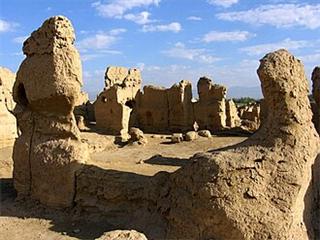
The Rouran lived as pastoral nomads, moving with herds of horses, sheep, cattle and camels between summer pastures in the north and winter grounds near the Gobi, and living in felt tents. The Wei shu states that they had no writing, at first counting with sheep droppings and later keeping records by notching wood. Their wealth came largely from tribute, raiding and control of other peoples. Subject groups such as the Gaoche and the Turks of the Altai, who worked iron for them, supplied livestock, warriors and metal, and the oasis states of Turfan and the Tarim Basin paid tribute and at times accepted Rouran-backed rulers. The Rouran traded horses and furs on the Chinese frontier and sent embassies to the Southern Dynasties, whose courts they reached by roundabout routes through the Tuyuhun lands or the western oases, and they took part in exchange along the steppe and oasis routes of the Silk Road. In the early 6th century, especially under Anagui, the court grew more elaborate, with Chinese advisers and marriage alliances with the Northern Wei and its successor states. Religion combined steppe cults of Heaven with shamanic practices, and Buddhism also reached the court: in 511 the khagan Chounu sent a monk as his envoy to the Northern Wei.
Military
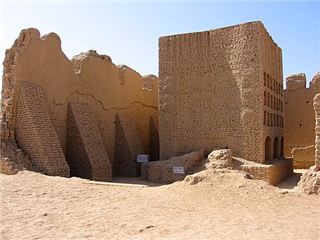
Like other steppe powers, the Rouran fought as mounted archers organised in decimal units; the Wei shu reports that Shelun set up a military organisation in units of a thousand and of a hundred men, each under its own commander, with laws rewarding bravery and punishing cowardice. Their tactics relied on raiding, rapid movement and withdrawal into the steppe when faced with superior forces. For a century and a half the Rouran were the chief enemy of the Northern Wei. In 424 the khagan Datan raided the old Wei centre of Shengle with a large cavalry army, but Wei armies campaigned deep into Mongolia repeatedly, and Emperor Taiwu's great expedition of 429 surprised the Rouran, forcing Datan to flee and capturing large numbers of people and animals. The Northern Wei fortified its frontier with the Six Garrisons and long walls. The Rouran in turn sought alliances with the southern Chinese courts and with states such as the Northern Liang, and fought the Gaoche, who broke away in 487 under Afuzhiluo and founded an independent kingdom in the west; in 508 the Gaoche king Mi'etu killed the khagan Futu in battle. Rouran armies also pushed into the oases, and in 460 they took Gaochang from the last Northern Liang ruler and installed Kan Bozhou as king there.
Governance & Law

The Rouran state was a confederation held together by the Yujiulü royal clan. The khagan ruled from a mobile court, and Chinese sources mention a royal seat called Mumo, whose location is uncertain. Each khagan took a regnal title in the Rouran language, transcribed in Chinese, such as Shelun's Qiudoufa, which the Wei shu glosses as 'controlling and expanding'. Succession was contested among brothers, uncles and sons within the ruling clan, and several khagans were overthrown or killed by relatives. Beneath the khagan, members of the royal clan and the chiefs of allied tribes commanded their own followings, while subject peoples such as the Gaoche and the Turks were governed through their own leaders and obliged to send tribute and warriors. The khagan's chief consort bore the title khatun, recorded in Chinese as kehedun, and both titles passed to later steppe states. After Anagui's restoration with Northern Wei help in the early 520s, his court adopted Chinese-style official titles and employed Chinese advisers, according to the Chinese histories. The Rouran also conducted wide diplomacy, exchanging embassies with the Northern Wei, the Liu Song, the Southern Qi and Liang, the Tuyuhun and western powers, and using marriage alliances with the Eastern and Western Wei to play the divided north Chinese states against each other.
Global & Regional Impact

The Rouran Khaganate's most lasting legacy is the steppe political tradition it handed on. The titles khagan, for the supreme ruler, and khatun, for his consort, became established at the Rouran court and were taken over by the Turkic Khaganate, which arose among the Rouran's own subjects, and later by the Uyghurs, the Khazars and the Mongols. The Turks also inherited the Rouran pattern of a royal clan ruling a confederation of tribes from the Mongolian steppe and extracting tribute from China and the oasis cities. The Rouran also shaped the history of northern China: the long struggle against them encouraged the Northern Wei to keep a heavily militarised frontier, and the Six Garrisons built to contain them became the centre of the great revolt of the 520s that broke the Northern Wei apart. In the west Rouran influence reached Turfan, the Tarim oases and possibly the Hephthalites. The fate of the Rouran after 555 has prompted a long debate. Byzantine writers record that the Avars who arrived on the Black Sea steppe around 557 were fleeing the Turks, and some historians identify them, or their ruling group, with Rouran refugees; others reject the link. Recent ancient DNA studies of early Avar elite burials in Hungary found ancestry closely matching populations of the Mongolian steppe, which some researchers see as supporting a Rouran connection.
Decline & Fall
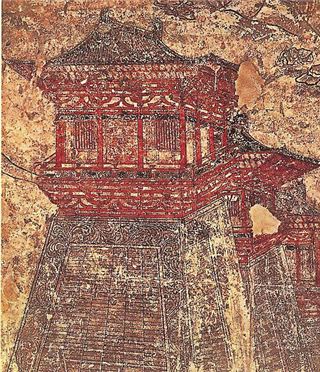
The Rouran Khaganate declined through internal division and the revolt of its subjects. The defection of the Gaoche in 487 deprived it of many tribes, and dynastic murders weakened the royal clan; in 520 the khagan Chounu was killed, and his brother Anagui, driven out by a rival, fled to the Northern Wei, which restored him with its support. Anagui rebuilt Rouran power in the 520s and 530s, profiting from the collapse of the Northern Wei into the rival Eastern and Western Wei, from both of which he received gifts and marriage alliances, and by about 541 he had crushed the Gaoche. But the Turks of the Altai, once ironworkers for the Rouran, grew strong under their leader Bumin, who in 546 defeated a Tiele force marching against the Rouran and then asked Anagui for a royal bride. Anagui refused, insulting him as a blacksmith slave, and Bumin turned to the Western Wei, which gave him a princess in 551. In 552 Bumin defeated the Rouran north of Huaihuang and Anagui killed himself. Rouran remnants under rival leaders fought on, some taking refuge with the Northern Qi or the Western Wei, until the Turkic khagan Muqan crushed them; in 555 the Western Wei handed about 3,000 Rouran refugees to Turkic envoys, who killed them outside Chang'an.
The Rouran Khaganate ruled the Mongolian steppe for a century and a half between the Xianbei and the Turks, was the chief northern enemy of the Northern Wei, and established khagan as the title of supreme steppe rule, a tradition inherited by the Turks and later steppe empires.
References
- Barfield, T.J. (1989) The Perilous Frontier: Nomadic Empires and China. Cambridge, MA: Basil Blackwell.
- Golden, P.B. (1992) An Introduction to the History of the Turkic Peoples. Wiesbaden: Otto Harrassowitz.
- Litvinsky, B.A. (ed.) (1996) History of Civilizations of Central Asia, Volume III: The Crossroads of Civilizations, A.D. 250 to 750. Paris: UNESCO Publishing.
- Sinor, D. (ed.) (1990) The Cambridge History of Early Inner Asia. Cambridge: Cambridge University Press.
Connections
Open the full connections map →