At a glance
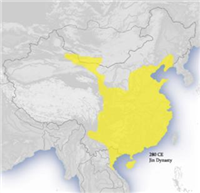
- The Eastern Jin carried on the Jin dynasty at Jiankang (Nanjing) after northern China fell to the Xiongnu-led Han Zhao in 311–316.
- Power lay with great aristocratic clans such as the Wang, Huan and Xie, while the emperors were usually weak.
- Its era saw Wang Xizhi's calligraphy, Tao Yuanming's poetry and the victory over the Former Qin at the Fei River in 383.
Rise & Fall
- 318Sima Rui takes the imperial title at Jiankang as Emperor Yuan
- 347Huan Wen conquers the Cheng Han state in Sichuan
- 353Wang Xizhi writes his preface at the Orchid Pavilion gathering
- 383Jin forces defeat the Former Qin at the Battle of Fei River
- 399Sun En's Daoist rebellion breaks out in the coastal south
- 403Huan Xuan usurps the throne as emperor of Chu
- 417Liu Yu's army conquers the Later Qin and takes Chang'an
- 420Emperor Gong abdicates to Liu Yu, founder of the Liu Song
Foundation
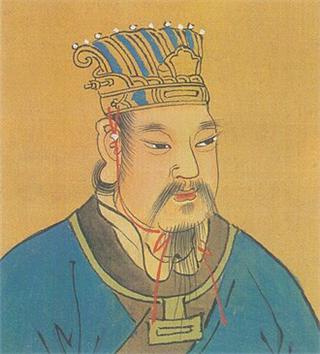
The Eastern Jin was the continuation, south of the Yangtze, of the Western Jin dynasty founded by the Sima family in 266. After the War of the Eight Princes (291–306) wrecked the Western Jin, the Xiongnu-led Han Zhao state sacked Luoyang in 311, capturing Emperor Huai, and took Chang'an in 316, capturing Emperor Min. Sima Rui, Prince of Langye, had been posted to Jianye in 307 on the advice of the aristocrat Wang Dao, and had won the cooperation of the gentry families of the lower Yangtze. In 317 he proclaimed himself King of Jin, and in 318, after news of Emperor Min's death, he took the imperial title at Jiankang (modern Nanjing), as Jianye had been renamed in 313; he is known as Emperor Yuan. The Wang clan of Langye, led by Wang Dao at court and his cousin Wang Dun in command of the middle Yangtze, was so dominant that contemporaries said 'the Wang and the Sima share the realm'. Hundreds of thousands of northern refugees, from great aristocratic lineages to peasant families, followed the court south in successive waves, settling around Jiankang, Jingkou and the middle Yangtze. The new regime rested on an uneasy partnership between émigré northern clans, the established southern gentry and a weak imperial house.
Socioeconomy
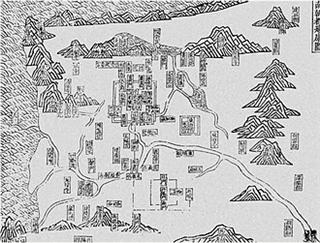
The migrations transformed southern China. Northern émigrés were at first entered on separate 'white registers' and settled in 'lodged' commanderies and counties named after their abandoned homes in the north, which kept them exempt from regular taxes; repeated campaigns of tuduan, 'registration by actual residence', such as Huan Wen's of 364, sought to bring them onto the ordinary tax rolls. Great families, both northern and southern, built up extensive estates in the Yangtze delta and Zhejiang, worked by tenants and dependants, and cleared new land in hills and wetlands, laying foundations for the later economic dominance of the south. Rice farming, silk, salt and river commerce sustained Jiankang, which grew into a great city, and Guangzhou handled maritime trade with Southeast Asia and beyond. Intellectual life was led by aristocrats devoted to qingtan, 'pure conversation' on metaphysical questions drawn from the Laozi, Zhuangzi and Yijing, as recorded in the later Shishuo xinyu. Buddhism spread among the elite through monks such as Zhi Dun and Huiyuan, whose community on Mount Lu became a major centre, while Daoism flourished in the Shangqing revelations received near Maoshan in the 360s and in the alchemical writings of Ge Hong.
Military

The Eastern Jin never had a large standing army under direct court control. Military power lay with regional commanders, above all in the middle Yangtze province of Jing, whose governors repeatedly challenged Jiankang: Wang Dun rebelled in 322 and 324, and Su Jun's rebellion of 327–329 captured the capital. The court nevertheless launched several northern expeditions. Zu Ti recovered much of the land south of the Yellow River in the 310s, and Huan Wen, the dominant general of the mid-century, conquered the Cheng Han state in Sichuan in 347, reached the outskirts of Chang'an against the Former Qin in 354 and retook Luoyang in 356, but was badly defeated by the Former Yan at Fangtou in 369. In 377 Xie Xuan formed the Beifu, or 'Northern Headquarters', army at Jingkou from hardy northern refugees. When Fu Jian of the Former Qin invaded with a vast army in 383, Xie Shi and Xie Xuan, under the overall direction of Xie An, defeated its advance forces at the Battle of Fei River, and the Former Qin collapsed. The Beifu army later produced the generals who decided the dynasty's fate, including Liu Laozhi and Liu Yu, whose campaigns conquered the Southern Yan in 410, Western Shu in 413 and the Later Qin in 417, briefly recovering Chang'an and Luoyang.
Governance & Law

Eastern Jin emperors reigned more than they ruled. Many came to the throne as children or were dominated by ministers, and effective government passed between great clans: the Wang of Langye under Emperor Yuan and his successors, the Yu family of the empress dowager in the 320s and 330s, the Huan of Qiao under Huan Wen, who deposed Emperor Fei in 371 and was prevented from usurping the throne only by his death in 373, and the Xie of Chenjun under Xie An. The central institutions of the Western Jin were preserved in form, with a Department of State Affairs, a Secretariat and the Nine Ranks system of official recruitment, through which local 'impartial judges' graded candidates. In practice the ranks reflected family pedigree, entrenching an aristocracy that monopolised high office and married within its own circle. Provincial administration was dominated by the governors of Yang province around the capital and Jing province upstream, whose rivalry shaped politics throughout the century. Emperor Xiaowu (r. 372–396), after Xie An's death in 385, tried to restore imperial power with his brother Sima Daozi, but their quarrels, and Daozi's control of government under the disabled Emperor An, weakened the throne further and opened the way to the military strongmen of the dynasty's last decades.
Global & Regional Impact
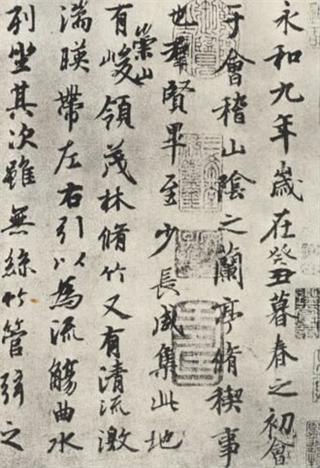
The Eastern Jin preserved the legitimacy, institutions and high culture of the Han and Jin world in the south while northern China was divided among the Sixteen Kingdoms, and in doing so began the long shift of China's population and economic centre towards the Yangtze. Jiankang remained the capital of the Southern Dynasties, the Liu Song, Southern Qi, Liang and Chen, which inherited Eastern Jin institutions and aristocratic society until the Sui conquest of 589. Its cultural achievement was outstanding. Wang Xizhi, whose preface to the poems composed at the Orchid Pavilion gathering of 353 became the most celebrated work of Chinese calligraphy, was revered as the 'sage of calligraphy'; the painter Gu Kaizhi, to whom the Admonitions of the Instructress to the Court Ladies scroll is attributed, was among the first Chinese artists known by name; and Tao Yuanming's poems of rural retreat became models for later Chinese poetry. Buddhism found an intellectual footing among the elite. The pilgrim Faxian, who set out from the north in 399, returned by sea in 412 and later translated texts at Jiankang, while Huiyuan's treatise arguing that monks need not bow to rulers framed a lasting question in Chinese politics. Neighbours took note: Baekje and Goguryeo sent embassies, and Buddhism reached Baekje from the Eastern Jin in 384.
Decline & Fall

The final decades of the dynasty were marked by rebellion and usurpation. In 399 Sun En, a leader of the Five Pecks of Rice Daoist movement, rose in the coastal commanderies of Zhejiang, where the court's conscription of dependants had caused deep resentment; his followers devastated the region before he was defeated and drowned himself in 402, and his brother-in-law Lu Xun carried on the revolt until 411. Taking advantage of the chaos, Huan Xuan, son of Huan Wen and master of Jing province, seized Jiankang in 402 and at the end of 403 forced Emperor An to abdicate, founding his own short-lived Chu dynasty. Liu Yu, a Beifu officer of humble origin, led a rising against him in 404, restored Emperor An and became the real ruler of the state. His victories over Lu Xun and over the northern states of Southern Yan and Later Qin brought him unrivalled prestige, although Chang'an was lost again to the Xia in 418. Early in 419 Liu Yu had Emperor An strangled and placed his brother on the throne as Emperor Gong, who abdicated to him in 420. Liu Yu founded the Liu Song dynasty as Emperor Wu, and the deposed emperor was murdered in 421, ending the Sima house.
The Eastern Jin carried the Jin dynasty south of the Yangtze after the fall of northern China, preserved its institutions and aristocratic culture at Jiankang, repelled the Former Qin at the Fei River in 383, and fostered the calligraphy, poetry and southern Buddhism that shaped Chinese civilisation for centuries.
Test yourself
5 questions on this page, from its key events and facts.
The questions open here once the page has loaded.
References
- Dien, A.E. and Knapp, K.N. (eds) (2019) The Cambridge History of China, Volume 2: The Six Dynasties, 220–589. Cambridge: Cambridge University Press.
- Graff, D.A. (2002) Medieval Chinese Warfare, 300–900. London: Routledge.
- Lewis, M.E. (2009) China between Empires: The Northern and Southern Dynasties. Cambridge, MA: Belknap Press of Harvard University Press.
- Liu I-ch'ing (1976) Shih-shuo Hsin-yü: A New Account of Tales of the World. Trans. R.B. Mather. Minneapolis: University of Minnesota Press.
- Zürcher, E. (1959) The Buddhist Conquest of China. Leiden: E.J. Brill.
Connections
Open the full connections map →