
Movement · Europe
Counter-Reformation
At a glance
- The Council of Trent (1545–1563) rejected all compromise with the Protestants, restating Catholic doctrine on grace and works, the seven sacraments and the veneration of saints, while reforming the training and discipline of priests and bishops.
- New orders led the revival, above all the Jesuits, recognised in 1540, who organised along military lines, served the pope and carried missions to the Americas and Asia.
- By politics, war and discriminatory law the Counter-Reformation won back Poland, Lithuania, France, Italy and the Habsburg lands, while many Protestants were expelled, forced to convert or fled.
Timeline
- 1540The Society of Jesus is canonically recognised
- 1545Pope Paul III opens the Council of Trent, which meets on and off until 1563
- 1559The Index Librorum Prohibitorum, a list of forbidden books, is issued
- 1570Pope Pius V makes the Tridentine Mass obligatory
- 1585Antwerp surrenders to Alexander Farnese and some 60,000 citizens flee north, leaving all the Southern Netherlands under Spanish control
- 1596In the Union of Brest the Ruthenian bishops enter full communion with Rome while keeping their Byzantine tradition
- 1618The Bohemian Revolt breaks out; after its defeat Protestants of Bohemia and Austria are expelled or forced to convert
- 1648The European wars of religion end, the date often given for the close of the Counter-Reformation
Background

Calls for reform within the Catholic Church were old. From the 14th to the 16th century a spiritual revival grew from the preaching friars, lay movements such as the devotio moderna, printing and Christian humanism, and councils with reforming agendas met at Constance in 1415, at Basel, Ferrara and Florence, and at the Fifth Council of the Lateran (1512–1517). Yet papal nepotism and bishops’ wealth, absence from their dioceses and preoccupation with secular power resisted serious reform for centuries, and radical reformers such as Savonarola rose against them.
The worldly excesses of the Renaissance Church, epitomised by the era of Alexander VI (1492–1503), intensified under Pope Leo X (1513–1521), whose use of indulgences to raise funds for Saint Peter’s Basilica was a key impetus for Martin Luther’s 95 Theses. Protestants decisively broke with the Catholic Church in the 1520s. Many rural priests were poorly educated and knew no Latin, and a growing divide separated clergy from laity.
Reform had already begun. From 1514 the Oratory of Divine Love in Rome drew priests and laymen to anonymous charity and talk of reform, and its members became key players in the Church’s answer to the Reformation; new congregations of clergy followed, from the Theatines in 1524. The French historian Henri Daniel-Rops argued that this renewal’s origins were much older than Luther and that it obeyed the Church’s own tradition rather than answering the reformers.
Aims

The Counter-Reformation sought to renew the Catholic Church and to answer Protestantism. The Council of Trent, opened by Pope Paul III, was tasked with institutional reform, addressing corrupt bishops and priests, the sale of indulgences and other financial abuses. It upheld the basic structure of the medieval church, its sacraments, religious orders and doctrine, and rejected all compromise with Protestants. It taught salvation by grace through faith and the works of faith, not by faith alone; it reaffirmed transubstantiation and the seven sacraments; and it strongly reaffirmed pilgrimages, the veneration of saints, relics and images, and the veneration of the Virgin Mary.
Alongside doctrine came discipline. Parish priests were to be better trained in theology through seminaries; the appointment of bishops for political reasons was no longer tolerated, and the council fought absenteeism, the practice of bishops living in Rome or on their estates rather than in their dioceses, giving bishops greater power to supervise all religious life.
A primary aim was mission: to reach the lands colonised by Catholic nations and to reconvert countries such as Sweden and England that had been lost to the Reformation. The historian Massimo Firpo distinguishes a wider Catholic Reformation, centred on the care of souls and the renewal of the clergy, from a Counter-Reformation founded on the defence of orthodoxy, the repression of dissent and the reassertion of Church authority.
Course of Events
In 1530 the Confutatio Augustana answered the Lutheran Augsburg Confession, and in 1540 the Jesuits were canonically recognised. The Council of Trent met on and off from 13 December 1545 to 4 December 1563. Alongside and after it came the Index of forbidden books in 1559, the Roman Catechism in 1566, the Roman Breviary in 1568, and in 1570 Pope Pius V made the Tridentine Mass obligatory. The calendar too was reformed, though the new Gregorian calendar came only in 1582.
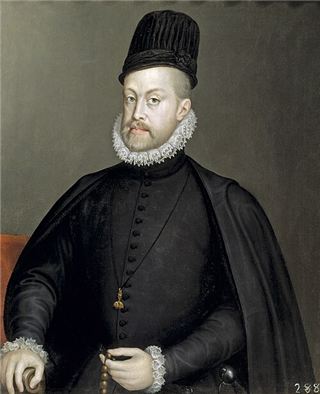
The Counter-Reformation was also fought by arms and law. In the Netherlands Alexander Farnese, governor-general for Philip II of Spain from 1578 to 1592, took the cities of the south; Antwerp surrendered in 1585 as 60,000 citizens fled north. In the Cologne War (1583–1589) Catholics defeated an archbishop who had turned Protestant. In France Catholics and Huguenots fought a series of wars from 1562 until the Edict of Nantes of 1598. In 1596 the Union of Brest brought the Ruthenian bishops into communion with Rome.
In the Habsburg lands Emperor Rudolf II began suppressing Protestant activity in 1576. In Bohemia, where about 85% of the people were Protestant, Ferdinand II’s breach of the Letter of Majesty of 1609 led to the Bohemian Revolt of 1618–1620; after its defeat Protestant nobles, clergy and burghers were expelled or forced to convert, and most nobles who kept their faith lost their lands. The end of the wars of religion in 1648 is often taken as the end of the period.
People
Pope Paul III (1534–1549) is considered the first pope of the Counter-Reformation, and Pope Pius V enforced its liturgy. Carlo Borromeo, Archbishop of Milan (1538–1584), set an example to bishops by visiting the remotest parishes and instilling high standards, and pressed for the council’s decrees, in music too, to be put quickly into practice.
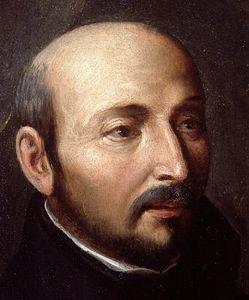
New orders carried the reform. The Theatines were founded in 1524 by Gaetano and Cardinal Gian Caraffa; the Capuchins, an offshoot of the Franciscans proposed by Matteo de Bascio in 1526, were noted for preaching and care of the poor and sick; the Ursulines were the first order of women devoted to educating girls; Philip Neri’s Oratorians used music and singing to draw the faithful. The Jesuits, the most effective of the new orders, followed Ignatius of Loyola, whose Spiritual Exercises shaped their devotion and who vowed to serve only God and the Roman pontiff; they worked in rural parishes and as missionaries in the Americas and Asia.
The movement had its mystics and theologians. Teresa of Ávila and John of the Cross, Spanish mystics and reformers of the Carmelite Order, taught interior conversion and deeper prayer; Thomas Merton called John of the Cross the greatest of all mystical theologians. Francis de Sales, Robert Bellarmine and the Jesuit Francisco Suárez contributed to Marian spirituality. In music Giovanni Pierluigi da Palestrina became the model for Catholic composers; in art its painters and sculptors included El Greco, Peter Paul Rubens and Bernini.
Outcomes
The Counter-Reformation succeeded in drastically diminishing Protestantism in Lithuania, Poland, France and Italy and in the vast lands of the Habsburgs, among them Austria, southern Germany, Bohemia, the Spanish Netherlands, Croatia and Slovenia. It succeeded less completely in Hungary, where a sizeable Protestant minority remains. Inside the Church it brought tighter discipline and organisation, stronger bishops and the parish at the centre of religious life. The Anglican historian G. E. Duffield noted that Catholic reform does not fit geographical patterns as easily as Protestant reform does.
Its gains came with war, discriminatory law and large migrations of religious refugees. In Bohemia the expropriation of the Protestant nobility was the most extensive in Europe at the time, its lands sold cheaply or given to foreign nobles, which contributed to the decline of Czech culture and language. New towns, the Exulantenstädte, among them Freudenstadt and Glückstadt, were founded for refugees. In Florida in 1565 Huguenot shipwreck survivors who surrendered to the Spanish were executed for heresy, with active clerical participation, and Louis XIV abolished Protestant worship in France in 1685.
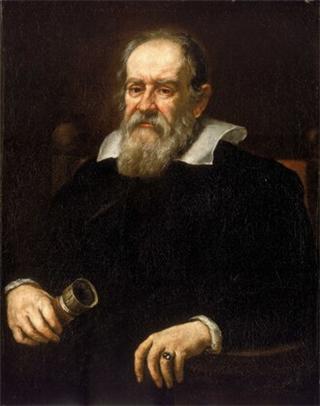
Clerical opposition also turned against new science: in 1633 Galileo Galilei was placed under house arrest and the teaching of heliocentric theory was temporarily banned, and some heliocentrists emigrated to Protestant lands. In the Habsburg lands the Patent of Toleration of Joseph II in 1781 can be regarded as the end of the political Counter-Reformation.
Legacy

The Counter-Reformation shaped Catholic worship for centuries. The Roman Catechism remained authoritative Church teaching until the Catechism of the Catholic Church of 1992, and the Index of forbidden books, updated twenty times, was suspended only on 29 March 1967. Confession became a private act in the confessional, and devotion to the Virgin Mary grew strongly after the victory at Lepanto in 1571 was credited to her. In 1966 the Archbishop of Salzburg, Andreas Rohracher, expressed regret for the expulsions of Protestants.
It left a mark on the arts. The council declared that painting, sculpture and architecture should convey Catholic theology, and its decree of 1563 on images, amplified by writers such as Gabriele Paleotti, banned lascivious or confused images; the medievalist Émile Mâle called it “the death of medieval art”. The aim of restoring Catholicism’s centrality, in the Rome of Bernini and the Flanders of Rubens, was one of the drivers of the Baroque style. The legend that Palestrina’s Missa Papae Marcelli saved church polyphony is unfounded, though it long held a place in histories of music.
The name itself is debated. German historians coined “Counter-Reformation” in the late 18th century as a negative term for Catholic repression, and Leopold von Ranke popularised it; Catholic historians shunned it, and the Protestant historian Wilhelm Maurenbrecher introduced “Catholic Reformation” in 1880. German historiography long remained divided by confession over whether the movement was a reaction to Protestantism or a reform from within.
The Counter-Reformation was the Catholic resurgence that followed the Protestant Reformation, launched by the Council of Trent (1545–1563) and often dated to 1648. It reaffirmed Catholic doctrine, reformed the clergy, founded new orders such as the Jesuits and drove the Baroque style, and through politics and war it won back much of Europe, at the cost of expulsions and refugees.
Test yourself
5 questions on this page, from its key events and facts.
The questions open here once the page has loaded.
References
- Robert Bireley, The Refashioning of Catholicism, 1450–1700: A Reassessment of the Counter Reformation (1999)
- A. G. Dickens, The Counter Reformation (1979)
- Michael A. Mullett, The Catholic Reformation (Routledge, 1999)
- John W. O’Malley, Trent and All That: Renaming Catholicism in the Early Modern Era (Harvard University Press, 2000)
- John C. Olin, The Catholic Reformation: Savonarola to Ignatius Loyola (Fordham University Press, 1992)
- A. D. Wright, The Counter-reformation: Catholic Europe and the Non-christian World (2nd ed., 2005)