Sub-Saharan Africa
Derg
At a glance
- The Coordinating Committee of the Armed Forces, Police and Territorial Army, fewer than 110 privates, NCOs and junior officers, deposed Emperor Haile Selassie on 12 September 1974, killed sixty officials of his government on 23 November and abolished the monarchy in March 1975.
- The Red Terror of 1976–1978 killed tens of thousands without trial, by the highest estimates up to 980,000, among them members of the rival Marxist-Leninist EPRP and MEISON; Mengistu Haile Mariam, chairman after the shootout of 3 February 1977, intensified it.
- The famine of 1983–85, which the Derg itself estimated at more than a million deaths, was deliberately worsened in the rebel areas of Tigray and Eritrea as a counter-insurgency strategy, and the regime's enforced resettlement killed between 50,000 and 100,000 more.
Rise & Fall
- 1974The Derg is established as the Coordinating Committee of the Armed Forces, Police and Territorial Army by junior and mid-level officers; announced on 28 June, it elects Major Mengistu Haile Mariam chairman.
- 1974On 12 September the Derg deposes and imprisons Emperor Haile Selassie during nationwide protests; three days later it renames itself the Provisional Military Administrative Council.
- 1974On 23 November the Derg removes and kills its chairman, Lieutenant General Aman Andom, with some of his supporters and 60 officials of the imperial government, the Massacre of the Sixty.
- 1975On 4 March the land reform 'Land to the Tiller' nationalises all rural land and abolishes tenancy; the monarchy is formally abolished the same month, and Haile Selassie dies on 27 August.
- 1976On 23 September the Red Terror begins after a failed attempt on Mengistu's life attributed to the EPRP; in less than two years up to 980,000 people are killed by the highest estimates.
- 1977On 3 February Chairman Tafari Benti is killed in a shootout and Mengistu takes power; Vice-Chairman Atnafu Abate is executed with 40 officers on 13 November; Somalia invades the Ogaden.
- 1983–1985Famine in northern Ethiopia, multiplied by the government's policies in the rebel regions, kills about 1.2 million people; Live Aid raises money in July 1985.
- 1987On 22 February the Derg government ends after a referendum approves the constitution of the People's Democratic Republic of Ethiopia; the Derg is formally abolished in September, its members keeping power.
Foundation

The Derg, 'committee' or 'council' in Amharic, grew out of the mutinies of early 1974. In February soldiers of the 4th Brigade of the 4th Army Division at Nagelle, angry at the lack of food and water, arrested their commander; the Air Force base at Bishoftu mutinied on 12 February and the Second Division at Asmara on 25 February, and the protests spread to students and trade unions. Alem Zewde Tessema formed an armed forces committee on 23 March to support Prime Minister Endelkachew Makonnen, but radicals in the army came to see Makonnen as the agent of the feudal aristocracy.
The Coordinating Committee of the Armed Forces, Police and Territorial Army was established on 21 June 1974 and announced on 28 June. Each of forty units of the Army, Air Force, Navy, Imperial Guard, Territorial Army and police sent three representatives, privates, NCOs and junior officers up to major, senior officers being 'too compromised'; the Derg was reported at 120 members but numbered fewer than 110, and no new member was ever admitted. Meeting at the Fourth Division headquarters it elected Major Mengistu Haile Mariam chairman and Major Atnafu Abate vice-chairman. In July it won from Emperor Haile Selassie the power to arrest officials at every level, imprisoned both former prime ministers and most of their cabinets, and on 12 September 1974 deposed and imprisoned the emperor himself.
Socioeconomy
The Derg's revolution reached into every field and farm. On 4 March 1975 it announced land reform under the slogan 'Land to the Tiller', radical even by Soviet and Chinese standards: all rural land was nationalised, tenancy abolished and peasants put in charge of enforcement. By 1980 state farms and cooperatives still produced only 6 per cent of agricultural output and 20 per cent of marketed production. In 1975 most industries were nationalised, urban real estate taken over and strikes, illegal since the junta came to power, prohibited by the Labor Code; the housing law reduced the dwellings available to rent, and the kebeles, which redistributed housing and ran welfare, could not provide enough food outlets to offset shortages and hoarding.
Food output did not keep pace with population in 1974–78, and there were severe shortages in town and country between 1977 and 1979. Literacy rose and the Ethiopian Orthodox Church was disestablished in 1974 under a policy of state atheism opposed by most Ethiopians. The famine of 1983–85 was under way, as Alex de Waal observed, months before the drought; the government deliberately multiplied its effects in Tigray and Eritrea, channelling aid through companies close to the Derg, and about 1.2 million people died, most in present-day Tigray and Amhara. Resettlement and villagisation displaced millions and killed 50,000 to 100,000, some of it funded with Oxfam and Live Aid money.
Military
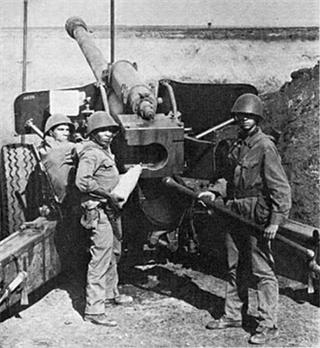
The army was the Derg's origin and its instrument. By late 1976 insurgencies existed in all fourteen administrative regions: the Eritrean People's Liberation Front fought for Eritrean independence, rebels in Tigray included the nascent Tigray People's Liberation Front, and the Western Somali Liberation Front had by June 1977 driven the army out of much of the Ogaden into fortified towns before Somalia launched a full-scale invasion in the Ogaden War. From 1976 the Soviet Union armed the Derg; fifty Cuban advisers were training Ethiopian troops in May 1977 and 3,000 Cubans were in the country by July, and with their help the army prevailed against Somalia. Ethiopia became the Soviet bloc's closest ally in Africa and one of the best-armed states of the region.
By 1980 the Derg had more than 250,000 troops, costing between 50 and 70 per cent of the national budget from 1978. The officer corps remained Amhara-dominated, as under Menelik II and Haile Selassie: over 80 per cent of generals and 65 per cent of colonels. At home the Central Revolutionary Investigation Department, the secret police, spied on citizens, and the Red Terror of 1976–78 killed hundreds of thousands, entire families executed as 'reactionary'. Eritreans came under heavier oppression and economic disruption, and the famine of the mid-1980s was used as military policy against the TPLF and OLF. When the regime fell in 1991 the army had shrunk to 45,000 and soon disintegrated.
Governance & Law

The officers decided everything collectively at first. Renamed the Provisional Military Administrative Council on 15 September 1974, the Derg took full control of government under a unitary form and chose Lieutenant General Aman Andom as chairman and head of state, pending the return of Crown Prince Asfaw Wossen as a constitutional monarch; when Aman quarrelled with the radicals over Eritrea and the proposed execution of the old regime's officials, the Derg destroyed the units loyal to him, removed him and killed him on 23 November 1974 with sixty imperial officials. Brigadier General Tafari Benti became chairman with Mengistu and Atnafu Abate as vice-chairmen; the monarchy was abolished in March 1975 and socialism proclaimed, and Haile Selassie died on 27 August 1975.
Opposition was answered with force: soldiers killed protesters demanding civilian government on May Day 1975, a state of emergency was proclaimed in September 1975, and in July 1976 the death penalty was introduced for political crimes and the faction seeking terms with the EPRP purged. Mengistu became chairman after the shootout of 3 February 1977 in which Tafari Benti died, and executed Atnafu Abate and forty officers on 13 November. By 1978 Amhara officials ran the government in higher proportion than ever, and Amharas were resettled in the south to staff courts, churches and schools, where Oromo texts were replaced by Amharic.
Global & Regional Impact
The Derg ended the Ethiopian monarchy and the feudal order, abolishing tenancy and, under its slogan, giving land to the tiller, and it made Ethiopia the Soviet Union's closest African ally and a heavily armed Cold War client. Its wars, terror and famine created for the first time an Ethiopian diaspora, as hundreds of thousands fled economic misery, conscription and repression to neighbouring countries and the West. The famine of 1984–85 brought Ethiopia to the attention of the world and inspired Oxfam's appeals and the Live Aid concerts of July 1985, and then controversy, when some of the money proved to have passed through NGOs under Derg influence into the enforced resettlement programmes. Many Ethiopians saw the revolution as a mask for the Amhara colonisation begun under Menelik II.
Its legacy is also legal. After the EPRDF entered Addis Ababa it disbanded the Workers' Party of Ethiopia and arrested almost all prominent Derg officials. In December 2006 seventy-three of them were found guilty of genocide, twenty-five, including Mengistu, in absentia, and many were sentenced to death when the trial ended on 26 May 2008; Mengistu, convicted of genocide, war crimes and crimes against humanity for the Red Terror, lives in Zimbabwe, which refused extradition in 2009. The death sentences of 23 officials were commuted in 2010, and sixteen were freed in 2011 after twenty years.
Decline & Fall
The Derg dissolved itself without giving up power. Three weeks after a referendum approved a new constitution, its government ended on 22 February 1987, and in September the Derg was formally abolished and the People's Democratic Republic of Ethiopia set up as a Marxist-Leninist one-party state under the Workers' Party of Ethiopia; the new government contained civilians but was dominated by Derg members, who filled its Central Committee and Politburo, and Mengistu became Secretary-General of the party, President of the republic and commander-in-chief. The wars went on: Eritrea, Tigray and the Ogaden had drained the economy since 1978, and productivity of food and cash crops fell under mismanagement, corruption and opposition to violent rule.
The end came from outside and from the north. Under Mikhail Gorbachev the Soviet bloc cut its aid, and in December 1990 the Soviet Union stopped aiding the PDRE altogether. In January 1991 the Ethiopian People's Revolutionary Democratic Front took Gondar, Bahir Dar and Dessie, while the EPLF held all Eritrea except Asmara and Assab. Mengistu wavered between vows of resistance and hints that he would kill himself like Emperor Tewodros II, and on 21 May 1991, saying he was going to inspect troops in the south, slipped into Kenya and flew with his family to Zimbabwe, which granted him asylum. The EPRDF entered Addis Ababa, ending the civil war that had run since 1974.
The Derg was the committee of junior officers that deposed Haile Selassie in 1974, abolished the monarchy and feudal landholding, and under Mengistu Haile Mariam ruled Ethiopia by the Red Terror, Soviet arms and a famine it turned against the rebel north, until it dissolved itself into the People's Democratic Republic of Ethiopia in 1987.
Test yourself
5 questions on this page, from its key events and facts.
The questions open here once the page has loaded.
References
- Bahru Zewde, A History of Modern Ethiopia, second edition (James Currey, 2001)
- Gebru Tareke, The Ethiopian Revolution: War in the Horn of Africa (Yale University Press, 2009)
- Paul Henze, Layers of Time: A History of Ethiopia (Palgrave, 2000)
- Alex de Waal, Evil Days: Thirty Years of War and Famine in Ethiopia (Human Rights Watch, 1991)
- John Young, Peasant Revolution in Ethiopia: The Tigray People's Liberation Front, 1975–1991 (Cambridge University Press, 1997)
- Marina and David Ottaway, Ethiopia: Empire in Revolution (Africana, 1978)
Connections
Open the full connections map →