Sub-Saharan Africa
Ghana Empire
At a glance
- Wagadou, the Soninke kingdom Arab writers called Ghana, sat between West Africa's goldfields and the Saharan caravan routes.
- It grew rich by taxing gold going north and salt going south, and its gold supplied mints across North Africa and Muslim Spain.
- Almoravid attacks, shifting trade routes and drought broke its power; Mali absorbed what remained in the thirteenth century.
Rise & Fall
- c. 750Wagadou crystallises as a recognisable state under Soninke rule
- c. 992Ghana captures Awdaghast, the southern terminus of the western trans-Saharan route
- 1054The Almoravids seize Awdaghast, ending some sixty years of Ghanaian control
- 1068Al-Bakri completes his famous description of the gilded royal court
- 1076Almoravids sack Koumbi Saleh, reducing Ghana for a time to a tributary
- 1087Death of the Almoravid leader Abu Bakr ibn Umar lets the Soninke regain independence
- c. 1235Sundiata Keita defeats Sumanguru at Kirina; Ghana's remnant passes into the Mali Empire
- c. 1240The old capital is traditionally said to have been abandoned
Foundation
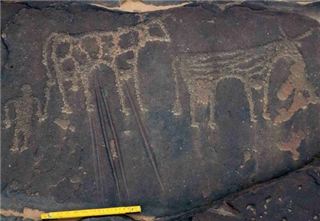
The Ghana Empire, known internally as Wagadou, is often linked to the Tichitt stone-settlement culture of Mauritania, traceable archaeologically to the second millennium BCE at Dhar Tichitt and Dhar Walata. The Soninke people who built it were iron-working, militarily capable, and positioned at a geographic accident of extraordinary consequence: they occupied the strategic zone between the goldfields of Bambuk and Bure to the south and the Saharan caravan routes leading north to Berber and eventually Arab markets. The spread of the camel across the western Sahara in the early centuries CE transformed irregular desert crossings into a structured, sustainable trade network, and Wagadou was already positioned to dominate it. The astronomer al-Fazari, writing in the late eighth century, referred to Ghana as the land of gold, the earliest known reference to the kingdom in Arabic sources. Soninke oral tradition credits the formal unification of the clans to Dinga Cissé, with many historians placing the crystallisation of the empire as a recognisable state by around 750 CE. The title ghana, often interpreted as war chief, was applied by Arab geographers to the king and eventually named the empire. What made the founding remarkable was its economic rather than military logic: Ghana rose because it stood between two things other people desperately wanted to exchange.
Socioeconomy
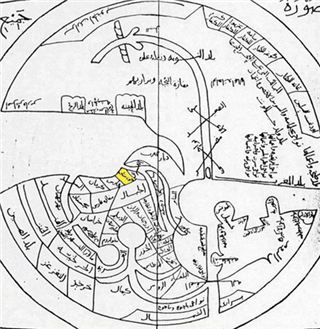
The Ghana Empire's economic system was a masterpiece of fiscal architecture. The king imposed duties on goods entering and leaving the realm, taxing salt moving south from Saharan mines and gold moving north from the southern fields simultaneously. Crucially, all gold nuggets found within the kingdom were reserved for the king, while subjects could trade gold dust freely, a deliberate mechanism that controlled supply and prevented the price from collapsing. Al-Bakri's celebrated description of the court, completed in 1068, recorded horses caparisoned in gold-embroidered cloth, pages bearing gold-mounted shields and swords, and even guard dogs wearing collars of gold and silver. Ibn Hawqal, writing around 977, declared Ghana's king the wealthiest monarch on earth because of his gold. The capital, generally identified with Koumbi Saleh, was a double city: the royal town of El-Ghaba with its palace and sacred grove, and a separate Muslim merchants' town six miles distant with twelve mosques and surrounding gardens. This dual urban structure reflected a society that had integrated Islamic commercial networks without converting its political elite, maintaining traditional royal legitimacy while pragmatically accommodating the faith of its most valuable trading partners.
Military
Ghana's military power was substantial without being the primary instrument of its dominance. Al-Bakri recorded that the king could field 200,000 warriors, of whom more than 40,000 were archers, figures almost certainly inflated but indicative of a genuinely large mobilisation capacity relative to regional rivals. Iron weaponry and cavalry gave Soninke forces a significant advantage over many neighbouring peoples. The empire's most significant offensive achievement was the capture, traditionally dated to around 992, of Awdaghast, the critical oasis town at the southern end of the western trans-Saharan route, previously dominated by Sanhaja Berbers. This conquest gave Ghana direct control over the main desert terminus of the gold-salt trade, representing the territorial climax of the empire's expansion. Military power was otherwise deployed primarily to enforce tributary relationships with subordinate kingdoms across the western Sudan, extracting regular payments that supplemented trade revenues. Ghana never attempted to conquer the goldfields themselves, a restraint that was either deliberate wisdom or geographical limitation, but which defined the empire's entire character.
Governance & Law
The Ghana Empire was a hereditary monarchy operating through a tributary imperial structure. The geographer al-Yaqubi, writing in the late ninth century, noted that the king of Ghana had other kings under his authority, confirming a layered hierarchy of vassal relationships rather than direct territorial administration. Succession followed matrilineal principles, passing to the king's sister's son, a custom al-Bakri documented explicitly. The royal court maintained ministers and provincial governors responsible for administering outlying territories and enforcing trade regulations, and al-Bakri noted that the king's interpreters, treasurer, and most ministers were drawn from the Muslim community. Justice was dispensed by the king personally in public audience, surrounded by elaborate ceremonial protocol. The dual-city structure of the capital reflected a deliberate governance choice: Muslim merchants operated under their own law in their own quarter, while royal religious traditions were maintained separately. This jurisdictional flexibility allowed the empire to integrate Islamic commercial infrastructure without subjecting its political legitimacy to Islamic legal authority, a balance that held for centuries until the Almoravid era, when the ruling house appears to have adopted Islam in the late eleventh century.
Global & Regional Impact
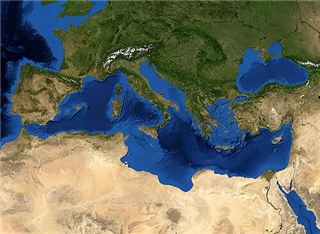
Ghana's command of the western trans-Saharan trade made it the essential conduit through which West Africa entered the medieval world economy. Gold flowing north through Wagadou supplied the mints of North Africa and Muslim Spain and, through them, the wider Mediterranean, meaning that Ghana's fiscal control indirectly shaped monetary systems across three continents. The empire's organisational model, including its tributary structure, twin-town urban design, and gold taxation mechanism, was inherited and adapted by its successor states. The Mali Empire, which absorbed Wagadou in the thirteenth century, replicated and expanded Ghana's trans-Saharan commercial architecture. When the Gold Coast gained independence in 1957, Kwame Nkrumah chose this empire's name precisely to assert a pre-colonial African tradition of statehood and sophistication, seven centuries after the original kingdom had ceased to exist.
Decline & Fall
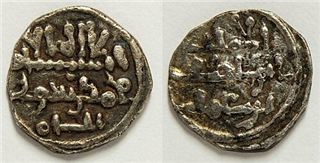
Ghana's collapse was structural rather than sudden. The Almoravid capture of Awdaghast in 1054 reversed some sixty years of Ghanaian control over the northern trade terminus in a single blow, and the Sack of Koumbi Saleh by the Almoravids, traditionally dated to 1076, reduced the empire for a time to a tributary of the Almoravid movement. Though the Soninke recovered their independence after the death of the Almoravid leader Abu Bakr ibn Umar in 1087, trade routes were already shifting eastward towards the Niger bend, and the economic logic sustaining Ghana's supremacy had been broken. Prolonged Sahel drought in the twelfth century damaged agricultural production. The Sosso kingdom of Kaniaga, a former vassal, rose to dominance under Sumanguru Kante and took over Wagadou in the early thirteenth century. After Sundiata Keita defeated Sumanguru at Kirina around 1235, the remnant of Ghana was incorporated into the Mali Empire, its capital traditionally said to have been abandoned around 1240.
The Ghana Empire's enduring significance lies in demonstrating that territorial control is not the only foundation of imperial power: for centuries, Wagadou dominated one of the medieval world's most lucrative trade corridors without owning a single goldfield, sustained by the fiscal genius of taxing what it could not possess.
References
- Connah, G. (2001) African Civilizations: An Archaeological Perspective. 2nd edn. Cambridge: Cambridge University Press.
- Conrad, D.C. and Fisher, H.J. (1982) 'The Conquest that Never Was: Ghana and the Almoravids, 1076', History in Africa, 9, pp. 21–59.
- Fage, J.D. (1969) A History of West Africa. 4th edn. Cambridge: Cambridge University Press.
- Levtzion, N. (1973) Ancient Ghana and Mali. London: Methuen.
- MacDonald, K.C. (1998) 'Before the Empire of Ghana: Pastoralism and the Origins of Cultural Complexity in the Sahel', in G. Connah (ed.) Transformations in Africa. London: Leicester University Press, pp. 71–103.
- Nehemia Levtzion and Hopkins, J.F.P. (eds.) (2000) Corpus of Early Arabic Sources for West African History. 2nd edn. Princeton: Markus Wiener.
Connections
Open the full connections map →