Islamic Caliphates & Middle East
Khwarazmian Empire
At a glance
- A Turkic-ruled, Persianised empire that rose from the Amu Darya oasis of Khwarazm to rule from western Iran to the Syr Darya.
- It grew rich on Silk Road trade, but rapid conquests left it with divided commands and loyalties it never resolved.
- Killing a Mongol envoy in 1218 brought Genghis Khan's invasion, which destroyed the empire and opened Iran to the Mongols.
Rise & Fall
- 1172Ala ad-Din Tekish comes to power and throws off Seljuk overlordship
- 1194Tekish defeats and kills Toghrul III, the last Seljuk sultan of Iraq
- 1200Ala ad-Din Muhammad II takes the throne and expands against the Ghurids and Qara Khitai
- 1217Muhammad II's march on Baghdad is abandoned in the snows of the Zagros
- 1218Otrar's governor massacres a Mongol-sponsored caravan; the shah executes a Mongol envoy
- 1220Bukhara and Samarkand fall to Genghis Khan's armies
- 1221The empire effectively ceases to exist; Jalal ad-Din is defeated on the Indus
- 1231Jalal ad-Din dies after a decade of resistance in Iran and the Caucasus
Foundation
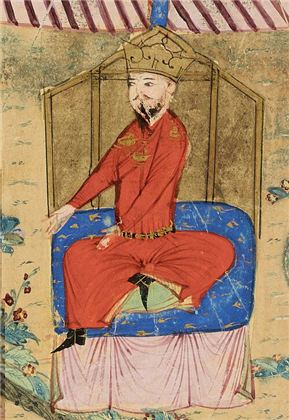
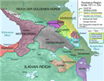
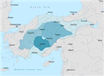
The Khwarazmian Empire emerged in the late eleventh and twelfth centuries in Khwarazm, the oasis region along the lower Amu Darya, as a provincial polity within the Seljuk imperial framework. Its rise is closely associated with the Anushteginid dynasty, named after Anushtegin Gharchai, a Turkic slave commander appointed governor of Khwarazm by the Seljuks; his grandson Atsiz repeatedly asserted independence from Sultan Sanjar. Under Ala ad-Din Tekish (r. 1172–1200) the dynasty threw off Seljuk overlordship altogether, defeating and killing Toghrul III, the last Seljuk sultan of Iraq, in 1194 and seizing much of western Iran. The empire reached its zenith under Ala ad-Din Muhammad II (r. 1200–1220), who overthrew the Ghurids in Afghanistan and the Qara Khitai in Transoxiana, creating a vast realm stretching from western Iran to the Syr Darya. The rise of the Khwarazmians was enabled by their control of trade routes linking the Islamic world with the steppe and China, and by the political vacuum left by declining Seljuk power.
Socioeconomy

The Khwarazmian Empire's economy rested on a combination of irrigated agriculture, urban commerce and long-distance trade. The fertile lands along the Amu Darya supported intensive irrigation, producing grain, cotton and fruit that sustained both rural populations and cities such as the capital Gurganj and, after its conquest, Samarkand. Society was hierarchically organised, with a Persianised administrative elite, urban merchants, religious scholars and a diverse rural population, alongside Turkic nomadic groups, especially the Qipchaqs and Qangli, on the periphery. The empire profited greatly from its position on major Silk Road routes, through which textiles, metals and luxury goods moved between East and West. Land taxes, trade duties and tribute from conquered territories provided substantial revenue. Cities functioned as hubs of economic activity and learning, Khwarazm having earlier produced scholars such as al-Biruni. However, the rapid integration of diverse regions and populations created disparities and administrative strains that required constant management.
Military
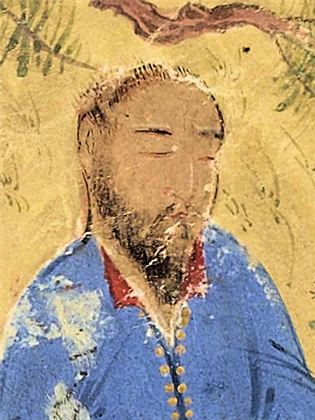
The Khwarazmian army was a hybrid system combining Turkic nomadic cavalry traditions with Persian and Islamic administrative structures. It relied heavily on mounted archers drawn from Turkic slave soldiers and tribal forces, particularly Qipchaq and Qangli contingents linked to the shah's mother, Terken Khatun, supplemented by infantry and siege units for urban campaigns. Under Ala ad-Din Muhammad II the empire expanded aggressively, conquering territory in Iran, Transoxiana and Afghanistan. Military success depended on mobility, cavalry tactics and the ability to combine diverse forces. The army's weaknesses were exposed, however, in the confrontation with Genghis Khan. After the governor of Otrar massacred a Mongol-sponsored caravan in 1218, the shah executed the envoy sent to demand redress, provoking a devastating invasion. Despite its size, the Khwarazmian army suffered from fragmented command and divided loyalties, and the shah, distrusting his commanders, dispersed his troops among city garrisons rather than meeting the Mongols in the field. The fall of Bukhara and Samarkand in 1220 exposed the inability of this system to withstand a highly organised and adaptive opponent.
Governance & Law
Governance in the Khwarazmian Empire rested on a monarchy supported by a Persian bureaucratic apparatus that managed taxation, administration and legal affairs. The shah exercised supreme authority, delegating responsibilities to provincial governors who oversaw local administration and military organisation. Law was based on the Sharia, administered by judges and religious scholars, alongside customary practice in rural and tribal areas. Court culture was heavily shaped by Persian traditions, reflecting the wider Islamic and Iranian political heritage. Despite a structured bureaucracy, government was often undermined by internal rivalries, above all the parallel court of Terken Khatun, whose Turkic kinsmen held key commands and who issued orders independently of her son. The rapid expansion of the empire under Ala ad-Din Muhammad II strained administrative capacity, as newly conquered territories were never fully integrated. This lack of political cohesion and institutional depth weakened the state's ability to respond to external threats and internal dissent.
Global & Regional Impact

The Khwarazmian Empire played a significant role in the political and economic dynamics of Central Asia and the wider Islamic world in the late twelfth and early thirteenth centuries. Its control of key Silk Road routes sustained trade and cultural exchange between East and West. Its expansion brought it into direct conflict with neighbouring powers, most notably the Abbasid caliph al-Nasir, against whom Muhammad II launched a march on Baghdad in 1217 that was abandoned when snow overwhelmed his army in the Zagros mountains. Its most profound impact, however, was indirect: its conflict with the Mongols triggered one of the most transformative episodes in Eurasian history. The destruction of Khwarazmian cities and administrative centres by Mongol forces not only ended the empire but opened the way for Mongol dominance across Central Asia and Iran. The fall of Khwarazmian authority disrupted established trade networks and contributed to a wider reorganisation of Eurasian political structures.
Decline & Fall
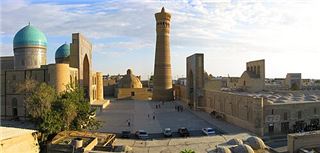
The fall of the Khwarazmian Empire was rapid and catastrophic, caused by external invasion compounded by internal weakness. The pivotal moment came in 1218, when the massacre of Mongol-sponsored merchants at Otrar and Ala ad-Din Muhammad II's execution of a Mongol envoy provoked a full-scale invasion by Genghis Khan. Between 1219 and 1221, Mongol forces systematically destroyed the empire's main cities, including Otrar, Bukhara, Samarkand, Merv and Gurganj, employing highly effective siege techniques and calculated terror. The leadership failed to mount a co-ordinated defence: the shah fled westward and died in late 1220 or early 1221 on an island in the Caspian Sea, and his forces disintegrated. Divided loyalties and overextended resources deepened the crisis. By 1221 the empire had effectively ceased to exist, although his son Jalal ad-Din Mingburnu, after defeat on the Indus in 1221, fought on in Iran and the Caucasus until his death in 1231. The collapse remains one of the most dramatic and rapid imperial falls in history.
The Khwarazmian Empire is one of history's starkest examples of how quickly an empire can be undone: within a few years of reaching its zenith under Ala ad-Din Muhammad II, the execution of Mongol envoys in 1218 brought the invasion that destroyed it by 1221 and opened Central Asia to Mongol dominance.
Test yourself
5 questions on this page, from its key events and facts.
The questions open here once the page has loaded.
References
- Barthold, W. (1928) Turkestan down to the Mongol Invasion. Translated by H.A.R. Gibb. 2nd edn. London: Luzac.
- Grousset, R. (1970) The Empire of the Steppes: A History of Central Asia. Translated by N. Walford. New Brunswick: Rutgers University Press.
- Jackson, P. (2005) The Mongols and the West, 1221–1410. London: Pearson Longman.
- Juvaini, A.M. (1958) The History of the World Conqueror. Translated by J.A. Boyle. 2 vols. Manchester: Manchester University Press.
- Lane, G. (2012) Genghis Khan and Mongol Rule. Cambridge: Hackett.
- Morgan, D. (1986) The Mongols. Oxford: Blackwell.
Connections
Open the full connections map →