
Ancient Near East
Lagash
At a glance
- The Stele of the Vultures records Eannatum's victory over Umma around 2450 BCE in the dispute over the Gu'edena, one of the earliest organised battles known, won by a dense phalanx of spearmen.
- Urukagina, the last ruler of the First Dynasty, made judicial, social and economic reforms that may well be the first legal code known to have existed.
- The Gudea cylinders found at Girsu contain the longest known text in the Sumerian language, from a reign marked by riches, power and the building of temples.
Rise & Fall
- c. 2520 BCEThe First Dynasty of Lagash begins; En-hegal is believed to be its first ruler, followed by Lugalshaengur, named an ensi of Lagash on a mace head of Mesilim, king of Kish.
- c. 2450 BCEEannatum defeats the army of Umma over the fertile Gu'edena, the battle shown on the Stele of the Vultures.
- c. 2300 BCESargon of Akkad lays waste the land from Lagash to the sea; his son Rimush later reconquers the rebellious city, recording 8,049 killed and 5,460 enslaved at Ur and Lagash.
- c. 2260 BCEPuzur-Mama declares Lagash independent after the death of Shar-Kali-Sharri; the Second Dynasty begins.
- c. 2150 BCEGudea rules a rich and powerful Lagash, builds and restores temples, campaigns against Anshan and leaves the Gudea cylinders.
- c. 2110 BCEUr-Nammu of Ur slays Nam-mahani, ensi of Lagash, ending the Second Dynasty; the Lagash state becomes the largest province of the Ur III empire.
Foundation
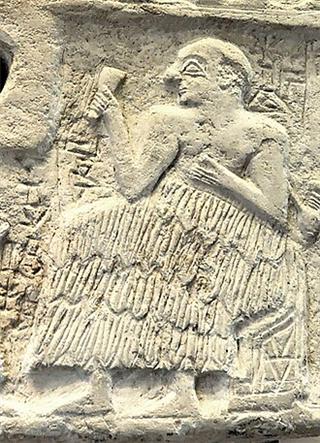
Lagash lay north-west of the junction of the Euphrates and Tigris and east of Uruk, at modern Al-Hiba in Dhi Qar Governorate, Iraq. The Lagash state took in three cities: Lagash itself; Girsu, modern Telloh, some 25 km to the north-west, the religious centre with the E-ninnu temple of Ningirsu; and Nina, Tell Zurghul, about 10 km away at the state's southern limit, the three joined by a canal. Though some Uruk-period sherds have been found, significant occupation began early in the third millennium BCE, in the Early Dynastic I period (c. 2900–2600 BCE); a drone survey has suggested that the city grew on four marsh islands, some of them gated, though the notion is contested. Its peak, with an area of about 500 hectares, came in Early Dynastic III (c. 2500–2334 BCE), the age of the First Dynasty of Lagash.
The dynasties of Lagash are absent from the Sumerian King List. Little is known of the first two rulers: En-hegal, believed to be the first, appears on a tablet recording a purchase of land, and his status and date are disputed; Lugalshaengur is named as ensi of Lagash on a mace head of Mesilim, who called himself king of Kish. Ur-Nanshe, 'son of Gu-NI.DU', left many inscriptions, nearly all about building temples; one records a channel dug against the Amorites, and several say he had the ships of Dilmun bring timber as tribute. He claimed to have beaten Ur and Umma in battle. His son Akurgal ruled briefly before Akurgal's own son Eannatum.
Socioeconomy

Lagash was a state of canals, temples and estates. Eannatum's reign saw temples and palaces repaired or raised at Lagash and elsewhere and canals and reservoirs dug, and Dilmun was a major trading partner, as it had been when Ur-Nanshe took its timber as tribute. The long quarrel with Umma was over land and water: the Gu'edena, a fertile plain between the two cities, and the boundary channel that Eannatum extended from the Nun-channel, leaving a strip of 215 nindan, about 1,290 metres, of Ningirsu's land under Umma's control as a no-man's land.
Some 1,800 administrative tablets survive from the reigns of the last three rulers of the First Dynasty, Enentarzi, Lugalanda and Urukagina, most from the 'woman's quarter', the temple of the goddess Babu, which was under the control of the queen. Excavation has found the working side of the city: an Early Dynastic administrative area with sealings and tablets of Eannatum, Enannatum I and Entemena, an area of kilns, streets and houses, and in 2022 a public eatery with ovens, a cooling system, benches and great numbers of bowls and beakers. A building at the Bagara of Ningirsu with ovens, storage vats and a tablet naming 'the brewery' and 'a brewer' may have been a brewery or a temple kitchen. Under the Third Dynasty of Ur the Lagash state of Lagash, Girsu and Nigin was the largest and most prosperous province of the empire.
Military

The wars of Lagash are among the best recorded of early Sumer. Eannatum, son of Akurgal and grandson of Ur-Nanshe, made the city a major power across much of Mesopotamia and to the east. His inscriptions have him defeat 'mountainous Elam', Urua, Umma and Ur, destroy Kish, Akshak and Mari at a place called Antasur and kill Zuzu, king of Akshak. Around 2450 BCE the border dispute with Umma over the Gu'edena came to battle. The Stele of the Vultures shows Eannatum, inspired by Ningirsu, dismount from his chariot and lead his men on foot; with spears lowered the army of Lagash advanced in a dense phalanx and after a brief clash won, one of the earliest organised battles known.
His brother Enannatum I crushed Ur-Lumma of Umma, who had hired mercenaries from foreign lands, diverted water into the boundary channels of Ningirsu and Nanshe and burned the chapels on the levee, pursuing him to the town of LUM-ma-girnunta. Later Lagash was on the losing side: Urukagina was defeated by Lugalzagesi, first as ruler of Umma and then of Uruk, and about 2300 BCE Sargon of Akkad 'laid waste' the territory from Lagash to the sea. His son Rimush reconquered the rebellious cities with mass slaughter, recording for Ur and Lagash 8,049 killed, 5,460 captured and enslaved and 5,985 expelled and annihilated. Gudea campaigned to the east against Anshan and Elam; his sixth year was named for the smiting of Anshan.
Governance & Law
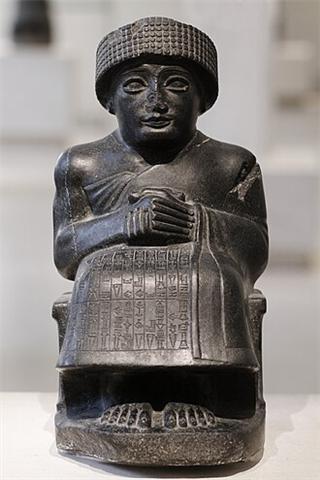
The rulers of Lagash bore the title ensi and ruled in the name of the city god Ningirsu. Mesilim, 'king of Kish', had mediated a formal border with Umma in the time of Enakalle, and Eannatum restored his monument and the boundary markers without crossing into Umma's plain. Entemena increased the power of Lagash and was a contemporary of Lugalkinishedudu of Uruk. The last ruler of the First Dynasty, Urukagina, was known for judicial, social and economic reforms that may well be the first legal code known to have existed.
Under the Akkadian Empire Lugal-ushumgal and Puzur-Mama governed Lagash for Naram-Sin and Shar-Kali-Sharri; after Shar-Kali-Sharri's death Puzur-Mama declared the city independent, though the Akkadian ruler Dudu still reported taking booty there. The Second Dynasty, unlike the first, dated its documents by year names, most of them religious. Ur-Baba's daughters married three later rulers, Gudea, Nam-mahani and Ur-gar, and he appointed Enanepada high priestess of Ur, an office Naram-Sin had filled before him and Ur-Nammu would fill after. Under Gudea thousands of inscriptions and countless statues were made, and twenty of his year names are known. After Ur-Nammu's conquest an ensi was a governor in Ur III terms; the empire's second official, the Grand Vizier, resided in the province. After Ibbi-Sin's fifth year his year names stop at Lagash, a sign that Ur had lost the city.
Global & Regional Impact
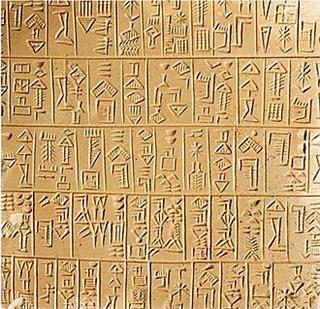
Lagash left records of a kind few early Sumerian cities match. The Stele of the Vultures is among the earliest depictions of an organised battle, and the Gudea cylinders found at Girsu contain the longest known text in the Sumerian language. The First Dynasty, though left off the Sumerian King List, exercised considerable influence in the region in the time before the dynasty of Akkad, and the prologue of the Code of Ur-Nammu boasts 'He slew Nam-ha-ni the ensi of Lagash', a measure of how much the city still counted.
Its reach was felt in its neighbours. Eannatum's conquests ran from Elam and Urua in the east to Kish, Akshak and Mari, and Ur remained under Lagashite kings even as their power waned, until Lugalkinishedudu of Uruk claimed it; after Akkad's fall Ur-Baba's son Enannipadda and Gudea's building works show Lagash again dominant at Ur. Some researchers now hold that Gudea's reign overlapped Ur-Nammu's rather than falling well before it in a time of Gutian power, since Ur-Baba's appointment of a high priestess at Ur fell between those of Naram-Sin and Ur-Nammu. The site itself, roughly 3.5 by 1.5 km and one of the largest in the region, was first dug for six weeks by Robert Koldewey in 1887, who took it for an extended burial place; Thorkild Jacobsen and Fuad Safar found the first evidence of its identification as Lagash in 1953, and excavation resumed in 2019 under Holly Pittman of the Penn Museum.
Decline & Fall

Lagash fell twice. The First Dynasty ended when Lugalzagesi of Umma and then Uruk defeated Urukagina, and about 2300 BCE Sargon of Akkad conquered Sumer, laying waste the land from Lagash to the sea; Rimush's reconquest followed with its slaughter and enslavement. For several centuries Lagash was an Akkadian possession, governed by men such as Lugal-ushumgal. Independence under Puzur-Mama, Ur-Ningirsu I and their successors was at first tenuous, and Lagash remained at best a small local power until Gudea.
The Second Dynasty, often called the Gudean Dynasty, ended with Nam-mahani, known chiefly for his defeat by Ur-Nammu, first ruler of the Ur III empire. Nam-mahani's inscriptions were defaced and the statues of him and his wife beheaded, the heads never found, an act of damnatio memoriae attributed to Ur-Nammu. Under Ur the Lagash state was the largest and most prosperous province of the empire and the seat of the Grand Vizier; after the fifth year of Ibbi-Sin, the last Ur III king, his year names were no longer used there, showing that Ur no longer controlled the city. Afterwards there was modest occupation in the Isin-Larsa and Old Babylonian periods, and then Lagash was largely deserted until a Seleucid fortress was built on the site in the 2nd century BCE. Much of the oldest city now lies under the water table. What survives is the record: the statues of Gudea, the cylinders, the Stele of the Vultures and the tablets by which the city's history is known.
Lagash, a Sumerian state of three cities on the lower Tigris–Euphrates plain, reached its height under Eannatum around 2450 BCE, fell to Lugalzagesi and Sargon of Akkad, rose again under Gudea, and ended when Ur-Nammu slew its last ensi and made it the richest province of the Ur III empire.
References
- Robert D. Biggs, Inscriptions from al-Hiba-Lagash: The First and Second Seasons, Bibliotheca Mesopotamica 3 (Undena Publications, 1976)
- R. Prentice, The Exchange of Goods and Services in Pre-Sargonic Lagash (Ugarit-Verlag, 2010)
- Vaughn E. Crawford, 'Lagash', Iraq 36 (1974)
- K. Maekawa, 'The Development of the é-mí in Lagash during Early Dynastic III', Mesopotamia 8–9 (1973–1974)
- D. P. Hansen, 'Lagaš. B. Archäologisch', Reallexikon der Assyriologie und Vorderasiatischen Archäologie 6 (1980–1983)
Connections
Open the full connections map →