
Language · Islamic Caliphates & Middle East
Armenian
At a glance
- Armenian is a branch of the Indo-European family on its own; in 1875 Heinrich Hübschmann showed that it is not an Iranian language, despite its many Parthian and Persian loanwords.
- Written since Mesrop Mashtots created its alphabet in 405, it kept Classical Armenian, or Grabar, as its literary standard from the 5th century to the 19th.
- Two modern standards grew up in the 19th century: Eastern Armenian, the official language of Armenia, and Western Armenian, carried by the diaspora after the Armenian genocide.
Timeline
- 405Mesrop Mashtots creates the Armenian alphabet of 36 letters
- 5th centuryThe Bible is translated into Armenian, the language’s oldest surviving text
- 10th centuryGregory of Narek writes the Book of Lamentations, adding well above a thousand new words to the literary language
- 11th–14th centuriesIn Bagratid Armenia and the Armenian Kingdom of Cilicia the letters օ and ֆ are added to the alphabet
- 1794Azdarar, the first Armenian periodical, is published in Classical Armenian
- 1875Heinrich Hübschmann uses the comparative method to show that Armenian is not an Iranian language
- 1920sA spelling reform in Soviet Armenia adds the letter և and makes ու a single letter
Origins
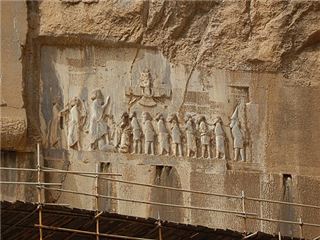
Armenian is an independent branch of the Indo-European language family and the native language of the Armenian people, whose homeland lay in the Armenian highlands. Its place in the family has long been debated. It shares more of the sound changes of the “satem” languages, such as Indo-Iranian, than of the “centum” languages, such as Greek, but is classed with neither. Since Holger Pedersen in 1924 and Antoine Meillet, many scholars have seen Greek as its closest relative: the two share the augment, a past-tense prefix, a negative word from the Proto-Indo-European phrase *ne h₂oyu kʷid, “never anything”, and other features, though scholars differ on whether this reflects a common Graeco-Armenian subgroup, long contact, or both. Donald Ringe and Tandy Warnow proposed that Pre-Armenian and Pre-Greek formed a close subgroup after 2500 BC, and David W. Anthony that Pre-Armenian may have begun to diverge by about 2800 BC.
Archaeogenetic studies have linked the steppe-related ancestry that appeared in the South Caucasus in the Middle Bronze Age, with the Trialeti-Vanadzor culture, to what some propose was an early Proto-Armenian horizon. The Armenians were known long before their language was written: they are named in the 6th-century BC Behistun Inscription and in Xenophon’s Anabasis of the 4th century BC. Their written language begins with the alphabet of Mesrop Mashtots in 405 and a 5th-century translation of the Bible, its oldest surviving text.
Sounds, Script & Grammar

Armenian is written in its own alphabet, a graphically unique writing system introduced around 405 by Mesrop Mashtots, an Armenian linguist and church leader. It first had 36 letters; two more, օ (ō) and ֆ (f), were added in the Middle Ages. The spelling reform of the 1920s in Soviet Armenia added a new letter, և, and made ու a single letter; Armenians of the former Soviet Union use this spelling, while the diaspora, including the Eastern Armenian speakers of Iran, keeps the traditional alphabet and spelling.
Armenian has only simple vowels, without diphthongs: Eastern Armenian has six, Western Armenian two more. Its stops and affricates include an aspirated series, pronounced with a puff of breath, and the dialects differ most in how they continue the old consonant contrasts: Western Armenian pronounces both թ and դ as [tʰ] and տ as [d]. Stress falls on the last syllable unless that syllable holds the definite article. The spelling is rich in consonant clusters, broken up in speech by a short neutral vowel.
Armenian has no grammatical gender, not even in its pronouns; a suffix -uhi only marks a woman, as usucʻičʻ, “teacher”, becomes usucʻčʻuhi, “female teacher”. Nouns once had seven cases, endings that show a word’s role in the sentence, and in the modern language some of them have merged. Early Armenian resembled classical Greek and Latin in its grammar, but the modern language generally uses auxiliary verbs where Classical Armenian inflected the verb itself.
Speakers & Spread
Armenian was historically spoken in the Armenian highlands and is indigenous to Armenia and Turkey. In the 19th century the homeland was divided again: the Russian Empire conquered Eastern Armenia from Qajar Iran, while Western Armenia, two thirds of historical Armenia, remained under Ottoman rule. Fleeing persecution or seeking a living, many Ottoman Armenians moved to Istanbul, while Tbilisi became the centre of the Armenians under Russian rule, and these two cities became the poles of Armenian intellectual and cultural life.
The short-lived First Republic of Armenia declared Armenian its official language. The Armenian Soviet Socialist Republic (1920–1990) made Eastern Armenian the language of the courts, government and schools, though Armenia was also russified. Independent Armenia keeps Armenian official, with Eastern Armenian as the prestige variety. Many Western Armenian dialects died out as a result of the Armenian genocide, and Western Armenian became the main language of the diaspora and of most Armenian-language schools outside Armenia.
Ethnologue counts 3.7 million Eastern and 1.6 million Western Armenian speakers, 5.3 million in all; other estimates run from five to seven million. In Georgia, Armenian speakers make up over 90% of the Ninotsminda and Akhalkalaki districts, and in 2010 Armenian was the main language of instruction in 144 state-funded schools in Samtskhe-Javakheti. In Lebanon, Syria and Iran, Armenians were in practice the only minority allowed to teach their language in schools.
Literature & Learning
The Armenian literary tradition begins in the 5th century, with a translation of the Bible, its oldest surviving text, and the Armenian Alexander Romance, translated in the same century. Its language was Classical Armenian, or Grabar, the literary standard from the 5th century to the 19th; it was quite uniform across the regions where it was written and may have served as a standard across them. Specialists call the language of the 5th-century literature “Classical”, that of the late 5th to 8th centuries “Post-Classical” and that of the 8th to 11th centuries “Late Grabar”.
The Book of Lamentations of Gregory of Narek (951–1003) shows how far the literary style had developed by the 10th century. He added well above a thousand new words, and his hymns and poems opened the way for later writers to take up secular themes and the vernacular. Hovhannes Sargavak’s “A Word of Wisdom”, a poem about a starling, made room for poetry on nature, love and female beauty, and Konsdantin Yerzinkatsi and others took the unusual step of criticising the church establishment and writing about the social troubles of the homeland.
In the early modern period the Mekhitarists tried to make Grabar the language of a literary renaissance with neoclassical leanings, and the first Armenian periodical, Azdarar, appeared in Grabar in 1794. In the 19th century newspapers and schools in the modern language raised literacy sharply, even in remote villages, in spite of obstacles from the colonial administrators.
Change & Descendants

Classical Armenian was spoken, in different varieties, as well as written until the 11th century. It was partly superseded by Middle Armenian, attested from the 12th to the 18th century; the Middle Armenian of the court of Cilician Armenia (1080–1375) shows the beginnings of Western Armenian. Later, Grabar lived on mainly in religious and learned writing. Its vocabulary had taken in many words from Middle Iranian languages, above all Parthian, and fewer from Greek, Syriac, Aramaic, Arabic, Mongol, Persian and local languages such as Urartian.
In the 19th century writers sought to raise the vernacular, Ashkharhabar, to a modern literary language in place of the now old-fashioned Grabar, and two standards emerged. Western Armenian took shape in Istanbul, where migrants from across the homeland brought their dialects together; Eastern Armenian, centred in Tbilisi, drew on the dialect of Yerevan and Mount Ararat. By the turn of the 20th century both had prevailed over Grabar. They differ in some sounds and forms but share most of their vocabulary, and a speaker fluent in one comes to understand the other with some exposure. In the 20th century, chiefly after the Armenian genocide, both removed almost all their Turkish words.
Beyond the standards lie many regional dialects, some not readily understood by other speakers, such as Homshetsi, spoken by the Hemshin peoples. Contact with Turkic and Caucasian languages changed some deeply, and the linguist Fortson notes that the modern standard’s subordinate clauses now greatly resemble those of a Turkic language.
Legacy
Armenian matters to linguists for its distinctive sound changes within the Indo-European family. Its many Iranian loanwords first led scholars such as Paul de Lagarde and F. Müller to class it as an Iranian language, until Heinrich Hübschmann in 1875 used the comparative method to separate two layers of Iranian words from the older vocabulary and showed that its native words and its endings followed a pattern of their own. Because so much was borrowed, only around 1,500 inherited Indo-European words are known in Classical Armenian, by G. Jahukyan’s count, which makes Proto-Armenian hard to reconstruct.
Words also passed between Armenian and its ancient neighbours. Igor M. Diakonoff saw in it a substratum of Hurro-Urartian words, such as ułt, “camel”, from Hurrian; Hrach Martirosyan and others have since given many of them native Armenian origins, suggesting that some went the other way, as arciv, “eagle”, may be the source of Urartian Arṣibi. More recent scholarship is more sceptical still, accepting fewer than ten Armenian words as surely Hurro-Urartian.
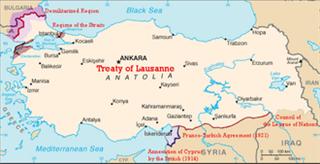
Today Armenian is official in Armenia, was official in the Republic of Artsakh, and is recognised as an official language of the Eurasian Economic Union. It is a recognised minority language in Cyprus, Hungary, Iraq, Poland and Romania, and in Turkey it is protected by the 1923 Treaty of Lausanne. In California state agencies translate their documents into Armenian, and the city of Glendale has some street signs in it.
In the Research Series
Armenian is an Indo-European language forming a branch of its own, written since about 405 in the alphabet of Mesrop Mashtots. Classical Armenian, or Grabar, was its literary language from the 5th century to the 19th, when two modern standards took its place: Eastern Armenian, official in Armenia, and Western Armenian, the language of the diaspora after the Armenian genocide.