
Culture · Sub-Saharan Africa
Tuareg
At a glance
- The Tuareg, who call themselves Imuhagh, Kel Tamasheq (“speakers of Tamasheq”) and Kel Tagelmust (“veiled people”), are an Amazigh people whose founding queen, Tin Hinan, is believed to have lived in the 4th or 5th century.
- Organised in confederations under an amenokal and ranked into nobles, vassals, clerics, artisans and enslaved people, they controlled trans-Saharan trade routes and ran salt caravans across the desert.
- The Tuareg resisted French conquest from 1881 to 1920; after independence their homeland was divided among five states, and uprisings followed in Mali and Niger from the 1960s.
Timeline
- 4th–5th centuryTin Hinan, the Tuareg founding queen, leads her people south into the Sahel; her tomb stands at Abalessa in the Hoggar
- 7th centuryIslam reaches North Africa with the Umayyad Caliphate, and the Tuareg in time adopt it
- 1449A Tuareg ruling house founds the Sultanate of Agadez in the Aïr Mountains
- 1881Tuareg fighters annihilate the French expedition led by Paul Flatters
- 1902The French defeat the Kel Ahaggar at the Battle of Tit
- 1990After a clash at Tchin-Tabaraden, Tuareg in Mali and Niger rise and claim independence for their homeland
- 1992–1995Peace agreements in Mali and Niger decentralise power and bring Tuareg fighters into the national armies
- April 2026During the Mali War the Azawad Liberation Front captures Kidal and parts of Gao
Origins
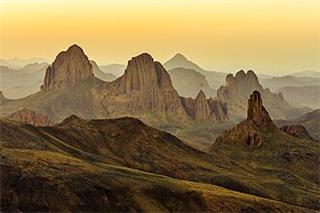
The Tuareg are an Amazigh people of the Sahara and the Sahel. They call themselves Imuhagh or Imushagh, a cognate of the northern Berber name Imazighen, and also Kel Tamasheq, “speakers of Tamasheq”, and Kel Tagelmust, “veiled people”; the name Amajagh, “freeman”, strictly meant the nobles alone. The name Tuareg probably comes from Targa, their name for the Fezzan in Libya. They speak the Tuareg languages, Tamasheq, Tamahaq and Tamajeq, of the Berber branch of the Afroasiatic family, and write them in Tifinagh, the old Libyco-Berber script.
In antiquity the Tuareg moved south from the Tafilalt into the Sahel under their founding queen Tin Hinan, who is believed to have lived in the 4th or 5th century; her monumental tomb at Abalessa in the Hoggar Mountains bears traces of a Tifinagh inscription. The Garamantes of the Fezzan are often counted among their ancestors, and some researchers tie the rise of the Tuareg to the Garamantes’ fall; the Lamtuna, the core of the Almoravid dynasty, were close kin. Their oral tradition holds that the seven clans who moved south after the Arab invasions of the 11th century descend from the same mother.
Genetic studies describe North African Berber ancestry as a mosaic of local North African, Middle Eastern, European and sub-Saharan strands. Among the Tuareg the male lineage E-M81, the “Berber marker”, is the most common, and the Tuareg of the Fezzan carry maternal haplogroup H1 at the highest frequency yet found.
Society
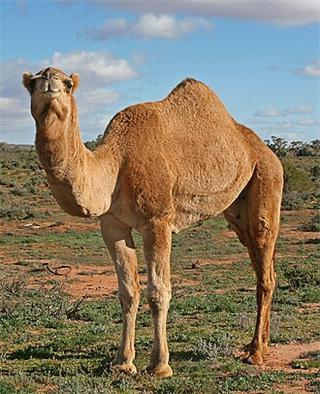
The Tuareg are a pastoral people, living from livestock, trade and farming. By the 19th century their land was divided among confederations, sometimes called “drum groups” after the drum that marked the authority of their supreme chief, the amenokal, who ruled with a council of elders; among the major confederations were the Kel Ahaggar, Kel Ajjer, Kel Adagh and Kel Ayr. Each clan, or tawshet, was led by an amghar, an office handed down through the mother’s line, usually to the son of the chief’s sister.
Society was ranked. The nobles, imuhagh, held the monopoly of arms and camels and took tribute from the vassal herders, the imghad, who kept goats, sheep and donkeys and tended the nobles’ herds. The Ineslemen, the clerics, served as judges and imams; artisan castes, the inadan, made saddles, tools, weapons and jewellery; the farmers of the oases, the izeggaghan, kept a fifth of their harvest for themselves. At the bottom were the enslaved, the ikelan, taken in raids or bought in markets, whose status was inherited.
Tuareg culture is largely matrilineal. The tent belongs to the married woman and is first raised at her wedding, so that “making a tent” means to marry, and jewellery passes from mother to daughter. Patrilineal Islamic values, cousin marriage and polygyny are thought to have been laid over this older order.
Beliefs & Worldview

Before Islam the Tuareg held to traditional Berber religion, and parts of its cosmology and ritual live on, especially among women, in allusions to matrilineal spirits, fertility, the earth and ancestresses, and in a widespread “cult of the dead”, a form of ancestor veneration. The men’s veil is said to come from the belief that it wards off evil spirits, and amulets holding sacred objects and, more recently, verses of the Qur’an are widely worn.
Islam reached North Africa with the Umayyad Caliphate in the 7th century. The Tuareg at first resisted it in their strongholds; in the 16th century, under the guidance of El Maghili, they embraced the Maliki school of Sunni Islam, which most follow today. The clerical caste of the Ineslemen spread the faith across North Africa and the Sahel, and the Tuareg helped carry it into the Western Sudan. Timbuktu, a centre famed for its scholars, is said to have been founded by Tuareg at the start of the 12th century and flourished under a Tuareg confederation’s protection, though modern scholars find too little evidence to name its founders.
In 1449 a Tuareg ruling house founded the Sultanate of Agadez in the Aïr Mountains. In the 18th century the Tuareg scholar Jibril ibn ’Umar preached revolutionary jihad, and his student Usman dan Fodio went on to lead the Sokoto jihads and found the Sokoto Caliphate.
Arts & Knowledge
Tuareg metalwork is famous. Smiths of the inadan castes make jewellery of silver, coloured glass and iron, worn by men as well as women, among them the tanaghilt or Agadez Cross, cast by the lost-wax method and now a symbol of Tuareg culture and political rights, the takoba sword, necklaces, earrings and decorated pilgrimage boxes. Silver, much of it from old Austrian coins and five-franc pieces, is thought to bring happiness, while gold is thought to bring misfortune. Saddles, leatherwork and tents covered with skins or mats complete the craft.
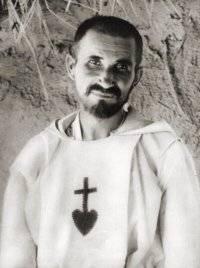
Poetry, often elegiac, epigrammatic or amatory, is composed in great quantity; Charles de Foucauld, who compiled perhaps the earliest Tuareg dictionary, and other ethnographers preserved thousands of poems. Traditional music rests on the anzad, a one-stringed violin played at night gatherings, and the tende, a goatskin drum played at camel races and festivities, with songs such as asak and tisiway sung by women and men.
In the 1980s rebel fighters founded Tinariwen, joining electric guitars to Tuareg styles; their music spread through areas cut off by the rebellion, and they toured Europe and the United States in 2004, followed by Bombino, Mdou Moctar and others. The night sky has Tuareg names too: Amanar, Orion, is “the warrior of the desert”.
Contact & Exchange
Since prehistoric times the Tuareg have organised caravans across the Sahara, first with oxen and horses, later with camels, carrying salt from mines such as Taoudenni, Bilma and Fachi: the Azalay ran from Timbuktu to Taoudenni, the Taghlamt from Agadez to Bilma. Arab writers from Ibn Hawkal in the 10th century to Leo Africanus in the 16th described them as the Mulatthamin, “the veiled ones”. Raids, rezzous, on other confederations and on the Chaamba, Toubou, Hausa and Fulani brought camels, goods and captives, who were kept as slaves or sold.
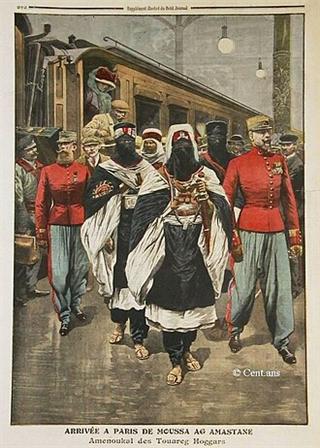
The Tuareg resisted French conquest. They annihilated Paul Flatters’ expedition in 1881; in 1902 the French defeated the Kel Ahaggar at the Battle of Tit, after which some moved to Libya and the rest submitted under Moussa ag Amastan, while Kel Ajjer under Sheikh Amoud Ag El Mokhtar, backed by the Ottomans and the Senusiyya, fought on from 1913 to 1920. After numerous massacres by the French and the southern Tuareg, treaties were forced on them in Mali in 1905 and Niger in 1917.
French rule leaned on the nobles and did not free the enslaved: after the Second World War some 50,000 Bella were still held by Tuareg masters in the Gao–Timbuktu area alone, and mass desertions began in 1946.
Legacy
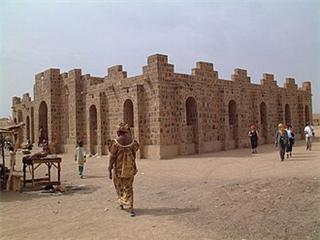
Independence in the 1960s divided the Tuareg lands among Niger, Mali, Algeria, Libya and Burkina Faso. Restrictions on nomadic life and desertification drove some to farming or to the towns. The Malian army put down an uprising in the Adrar des Iforas in the 1960s; in 1990, after a clash at Tchin-Tabaraden in Niger, Tuareg in both countries claimed independence for their homeland, and fighting under leaders such as Mano Dayak killed thousands before agreements in 1992 and 1995. Violence rose again in Niger in 2007, and in April 2026, during the Mali War, the Azawad Liberation Front captured Kidal.
Old hierarchies have lasted: Niger outlawed slavery only in 2003, and some Tuareg communities still hold slaves. In northern Niger, uranium mining by the French firm Areva has degraded Tuareg grazing land and uses up scarce water, and the Tuareg there remain poor and unrepresented in government. In 2021 militants of IS-GS killed 141 people, most of them Tuareg, in villages around Tillia.
A Tuareg revival grew with Berberism in the 1990s, and three Tuareg flags have been designed since 1998. Festivals such as the Festival in the Desert near Timbuktu gather Tuareg music and dance, and the exhibition “Art of Being Tuareg” opened at Stanford in 2007.
The Tuareg are an Amazigh people of the Sahara and the Sahel who trace their origins to the founding queen Tin Hinan and became Muslims and carriers of Islam. Organised in ranked confederations, they ran the salt caravans across the desert and resisted French conquest until 1920; divided among five states since the 1960s, they have risen repeatedly for their homeland.
Test yourself
5 questions on this page, from its key events and facts.
The questions open here once the page has loaded.
References
- Edmond Bernus, “Les Touareg”, pp. 162–171 in Vallées du Niger, Paris: Éditions de la Réunion des Musées Nationaux, 1993.
- Andre Bourgeot, Les Sociétés Touarègues, Nomadisme, Identité, Résistances, Paris: Karthala, 1995.
- Hélène Claudot-Hawad, ed., “Touaregs, exil et résistance”. Revue du monde musulman et de la Méditerranée, No. 57, Aix-en-Provence: Edisud, 1990.
- Mano Dayak, Touareg: La Tragedie, Paris: Éditions Lattes, 1992.
- Sylvie Ramir, Les Pistes de l’Oubli: Touaregs au Niger, Paris: éditions du Felin, 1991.