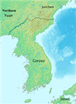
Central & East Asia
Western Xia
At a glance
- Li Yuanhao levied every man between 15 and 60, put as many as 370,000 under arms, promulgated the Tangut script in 1036 and in 1038 declared himself emperor of the Great Xia; after six years of war the Song recognised him and paid an annual tribute of 250,000 units of silk, silver and tea.
- For most of the 11th century child emperors reigned under empress dowagers and their clans, the Mocang and then two generations of the Liang; Empress Dowager Liang rode at the head of the cavalry against the Song until she was poisoned by Liao assassins in 1099.
- Western Xia pioneered printing with ceramic and wooden movable type, and under Emperor Renzong (1139–1193) founded schools, examinations and a Hanlin Academy and completed most of the Tangut Buddhist canon; the Mongols destroyed the state so thoroughly that its history stayed obscure until the 20th century.
Rise & Fall
- 1038Li Yuanhao declares himself emperor of the Great Xia at Xingqing, taking the Tangut clan name Weiming and creating a Chinese-style bureaucracy.
- 1044After victories at Sanchuan Pass and Haoshuichuan and the repulse of a Liao invasion of 100,000, Jingzong makes peace: the Song recognise him and pay 250,000 units of silk, silver and tea a year.
- 1081The Song launch a five-pronged invasion while the Liang clan imprisons Emperor Huizong; Lanzhou falls, but the Xia flood the Song camps by breaching the Yellow River dikes.
- 1099Empress Dowager Liang, who led armies in person, is poisoned by assassins from the Liao; the Song 'advance and fortify' campaign has built 40 forts across the Ordos.
- 1124Emperor Chongzong turns away the fugitive Liao emperor Tianzuo and declares himself a vassal of the Jurchen Jin.
- 1147Emperor Renzong institutes imperial examinations, after founding schools throughout the country and Confucian temples.
- 1210After the Mongol siege of Zhongxing, Emperor Xiangzong submits to Genghis Khan, giving him his daughter Chaka and a tribute of camels, falcons and textiles.
- September 1227Emperor Mo surrenders after a six-month siege and is executed; the Mongols slaughter the capital's population and plunder the imperial tombs.
Foundation
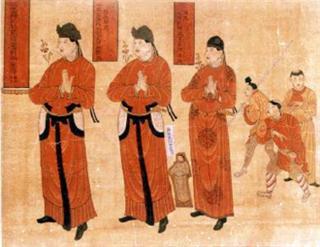
The Tanguts, Dangxiang to the Chinese and Minyak to the Tibetans, came from the highlands of the Qinghai-Sichuan-Tibet region and were held to descend from the Western Qiang. Moving east in the 650s under Tibetan pressure, they were settled by the Tang in 32 jimi prefectures under their own chieftains, and by the An Lushan Rebellion of the 750s they were the chief power of the Ordos. In 873 Tuoba Sigong seized Youzhou; for helping drive Huang Chao from Chang'an he received in 881 the four prefectures of the Dingnan Jiedushi and in 883 the imperial surname Li and the title Duke of Xia, a frontier command his house held through the Five Dynasties.
In 982 Li Jipeng, whose succession the elders had not approved, surrendered the command to the Song. His kinsman Li Jiqian refused to submit: he took Yinzhou in 985, paid tribute to the Liao from 986, married into Khitan nobility in 989 and in 990 accepted from the Liao emperor the title King of the Xia State, defying and placating the Song by turns until he died of an arrow wound on 6 January 1004. His son Deming sent tribute to both empires and expanded west: Deming's son Yuanhao conquered the Ganzhou Uyghur Kingdom in 1028 and the Guiyi Circuit surrendered in 1030. Succeeding his father in 1032, Yuanhao took the Tangut clan name Weiming, levied every able-bodied man between 15 and 60, promulgated the Tangut script in 1036 and in 1038 declared himself emperor of the Great Xia at Xingqing.
Socioeconomy

At its height Western Xia ruled about a million square kilometres of north-central China. Its heart was the Hexi Corridor, a stretch of the Silk Road and the chief route between northern China and Central Asia; agriculture, pastoralism and trade with Central Asia were the economy's foundations. The Song cut off border trade in 1038, and the Jin shut the markets of Lanzhou and Baoan from 1172 to 1197, accusing the Tanguts of trading worthless gems for silk. The peace of 1044 brought a Song tribute of 250,000 units of silk, silver and tea a year until 1096.
Tanguts, Han Chinese, Tibetans and Uyghurs served as officials and intermarried freely, and Tangut, Chinese and Tibetan were all official languages. The Tangut script, attributed to Yeli Renrong and based on Chinese and Khitan, was used from 1036 to translate and print Chinese and Tibetan works, and Western Xia pioneered movable type after Bi Sheng (972–1051): the Auspicious Tantra of All-Reaching Union is the earliest surviving wooden-type book. Society was patriarchal under the Tangut Code: a woman was the property of her parents, husband and in-laws, could marry at 13 for a bride price and be divorced for the 'Seven Defects', from childlessness to talkativeness; a wife who killed her husband was beheaded, and female slaves counted as livestock. In 1034 Yuanhao decreed that his subjects shave their heads, leaving a fringe at the forehead and temples.
Military

Western Xia was a militarised kingdom. Jingzong's eighteen military commissions in five zones put as many as 370,000 mounted men under arms. Its elite were the Iron Hawks, 3,000 heavy horse, and the Trekker mountain infantry, though the prince Chage complained that the Trekkers were scattered by the Song's Mighty-Arm crossbows and that Xia troops 'can only fight according to convention'.
Against the Song the Tanguts won battles and lost wars. In 1039–40 Jingzong besieged Yanzhou with over 100,000 men and annihilated Ren Fu's 30,000 at Haoshuichuan, yet took no territory from forts held by 200,000 rotating Song troops; half his soldiers died of attrition. A Liao invasion of 100,000 in 1044 was brutally mauled. In 1081 five Song armies took Lanzhou, Xiazhou and Youzhou, but on 21 December the Xia breached the Yellow River dikes and flooded the besiegers of Lingzhou, and in 1082 a 300,000-strong Xia army took Yongle, killing 17,300. The Song 'advance and fortify' campaign of 1097–99, 40 forts across the Ordos, ended Tangut superiority in the field: 100,000 men were routed at Pingxia in 1098. In 1115–19 Tong Guan's invasions ended with Liu Fa's 200,000 surrounded and halved by Chage before the capital and a Song apology. Genghis Khan raided in 1205 and 1207, besieged Zhongxing and its 150,000 defenders in 1209 until his own dike burst, and in 1225–27 brought some 180,000 Mongols to defeat Emperor Mo's 300,000 and slaughter the capital.
Governance & Law
Jingzong built a Chinese-style government for a Tangut state: a Secretariat, a Bureau of Military Affairs, a Censorate and sixteen bureaus under a chancellor. Succession never settled. When he died on 19 January 1048, stabbed by his disinherited heir, a council of elders chose his cousin until Mocang Epang pressed the claim of his two-year-old nephew Liangzuo (Yizong); the Mocang regents ruled until Yizong and Lady Liang murdered Epang and his clan in 1061. Two generations of the Liang clan followed, empress dowagers and their brothers Liang Yimai and Liang Qipu ruling for the child emperors Huizong (seven in 1068) and Chongzong (three in 1086). The court swung between Chinese and Tangut rites, and Huizong was imprisoned by Liang Yimai from 1081 to 1083.
Renzong (1139–1193) remade the state on Confucian lines: schools throughout the country, Confucian temples, imperial examinations in 1147, an Inner Academy in 1148 and in 1161 a Hanlin Academy to compile the Xia records. He crushed the general Ren Dejing when Ren demanded half the realm in 1170, and made the Confucian Wo Daochong, translator of the Analects into Tangut, chief minister. The state religion blended Tibetan Tantric and Chinese Mahayana Buddhism; the emperor posed as a Buddhist king and patron of lamas, and from the mid-12th century Tibetan monks held the office of state preceptor.
Global & Regional Impact

Western Xia made the Hexi Corridor a state. For two centuries the Tanguts held the road between China and Central Asia against the Song, the Liao and the Jin, dealing with each as a fourth power: a royal title from the Liao in 990, a Song tribute after 1044, vassalage to the Jin in 1124 and a brief occupation of Jin and Song land in 1161–62. It was against Western Xia that Genghis Khan first turned his united Mongols, in 1205, 1207 and 1209, and the Xia submission of 1210 opened the Mongols' 23-year war on the Jin.
The Tanguts' lasting work was in letters and faith. Their script, created by 1036, wrote a Tibeto-Burman language in characters of its own and carried a literature now surviving only in fragments; their printers were the first after Bi Sheng to use movable type, in clay and in wood, and their Buddhist canon, mostly completed under Renzong, was printed in more than 3,620 juan at Hangzhou in 1302 under the Mongols for the monasteries of the old Tangut lands. Their art, music and architecture were called 'shining and sparkling', and Khara-Khoto remains a major archaeological site. So complete was the Mongol destruction, and the Yuan compiled no official history of Western Xia as they did for Liao, Jin and Song, that the state's origins stayed obscure until the scholarship of the 20th century. Its remnants scattered to western Sichuan, northern Tibet and to Henan and Hebei, where they persisted into the middle of the Ming.
Decline & Fall
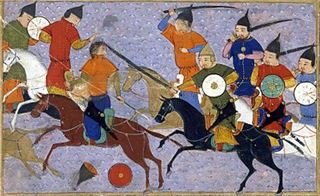
The end came from the steppe. In 1203 Temüjin defeated Toghrul and used the flight of Toghrul's son through Tangut land as a pretext to raid Western Xia in 1205; in 1206, the year he became Genghis Khan, Emperor Huanzong was deposed by his cousin Anquan (Xiangzong). Genghis raided again in 1207, sacking Wulahai, and in 1209 besieged Zhongxing until his diversion of the Yellow River burst and flooded his own camp. In 1210 Xiangzong submitted, gave Genghis his daughter Chaka and paid tribute, and turned the Xia armies on the Jin. When the Mongols demanded troops for their western campaigns in 1217–18 the Xia refused, and Asha Gambu led a court set against both the Mongol alliance and the Jin war.
Genghis, back from Khwarazm, came to punish them. In 1225 he attacked with some 180,000 men; Asha Gambu mocked his offer of submission and challenged him to battle, and the Mongols destroyed city after city, Khara-Khoto in early 1226 and Liangzhou in August, and in November besieged Lingwu as Emperor Xianzong died. His successor Mo led 300,000 men to defeat and Lingzhou was sacked. The siege of the capital lasted six months into 1227. Genghis died in August 1227, his death kept secret; in September Emperor Mo surrendered and was executed, the city's people were slaughtered, the imperial tombs plundered and the state annihilated. John Man has called it perhaps the first recorded attempt at genocide: the Tangut language and script are extinct.
Western Xia, the Tangut 'Great State of White and High', ruled the Hexi Corridor and the Ordos from Li Yuanhao's proclamation in 1038, fought the Song to a tributary peace, survived as a fourth power beside Liao and Jin, and built a Buddhist, Confucian-schooled state with its own script and movable-type printing, until Genghis Khan's armies destroyed it utterly in 1227.
Test yourself
5 questions on this page, from its key events and facts.
The questions open here once the page has loaded.
References
- Ruth W. Dunnell, The Great State of White and High: Buddhism and State Formation in Eleventh-Century Xia (University of Hawai'i Press, 1996)
- Herbert Franke and Denis Twitchett (eds), The Cambridge History of China, vol. 6: Alien Regimes and Border States, 907–1368 (Cambridge University Press, 1994)
Connections
Open the full connections map →